

In 2012, California voters opened their general election ballots and, in a number of districts, found two candidates from the same party and none from the other. Washington had already spent several cycles under a related rule, sending the top two primary finishers to November no matter their labels. Those two states now supply the longest record Americans have of how this design behaves in practice, and that record is what Massachusetts Question 3 asks voters to trust or reject.
What a top two primary actually does

Under the system those states use, every candidate appears on one primary ballot. Voters may choose any of them. The two people with the most votes advance, even if they share a party, and even if a major party is shut out. The general election is then a runoff between those two names. Party membership no longer functions as a legal gate. A party may still endorse, raise money, and urge supporters toward a favorite, but it does not own a guaranteed line in November.
That is a sharper break than a merely open primary. In a familiar open or semi open primary, a voter may be allowed to take one party ballot, yet November still tends to feature one nominee from each major party, plus any minor candidates who qualified on their own. Top two collapses the first round into a single list and treats the general election as a contest of individuals, not of party tickets. Supporters describe this as a way to let every voter help choose finalists. Opponents describe it as the state taking the nomination away from parties and handing it to whoever can finish first and second in a low turnout spring or summer election.
Washington built the working model
Washington voters approved Initiative 872 in 2004 after years of fighting over who could participate in primaries. The major parties sued, arguing that a ballot listing a candidate party preference would force them to associate with people they had not nominated. In 2008 the United States Supreme Court rejected that facial challenge in Washington State Grange v. Washington State Republican Party. The Court treated the party label as the candidate own statement of preference, not as the party official nomination. With that ruling, the system moved from theory into routine use.
What followed was evolution more than revolution. In many legislative and congressional districts, November still offered a Democrat against a Republican. In strongly Democratic places, especially around Seattle, voters sometimes faced two Democrats and no Republican. A smaller number of conservative districts produced the mirror image. Minor party candidates seldom survived the first round. The state did not become nonpartisan in spirit. Campaigns still ran on familiar party themes, and legislative caucuses still organized the Capitol. The reform changed the menu of names more reliably than it changed the menu of ideas.
California tried the same idea on a larger stage
California adopted its version through Proposition 14 in June 2010, during a grim budget standoff. A Republican state senator, Abel Maldonado, pressed the top two primary as part of the bargain that moved the measure to the ballot. Voters approved it, and the new rules applied starting in 2012, covering legislative, congressional, and statewide offices aside from the presidential contest, which stayed on a separate track.
Because California is so large, the experiment generated a thick stack of examples. Same party general elections became a regular feature in the Bay Area, in parts of Los Angeles, and in other seats where one party dominated registration. The most visible statewide case arrived in 2016, when Barbara Boxer retired from the United States Senate. Kamala Harris and Loretta Sanchez, both Democrats, finished first and second in the primary. No Republican appeared on the November ballot for that office. Harris won. For supporters, the race showed that a one party region can still have a real November choice. For critics, it showed millions of Republican leaning voters with no candidate of their own party in the final round of a statewide election.
Same party Novembers, and who they leave out

The same party general election is the feature people notice first, and it is the feature most likely to appear in Massachusetts if the reform passes. The Commonwealth is not politically uniform, but large stretches of the state, above all in and around Boston, are so heavily Democratic that a Republican often has little chance of finishing second in a crowded primary. In those places, November could become a contest between two Democrats. A few more conservative districts could, in theory, produce two Republicans, though that outcome has been less common in the western states and would be less common here.
Advocates say this is a gain. A Democrat who must face another Democrat in November, they argue, has a reason to speak to independents and to Republicans who would otherwise skip a hopeless race. The general election, not a party primary dominated by the most committed activists, becomes the election that matters. Critics answer that the minority party loses its November voice, and that the two finalists may both sit on the same side of the main arguments in the district. A choice between two Democrats is still a choice, but it is not the same kind of choice as a choice between parties. Washington and California show both descriptions can be true at once, depending on the district.
Third parties almost disappear from November

Another consistent result is quieter and, for some voters, more bitter. Libertarian, Green, and other minor candidates rarely gather enough primary votes to place in the top two for legislative or statewide office. Under older rules, those candidates often reached November even when they won only a small share. Under top two, the general election ballot usually shrinks to two names. Washington and California both saw that contraction. It is not an accident of one bad cycle. It is how the arithmetic works when many voters cluster in two big parties and only two slots remain.
Defenders call the shorter ballot a mercy. They say fringe candidates clutter the choice and occasionally distort it. Opponents call it a closing of the public square. A voter who wanted a consistent third party option in November loses that option unless the candidate somehow breaks into the top two, which almost never happens in a serious race. If Massachusetts Question 3 follows the western pattern, minor parties will still be free to recruit and campaign, but they will campaign mostly for a primary placing they are unlikely to win. That is a structural fact, not a prediction about any one personality.
The hope that politics would grow calmer
The deepest promise of the reform was not a shorter ballot. It was a less polarized politics. If candidates must appeal beyond their party base to reach November, or to win a same party November, they might govern closer to the middle. California backers said this plainly in 2010, in a state exhausted by late budgets and partisan standoffs. Washington supporters made a similar claim, though in a milder key.
The years since have not produced a clear verdict, and honesty requires saying so. Some California lawmakers looked more moderate on voting scores after 2012 than the old primary system seemed to allow. Other observers look at the same Capitol and see national polarization rolling over any effect the primary rule might have had. Washington legislature remained organized by party, with familiar fights over taxes, schools, and climate. Campaign money, safe districts, residential sorting, and the nationalization of local politics all pull harder than a change in primary rules. A top two system can change incentives at the margin. It has not, in either state, dissolved the party divide. Anyone selling Massachusetts Question 3 as a cure for harsh politics is selling more than Washington or California has delivered.
Competition depends on who shows up in the first round

There is a second, less discussed mechanic. The two finalists are chosen in a primary that almost always draws fewer voters than November. In both states, primary turnout has lagged the general election as a matter of habit. That means a smaller, more attentive slice of the public picks the entire November menu. If that slice is older, more partisan, or more ideological than the fall electorate, the top two system can lock in a narrow choice before the broader public arrives. The reform widens the primary in one sense, because any voter may participate, and narrows it in another, because so many people still stay home.
Crowded primaries add a further twist. When five or six candidates split the vote, the top two may advance with modest shares, sometimes from the same wing of the same party. The general election then feels less like a fresh contest and more like a continuation of an internal fight that most voters never saw. California has produced races in which the two finalists together won well under half the primary vote. That is legal, and it is coherent under the rule, but it weakens the claim that the finalists represent a majority preference. Majority preference, if it arrives at all, arrives only in November, and only between the names the primary happened to elevate.
Parties did not leave, they changed jobs
A common fear in 2010 and 2004 was that parties would wither. They did not. They adapted. In California, a formal party endorsement in the primary became more valuable, not less, once the ballot stopped guaranteeing a single nominee. Endorsements, slate mail, and independent spending helped voters sort among several Democrats or several Republicans who sounded alike in short advertisements. Labor, business, and ideological groups moved into that sorting role as well. The party lost a legal monopoly and gained a campaign function. Washington shows the same pattern on a smaller scale. The organizations that can communicate with inattentive primary voters become the new gatekeepers.
That shift matters for Massachusetts, where party committees, unions, and advocacy groups already shape primaries. Under a top two rule, their influence would not vanish. It would concentrate on the first round, because the first round decides who is allowed to speak to the full electorate later. A candidate frozen out of endorsements can still win, and sometimes does, but the path is steeper. Reformers who imagine a pure contest of individuals, free of party machinery, will not find that picture in Sacramento or Olympia.
What the western record can and cannot tell us

Read together, the two states support a few sturdy conclusions. The system is administrable. Elections happen, winners take office, and courts have not torn the design down after the early challenges. Same party general elections occur, and they occur most often where one party already dominates. Minor parties recede from November. Claims of a broad moderating wave outrun the evidence. Turnout in the deciding first round stays lower than turnout in the fall. Money and endorsements remain central.
The record cannot tell Massachusetts how any particular race in 2028 or 2030 would unfold. California is more varied in geography and more expensive in media markets. Washington political culture is not New England political culture. Massachusetts already lets unenrolled voters participate in party primaries, so the jump from the status quo is real but not identical to the jump some closed primary states would face. Local incumbents, district lines, and the national mood will still decide most outcomes. A primary rule is a powerful piece of machinery. It is not the whole machine.
The tradeoff on the Massachusetts ballot
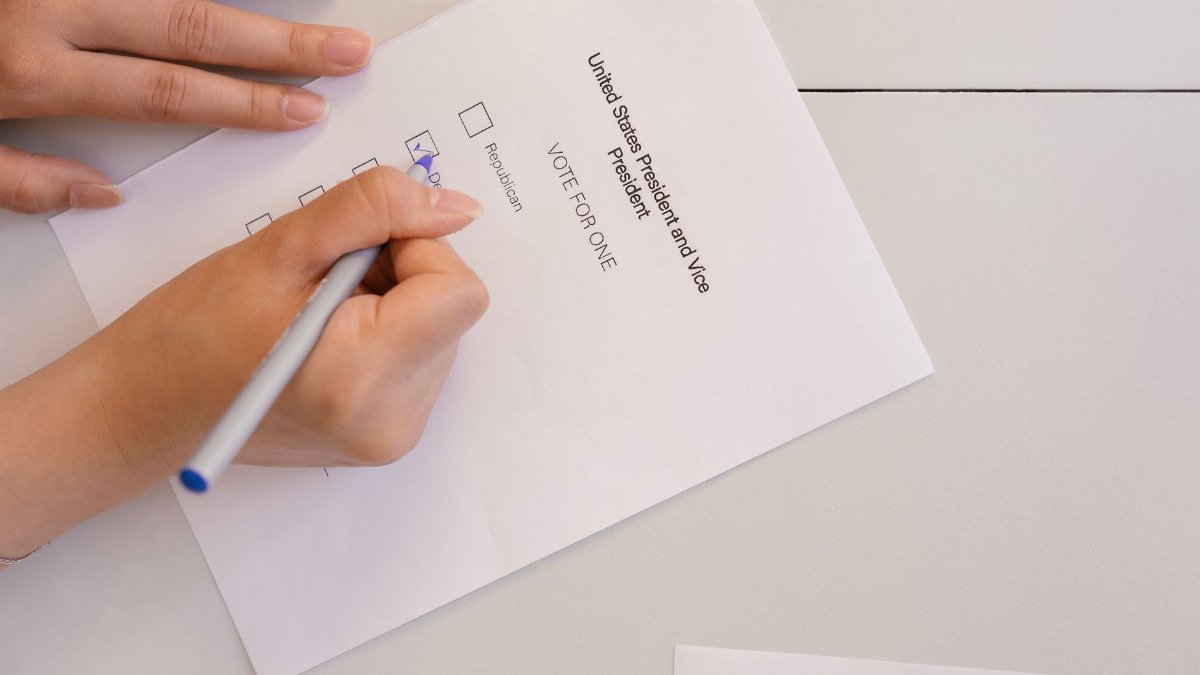
Voters considering Massachusetts Question 3 are not being asked to endorse a theory that has never been tried. They are being asked to import a design with a fifteen year record in one state and a slightly longer record in another. That record is mixed in the precise sense of the word. It offers more November competition inside one party areas, and less November representation for the party that finishes third or worse in the primary. It offers every voter a single primary ballot, and it offers minor parties a much harder road to the general election. It offers a hope of broader campaigns, without strong proof that governing grew gentler.
Those are not reasons to sneer at the proposal, and they are not reasons to treat it as a technical fix with no losers. Ballot design is a choice about whose vote is decisive, and about whether a party is a private association or a public utility. California and Washington show that a top two primary can become ordinary civic furniture. They also show what that furniture costs. Massachusetts Question 3 is a decision to accept those costs, or to keep a system in which parties still nominate and November still tries, however imperfectly, to put more than one party on the ballot.