
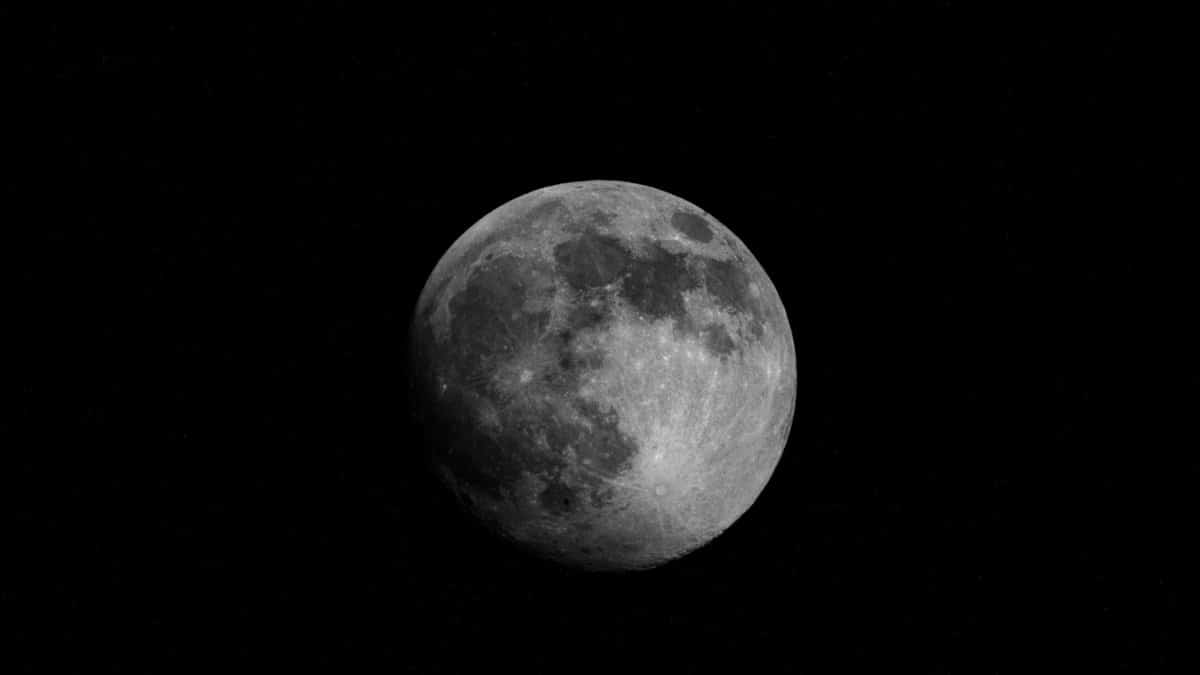
On a clear night the Moon looks finished, a coin pressed flat by distance and habit. The cameras that circle it tell a less settled story. In recent years NASA’s Lunar Reconnaissance Orbiter has been catching scars that were not on older maps, pits young enough that engineers can still argue about what struck the surface and when. Set beside those fresh wounds, the McGetchin lunar crater is a reminder that every named bowl up there began as an unplanned collision and only later acquired a biography, a coordinate, and a place in the human record.
What the cameras keep finding

The Moon does not heal the way Earth does. There is no rain to soften rims, no wind to fill bowls with dust in a season, no vegetation to hide a wound. A new impact stays sharp. That is why a spacecraft in a low polar orbit can do what no telescope on a backyard deck can do: compare yesterday’s map with today’s and notice a change the size of a house.
NASA’s Lunar Reconnaissance Orbiter, flying since 2009, has become the patient archivist of that change. Its narrow angle camera resolves features a few feet across. Mission scientists lay new images over older ones and look for bright halos, dark streaks, and crisp rims that were absent in earlier passes. Most of the additions are small. A few are large enough to force a rewrite of assumptions about how often sizable objects still hit the inner solar system, and about what human made hardware can do when it arrives without a landing plan.
The public usually meets this work through a single striking picture: a bright splash on gray ground, a before and after pair, a caption that says the Moon is not a museum. The scientific value sits in the repeat visits. A crater photographed weeks after it forms, then again months later, shows how quickly ejecta darkens and how micrometeorites sand the rim. Those measurements feed models used by anyone planning to live or work on the surface.
A March morning that left two pits

One of the clearest recent cases arrived on March 4, 2022, when a spent rocket body struck the far side. Observers on Earth had tracked the object for weeks. They could not agree, in public at least, on which nation’s hardware it was. What they could agree on was the date and a rough location. When the orbiter swept over the predicted site, the pictures showed not one crater but two, sitting side by side in a way rocket impacts were not expected to produce.
NASA described the result in a note from Goddard Space Flight Center. The western pit and the eastern pit were each on the order of a city bus across, an odd double signature for a single incoming mass. Engineers still debate whether a dense engine on one end and a lighter body on the other, striking nearly together, could excavate twin bowls. The uncertainty is the point. Even a well watched piece of space hardware can surprise the people who build models of impacts. A concise account of the images is on NASA’s site at the agency’s report on the rocket impact site.
That event is not the oldest scar on the Moon and it is not the largest. It is among the best documented. Ground telescopes saw the object coming. An orbiter photographed the result. The chain from prediction to picture is what makes the case useful, more than any superlative about size.
Where a name like McGetchin comes from
Fresh pits do not receive personal names on the day they appear. The International Astronomical Union keeps a slow ledger. Craters are generally named for deceased scientists, explorers, and artists, and only after a feature is established on maps. The McGetchin lunar crater belongs to that older ledger. It honors Thomas R. McGetchin, an American geologist who studied volcanism on Earth and on other worlds and who died in 1979, still in his forties, with a reputation for connecting field observation to planetary questions.
The feature sits on the far side, beyond the face that tides lock toward Earth. You will not find it with binoculars from a suburban lawn. You find it in gazetteers and in image mosaics built from orbiter data. The United States Geological Survey maintains the planetary names database that records such decisions, including lunar craters, at planetarynames.wr.usgs.gov. The entry is bureaucratic on purpose. A name is a handle for papers, maps, and mission planning, not a poem, though the choice of whom to remember is never neutral.
McGetchin’s scientific life was about process: how rock melts, how gas escapes, how a landscape records violence and then quiets. A crater carrying his name is a fitting if accidental monument. Impact excavation is a kind of geology done in a second. The bowl left behind is a sample of depth brought to the surface, which is what field geologists spend careers trying to reach with slower tools.
Why small bowls matter to large plans

It is easy to treat a new pit as a curiosity and a named crater as trivia for quiz nights. Both are instruments. Fresh impacts calibrate how often the surface is sandblasted. That rate tells engineers how much shielding a habitat needs, how long a solar array can sit uncovered, and how quickly tracks and footprints will fade into the background. Older named craters, including the McGetchin lunar crater, anchor the opposite problem: reading a surface that has been collecting scars for billions of years and deciding which layers are ancient and which are recent spray from a neighbor.
Mission designers also care about slopes, boulder fields, and the way ejecta blankets change the bearing strength of soil. A lander that sets down on the fluffy fringe of a young crater may sink differently than one that sets down on a mature plain. The orbiter’s repeated mapping is, in that sense, a safety document. It is also a scientific one. Each new crater is a drill hole nobody had to fund, exposing material from a few yards down and tossing it where cameras and, someday, astronauts can see it.
The argument over what hit, and why it lingers

The 2022 far side impact reopened a awkward conversation about abandoned hardware. Upper stages and defunct craft have been left on long, looping paths for decades. Most burn up at Earth or drift in orbits that mission planners consider safe enough. A few have Moon crossing trajectories that nobody intended as impact experiments. When one of them arrives, the scientific return is real and the stewardship question is real too.
Nations and companies now speak more carefully about disposal. A stage that can be sent into the Sun, or into a graveyard orbit, or onto the Moon on purpose with a declared site, is preferable to an object that wanders until gravity decides. The double crater did not settle the legal debate. It did make the debate photographic. A picture is harder to file away than a tracking number.
There is a second argument, quieter and more technical, about impact physics. Models that assumed a rocket body would behave like a single loose mass did not predict twin pits so cleanly. Updating those models matters for planetary defense as well as for lunar geology. If we misread how an elongated, partly dense object couples its energy into the ground, we misread craters on other airless worlds too.
Reading age in a landscape without weather
Geologists on Earth use soil, plants, and erosion to guess how long a hillside has stood. On the Moon the clues are optical and statistical. Young craters are bright because they have thrown up fresh mineral grains that have not yet been darkened by solar wind and tiny impacts. Their rays can stretch for miles. Older craters lose that brightness, collect smaller pits on their floors, and slump at the rim.
The McGetchin lunar crater, as a named and mapped feature rather than a headline, sits in that longer timeline. It is not a scar from the last few seasons of spaceflight. It is part of the far side’s accumulated memory, a bowl whose walls have been gardened by ages of smaller strikes. Placing it next to a pit from 2022 is a lesson in scale. Human record keeping covers a blink. The surface covers a history that predates our species by a margin that is hard to feel and easy to flatten into a slogan.
Scientists resist that flattening. They count craters in a given patch, compare the count with samples brought home by Apollo and by later robotic returns, and build a chronology that is always being revised. A single new image can shift a local age estimate. It rarely overturns the whole clock. The discipline is cumulative, which is why an orbiter that simply keeps looking is more valuable than a one time sensation.
What crews may walk among

Artemis planning and the parallel ambitions of other nations assume people will return to the lunar surface and stay longer than the Apollo crews did. They will not land beside every interesting crater. They will land where light, temperature, and communication allow, then travel. Along those traverses they will pass both anonymous fresh pits and features that already have names in the gazetteer.
A named crater is a waypoint in a way a nameless one is not. Radio calls, traverse maps, and public briefings all prefer a word to a string of latitude and longitude. That practical need is one reason the naming process, slow as it is, still matters. It is also why scientists argue, sometimes sharply, about whose names are chosen and whose are left in footnotes. The Moon is becoming a workplace. Workplaces inherit the politics of memory.
None of that requires mysticism. It does require attention. A crew that treats every bowl as scenery will miss the geology. A crew that treats every bowl as a monument will miss the hazard. The useful habit is the one field scientists already have: look twice, then look at the map, then look again.
How the rest of us are invited to look

I keep a small pair of binoculars by the back door, and I am honest about their limits. They show the familiar face, the maria, the bright ray systems, the terminator where shadows make mountains obvious. They do not show the far side, and they do not show a crater carved in 2022. The invitation from NASA’s pictures is different. It is an invitation to accept that the world we share includes places we will not see directly, documented by public instruments and argued over in public notes.
That is a civic fact as much as a scientific one. The orbiter’s images are released. The names database is public. The disagreements about a wandering rocket body played out in open tracking circles before they played out in newspapers. A reader does not need a degree to follow the chain, only patience with measurements that refuse to become a single dramatic number.
There is wonder in that restraint. The Moon remains the brightest thing in the night for most people on Earth, a shared ceiling that does not ask what you believe before it rises. Learning that its far side holds both a fresh double pit and the McGetchin lunar crater does not diminish the view from a sidewalk. It thickens it. The coin is not finished. It is a ledger, and we are finally patient enough to read new lines as they are written.
A record that will not stay still

More impacts will come. Some will be natural, bits of asteroid or comet too small to make news on Earth and large enough to star in an orbiter image. Some may again be hardware, if disposal practices lag behind launch rates. Each one will be folded into counts, models, and, much later, perhaps a name. The McGetchin lunar crater will remain what it is: a far side feature tied to a geologist who tried to read volcanic landscapes with care. The new pits will remain what they are: evidence that the solar system is still in motion, and that our machines are now part of that motion whether we planned the collision or not.
NASA’s continuing survey is the thread between those facts. It does not need a superlative to justify itself. A spacecraft that returns to the same ground, season after season, and notices when the ground has changed, is doing the oldest work of exploration with the newest tools. The rest of us can follow at the speed of a caption, a map, and a clear night, which is slower, and enough.