
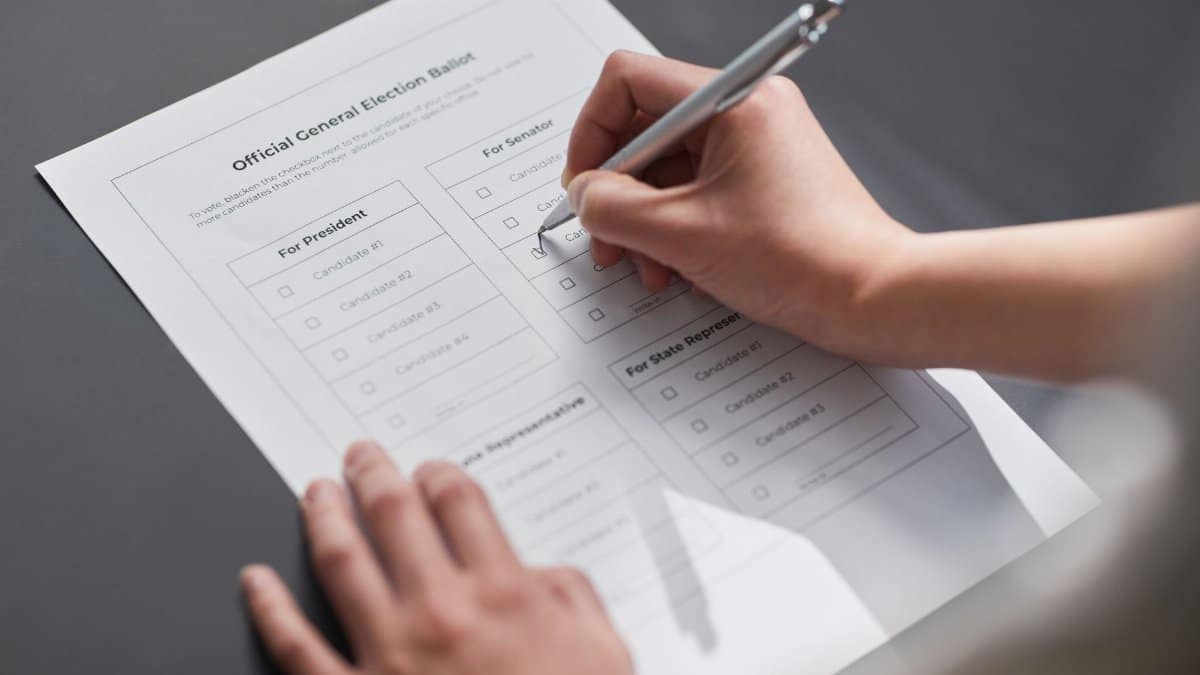
By Friday morning, the quiet arithmetic of a Minnesota autumn had become a political fact. Nearly 729,000 people had already cast ballots, a figure that surpassed the state’s previous midterm mark and turned Minnesota early voting into the first story of this election rather than a footnote. County offices that once treated October as a warm up were instead managing a surge that looked, in raw volume, like the closing days of a presidential year. The record arrived with a second, less comfortable fact: state and local officials were also preparing for the possibility that federal authorities would challenge procedures, or voters, when Election Day finally arrives.
A benchmark that fell before the final weekend
The Star Tribune reported the Friday morning total, and the number deserves to be read slowly. Nearly 729,000 ballots already accepted is not a rumor from a campaign war room. It is a statewide tally built from county reports, absentee returns, and in person votes cast at designated locations before the traditional Tuesday. In the last midterm, Minnesota also saw heavy advance participation, but this cycle cleared that bar with days still left on the calendar.
Volume of that kind changes the texture of a campaign. Candidates can still chase undecided voters, yet a large share of the electorate has already locked in a choice. Advertising that lands next week will miss them. So will any late scandal, any fresh endorsement, any argument that depends on a final debate. The election is not over. It is, for hundreds of thousands of people, already personal history.
That is the plain meaning of a record. It is also why clerks stop talking about turnout as a single night and start talking about a season.
How the early period actually works

Minnesota early voting is not one door. Residents may request an absentee ballot and return it by mail, place it in a drop box where local rules allow, or deliver it to an election office. Others go to a polling place that opens before Election Day and vote in person, often with the same ballot they would see on Tuesday. The secretary of state publishes the calendar, the deadlines, and the rules that counties must follow. Cities and townships staff the sites. The state sets the frame. The counties do the counting.
Deadlines are unforgiving in a way that voters sometimes discover too late. A mailed ballot has to be received, not merely postmarked, by the hour the law names. An in person early vote has to happen while the site is open. A registration question has to be resolved before a ballot can be accepted. None of this is glamorous. It is the reason a record can be both large and orderly. The system was built to absorb advance traffic, and this fall it is being asked to absorb more than it has in any prior midterm.
Observers who want a single national comparison will be disappointed. States do not run identical calendars. Some open early sites for weeks. Some lean almost entirely on mail. Minnesota sits in the middle, with a culture of high participation and a statute book that treats advance voting as ordinary civic practice rather than a special exception.
Why the lines formed in October
Ask people in a suburban lobby or a rural courthouse hallway and the answers rhyme without matching. Some want to avoid a long Tuesday. Some travel for work. Some care for a parent and cannot promise a free hour next week. Some simply do not trust that a mailed form will arrive if they wait. A smaller group says, more bluntly, that they want their ballot in the box before anyone can argue about whether they were allowed to cast it.
That last motive is new in its intensity, even if early voting itself is not. Minnesotans have used absentee and advance options for years, including in quieter local races. What feels different is the mix of convenience and precaution. Convenience explains a busy nurse who votes on a day off. Precaution explains the neighbor who says she would rather stand in an October line than wonder, on Tuesday night, whether a rule changed while she was at work.
Campaigns notice the pattern and adjust. Field programs that once peaked on Election Day now peak whenever a county opens its doors. The voter who has already returned a ballot drops off the call list. The voter who has requested one but not returned it becomes the only person worth a knock. In that sense the record is also a map of where persuasion has already ended.
The federal question hanging over a state process

The second half of the story is less numerical and more unsettled. Officials in Minnesota have spent recent weeks preparing for possible federal challenges on or around Election Day, a prospect that sits awkwardly beside a state that has long prided itself on competent election administration. The concern is not abstract. Lawyers, clerks, and party observers are gaming out what happens if a federal agency, a federal court filing, or a public statement from Washington seeks to slow, question, or reframe voting that state law already treats as valid.
Interference, in this setting, does not require a smashed machine or a stolen truck of ballots. It can look like a late claim that a routine procedure is illegal. It can look like agents arriving at a site without a clear state role. It can look like a public warning that chills people who have not yet voted, even if the warning rests on a theory courts have not accepted. Local officials cannot control the national news cycle. They can control whether their own instructions stay consistent from one county line to the next.
That distinction matters. A voter in Duluth and a voter in Mankato should meet the same statutory rules, even if they meet different buildings and different hours. When federal attention arrives unevenly, the risk is not only a legal fight. It is a story in which two neighbors conclude that the rules depended on who was watching.
What clerks can prepare, and what they cannot

Preparation, for the people who actually run elections, is mostly paper, training, and phone trees. Counties review chain of custody for ballots already accepted. They brief poll workers on who may be inside a voting location and who must remain outside. They confirm how to respond if someone demands a list, a machine, or a pause that state law does not authorize. They talk to county attorneys before the crunch, not during it.
None of that prep can repeal a federal statute or silence a cabinet secretary. It can, however, keep a site from improvising. Improvisation is where errors breed, and errors are what later get described, fairly or not, as fraud. The most useful sentence a lead poll worker can memorize is often the dullest: here is the rule, here is the person who interprets it, here is the log where we write down what happened.
Minnesota early voting adds a wrinkle to that drill. Hundreds of thousands of ballots are already in the pipeline. A challenge aimed only at Tuesday sites would miss them. A challenge aimed at absentee acceptance would reach backward into decisions counties believe they have already completed under state law. That is why some officials are less worried about a single dramatic hour on Tuesday than about a theory that tries to unwind the weeks before it.
Records, trust, and the temptation to overread
A record is not a verdict on which party is winning. Early voters are not a perfect sample of the eventual electorate. In some years they lean one way. In others the Election Day vote leans the other way and narrows, or erases, the gap. Anyone who treats 729,000 accepted ballots as a forecast is guessing with a confident voice. The honest reading is narrower: participation before Tuesday is historically high, and the administrative load is historically heavy for a midterm.
Trust is a separate question from volume. High turnout can coexist with low confidence, just as a smooth count can coexist with a loud argument about whether the count should count. Minnesota has usually posted strong participation and relatively few close calls that turn on a handful of disputed ballots. That history is an asset only if people still believe the next count will be as dull as the last ones. Dull, in election administration, is a compliment.
I have watched enough public meetings to know that dullness does not trend. A clerk explaining ballot envelopes will lose the room to anyone promising a hidden plot. The remedy is not a better slogan. It is a public record that can be checked, a process a skeptical neighbor can observe within the law, and a refusal to treat every procedural question as proof of a crime.
The voters who still have not gone
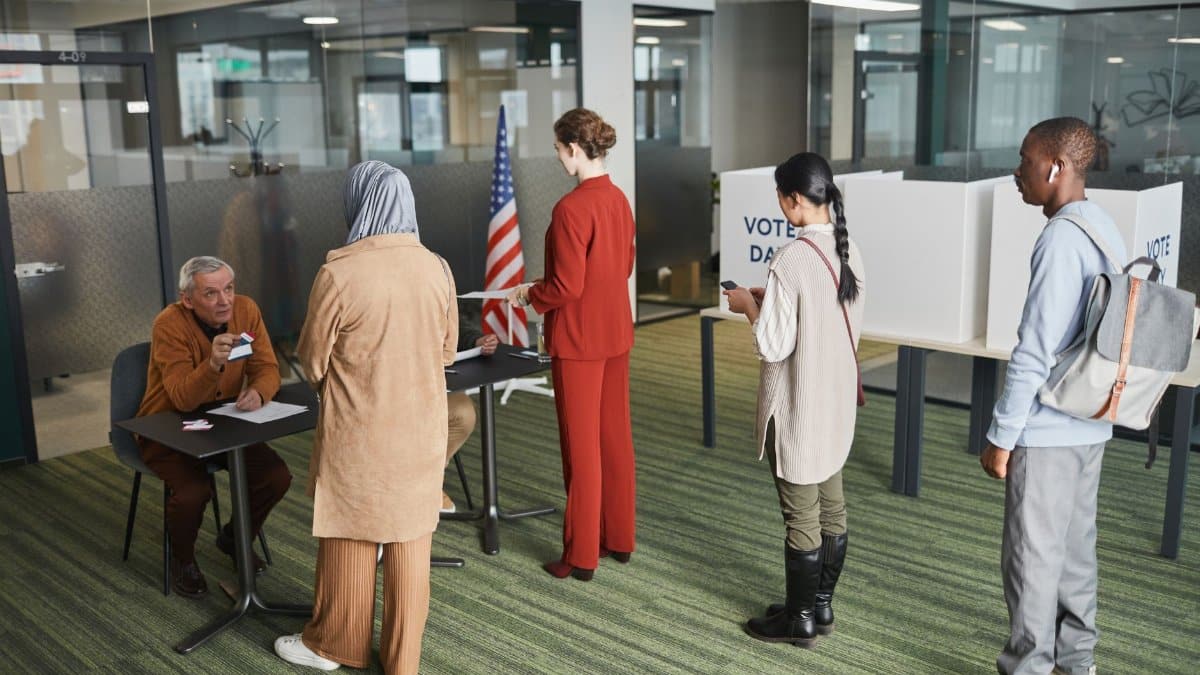
Even with the record, a large share of the electorate has not voted. Some are undecided. Some dislike every option on the ballot. Some intend to vote on Election Day because that is how their parents did it, and habit is a political fact as real as any statute. Campaigns will spend the last weekend on that remainder, because the remainder still decides margins in legislative districts and, in a close year, in statewide offices.
For those voters, the early surge is both reassurance and warning. Reassurance, because the system has already handled a midterm sized pile of ballots without waiting for Tuesday. Warning, because the spotlight may be brighter at the sites that remain open, and because any federal challenge is more likely to be staged where cameras can still find a line. A person who waits should not have to become an extra in someone else’s legal theory. The law, if it is working, treats the Tuesday voter and the October voter as the same citizen with the same ballot weight.
That equality is the point of the calendar Minnesota publishes. Early is an option. It is not a separate electorate with a separate legitimacy. When commentators talk as if ballots cast in October are suspicious by nature, they are arguing with the statute, not with a loophole.
What the next week will test
The days between a Friday record and a Tuesday close are when small failures become stories. A drop box that fills faster than a county planned. A mail delay that leaves a voter unsure whether a ballot arrived. A social media post that misstates a deadline by an hour and races across group chats before anyone corrects it. None of those problems requires a conspiracy. All of them can be used as if they proved one.
Officials preparing for federal friction are, in effect, preparing for two elections at once: the one in the statute, and the one in the argument about the statute. They can win the first by accepting lawful ballots, rejecting unlawful ones, and publishing results that add up. They cannot fully win the second, because the second does not end when the canvass does. It lives in hearings, in fundraising emails, and in the memory of people who experienced a polling place as a place of doubt.
Still, the early numbers offer a kind of evidence that speeches cannot. Minnesota early voting has already carried more midterm ballots than the old record, under rules that were public before the first envelope was opened. If a challenge comes, it will meet a paper trail, a training record, and a state that has spent years treating advance participation as normal. That will not settle every fear. It should settle the question of whether this surge appeared from nowhere. It did not. It appeared from a calendar, a habit, and a public that decided not to wait.