
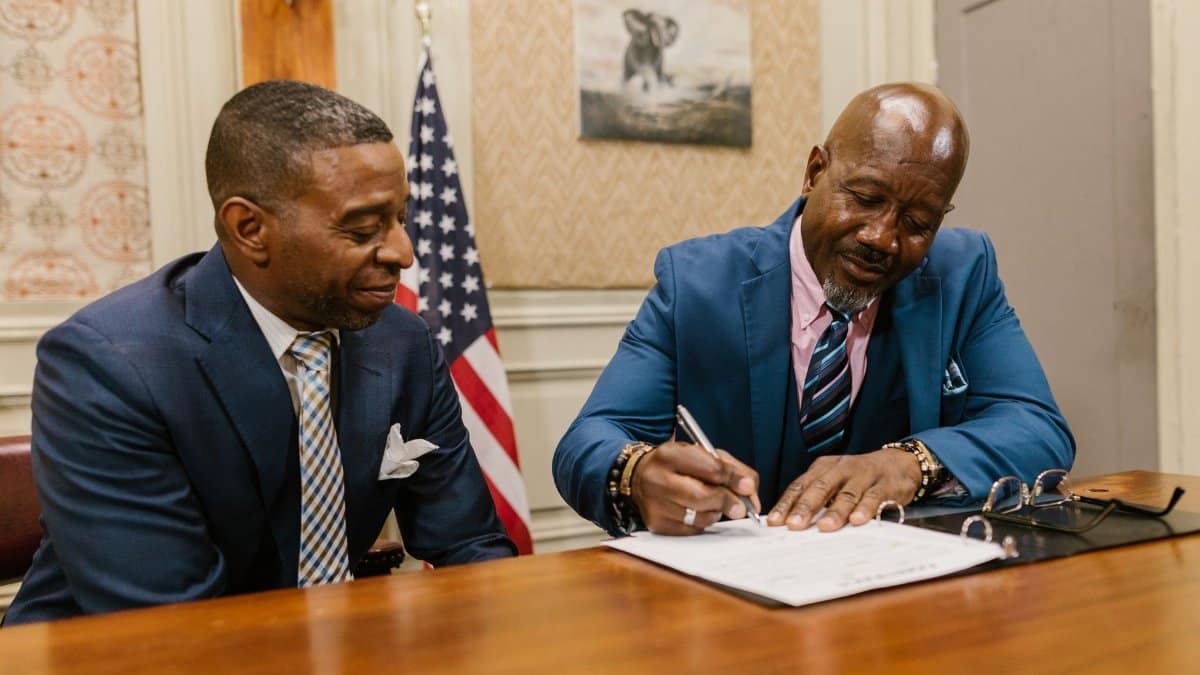
On a weekday morning in City Hall, the arguments sounded familiar and the stakes did not feel abstract. A landlord spoke of insurance bills that keep rising. A tenant spoke of a notice taped to a door and of boxes that might have to be packed before the month ends. Between them sat an ordinance that has become a test of how far Chicago will go to shield people who rent. The Johnson renters rights bill, trimmed after months of negotiation, cleared the Housing Committee and now waits for the full City Council.
A vote that moves the fight from committee to the floor

Committee passage is not law. It is a signal that a mayor who ran on housing justice has kept a tenant measure alive long enough to force a public reckoning. Aldermen who might have buried the proposal in a subcommittee instead sent a narrower version forward. That choice matters in a city where housing fights often die in procedural fog rather than on a recorded vote.
For tenants, the advance is a rare moment when City Hall treats a lease as something more than a private contract. For owners of small buildings, it is a warning that rules written for corporate landlords may land on a two flat owned by a retired teacher. Both readings can be true at once. The committee did not settle that tension. It scheduled it.
What the mayor is asking the council to accept

Mayor Brandon Johnson has framed tenant protection as a matter of stability, not charity. The Johnson renters rights bill, in the form that left committee, is described by City Hall allies as a scaled back tenant ordinance. The original ambition was broader. What remains is still meant to slow sudden displacement, give renters clearer notice, and limit some of the practices that turn a missed paycheck into an eviction filing.
The precise text will matter more than the slogan. Ordinances live in definitions. Who counts as a covered landlord. How many days of notice are enough. Whether a building with a handful of units is treated like a downtown tower. Those lines decide whether the law reaches the corners of the city where most renters actually live, or only the cases that make for a clean press release.
Why a bolder draft became a narrower one

Progressive mayors often arrive with a list and leave with a compromise. Johnson is not the first. Tenant groups wanted stronger limits on rent hikes and faster penalties for owners who ignore repair orders. Real estate groups warned that strict rules would push owners to sell, convert, or simply stop renting. The committee version reflects that collision. It is smaller than the rally version and larger than what opponents wanted, which is to say it satisfies almost no one completely.
Scaling back is not the same as surrender. A law that can pass is sometimes more useful than a manifesto that cannot. It is also true that a thin ordinance can become a ceiling. Once the council votes, advocates may find it harder to reopen the same questions next year. The mayor is betting that a foothold is worth the concessions. His critics on the left are not sure the foothold is high enough to matter.
The people who live one notice from the street

Chicago renters do not experience housing policy as a white paper. They experience it as a choice between rent and a car repair, or between a complaint about mold and the fear of a non renewal. In neighborhoods on the South Side and the West Side, and in pockets of the North Side where wages never caught the rent, a lease is often the only barrier between a family and a couch, a shelter, or a long commute from a cheaper suburb.
Supporters of the bill argue that the city already intervenes when a building is unsafe, and that it should intervene when a household is pushed out for reasons that have little to do with unpaid rent or serious lease violations. They point to children who change schools midyear, to elders who lose doctors along with apartments, and to workers who cannot keep a job if they cannot keep an address. Those costs do not show up on a landlord ledger. They show up in classrooms, clinics, and police calls.
Owners who say the rules will shrink the supply

The other side of the table is not a cartoon. Many of the people who rent out housing in Chicago own one building, sometimes the building they live in. They talk about property taxes, insurance, unpaid rent during hard months, and the time it takes to remove a tenant who has stopped paying and will not leave. They fear that new procedure will add months and legal fees to an already slow system.
Their argument is economic as much as ideological. If the return on a small rental falls, some owners will exit. Fewer rentals can mean higher rents for the units that remain, which would punish the very households the ordinance hopes to protect. Whether that fear is a forecast or a threat depends on whom you ask. The council will have to decide without a clean experiment. Cities that tightened tenant rules did not all see the same result, and Chicago is not a copy of any of them.
A progressive mayor and a council that counts votes

Johnson governs with a base that expects movement on housing and a council that is more fragmented than his campaign rhetoric sometimes allowed. Committee allies can carry a bill out of one room and still lose it on the floor if ward politics shift. Aldermen hear from building owners who vote, donate, and show up at Saturday meetings. They also hear from tenants who pack hearings when the issue is eviction and then disappear when the issue is a budget line.
The Johnson renters rights bill therefore doubles as a leadership test. Can the mayor hold a coalition after he has already given ground. Can he persuade members who are not part of his inner circle that a tenant ordinance will not become a campaign attack in the next cycle. Chicago mayors have learned that housing bills are easy to praise in principle and hard to own in detail.
What passage would change, and what it would not
Even a successful vote would not freeze rents across the city or build the apartments Chicago still lacks. A rights ordinance and a supply strategy are different tools. One tries to make the existing rental market less brutal. The other tries to add homes so that brutality has less room to operate. Treating the first as a substitute for the second is how cities talk themselves into stalemate.
If the council adopts the committee version, renters may gain time, information, and a clearer path to challenge certain removals. Owners may gain a more predictable set of duties than a patchwork of proposals that keep returning every spring. Neither group will get certainty about the market. Interest rates, employment, and the condition of older buildings will still set the rent as much as any ordinance. Law can change the terms of a conflict. It cannot repeal scarcity.
The moral question hiding inside a lease
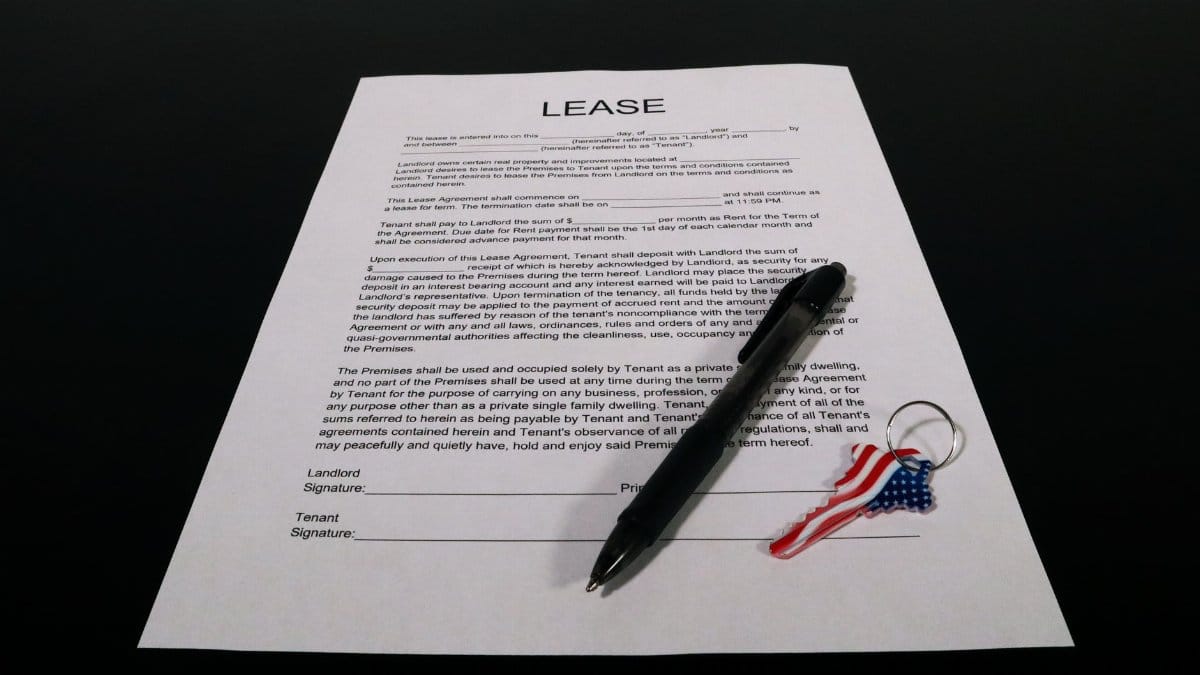
Housing debates in this city are often filed under politics, and they belong there. They also touch something older than a committee calendar. A home is where people pray, argue, recover, and raise children. To lose it without a fair process is not only an economic event. It is a wound to dignity. Religious congregations on the South and West Sides have said this for years, sometimes more plainly than City Hall. Shelter is not a luxury good in the moral vocabulary most Chicagoans still recognize, even when they disagree about statutes.
That does not settle the bill. A moral claim can be misused to ignore the person who spent decades paying a mortgage on a six flat. Justice that sees only the tenant, or only the owner, is incomplete. The harder spiritual work, if the word fits a council chamber, is to hold both people in view without pretending their interests are the same.
Questions the public still cannot answer

Readers trying to judge the ordinance will want answers the committee hearing did not fully supply. How many units are covered. What happens to month to month tenancies. How the city will enforce new duties when inspection backlogs already frustrate both tenants and owners. Whether legal aid will be funded at a level that makes paper rights real for people who cannot hire a lawyer. A right that exists only for those who can afford to assert it is a press conference, not a protection.
Those gaps are not a reason to ignore the vote. They are a reason to read the text when it is posted and to ask aldermen which provisions they will defend on the floor. Vague sympathy for renters is common. Specific commitments are rarer. The Johnson renters rights bill will be judged on the second, not the first.
The politics of a scaled back promise

Compromise has a reputation problem in Chicago. To some, any reduction of the original draft proves that real estate still writes the ending. To others, refusal to compromise proves that activists would rather lose cleanly than govern. Both habits have produced years of speeches and too few stable homes. The committee outcome suggests a third path, uneasy and unfinished. The mayor accepted a smaller bill in exchange for a chance at a larger audience.
Whether that trade was wise depends on what happens next. If the floor vote restores teeth that committee leaders removed, advocates will claim the scaling back was tactical. If the floor vote weakens the bill further, or if enforcement is left unfunded, the advance will look like motion without protection. Political memory in this city is long. Tenants will remember which version of the promise survived contact with fifty votes.
How other cities shadow this debate

Chicago rarely copies another city cleanly, but it watches them. Places that adopted just cause rules report fewer abrupt non renewals and more litigation. Places that layered fee caps and notice rules on top of slow courts report frustration from small owners. None of those experiences is a script. Chicago has an older housing stock, a larger share of two flats and three flats, and a politics of race and ward loyalty that does not map onto coastal cities with different ownership patterns.
The useful lesson is narrower. Tenant law works best when it is legible. If a owner cannot tell, in plain language, what the city requires before ending a tenancy, the ordinance will be ignored or fought in court. If a renter cannot tell what the city will actually do when a ceiling leaks or a lease is cut short, the ordinance will be a rumor. Clarity is not a technical footnote. It is the difference between a right and a hope.
What aldermen will hear before they vote

Between committee and the full council, the lobbying will intensify. Tenant unions will fill galleries and ask members to stop treating displacement as a private misfortune. Neighborhood associations will warn about abandoned buildings if owners walk away. Legal aid groups will ask for funding attached to the duties the ordinance creates. Bankers and insurers, quieter than rally speakers, will remind aldermen that lending on small rentals already feels risky.
Johnson will have to decide how much political capital to spend. A mayor can twist arms for one housing vote or save those arms for the budget, the schools, and the next public safety fight. The Johnson renters rights bill is a chance to show that campaign language about dignity can survive markup. It is also a chance to discover that language was doing more work than the votes ever would.
A city that keeps postponing the harder build

Even a strong tenant ordinance leaves the larger shortage untouched. Chicago needs more homes that ordinary wages can reach, in neighborhoods that already have transit, schools, and jobs, and in neighborhoods that have been starved of investment. Zoning fights, construction costs, and neighborhood resistance have stalled that work for decades. Rights without homes can stabilize people who already have a lease. They cannot house the family on a waiting list.
That is not an argument for doing nothing about evictions. It is an argument against pretending this bill is the whole housing agenda. A serious city would pair fairer rules for current renters with a credible plan to add supply, repair older buildings, and keep small owners from treating every new duty as a reason to sell to an absentee buyer. The committee did not take up that whole agenda. The mayor should not pretend that it did.
What readers should watch when the council meets

When the ordinance reaches the floor, watch the amendments more than the speeches. Watch whether notice periods shrink in a late deal. Watch whether small buildings are carved out so broadly that the law misses most of the rental stock. Watch whether enforcement money appears in the same breath as the new duties, or is promised for a budget season that never quite arrives. And watch which members explain their votes in the language of their own wards rather than in the language of a press shop.
The Housing Committee has done what committees do. It has moved a contested idea from rumor to record. The Johnson renters rights bill is no longer only a campaign theme. It is a text with a path to a final vote, carrying both the hopes of people who rent and the objections of people who provide the rooms. Chicago will learn soon whether its council can hold that contradiction without looking away.