
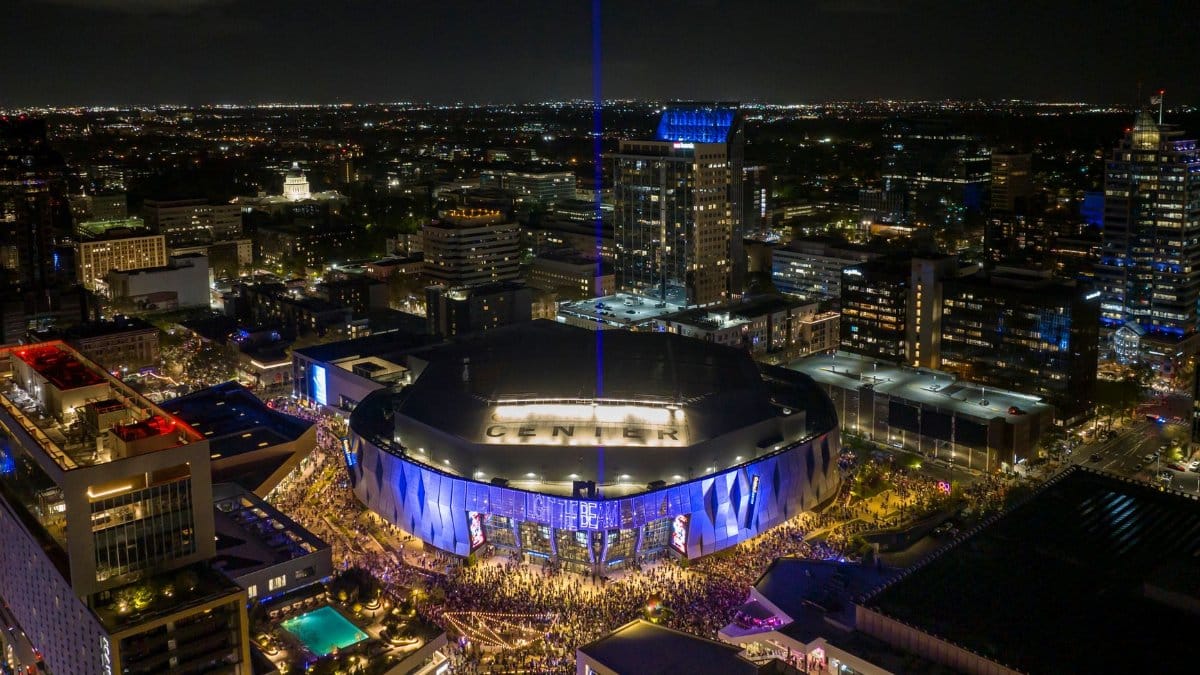
On a quiet weekday in Dallas, when the arena feels more like an office than a stage, a familiar name still sits near the top of a short list. Dwight Powell Mavericks is not a marketing phrase. It is a working relationship that has lasted through rebuilds, injuries, star arrivals, and star exits. By Monday the club must decide whether that relationship continues under leadership that did not build it. For a player who has become part of the memory of the building, the answer is about more than one roster line.
A name that outlasted the eras around it
Powell arrived in Dallas as a young big man still learning how to occupy space without disappearing in it. The franchise around him kept changing. Dirk Nowitzki closed a career. Luka Doncic became the center of gravity. Coaches came and went. Front offices redrew the plan. Through all of that, Powell remained, not as the face of the team but as a constant in the locker room and on the practice floor. Longevity in the NBA is rarely romantic. It is usually a negotiation between usefulness and cost. Powell has won that negotiation often enough to become the longest tenured Maverick of the current era.
That status carries a strange weight. Fans remember the dunks, the charges, and the nights when a role player looked briefly like the story. Teammates remember something less visible: who speaks after a loss, who stays late, who treats a blowout the same as a playoff minute. A deadline does not measure those habits. It measures whether they still fit a roster that is trying to win now.
What the Monday clock actually measures

Roster deadlines are blunt instruments. They force a club to turn a relationship into a yes or a no before the league calendar moves on. Reporting by The Dallas Morning News has framed this week as a crossroads for Powell, with new decision makers weighing a veteran whose contract and role no longer sit in the automatic column. The public will see a transaction or the absence of one. Inside the building, the choice is a stack of questions about minutes, money, health, and the shape of the bench.
Nothing about that process is theatrical. A general manager does not owe the crowd a soliloquy. Still, when the player in question has spent a decade in one city, silence reads as a verdict. Dallas has watched enough farewells to know the difference between a mutual ending and a cut made in a conference room.
The body that kept coming back

Any honest account of Powell has to pass through injury. The torn Achilles that ended his 2020 season could have ended the career that Dallas knew. Big men do not always return to the same spring, the same timing on rolls to the rim, the same willingness to meet a driver at the restricted area. Powell did return. He was not the same athlete in every measurable way, and nobody serious pretended otherwise. What returned with him was a professional standard: available, prepared, and willing to accept a smaller slice of the game.
That comeback is part of why the Dwight Powell Mavericks story still resonates beyond box scores. Supporters do not need advanced data to understand a player who rehabbed in private and then stood in a lineup again. Critics do not need romance to ask whether gratitude is a roster strategy. Both views can be true in the same week. A franchise can honor a recovery and still decide that the minutes belong to someone else.
A role that shrank without vanishing

Powell was never asked to be the offense. His value lived in screens, dives, offensive rebounds, and the occasional finish that punished a defense for ignoring him. On the other end he offered size, effort, and a veteran sense of where help should arrive. In a league that now hunts space and switchable defenders, that profile is narrower than it once was. Younger bigs arrive with more range or more length. Stars want partners who do not clog the paint unless the dive is perfectly timed.
Narrow is not the same as useless. Contenders still need players who can enter a game without demanding a new system. Powell has spent years learning Dallas actions, Dallas terminology, and Dallas personalities. Institutional knowledge is not a skill you can draft in June. It is also not a skill you can pay for if the court minutes no longer justify the salary. That tension is the entire deadline.
New voices in an old building

Front offices inherit history they did not write. The people now responsible for the Mavericks did not draft Powell, did not sit with him through every rehab session, and do not owe him a sentimental extension simply because the city knows his name. Their job is colder: build a rotation that can survive a playoff series. Loyalty is a real value in a locker room. It is a poor substitute for a mismatch that gets hunted for four quarters.
There is another risk, quieter and just as real. A new regime that treats every inherited veteran as dead weight teaches the rest of the roster a lesson it may not intend. Players notice who gets protected and who gets discarded the moment the spreadsheet turns. Culture is not a slogan on a wall. It is the pattern of decisions that veterans describe to free agents when the microphones are off. The Dwight Powell Mavericks question is therefore also a question about what this leadership wants the room to believe.
Money, spots, and the players waiting behind him

Every retained veteran occupies a spot someone else might use. Dallas, like every club near the luxury line or the playoff cut, has to decide which dollars are sacred and which are flexible. A guaranteed deal for a backup center can block a two way experiment, a buyout addition, or a younger player who needs real games rather than summer league tape. Those alternatives are not theoretical. They are the daily work of a basketball operations staff.
Powell’s camp has its own math. A player at this stage can accept a reduced role, seek a situation with clearer minutes, or wait to see whether familiarity outweighs uncertainty. None of those paths is a failure. The league has trained fans to treat every departure as rejection. Often it is simply two calendars that no longer match. A deadline makes the mismatch visible. It does not invent it.
What he still gives a team that wants to win

Strip away nostalgia and a few concrete offerings remain. Powell sets screens with intent. He runs the floor well enough to punish a lazy transition defense. He does not hunt shots that stall an offense built for a primary creator. He has played in meaningful games and does not require a coach to explain what April feels like. For a young big still learning how to be physical without fouling, a veteran teammate can be a daily correction that no film session fully replaces.
Those offerings have a shelf life. If the screen is a half step late, if the vertical pop is gone, if opponents ignore him without consequence, the teaching value does not pay the possession. Coaches know this faster than columns do. The fair question is not whether Powell once mattered. It is whether, on the nights that decide a season, he still changes a possession more often than he costs one.
The city that learned his name the slow way

Dallas does not anoint role players quickly. The city spent years watching Nowitzki turn humility into a civic trait, and it learned to notice the players who stayed in that register. Powell fit. He was not loud. He was Canadian, Stanford trained, and conspicuously durable in his public manner even when his body was not. Kids in Mavericks gear knew him as the guy who smiled on the baseline and then threw his body into a play that would not make a poster.
That kind of recognition is easy to mock from outside and hard to fake from inside. It does not bind a general manager. It does explain why a roster note about a backup center can feel, to some readers, like a small ending. Sports cities collect these endings. They are how a franchise stays human while the standings stay numerical.
Injury risk and the honesty required now

Any decision that ignores Powell’s medical history would be careless. Achilles repairs change careers even when the player returns to the floor. Load management is an ugly phrase, but the underlying problem is plain: how many hard minutes can this body absorb in a compressed schedule, and what happens if it cannot. A team that keeps him must have a plan that does not pretend he is 24. A team that moves on must not dress that medical reality up as a character judgment.
Powell has earned plain speech. He has been available when many assumed he would not be. He has also reached the age and the injury file where availability is a forecast, not a promise. Mature organizations say that out loud, to the player first and to the public only as much as the transaction requires.
Signals the locker room will read

Whatever Dallas chooses, the locker room will translate it. If Powell stays, younger players may hear that tenure and professionalism still buy a seat, provided the skill remains real. If he goes, they may hear that the window is narrow and that no one is kept for memory alone. Both messages can be healthy. The unhealthy version is a muddled one: a player retained without a role, or cut with a story that does not match the film.
Veterans talk. They tell agents which buildings tell the truth. In that sense the Dwight Powell Mavericks decision will travel farther than one transaction wire. It will sit inside the next recruitment pitch, the next exit interview, the next quiet conversation after practice about whether this place is worth the bruises.
A farewell that does not need a speech
Not every career chapter ends with a video tribute. Some end with a cleared locker and a short statement that thanks a city without pretending the fit is still perfect. Powell has given Dallas a decade of ordinary excellence, which is rarer than the highlight that loops for a weekend. If Monday brings a separation, the decent version is clean, prompt, and free of invented grievance. If it brings a return, the decent version is a role with a real job description, not a ceremonial jersey.
Either outcome can respect the work. What would cheapen it is delay dressed up as deliberation, or sentiment used as a substitute for a plan. The player has already shown what he is. The franchise now has to show what it is becoming.
The choice underneath the transaction

By the time the deadline passes, the basketball public will reduce the story to a line: kept or not kept. That reduction is inevitable and incomplete. Under it sits a harder civic question that sports keep asking in public. What do organizations owe the people who carried them through the unglamorous years, once those people are no longer the most efficient option? The answer is not infinite money. It is also not amnesia.
Dwight Powell Mavericks will read, after Monday, as either a continuing partnership or a closed chapter. The phrase has earned that weight. A player stayed long enough to become a landmark. A franchise now decides whether landmarks still belong on a roster built for the next run. The honest decision, whichever way it falls, will be the one that can be explained without flinching to the man who already knows the film.