
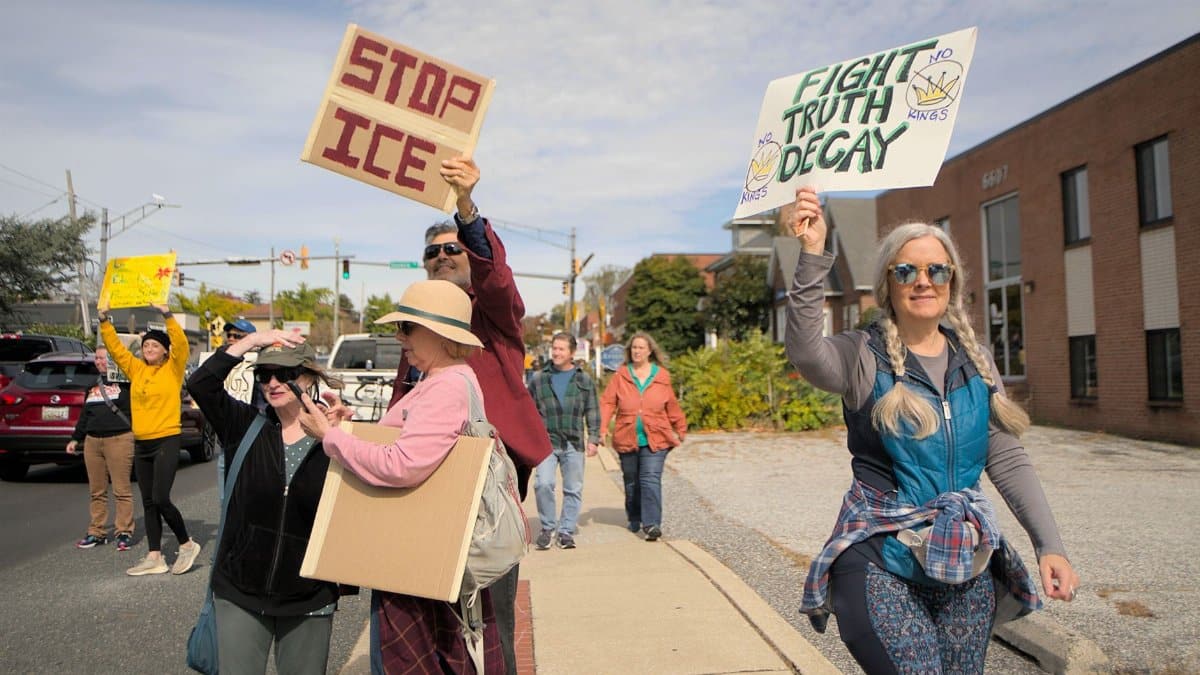
In a crowded courtroom in Annapolis last week, attorneys for the state Republican Party presented arguments that could delay or derail a voter backed effort to reform how legislative districts are drawn. The filing marks the latest chapter in a long running dispute over political maps that many believe favor one party over another. The Maryland redistricting lawsuit challenges an amendment that would create an independent commission to handle future boundary adjustments, a step supporters say would reduce partisan advantage while critics fear it opens the door to new forms of manipulation.
Origins of the Proposed Amendment

The amendment emerged from years of public hearings and advocacy by good government groups seeking to limit the influence of sitting lawmakers in the map drawing process. Proponents collected signatures to place the measure on the ballot, arguing that current methods allow the majority party to protect its seats even when voter preferences shift. Lawmakers in the Democratic controlled legislature had previously resisted similar changes, leading activists to pursue a constitutional route instead.
Core Claims in the Republican Filing

The suit contends that the amendment violates provisions in the state constitution regarding how ballot measures must be presented to voters. Attorneys assert that the language is misleading and fails to disclose potential costs or shifts in authority. They also question whether the signature gathering process met all legal thresholds, pointing to procedural lapses that they say should disqualify the measure from appearing this fall.
Democratic Counterarguments and Strategy
Democratic officials and their allies maintain that the amendment simply codifies principles already embedded in federal court rulings on equal representation. They describe the lawsuit as an attempt to preserve an outdated system that has benefited the minority party in certain districts. Party leaders have signaled they will seek expedited review so that any ruling does not disrupt preparations for the coming election cycle.
Historical Patterns in State Redistricting

Maryland has long drawn scrutiny for maps that concentrate opposition voters into fewer districts, a practice that dates back decades. Past cycles produced boundaries that stretched across rural and suburban areas in ways critics called contorted. Federal courts have occasionally intervened, yet the state has avoided the wholesale court drawn maps seen in some neighboring states after successful challenges.
Possible Effects on Upcoming Elections
If the amendment survives legal review and passes, the first maps produced by the new commission would take effect after the next census. Analysts project modest shifts in several competitive districts now held by Democrats, though the overall balance of power in the legislature would likely remain tilted toward the majority. Republicans hope the change could open pathways to greater influence in suburban counties where population growth has been steady.
Role of Advocacy Organizations

Groups focused on voting access and transparency have lined up on both sides of the dispute. Some have filed friend of the court briefs supporting the amendment as a safeguard against future manipulation, while others caution that independent commissions can still be influenced by wealthy donors or partisan staff. Their involvement highlights how technical questions of map drawing have become rallying points for broader civic engagement.
Broader National Context

Similar lawsuits have appeared in other states where one party has held consistent control of the legislature for multiple cycles. Courts in those jurisdictions have reached differing conclusions on the validity of citizen backed reforms, creating a patchwork of rules that vary sharply from one state to the next. The Maryland redistricting lawsuit adds another data point to this evolving legal landscape.
Next Steps for the Courts

A circuit judge is expected to issue a preliminary ruling within weeks, after which either side could appeal directly to the state supreme court. Observers note that timing will be critical, since ballot printing deadlines loom in early autumn. Whatever the outcome, the case is likely to influence how future reform efforts are structured in states facing comparable partisan divides.