
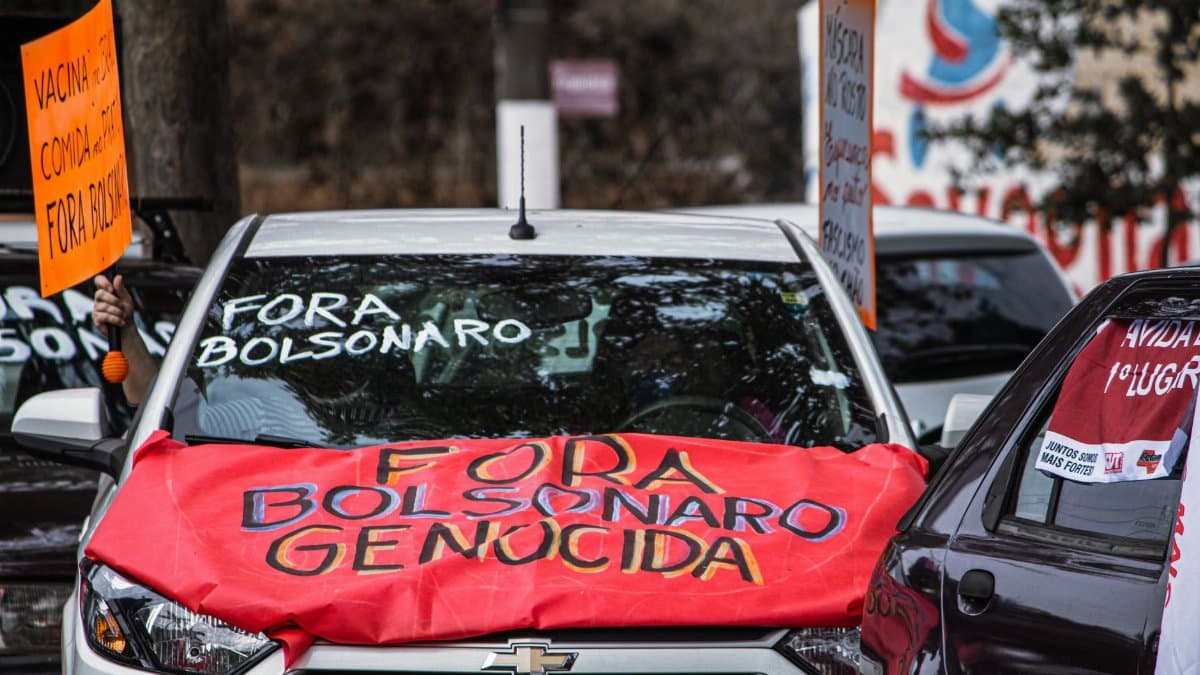
In Brasília the lights at the electoral court stayed bright long after the avenues had thinned. Families watched the last precincts arrive on living room screens, some in silence, some with flags still folded on the couch. When the court said the tally was finished, the Lula Brazil election had produced a certified winner and a rival camp that treated the certificate as an opening argument rather than an ending. Luiz Inácio Lula da Silva, the former metalworker who had already governed Brazil for eight years, was returned to the presidency. Jair Bolsonaro, the incumbent, did not offer a prompt recognition. The country had voted. It had not agreed on what the vote meant.
A verdict read in a tense capital

The declaration did not arrive as a surprise to people who had followed the count hour by hour. Brazil’s electronic voting machines, used for a generation, reported results with a speed that still startles visitors from countries that wait days for paper to be sorted. The Superior Electoral Court, the institution charged with running the vote and announcing the outcome, treated the final bulletin as the close of a legal process. Supporters of Lula gathered where they could, on avenues in São Paulo and in smaller cities of the Northeast, and treated the announcement as permission to exhale.
The other side heard a different sentence in the same words. For months, Bolsonaro had questioned the reliability of the machines and the neutrality of judges who oversee elections. When the court spoke, his most loyal voters were already primed to hear politics rather than arithmetic. Rejection did not require a new document. It required only the refusal to grant the document moral force.
How a familiar name returned to the ballot

Lula’s path back to the Planalto was never a simple sequel. He left office in 2010 with high approval and a reputation, at home and abroad, as a broker between markets and social programs. Later convictions in corruption cases removed him from the 2018 race. Those convictions were later annulled, and he reentered public life as both a symbol of resilience for his base and a reminder of scandal for his critics. The Lula Brazil election of 2022 was therefore a referendum on memory as much as on a platform: memory of expanded cash transfers and university access, and memory of plea bargains, construction firms, and a political class that many Brazilians no longer trusted.
Bolsonaro offered a rival memory. He had won in 2018 as an outsider to the traditional parties, speaking in the language of order, faith, and hostility to the left. His presidency collided with the pandemic, with Amazon fires that drew global rebuke, and with a style of communication that thrilled supporters and exhausted institutions. By the time the runoff arrived, neither man was an abstraction. Each was a known quantity with a coalition built from gratitude and grievance.
What the map revealed without a speech
The country did not divide into a single clean line, but the pattern was legible. Lula’s strength concentrated in the Northeast, where social programs had changed household budgets in visible ways, and in parts of the urban left that still organized through unions, universities, and neighborhood associations. Bolsonaro’s strength concentrated in the South, the Center West, and among voters who described themselves as evangelical, entrepreneurial, or simply tired of the Workers’ Party. Wealthier neighborhoods and agribusiness regions often leaned toward the incumbent. Poorer municipalities often leaned toward the former president.
That geography matters because it resists the lazy story of a nation hypnotized by one man. Brazil voted in layers: class, region, church, and the private calculation of who would keep a small business open or a benefit card funded. The Lula Brazil election was close enough that each side could claim a moral majority in the places it already knew. Closeness is not the same as fraud. It is, however, a political fact that makes rejection easier to sell.
The refusal and the vacuum it created

Bolsonaro did not deliver a concession in the hours after the declaration. Allies spoke of challenges, of audits, of a people that had been misled. Some of that talk stayed inside the law, in the form of complaints that courts exist to hear. Some of it moved into the street, where truck drivers blocked roads and camps formed near barracks, as if the armed forces were an appeals court. The president’s silence functioned as a signal. In a system that depends on the loser acknowledging the winner, silence is not neutral. It invites others to fill the gap with certainty.
Foreign governments moved faster than the incumbent’s inner circle. Congratulations arrived from capitals that had spent four years keeping a careful distance. Markets, which dislike ambiguity more than they dislike any single ideology, looked for signs that contracts, budgets, and the central bank would survive the transition. Ordinary life continued in supermarkets and bus terminals, which is its own kind of democratic evidence. A disputed mandate does not stop the city. It changes the temperature of every conversation inside it.
Institutions that had to act in public
Brazil’s electoral machinery is not a folk tradition. It is a bureaucracy with codes, party lawyers, and a court that has grown more visible as politics has grown more suspicious. Judges became characters in the campaign, praised as guardians by one camp and cast as censors by the other. That visibility is a risk. Courts that must defend the count also become targets for the claim that they have chosen a side. The claim does not need to be true to be useful. It only needs to travel faster than a technical explanation of how a voting machine records a ballot.
Congress, governors, and the military leadership faced a quieter test. Most refused to treat the result as optional. A smaller group winked at doubt without quite adopting it. The weeks after the declaration showed a country with strong formal rules and uneven informal consent. Formal rules can carry a transition. Informal consent is what keeps the next election from beginning in a state of inherited suspicion.
Faith, pulpits, and the language of destiny

Any honest account of this vote has to pass through churches. Evangelical congregations, especially neo Pentecostal networks with national media reach, formed a durable part of Bolsonaro’s coalition. Pastors framed the race in moral terms: family, territory, and a fear that the left would shrink religious speech. Catholic Brazil, still vast, was less uniform. Liberation theology had faded as an organizing force, but parish life still shaped how many voters heard the news. In some neighborhoods, Afro Brazilian religious communities watched the campaign with their own memory of stigma and of political neglect.
Prayer vigils on election night were not a sideshow. They were a way people located a civic event inside a cosmic one. That habit can steady a person. It can also turn a loss into evidence of spiritual warfare, which is harder to audit than a precinct report. The health of the republic depends in part on whether religious language remains a vocabulary of conscience or becomes a license to treat the other half of the country as illegitimate.
The family name waiting in the wings

Rejection of a result is rarely only about the man who lost. It is also about who inherits the grievance. Flávio Bolsonaro, a senator and the best known of the president’s sons in institutional politics, remained a reference point for a movement that does not dissolve when a term ends. Other sons occupied media space, legal controversy, and the informal role of messenger. The Bolsonaro name had become a brand: anti left, pro gun in the cultural sense, impatient with courts, fluent in social networks.
A brand can outlast a ballot. That is why the hours after a declaration matter beyond protocol. If the loser accepts the count, the brand must reinvent itself as opposition. If the loser withholds acceptance, the brand can sell continuity of emergency. Voters who want that emergency do not need a new ideology. They need a story in which the Lula Brazil election was not lost but stolen, paused, or misunderstood. Responsible opposition argues policy. A movement built on stolen verdicts argues legitimacy, which is a harder fight to end.
What Lula inherited besides an office

Winning a narrow race against a predecessor who will not bless the outcome is a specific kind of burden. Lula returned with promises familiar to his earlier years: hunger as a governing priority, a more active state in energy and industry, and a foreign policy eager to be seen as independent of Washington. He also returned to a Congress that no single party controls, to a budget thick with mandatory spending, and to a public that had learned to doubt experts, journalists, and judges in equal measure. The third electoral victory of his career, after wins that sent him to the presidency in 2002 and 2006, did not restore the political weather of those years.
His coalition was wider than his party and thinner than his rhetoric. Centrist barons, business figures worried about international isolation, and voters who simply wanted the shouting to stop all claimed a share of the result. Governing would mean disappointing some of them quickly. The risk was not only legislative gridlock. It was the temptation to answer rejection with exclusion, to treat critics as enemies of the count rather than as citizens who lost. Democracies rot from that temptation as surely as they rot from lies about machines.
Markets, forests, and the audience abroad
Outside Brazil, the declaration was read through two lenses that do not always align. Investors asked whether fiscal rules would hold and whether the central bank would remain insulated from campaign revenge. Environmental advocates asked whether deforestation in the Amazon would slow, and whether indigenous territories would be treated as something more than an obstacle to extraction. Both questions are fair. Neither is a substitute for the domestic argument about prices, crime, schools, and the monthly bill.
American and European commentary sometimes flattened the race into a morality play about global democracy. Brazilians living the Lula Brazil election experienced something denser: a choice between two damaged projects, each with achievements its opponents refuse to name. Foreign applause can steady a transition. It can also feed the story that the winner is a project of outsiders. Leaders who need room at home are wise to treat that applause as background, not as proof.
The street after the certificate

In the days that followed, Brazil offered both reassurance and warning. Most ballots had been cast without violence. Poll workers, many of them ordinary citizens paid little for a long Sunday, had done their work. The court had published a result. At the same time, encampments, road blockades, and online claims of hidden tallies showed how quickly a certified loss can be recoded as a provisional injustice. Later unrest, including the invasion of government buildings in Brasília by Bolsonaro supporters in January 2023, made plain that symbolic rejection can become physical damage. Institutions held. The scar remained visible.
That sequence should discipline anyone tempted to romanticize street anger as authenticity. Protest is legal. The occupation of the seats of the three branches is not a continuation of the campaign by other means. It is a bet that force can edit a result the voters already filed. The bet failed. The fact that it was placed at all is part of the record of this election, not a footnote.
A standard for the next count
The useful question after a disputed declaration is not which personality readers prefer. It is which habits they are willing to defend when their side loses. Brazil already possesses the tools: a professional electoral authority, rapid publication of results, courts that can punish abuse, and a press that, at its best, separates allegation from proof. Tools do not operate themselves. Parties have to decide whether doubt is a legal motion or a permanent identity. Churches have to decide whether mourning a loss is faithful or whether only victory counts as providence. Newsrooms have to decide whether every viral spreadsheet deserves the dignity of a hearing.
Lula’s return did not settle those decisions. It dated them. A country can inaugurate a president and still be mid argument about the rules that made the inauguration possible. The Lula Brazil election will be remembered less for the theater of election night than for the test that came after the lights at the court went down: whether a narrow, lawful win could be lived with by people who had been told, for years, that living with it was a form of surrender.