

On a weekday afternoon when school lets out, the difference between a town with an open reading room and a town without one is not abstract. It is a child with a homework packet and nowhere quiet to finish it. In the south suburbs of Cook County, the struggle around the Robbins Dixmoor library has become a plain statement about what happens when a small public institution runs out of money and people to keep the doors open. Residents of Robbins and Dixmoor already travel farther for groceries, clinics, and jobs. Losing a shared civic room makes those distances feel longer, and it leaves two villages explaining to their neighbors why a basic public service has slipped out of reach.
Two villages and one fragile room
Robbins and Dixmoor sit close together on the southern edge of the Chicago region, small municipalities with long histories and thin tax bases. Neither has the commercial corridors that cushion larger suburbs when property values stall. A library in that setting is more than a building with shelves. It is often the only indoor public place that does not ask for a purchase, a membership fee, or a church affiliation. When hours shrink or a closure notice appears, the loss is felt block by block.
William Leonard Public Library has served Robbins for generations. Dixmoor residents have long treated nearby collections as part of their own map of daily life, whether through formal agreements or simple proximity. The phrase Robbins Dixmoor library captures that shared dependence. Two village halls, two school experiences, one set of shelves that both communities have needed when budgets elsewhere could not fill the gap.
What the doors were actually for
People who do not use a small library sometimes picture silence and card catalogs. The real traffic looks different. Parents print forms. Job seekers sit at computers they do not have at home. Teenagers wait out the hours between the last bell and a late shift. Older residents read the paper, ask a staff member to explain a medical bill, or simply occupy a chair that is warm in winter.
Those uses do not show up as drama. They show up as routine. When routine disappears, families invent replacements that cost more and work less well. A fast food table is not a study carrel. A phone screen is not a reference desk. A closed branch does not announce itself with a single crisis. It announces itself in a hundred small errands that no longer have a destination.
Budgets that cannot stretch

Illinois public libraries often stand on property tax levies set by their own boards. That structure gives local control. It also ties a library’s fate to the value of the land around it. In villages where many parcels are modest homes, vacant lots, or properties already carrying tax burdens, the levy cannot grow just because demand grows. Inflation in utilities, insurance, and materials still arrives on schedule.
Trustees then face a narrow menu. Cut hours. Delay repairs. Leave positions empty. Postpone new books. None of those choices looks drastic on a spreadsheet. Together they produce a building that is technically open and practically unreliable. Patrons stop planning around a schedule they cannot trust. Staff who remain absorb the work of colleagues who left. The next budget year starts from a weaker place than the last.
Staffing as the hidden closure

A library can fail before the lights go out. If there are not enough trained people to cover the desk, the children’s room, and basic technical help, the board may shorten the week rather than pretend full service exists. Part time hours become the norm. Full time posts stay vacant because the pay cannot compete with larger systems a few miles away. Institutional memory walks out with the people who knew which vendor to call and which family needed a quiet word.
Recruiting in a small district is its own problem. Candidates weigh commute, benefits, and whether the job will still exist next spring. A closure driven by staffing is easy to misread as a lack of interest. More often it is a lack of a wage that matches the skill the public expects: literacy support, digital navigation, and the patience to help someone who has not touched a keyboard in years.
Children who lose the after school hour

Schools in both villages already carry heavy loads. A public library has traditionally extended the school day without extending the school budget. Homework help, summer reading, and a safe interval between dismissal and a parent’s return home are not extras. They are how a poor district keeps students from falling further behind during the hours no classroom is assigned to them.
When that interval vanishes, the burden shifts to relatives, to crowded apartments, and to phones. Some students will manage. Many will not, especially those whose homes lack reliable internet or a table clear of other obligations. The closure does not create the achievement gap. It removes one of the few free tools communities had for narrowing it. Neighbors notice which children stop appearing with library books and which ones never had a card to begin with.
Seniors and the digital divide

Public agencies increasingly assume that residents can file, pay, and appeal online. For older adults in Robbins and Dixmoor, that assumption was already shaky. Library staff often served as translators between a paper life and a screen life. They reset passwords, printed tax documents, and sat beside someone filling out a benefits form that timed out too quickly.
A closure pushes those tasks onto family members who may live elsewhere, or onto paid services that charge for what used to be free. Some seniors will simply stop completing the forms. That is not a technical inconvenience. It is how people lose access to programs they already qualify for. The digital divide is usually described as a lack of devices. In these villages it is also a lack of a person willing to sit still and explain the device.
Distance is its own tax

Larger library systems in the south suburbs remain open, and some offer reciprocal borrowing. On a map, the alternative looks close. On a bus schedule, or in a car that is shared among several workers, close can mean a missed shift. Dixmoor and Robbins are not designed around easy crosstown trips. Side streets, limited transit, and winter weather turn a neighboring branch into an occasional visit rather than a weekly habit.
Service gaps are therefore geographic as well as financial. A resident who could walk to a local reading room will not walk three miles with a stroller and a bag of returns. The Robbins Dixmoor library mattered because it sat inside the radius of ordinary life. Replacing it with a better funded building outside that radius does not restore the same service, even if the catalog is larger.
Trustees and the limits of local control

Library boards in small districts are usually volunteers. They approve levies, hire directors, and decide when a building is no longer safe to staff. Those decisions are public in form and lonely in practice. Meetings draw few attendees until a closure is already likely. By then the reserves are thin and the choices are mostly about sequence: which service ends first.
Critics sometimes treat a shutdown as proof of mismanagement. Mismanagement can exist, and residents are right to ask for audits, meeting minutes, and a clear account of unpaid bills. They are also right to ask a harder question. What level of service can a very small property tax base honestly sustain without help from a wider government? Local control without local wealth is a slogan that does not pay the heating bill.
Congregations and the civic sanctuary
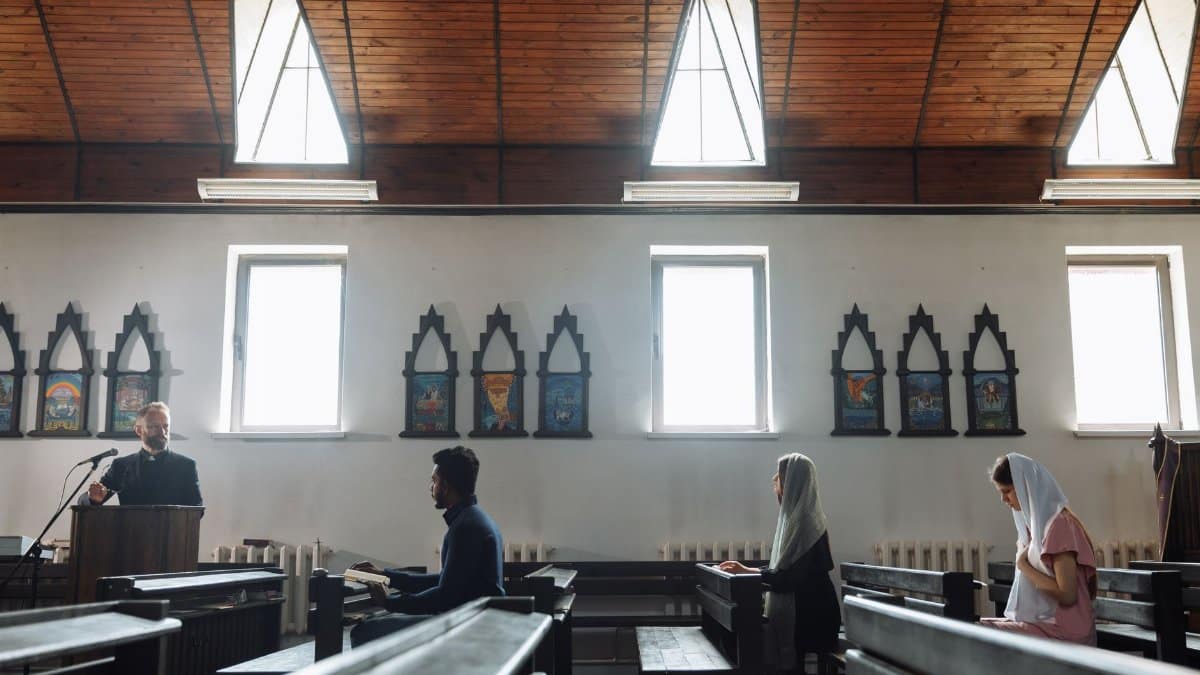
In both villages, churches have long filled spaces that public institutions leave empty. Fellowship halls host tutoring. Pastors keep lists of families who need a ride to a clinic. That work is real, and it will expand if the library stays dark. It is not the same work. A congregation serves its members and its guests under a theological roof. A public library serves everyone under a civic one, including people who do not share the faith of the nearest church and people who want no sermon with their tax form.
There is still a spiritual dimension to the loss, if spiritual means a claim about human dignity rather than a denomination. A community that cannot offer a quiet chair to a stranger has narrowed the circle of who counts as a neighbor. Residents who speak of the library in the language of care are not being sentimental. They are describing a room where people were treated as capable of learning, regardless of income. When that room closes, the moral weather of a place changes, even if the zoning map does not.
What residents say they still need
Ask around and the requests are consistent. Reliable hours. A working printer. Computers that stay on. A children’s collection that is not a decade old. Staff who know the villages and will still be there next month. None of this requires a landmark building. It requires a budget that matches a modest promise and a staff roster that can survive a sick day.
Residents also want honesty about partnerships. If Robbins and Dixmoor must rely on a neighboring system, that reliance should be written down, funded, and reachable by transit, not left as an informal courtesy. Informal courtesy disappears when the larger system has its own shortfalls. The people most likely to need the courtesy are the least able to negotiate a replacement.
Paths other small districts have tried
Across Illinois, small libraries have merged districts, contracted with larger systems for administration, or shared a director and a technical staff while keeping local boards for levy decisions. Some have moved collections into municipal buildings to shed a separate utility bill. Others have limited service to a few dependable days rather than advertising hours they cannot honor. Each path has tradeoffs. Merger can dilute a village’s voice. Contraction can look like retreat. Shared staffing can work only if the contract names who answers the phone when something breaks.
What tends to fail is waiting for a windfall. Grants can buy furniture. They rarely pay salaries year after year. A rescue framed as a one time gift leaves the same tax base in place and the same crisis on a delay. Durable repair means either a wider tax base or a frank reduction in what the district claims to offer, paired with a funded link to a system that can offer the rest.
The cost of calling it temporary
Closures are often announced as temporary while boards seek funds. Temporary has a way of hardening. Patrons build new habits. Students age out of the grades that most needed the after school room. Donors move on to the next appeal. Staff who left do not return for a reopening that might last a season. A village that treats a shutdown as a pause must publish a date, a budget, and a staffing plan, or it should admit that the pause is a closing.
Language matters here because hope is not a strategy. Residents can accept hard limits. They cannot plan around vague reassurance. If the William Leonard building cannot reopen on a stable calendar, leaders owe the public a map of where cards will be honored and how people without cars will get there. Silence after a closure notice is its own form of service cut.
A regional problem wearing a local name
It is tempting to file this story under two small place names and move on. That would miss the pattern. South suburban communities with similar housing stock face similar arithmetic: rising costs, stagnant levies, and public expectations shaped by libraries in wealthier towns. The Robbins Dixmoor library is a local wound and a regional symptom. When one district folds its hours, pressure shifts to the next open door, which then shortens its own week.
County and state officials often speak of equity in broadband, transit, and schools. Libraries belong on that list. They are the civic rooms where those other policies become usable. A broadband grant does little for a household that still needs someone to show them the portal. A transit plan that skips the library stop skips the reason many riders would have boarded.
What a reopening would have to prove

If the doors open again, success should not be measured by a ribbon. It should be measured by whether a child can count on the same hours every week, whether a senior can get a form printed without a fee, and whether the staff roster can absorb a vacancy without going dark. A reopening that restores the old fragility is a delay, not a repair.
That standard is modest. It is also the standard these villages have been missing. The Robbins Dixmoor library, as residents used the idea if not always the formal name, was never meant to compete with downtown reading rooms. It was meant to be there. Being there, on a posted schedule, with a person at the desk, is the entire service. Everything else is commentary.
Keeping the question in public

Service gaps widen fastest when they become normal. A closed library can fade into the background of other shortages, another item on a list of things small suburbs do without. The corrective is ordinary attention: board agendas read, levies explained in plain figures, partnerships written so a resident can see them, and neighboring systems asked what they can actually absorb.
Robbins and Dixmoor have never been short of people who know how to share. They have been short of institutions sturdy enough to hold that sharing when money runs thin. A library is one of the simplest of those institutions. Its absence does not stay symbolic for long. It shows up in unfinished homework, unfiled forms, and afternoons with nowhere to go. That is the story the closure tells, and it will keep telling it until someone funds a room that stays open.