

On a winter afternoon in Houston, the kind of flat gray light that makes the downtown skyline look closer than it is, a former ace can still picture the box that arrives after a title. Inside it sits metal, enamel, and a year that will not fade. Lance McCullers Jr. already owns two of those boxes from his years with the Astros. Now the question moving through baseball circles is whether a short stay in Milwaukee will produce a McCullers World Series ring, a third piece of championship hardware for a pitcher whose career has been defined as much by absence as by October noise.
A short stay and a long memory

Championship rings are not scorecards. They do not record innings, earned runs, or the nights a pitcher never took the mound. They record belonging, or at least the version of belonging that a front office is willing to honor when the season ends in a parade. McCullers spent the heart of his career in Houston, a right hander with a heavy curveball and a reputation for wanting the ball when the month turned cold. A later chapter in Milwaukee was brief by any ordinary measure of a baseball life. Brief, in this sport, is not the same as forgettable.
Teams decide, sometimes quietly and sometimes after a winter of phone calls, who stands in the line when the rings are handed out. A player who appeared for a handful of weeks can still be on that list if the club believes he contributed to the run, or if the organization simply prefers a generous reading of the roster. That custom is older than any single pitcher. It is also why a name can travel from one clubhouse to another and still end up engraved on the same kind of prize.
Two titles already in the drawer

McCullers was part of the Astros teams that won the World Series in 2017 and again in 2022. Those rings are not abstractions. They are objects people keep in safes, in drawers, and sometimes in the awkward space between pride and argument. The 2017 title remains entangled, for many fans, with the sign stealing scandal that later rewrote how that season is discussed. The 2022 title arrived under a different cloud, one made of injuries and a roster that had to find October without several of its familiar arms for long stretches.
He was never a decoration on those clubs. In his healthiest seasons he looked like the kind of starter a manager trusts with a series, the kind whose stuff plays in a loud park and a quiet one. The curveball dipped late. The fastball had enough life to keep hitters from sitting on the breaking ball. When the elbow and the shoulder cooperated, he was a reason Houston felt deep. When they did not, he became a different kind of story, the ace whose absence forced everyone else to grow up faster.
Injury as the uncredited teammate

Any honest account of McCullers has to sit with the body. Tommy John surgery and the long return that follows it do not fit neatly into a ring narrative, yet they shape who is even available to earn one. A pitcher can be on a championship club in name and spend the decisive weeks in a training room, watching a monitor, texting teammates he cannot join on the field. Fans argue about whether that counts. Players, more often than outsiders expect, do not. They have seen what a bullpen looks like when one expected arm is gone. They have also seen what it costs to come back at all.
The public prefers a clean line from contribution to reward. Baseball rarely offers one. A brief stint with a new team can be a rehabilitation assignment in everything but name, a chance to face live hitters, a favor between organizations, or a genuine attempt to win a job. From the outside those motives blur. From the inside they are often all true at once. That blur is where the ring question lives.
How clubs decide who is in the line

There is no single rulebook entry that settles a McCullers World Series ring the way a save rule settles a box score. Clubs set their own thresholds. Some include anyone who wore the uniform during the championship season. Some draw a line at a certain number of days, or at whether a player was on the active roster when the postseason began. Others make exceptions for veterans, for players claimed in August, for coaches who arrived in June, for staff who never threw a pitch and still kept the club upright.
Milwaukee, like every other franchise that reaches the last week of October, will have a list. That list is part logistics and part culture. Rings are expensive, and they are also symbols the organization will photograph for years. Leaving someone off can feel like a slight that outlasts the season. Including someone who barely played can anger fans who watched every inning and want the hardware to match the sweat they remember. Front offices live in that tension. They usually choose inclusion when the cost of exclusion is a winter of bad feeling.
What the object actually weighs
A modern championship ring is heavier than people who have only seen one on television tend to guess. It is built to be noticed, crowded with stones, with a team mark, with a year, sometimes with a personal detail that only the recipient will clock. Players joke about the size. They also, in quieter rooms, talk about where they will keep it so a child does not treat it like a toy, and about the strange guilt of owning something so many teammates wanted and did not get.
For a pitcher with two already, a third does not multiply the meaning in a simple way. It can shrink the earlier ones into a set, a collection, a line on a biography that scouts and historians will repeat. It can also make the missing seasons louder. Hardware has a way of editing a career toward the nights that ended in celebration and away from the nights that ended in an MRI. McCullers has lived both kinds of night. Any new ring will sit beside that editing, not erase it.
Houston fans and a borrowed October
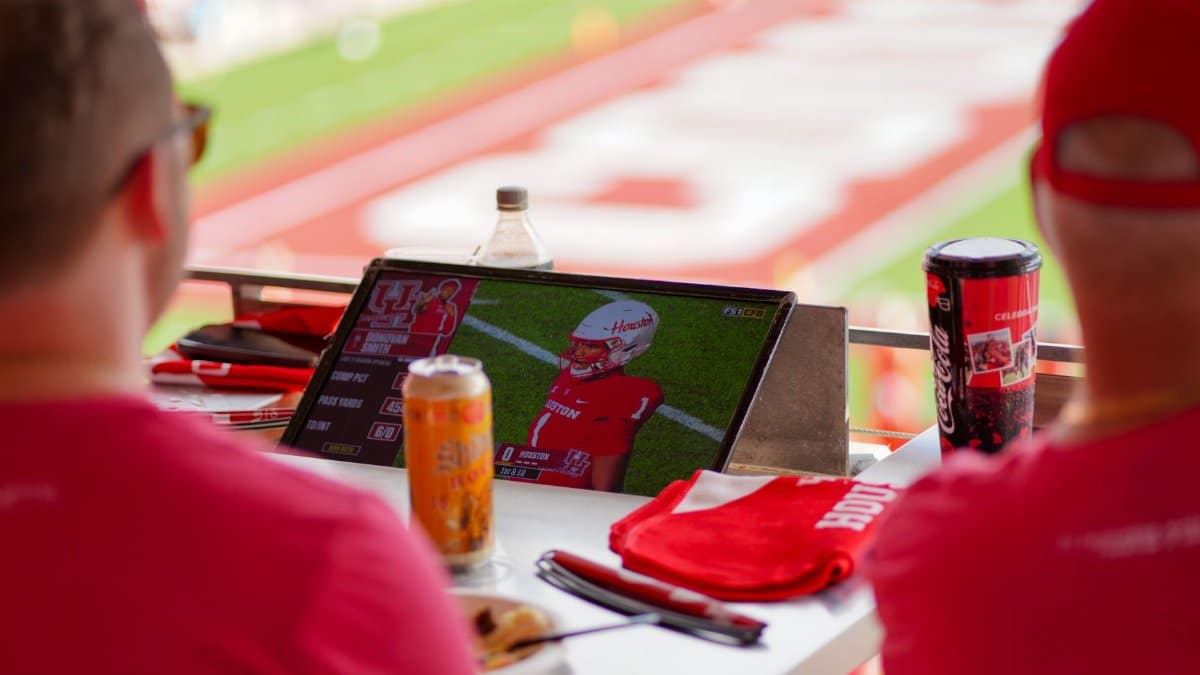
Astros supporters have a complicated claim on him. He grew up in the organization in the public eye, a first round talent who became a postseason face before he was a finished product. Many of those fans will read a Milwaukee ring as a courtesy more than a coronation, and some will say so without much grace. Others will be glad to see a player they watched through surgeries get one more piece of proof that the years were not wasted. Both reactions can be true in the same group chat.
Borrowed Octobers are part of the modern game. Players move. Front offices trade control for payroll relief, or for a prospect, or for nothing more romantic than a roster crunch. The fan who bought a jersey does not get a vote on the engraving. That does not stop the feeling of ownership. It only means the feeling and the paperwork no longer match. A McCullers World Series ring tied to Milwaukee would make that mismatch visible, which is why it travels so easily as a talking point.
The brief chapter in Milwaukee

A short tenure is easy to mock and hard to summarize. A pitcher can arrive, throw, adjust to a new catcher, learn a new scouting report, and leave before the city has decided what to call him. If that window overlaps with a club that goes on to win, the window gets enlarged in retrospect. People remember the outing that mattered and forget the bus rides that did not. They also remember the clubhouse, which is where brief teammates sometimes do their real work: a conversation in a corner, a look at a grip, a willingness to take a low leverage inning so a tired arm can rest.
None of that shows up in a ring ceremony script. The script prefers a smile, a handshake, and a camera. The work that earned the invitation, if it earned it at all, happened earlier and with fewer witnesses. That is not a reason to inflate a cameo into a legend. It is a reason to be careful about what a cameo excludes. Contribution in a clubhouse is not the same as dominance on a mound, and pretending otherwise insults the players who carried the series. Refusing to see any contribution at all insults the way teams actually function.
Money, metal, and the winter ledger

Rings are not salary. They do not replace the seasons a pitcher loses to surgery, and they do not settle an arbitration case. They do, however, enter the story agents tell and the story teams tell themselves when they weigh a familiar name. A third ring makes McCullers easier to introduce to a new city, and it makes him harder to reduce to an injury report. That dual use is part of why players care about the list even when they claim they do not.
There is also the plain fact of the object as property. Championship jewelry has a resale market, a display market, and a family market. Most players do not sell. Some do, years later, when a divorce, a debt, or a desire to fund something else overrides the symbolism. Writing about that possibility is not a prediction. It is a reminder that the ring leaves the ceremony and enters an ordinary life, where meaning is negotiated with spouses, children, and the simple problem of a safe deposit box.
Ceremony without the roar
The night a team wins is loud. The afternoon the rings arrive is not. It is often a weekday, sometimes the following spring, sometimes a private event with families in good clothes and players in clothes they would wear to a lunch. Speeches run long. Someone thanks the training staff. Someone cries in a way that surprises him. The people who were traded in July watch from elsewhere, or they do not watch at all.
If McCullers is in that room in Milwaukee colors, or in a room the club arranges for those no longer on the roster, the photograph will do a certain kind of work. It will flatten the brief stay into a fact. It will also sit, inevitably, next to the Houston photographs, where the uniform is different and the face is younger or simply less lined by recovery. Careers are collages. Rings are one of the few pieces sturdy enough to survive the rearrangement.
What a third ring does to the story

Three rings would place him in a small group of players who can point to more than a single lucky October. It would not place him among the pitchers whose October lines are recited without a pause. Those are different honors, and confusing them is how arguments on radio go wrong. The fairer sentence is simpler. He was present for titles in one city, and he may be judged present enough for a title in another. Presence is not nothing. It is also not a complete account of value.
I keep returning to the gap between the object and the season. A ring is a conclusion the sport prints in metal because the sport is otherwise terrible at conclusions. Seasons end. Bodies do not reset on a schedule. Fans do not agree on what they saw. A McCullers World Series ring, if it comes, will be a conclusion Milwaukee chooses to print. Houston already printed two. The rest of the career, the missed starts, the curveball at its best, the long afternoons of rehab, remains in prose.
The argument fans will actually have
The argument will not be about carats. It will be about deserts, in the old sense of what a person has earned. Some will say a player must appear in the postseason to deserve the ring. Some will say a single regular season appearance is enough if the club says so. Some will say the only honest standard is the standard the club applied to its own coaches and to the players it liked. That last group is usually closest to how these decisions get made, which is to say they get made by people, not by a pure rule.
McCullers does not need strangers to settle his worth, and strangers will settle it anyway. That is the tax on a public career. The useful discipline, for anyone watching from a couch, is to separate the hardware from the myth. A third ring would be real. It would be chosen. It would not rewrite the injuries, and it would not require anyone to pretend a short stay was a second prime. Holding those facts together is harder than picking a side, which is why most arguments refuse to do it.
A career measured in more than Octobers

There is a version of this story that ends at the jewelry counter and calls itself complete. It is the version built for a headline. The fuller version includes the kid from the Houston system, the postseason innings that made him famous before he was durable, the surgeries that stole years, the returns that were never quite the original arm, and the professional fact of moving on when a team and a player no longer fit. A ring from a new city would be one more sentence in that version, not the last word.
Baseball keeps producing these odd inheritances because the roster is a temporary agreement. You can help a club, leave a club, and still be invited back into its happiest photograph. You can also be central to a dynasty and spend a championship October in a brace. McCullers has enough of both experiences to make the next ceremony, if it happens, feel less like a surprise than like another turn in a pattern. The pattern is not fair. It is recognizable.
What remains after the box is closed
When the photographs are posted and the arguments cool, the ring goes into a box or onto a hand for a dinner that has nothing to do with baseball. The pitcher still has to decide what the next season is for, if there is a next season he wants. Hardware does not throw a bullpen. It does not negotiate with an elbow. It does not tell a clubhouse how to treat a new teammate who arrives in June and may be gone by August.
That is the modest truth under the spectacle. A McCullers World Series ring would mark a brief Milwaukee chapter as officially remembered. It would add a third title to a name already tied to two. It would leave the harder record untouched: the quality of the pitches when he was right, the cost of the years he was not, and the ordinary labor of staying in a game that keeps moving whether or not your name is on the list. The metal is loud. The career, if you listen past it, is more interesting than the prize that tries to summarize it.