
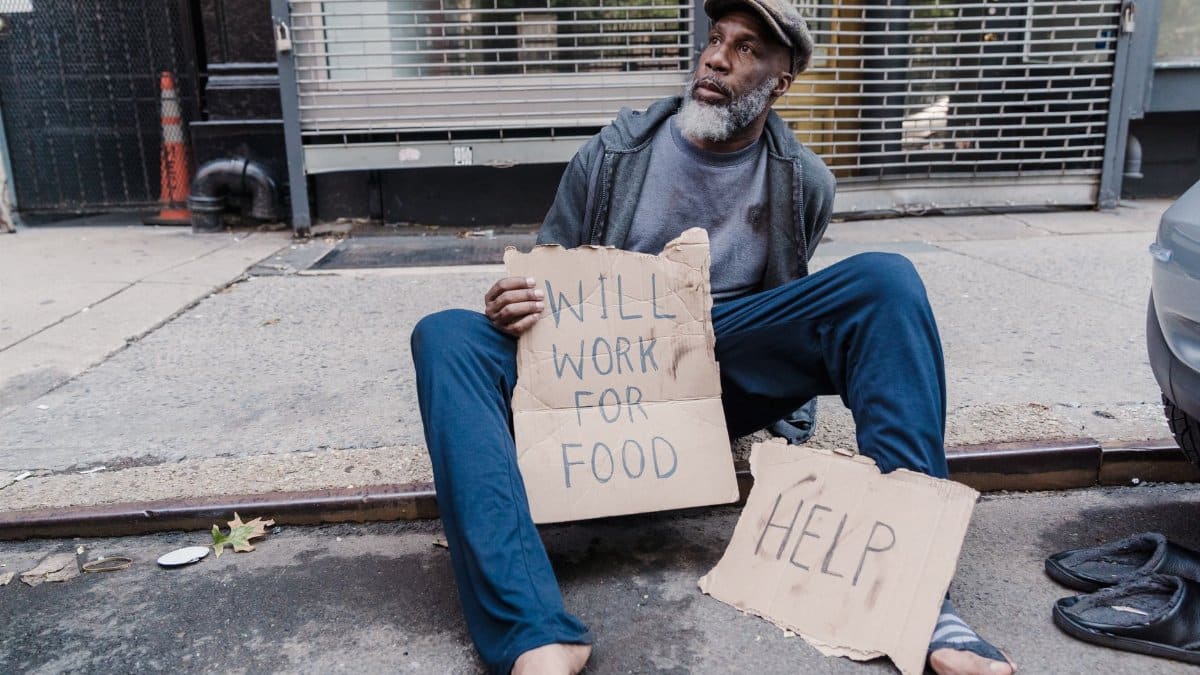
On a weekday morning outside a federal courthouse in downtown Los Angeles, the usual cluster of lawyers, advocates, and city staff looked less like combatants than like people waiting out a storm. Years of litigation over street homelessness had trained everyone to expect another sharp filing, another hearing, another public scolding. What arrived instead was a quieter signal. The LA homeless services agreement, described by officials as an understanding in principle between the city and the county, is meant to give City Hall more control over shelter and housing placements and to keep a renewed court battle from consuming the spring.
A truce that arrived before the gavel

The fight has never been only about tents on a sidewalk. It is about which government writes the check, which agency finds the bed, and which official has to explain a failure when a person is still outside after dark. City leaders have argued that they carry the visible crisis while much of the clinical care, outreach funding, and placement authority sits with the county. County leaders have answered that homelessness is not a problem one jurisdiction can assign away, and that mental health care and substance use treatment cannot be redesigned by a press conference.
An agreement in principle is not a final contract. It is a political and legal pause, a statement that the parties would rather negotiate the machinery of placements than test every sentence in front of a judge. For residents who have watched encampments move from block to block, that distinction can sound thin. For the lawyers, it is the difference between a managed settlement path and months of discovery.
What City Hall says it needs

The city’s complaint, repeated in council chambers and in court papers for years, is practical. When a outreach worker meets someone who will accept a bed that night, the offer has to be real. If the bed is controlled by a county funded program with its own rules, wait lists, and clinical screens, the city can promise shelter and then fail to deliver it. Officials want a clearer hand on placements so that a commitment made on a sidewalk can be honored without a second bureaucracy rewriting the plan.
That desire is not the same as a wish to run every clinic. Los Angeles still depends on county health systems for psychiatric care, withdrawal management, and long stay medical respite. The argument is about the front door. Who decides that a particular person goes to a particular site, and who is accountable if the site is full, unsafe, or a poor match.
What the county is unwilling to surrender

County government was built to deliver health and human services across a region of many cities, not to act as a contractor for one mayor. Supervisors and agency heads have warned that handing placement control to Los Angeles could scramble equity for people in Long Beach, Pomona, or unincorporated communities who rely on the same scarce beds. They also note that a shelter bed without clinical support can become a revolving door, especially for people whose primary need is treatment rather than a cot.
Any durable deal has to protect that regional duty while answering the city’s demand for speed. That is a design problem, not a slogan. Shared data, shared intake rules, and a written path for disputes matter more than a joint statement about compassion.
The lawsuit that forced the conversation

The pressure comes from a federal case brought by business and neighborhood plaintiffs who argued that the city and county had allowed inhumane conditions to persist in public space. U.S. District Judge David O. Carter has used the case to demand plans, numbers, and visible progress, and he has not been shy about telling elected officials that process is not the same as housing. Settlements and stipulated orders have already shaped how Los Angeles talks about beds, milestones, and enforcement.
Against that backdrop, the LA homeless services agreement functions as damage control and as governance. Officials would rather define placement authority themselves than have a court impose a structure that neither budget office can live with. Avoiding a battle is not the same as escaping oversight. The judge can still ask whether the paper changes anything on a Tuesday night in Skid Row or Venice.
Beds, rules, and the person in front of the worker

Placement sounds administrative until you stand next to the decision. A woman leaving a hospital may need a bed that allows oxygen. A man with a dog may refuse a site that bars animals. A teenager who aged out of foster care may need a program that is not built for older adults with chronic illness. When governments argue about control, they are also arguing about whose rules win when those details collide.
City control could shorten the chain between an offer and a ride. It could also concentrate blame if the inventory is wrong. County control can protect clinical standards. It can also slow a match until the person has moved on, been arrested, or lost trust. Neither structure is kind by default. Kindness here is a matter of hours, transportation, and whether the bed still exists when the van arrives.
Money and the habit of mistrust

Los Angeles voters have approved major taxes and bonds aimed at homelessness, and both governments spend heavily through nonprofits, housing authorities, and health agencies. The public hears the totals and then sees the same corners unchanged. That gap breeds a cynicism that no agreement can fully disarm. People want to know which dollar follows which person, and they rarely get an answer that survives a follow up question.
The LA homeless services agreement will be judged in part on whether it clarifies spending, not only authority. If the city gains more say over placements, budget analysts will ask who pays when a county funded slot is redirected, and what happens to people outside the city who were next in line. Transparency is not a side issue. It is the only way a regional system survives a shift in power.
Council politics and the temptation to declare victory

Inside City Hall, homelessness is both a moral emergency and a political weapon. Members represent districts with very different street conditions, business pressures, and shelter politics. An agreement that helps downtown may look like a loss in a valley district that wants resources closer to home. County supervisors face their own map. A deal praised as pragmatic in one hearing can be attacked as a giveaway in the next.
That is why language matters. Calling something final before the attachments are written invites a later collapse. Calling it a failure because it is incomplete ignores how rarely these governments even share a definition of a placement. The honest public line is narrower. Leaders have chosen negotiation over a fresh courtroom clash, and the details still have to earn the claim.
What earlier court pressure already changed

Even without this latest understanding, litigation has altered daily work. Agencies track beds with more urgency. Elected officials arrive at hearings with spreadsheets. Outreach teams know that a missed milestone can become an exhibit. Some of that discipline is useful. Some of it produces paperwork that looks like progress while people remain unsheltered because the right kind of room does not exist.
Court pressure cannot build apartments on a schedule set by a hearing date. It can force governments to stop hiding behind one another. In that sense the LA homeless services agreement is a child of the lawsuit even if it is designed to avoid the next round. The case taught both sides that ambiguity is expensive.
The people who are not in the room

Unhoused residents rarely get a vote on which government holds the placement key. They experience the result as a yes, a no, or a wait. I have listened to people outside missions describe the same loop: a worker promises a call, the call comes late, the bed is gone, and the explanation belongs to an agency whose name they do not use. Agreements that do not change that loop will be remembered as insider documents.
Service providers sit in a similar bind. They must satisfy city contracts, county clinical rules, and the immediate needs of clients who did not read the settlement. If the new arrangement multiplies forms without shortening waits, the people paid to help will absorb the friction, and some will leave. Staff turnover is already one of the quiet drivers of failed placements.
A moral weight the spreadsheets do not carry

This news sits, on some sites, beside coverage of faith and public conscience, and the fit is not accidental. Homelessness in Los Angeles has become a test of whether a wealthy region believes a stranger’s night has a claim on its institutions. Churches, synagogues, mosques, and temples have opened lots, kitchens, and beds while arguing among themselves about safety and capacity. Government agreements do not replace that work. They decide whether public systems meet it or leave it stranded.
A spiritual reading of the crisis does not require soft language. It requires honesty about dignity. A person is not a milestone. A placement system that treats human beings as units to be moved for a hearing date will fail the people and, eventually, the court. The harder standard is whether someone can sleep, wash, store medication, and be known by name.
Limits of a deal still written in pencil

Several limits are already visible. An understanding in principle can unravel when lawyers translate it into definitions of eligibility, geographic priority, and data sharing. Privacy rules can block the very lists that would make placements faster. Labor agreements can limit who is allowed to staff a new intake desk. Neighborhood opposition can erase a site that both governments counted on paper.
There is also the risk of illusion. If the city gains control over a pool of beds that is still too small, or too poorly matched to disability and recovery, authority will not produce exits from the street. Control of scarcity is still scarcity. Residents should ask, in plain terms, how many appropriate beds can be offered within a day, and what happens when the answer is none.
How the region will read the signal

Other cities in the county will watch for precedent. If Los Angeles can pull placement decisions closer to its own outreach teams, smaller cities may demand similar leverage or fear that regional beds will drift toward the largest political voice. State officials, who fund pieces of the system and face their own critics, will look for a model they can cite or a warning they should avoid.
Advocates will split, as they often do. Some will welcome any step that reduces turf wars. Others will argue that centralizing power in City Hall without stronger tenant protections and faster housing production merely polishes the entrance to a system that still ends in shortage. Both reactions can be true at once.
What residents should watch in the coming weeks

The useful questions are concrete. Will the written terms name a single intake path for city referrals. Will county clinicians retain a veto when a placement is medically unsafe, and how fast must that veto be explained. Will public dashboards show not only beds created but offers accepted, offers refused, and offers that failed because transportation or rules got in the way. Will people living outside be able to see, without a lawyer, where they stand.
Readers should also watch the calendar. If weeks pass and the only product is another joint appearance, the pause will have served politics more than shelter. If draft rules appear, with numbers attached, the LA homeless services agreement may become something sturdier than a headline. The test is boring on purpose. Boring rules, applied the same way on a Friday as on a Monday, are how large governments prove they mean a promise.
A city still living with the distance

Los Angeles has no shortage of plans. It has a shortage of trust, of matched rooms, and of time. The choice to fend off a court battle is understandable. Trials are slow, costly, and often better at assigning fault than at finding a bed before sunset. Negotiation can be braver than combat when it forces rivals to share power they would rather keep.
It can also be a delay dressed up as statesmanship. The LA homeless services agreement deserves a fair reading and a hard one. Fair, because city and county officials are trying to untangle a system that punishes the person who says yes to help. Hard, because an understanding in principle does not yet keep anyone warm. Until placements move faster, and until the public can see the trail from offer to door, the courthouse will remain a short walk from the sidewalk, and the argument will not really be over.