
In the last stretch before a national election, a courtroom can feel as consequential as a polling place. A federal judge has refused a Justice Department effort to pull roughly 20,000 California ballots out of the count, and the opinion did not soften the point. The fight over a California ballots federal block arrived with November 3 already close enough to smell the printer ink on sample ballots, and the court treated the request as something more serious than a technical quarrel over envelopes.
A late petition with a large shadow

The administration asked a federal court to set aside about 20,000 ballots already in the California system. The number is small beside the millions of votes the state will tally, and large beside any single neighborhood, campus, or rural route. Judges are used to emergency papers in October. What distinguished this filing, in the telling of the opinion, was the remedy. The government did not ask for clearer instructions to local clerks or a narrow review of a defined defect. It asked the court to wall off a bloc of ballots from the count.
That is an extraordinary ask in any year. It is sharper when the calendar has already turned toward Election Day. Ballots are not abstractions. They are pieces of paper, or digital records of pieces of paper, tied to people who stood in line, dropped an envelope in a box, or trusted a mailbox. A court that grants a freeze at that stage does not merely pause a lawsuit. It changes who is heard.
What the judge refused to do
The opinion denied the request. In plain terms, the ballots stay in the process that California law already provides. They are not quarantined by federal order. They are not presumed invalid because a federal lawyer said so in a brief. Local officials remain responsible for the ordinary work of checking signatures, resolving challenges, and applying the rules the legislature wrote.
Denial is not the same thing as a medal for every ballot in the pile. Some envelopes fail signature checks. Some arrive after the legal cutoff. Some voters cure a problem and some do not. The point of the ruling is jurisdictional and remedial. The federal government did not persuade the court that it should step in and silence twenty thousand votes by injunction. The blistering tone mattered because tone, in a judicial opinion, is a form of reasoning made audible. The judge did not treat the filing as a routine disagreement among lawyers. The judge treated it as an attempt to bend the count.
Interference, named without ceremony

According to the public account of the opinion, the court described the effort as election interference. That phrase carries weight because courts usually prefer narrower words: standing, irreparable harm, likelihood of success, balance of equities. When a judge reaches for interference, the reader is meant to understand that the requested order would distort the election itself, not merely inconvenience a party.
The California ballots federal block, had it been granted, would have done exactly that. It would have told counting officials to treat a defined set of ballots as legally radioactive. Campaigns would have read the signal. Voters whose ballots sat in that set would have read it too. Even a temporary order can become a permanent political fact if the clock runs out before an appeal can unwind it. The court declined to hand anyone that fact.
Why twenty thousand is not a rounding error
Twenty thousand ballots will not decide every statewide race. They can decide a congressional seat, a legislative district, a local measure, or the margin that a losing campaign later calls illegitimate. Scale is the wrong comfort. Election law has always cared about the ballots at the edge because the edge is where power is tempted to look for a shortcut.
California runs elections at a size that invites both pride and suspicion. The state mails ballots widely, counts them over days, and publishes partial results that move as later envelopes are processed. That rhythm is legal. It is also easy to caricature. A pile of uncounted or provisionally held ballots becomes, in heated rhetoric, a pile of fraud waiting to be alleged. The court was asked to convert rhetoric into an order. It refused.
How a ballot becomes a target
Most challenged ballots are not cinematic forgeries. They are ordinary failures of paperwork. A signature drifts from the one on file. A voter moves and the address does not match. An envelope is creased, late, or missing a required mark. States build cure processes for some of those problems because the alternative is to discard a lawful vote over a clerical mismatch. Those processes are slow, human, and imperfect. They are also the mechanism a democracy uses when it would rather correct a mistake than erase a person.
A federal block skips that mechanism. It does not ask whether a particular signature matches. It asks a judge to treat thousands of ballots as a class unfit for the count. Class treatment can be appropriate when a single illegal rule tainted every ballot in the class. It is a poor fit when the claimed defect is a cloud of suspicion rather than a proven, uniform flaw. The opinion, as described, found the government on the wrong side of that line.
Voters who already acted
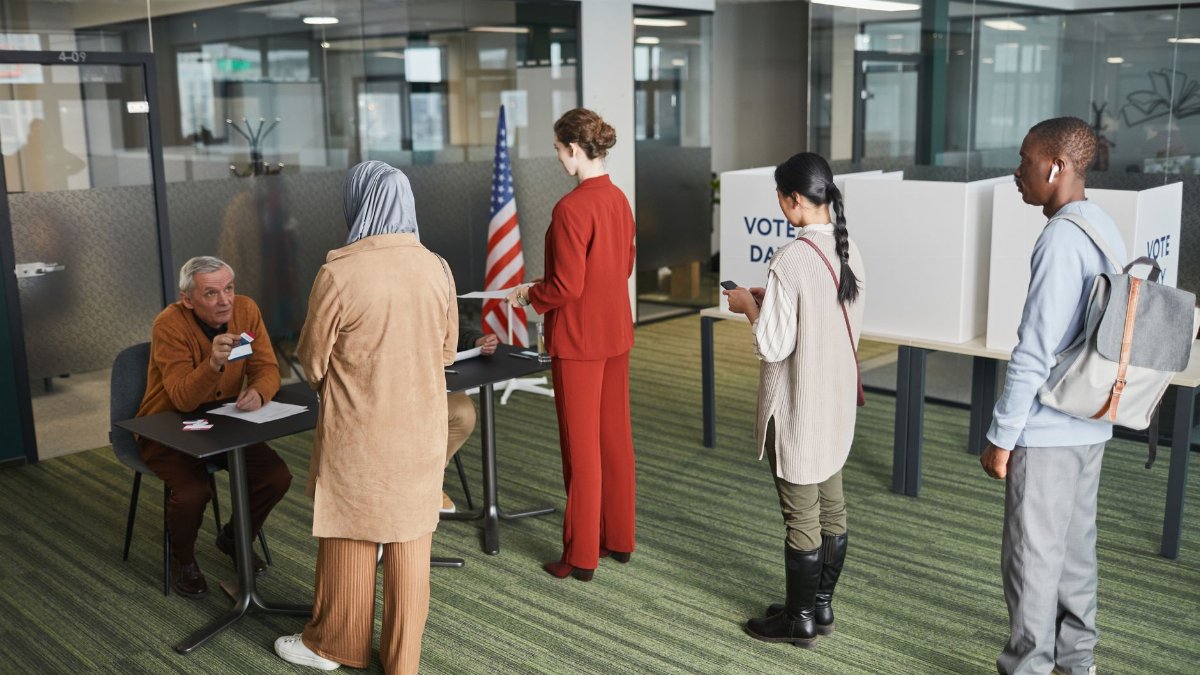
There is a moral sequence inside election litigation that lawyers sometimes skip. The voter acts first. The state receives the ballot. Only then does a party ask a court to undo the act. By the time a federal complaint seeks to block thousands of California ballots, those voters have already performed the civic task the law invited. They cannot easily vote again if a judge freezes their envelope. Many will not even know their ballot is the one in dispute until a headline names a number instead of a name.
That asymmetry should make courts cautious. The government has lawyers, press officers, and the power to file again. The voter has an envelope and a deadline. When those interests collide, the heavier burden belongs on the party that wants the envelope ignored. The ruling placed the burden where it belonged and found it unmet.
Federal power meets state machinery
States run elections. Federal law sets boundaries around discrimination, intimidation, and certain national offices. The tension is old and real. A Justice Department that believes state officials are breaking federal law has tools, including lawsuits aimed at the rule rather than at a grab bag of ballots. What it does not have, on this record, is a judicial welcome for a last minute seizure of the count.
The California ballots federal block failed because the requested remedy outran the showing. Observers who care about federal oversight should not confuse that failure with a ban on oversight. A court can reject a blunt instrument without declaring that every federal concern is frivolous. The opinion drew that distinction in heat rather than in haze. Heat, here, was clarity. The administration asked for too much, too late, on too thin a basis, and the court said so.
The days before November 3

November 3 is close enough that every order is also a message. Campaigns will quote the lines that flatter them and ignore the lines that do not. Local election workers will do something less theatrical. They will keep sorting, verifying, and logging, because the ruling told them the federal court would not take that job away. That is the practical consequence, and it is the one that matters on a warehouse floor at midnight.
Appeals remain possible. A denial of emergency relief is not always the last word on the merits. Still, emergency relief was the point of the filing. Without it, the ballots move with the rest of the count. Time, which the government tried to use as pressure, now works in the other direction. Each day of ordinary processing makes a later freeze harder to justify and harder to administer. The court understood that arithmetic.
Trust is not a mood

People speak of trust in elections as if it were a feeling that pundits can restore with a calmer sentence. Trust is closer to a practice. It is built when rules are published before the votes are cast, applied the same way to allies and opponents, and defended by courts that will not raid the count to please the party that holds the Justice Department. It frays when a government asks a judge to treat thousands of ballots as presumptively illegitimate and hopes the headline will do the rest.
I have covered enough late October filings to know the pattern. The legal theory arrives dressed as protection of the franchise. The remedy asks the court to shrink the franchise. Readers do not need a law degree to notice the costume change. They need a court willing to say the costume is visible. This opinion did that work in public, which is the only place such work counts.
What remains unsettled
The ruling does not certify a winner. It does not audit every signature in California. It does not promise that no ballot in the disputed set will later fail a lawful check. It settles a narrower and urgent question. The federal government may not, on the showing it made, block about 20,000 California ballots from the count by judicial order in the shadow of November 3.
That narrower settlement is the one a republic can live with. Challenges that name a real defect can still be brought in the forums state law provides. Criminal cases, if evidence of a crime exists, still belong in criminal court, with proof rather than with a pile. What does not belong is a federal eraser applied to a number large enough to scare and vague enough to travel. The California ballots federal block was that eraser. The judge put it down.
A count that continues in daylight
Election night will still be noisy. Partial totals will still move. Someone will still claim that movement is mischief. The opinion does not silence any of that. It does something more useful. It keeps the argument in the realm of evidence and statute, and it keeps the ballots in the realm of counting. For the voters attached to those twenty thousand envelopes, that is not a technicality. It is the difference between being a citizen in the tally and being a statistic in someone else’s brief.
Courts are not saviors of civic life. They are backstops. On this record the backstop held, and it held with language sharp enough that no careful reader can pretend the request was ordinary. The administration sought a California ballots federal block. A federal judge denied it, called the effort what it was, and left the count to proceed under rules that were on the books before the lawsuit was filed. In a season crowded with claims, that sequence is worth stating without ornament. The ballots remain. The block does not.