

In Palo Alto, a shopping center built for affluent weekends has become the setting for a very public landlord fight. The José Andrés Zaytinya eviction case, filed against a restaurant that opened less than a year ago, claims the celebrated chef’s company owes Stanford Shopping Center about $2 million in rent. I have watched enough dining rooms rise and fall to know that a famous name does not settle a lease. What is striking here is the speed. A concept associated with long lines and generous hospitality is already answering a demand to leave. The dispute raises a plain question for anyone who eats out: if a restaurant with this much attention cannot cover a prime California address, what does that say about the math of modern dining?
A famous kitchen meets a hard number

José Andrés built a career on abundance. His restaurants promise mezze, grilled fish, warm bread, and the feeling that a table can hold a small celebration. Zaytinya, the Mediterranean concept that made his name in Washington before traveling west, fits that promise. Palo Alto seemed, on paper, like a natural next room: tech wealth, a university crowd, and a shopping center that already draws people who expect polished food.
The lawsuit described in local reporting tells a colder story. Stanford Shopping Center wants the restaurant out and says roughly $2 million in rent has gone unpaid. That figure is large enough to stop a conversation. It is also specific enough to suggest this is not a quarrel over a late invoice or a disputed utility bill. Less than a year after opening, the relationship between chef and landlord has moved from ribbon cutting to court papers.
Fame does not erase fixed costs. A dining room still needs cooks, servers, linen, wine, insurance, and a lease that was negotiated when optimism was easier to sell. When the rent number outruns the covers, reputation becomes a sidebar.
What the José Andrés Zaytinya eviction claim actually asserts

Readers should keep the legal posture straight. A complaint is an argument, not a verdict. The José Andrés Zaytinya eviction lawsuit, as summarized by the San Francisco Chronicle, claims the Palo Alto restaurant owes the center about $2 million. Until a judge rules or the parties settle, that claim remains contested ground. The company behind the restaurant has every right to answer, to negotiate, or to argue that the lease terms do not mean what the landlord says they mean.
Still, eviction is a particular kind of pressure. It is not a note from an accountant. It is a demand that a business surrender the room where it earns money. For a restaurant, the address is the product as much as the menu. Lose the doors and you lose the reservations, the walk in traffic from the center, and the chance to grow into the rent that was supposed to make sense later.
Commercial leases are often written to favor the party that owns the building. Percentage rent, common area charges, and personal guarantees can turn a slow season into a legal emergency. None of those clauses need to be exotic to produce a multimillion dollar dispute. They only need to meet a dining room that did not fill fast enough.
Why a year is a brutal clock

Opening a restaurant is a bet that the first months will be noisy and the later months will be steady. Critics come early. Friends of the chef come early. The real test arrives when the novelty fades and Tuesday night has to pay for Saturday. A lease that demands millions before that rhythm settles is a bet of a different kind.
Less than a year is barely enough time to train a floor team, fix a menu that looked brilliant in a test kitchen, and learn which dishes Palo Alto actually orders. It is not much time to recover from construction delays, soft openings, or a holiday season that failed to match the pro forma. Landlords, of course, do not underwrite hope. They underwrite a contract. If the checks stop, the calendar in the lease matters more than the calendar in the dining room.
That mismatch explains why so many celebrated projects look sudden when they fail. From the sidewalk, the lights are on and the plates look expensive. From the back office, the weekly sales report has already lost the argument.
Stanford Shopping Center and the price of a good corner
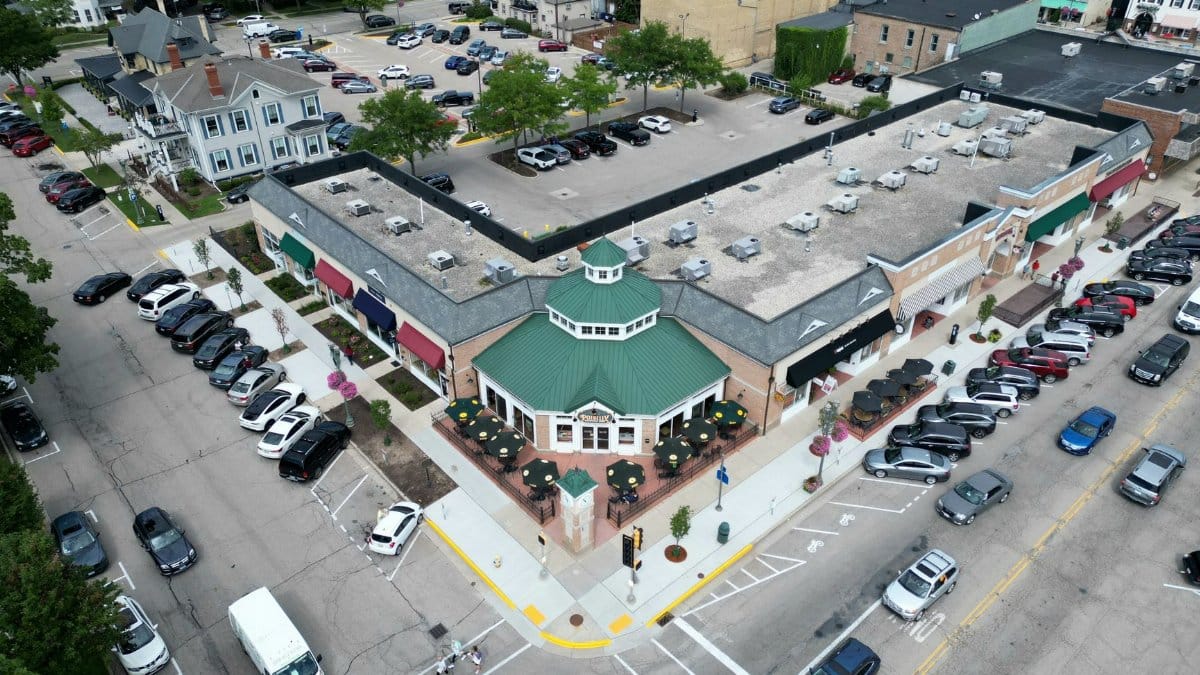
Stanford Shopping Center is not a struggling strip of vacant storefronts. It is a destination property in one of the most expensive corridors in the country. Tenants pay for the neighbors, the parking, and the assumption that people with money will keep walking past. That assumption is the product the landlord sells. A chef buys it with rent.
Prime retail has its own logic. A center can tolerate a tenant that draws crowds even if the tenant’s margins are thin, because crowds help everyone else. It cannot tolerate a tenant that stops paying, because unpaid rent is a hole in a carefully modeled asset. The José Andrés Zaytinya eviction fight sits on that line. A famous restaurant can be an amenity. An unpaid amenity is a liability.
Shoppers rarely see this calculation. They see a name they recognize and assume the economics must be fine. Commercial real estate does not work that way. A center can be full and still be unforgiving to the one operator whose sales missed the model.
The brand and the building are not the same thing

Andrés is more than a restaurant group. Through World Central Kitchen he became a public figure of emergency feeding, showing up after disasters with a competence that made institutions look slow. That work earned trust that no lease can buy. It also creates a halo that can confuse the story when a for profit dining room stumbles.
The two enterprises are not interchangeable. Feeding people after a hurricane is a mission funded by donations and urgency. Feeding people in Palo Alto is a business funded by checks and a lease. Admiration for one does not pay the other. It would be unfair to treat a rent dispute as a verdict on his humanitarian record. It would also be naive to assume the humanitarian record insulates a shopping center tenant from ordinary commercial law.
Diners often collapse those identities. They want the chef they admire to be present in the room they booked. Investors and landlords want the entity on the signature block to perform. When those expectations diverge, the person with the famous name absorbs the headline either way.
Hospitality as a civic habit

There is a reason restaurant closings feel personal in a way that other retail failures do not. A table is one of the last ordinary rituals that still asks strangers to sit still together. In a secular culture, that ritual carries some of the weight older communities gave to congregations: a weekly return, a shared portion, a sense that the week has a center. Losing a room is not a spiritual crisis. It is still a small tear in the habit of gathering.
Palo Alto has no shortage of places to spend money. It has fewer places where a meal is meant to last and where the staff learns your name. If Zaytinya leaves Stanford Shopping Center, the loss will not be measured only in unpaid rent. It will be measured in reservations that vanish and in workers who have to find another floor. Those are practical harms. They also explain why people grieve restaurants that they visited only twice.
What workers carry when the papers arrive

Eviction headlines name the chef and the landlord. They rarely name the line cook who moved for the job or the server whose schedule depends on a room staying open through the suit. A legal fight can drag while service continues, or it can end a shift with little warning. Either path is hard on people whose wages do not include a cushion for celebrity drama.
California restaurant work is already a tightrope of high rents, high wages, and customers who have become careful with checks. A dispute of this size adds uncertainty that no tip pool can absorb. If the restaurant keeps operating during litigation, staff live with rumor. If it closes, they live with applications. The moral center of the story is not the brand. It is whether the people who cooked and served are treated as an afterthought while lawyers trade numbers.
How these fights usually end

Most commercial disputes of this kind do not end with a sheriff and a padlock on the evening news. They end with a payment plan, a reduced term, a buyout, or a quiet exit that lets both sides claim a version of dignity. Landlords want occupancy and cash. Operators want time. Courts are slow, and empty storefronts photograph badly in a center that sells polish.
That pattern is not a prediction. A $2 million claim can be too large for a friendly restructuring, especially if trust is gone. It can also be a negotiating poster, a number chosen to force a faster conversation. Outsiders cannot see the side letters, the construction allowances, or the sales reports that would tell them which reading is fair. What they can see is that both sides now have a reason to talk before a judge writes the ending.
Silence from a famous operator is its own strategy. Saying too much can anger a landlord or spook staff. Saying nothing lets the complaint define the story. In a media market that already knows the name, that is a costly kind of quiet.
A caution for the next famous opening

Cities love a celebrity restaurant the way they love a new museum wing. It signals arrival. Developers use the name in leasing decks. Local officials pose for photographs. The José Andrés Zaytinya eviction dispute is a reminder that the photograph is not the underwriting. A concept can be beloved in one city and mispriced in another. Mediterranean small plates that feel inevitable in Washington have to earn their repetition in Palo Alto, against rents that assume Silicon Valley will always fill the seats.
Other chefs watching this case will draw a practical lesson, not a moral one. Do not let the prestige of an address outrun the first year of sales. Do not assume a landlord will wait because the brand is good for the center. And do not confuse public affection with private cash flow. Affection fills a room on opening week. Cash flow keeps it through month eleven.
What diners should watch next

The next chapter will be procedural and human at once. Watch whether the restaurant keeps taking reservations. Watch whether the landlord signals any willingness to restructure. Watch whether the company behind Zaytinya offers a public account or leaves the complaint unanswered. None of those signals replaces a court record, but together they tell you whether this is a rupture or a negotiation conducted in public.
For now the facts that matter are simple and still unresolved. A well known Mediterranean restaurant tied to José Andrés opened at Stanford Shopping Center and, according to the landlord’s suit, fell about $2 million behind in rent in less than a year. The José Andrés Zaytinya eviction claim will be tested in filings, not in reputation. Until then, the dining room remains a wager: lights on, lease in dispute, and a community waiting to see whether the table survives the bill.