

On a side street a short walk from the Jenkintown campus, the brick walkups at Salba Apartments have housed working families for decades. Paint peels near the stairwells. Radiators clank through winter nights. Children still race the sidewalk after dismissal. That ordinary block now sits at the center of a public argument, because Jenkintown school expansion Salba has moved from hallway conversation into formal consideration by the school board. Leaders describe classrooms that feel tight and a student body that keeps growing. Neighbors hear a different story: a plan that could remove scarce affordable homes in a town where rent already strains a paycheck. The choice is not abstract. It is about who gets to remain, and what a small district owes the children already inside its doors.
A small campus with little room to grow

Jenkintown is not a sprawling suburban system with spare fields behind the gym. It is a compact district in Montgomery County, pressed against older streets, rail lines, and parcels that were spoken for long ago. When enrollment rises, administrators cannot simply annex a cornfield. They look at the edges of the existing campus and ask which neighboring property might be converted into classrooms, offices, or play space.
That geography explains why an aging apartment complex can suddenly look, to a facilities committee, like a solution. Land next to a school is rare. Land that might come up for sale is rarer. Once a board starts measuring square footage against projected headcount, a residential building stops being only a home. It becomes a site plan.
Why enrollment is driving the conversation

Districts across the inner suburbs have spent the past several years revising the old assumption that student numbers only fall. Some towns are seeing younger families move in. Others are absorbing shifts in where people can still afford to live. Special education services, smaller class size goals, and expanded early childhood programs all consume rooms that a generation ago might have sat empty.
None of that requires a dramatic boom to create a squeeze. A few dozen additional pupils, spread across grades, can force combined classes, lunch periods that start too early, and specialists who share closets. Parents notice when art is taught from a cart. Teachers notice when there is no quiet corner for a child who needs one. Boards notice when the capital plan has nowhere left to point.
What Salba represents beyond a parcel

Salba Apartments are not a blank lot. They are occupied housing, and by most public descriptions they are older and relatively affordable in a market that has priced many workers out of the towns where they are employed. Aging buildings often carry deferred repairs, uneven heating, and layouts that would not pass a modern design review. They also carry leases, neighbors, and routines that no architectural rendering can capture.
For tenants, the building is not a future wing of a school. It is the place where rent is calculated against wages, where a child walks to class without a transfer, and where a move can mean a longer commute or a school change of their own. Any serious discussion of Jenkintown school expansion Salba has to hold both facts at once: the district needs space, and the people inside that space need homes.
The case school leaders are likely to make

A purchase, if it advances, will be framed as stewardship. Officials can argue that buying adjacent property is cheaper and faster than busing students to rented rooms across town, and more coherent than scattering programs into church basements. They can point to safety, to the value of keeping young children on one campus, and to the political reality that voters dislike tax increases but also dislike overcrowded schools.
There is a planning logic here that deserves a fair hearing. Schools are public infrastructure. When a district waits until hallways are impassable, the eventual fix is usually more expensive and more disruptive. Acquiring land before a private developer does can look, on a spreadsheet, like the responsible move. The question is whether the spreadsheet is the right moral unit.
The housing that would disappear
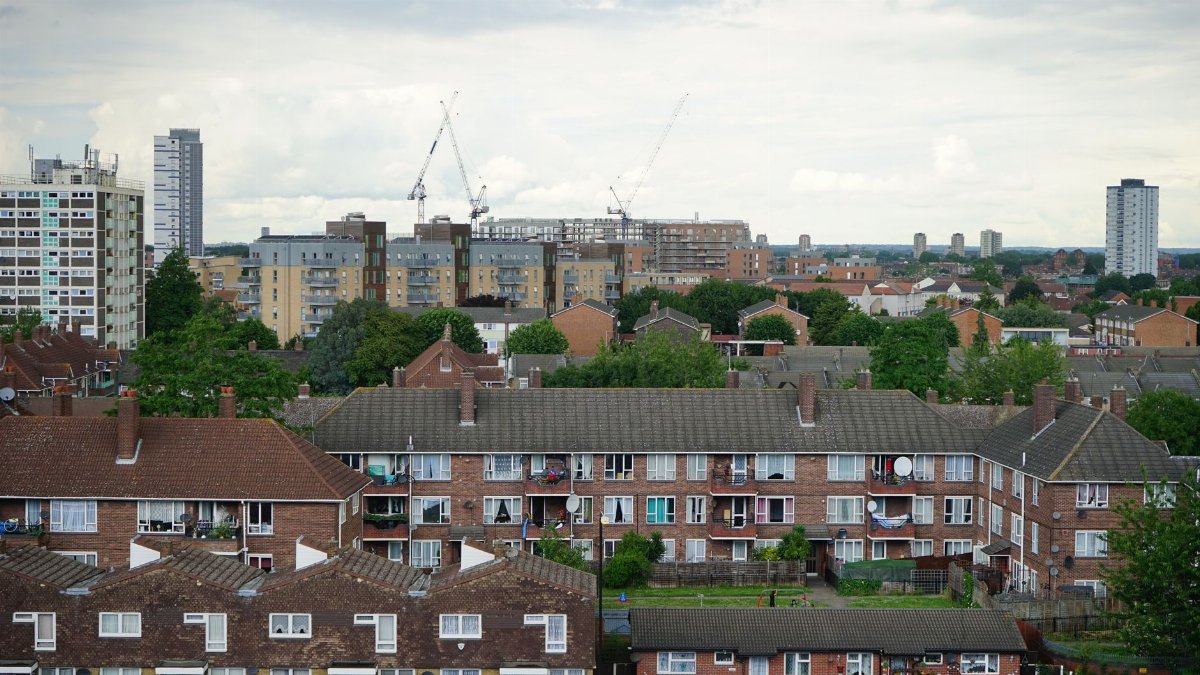
Affordable apartments in established suburbs are not easily replaced. New construction nearby tends to arrive at market rents that working families cannot meet. Subsidized projects take years, layered financing, and political will that often evaporates once neighbors organize. If Salba were emptied for school use, the units would not reappear down the block by the next lease cycle.
That loss would not be evenly shared. Families with savings can absorb a move. Families living close to the margin cannot. A school expansion that pushes out the very children it claims to serve would be a bitter kind of progress. Even if current students of the district are not the tenants, the town still educates whoever remains, and it still depends on the aides, cafeteria workers, and clerks who need a place to sleep within reach of the job.
Money, debt, and what taxpayers are asked to carry

Buying a multifamily property is not a routine textbook purchase. A district would need appraisals, environmental reviews, a plan for relocation if the law requires one, and a design for demolition or conversion. Debt service would land on the same tax base that already funds salaries and building maintenance. Residents who never set foot in Salba would still pay for the decision.
Supporters will say the alternative also costs money: modular classrooms, leased space, or a larger project years from now at a higher price. Skeptics will ask whether enrollment projections are sturdy enough to justify permanent removal of housing. Both questions are legitimate. Capital decisions outlive the board members who vote for them. A cautious public should demand the assumptions in writing, not only the renderings.
How a purchase would actually unfold

Nothing in a deliberation of this kind happens in a single night. A board typically authorizes a study, then a letter of intent, then inspections that can reveal asbestos, outdated wiring, or structural limits that change the price. Solicitors review whether school code allows the use. Relocation counselors, if engaged, would have to find units that tenants can actually afford, not units that exist only on a list.
Public meetings are where the tone of Jenkintown school expansion Salba will be set. If residents hear a finished plan presented as a courtesy, trust collapses. If they hear options, timelines, and a clear account of who would be displaced and how they would be housed, the same facts can produce a harder but more honest debate. Process is not a delay tactic. In a town this small, process is the only way neighbors remain neighbors afterward.
Students who need rooms, not slogans

It is easy, from the sidewalk, to treat the school side of the argument as bureaucratic appetite. Inside the building the needs are concrete. A child receiving speech therapy should not meet a clinician in a hallway. A science class should not store supplies in a teacher lounge. A growing kindergarten should not be split because a wall cannot move.
Those conditions shape learning in ways test scores only partly capture. Crowding raises noise, shortens attention, and makes it harder to notice a student who is slipping. Educators in small districts often pride themselves on knowing every child by name. That promise frays when there is nowhere to pull a child aside. Expansion, done well, is a defense of that promise. Done carelessly, it trades one group of children for another.
Neighbors and the politics of a single block

School fights in towns like Jenkintown rarely stay inside the boardroom. They move to porches, youth sports sidelines, and the comment line before a vote. Homeowners near the campus may fear construction dust and a loss of quiet. Renters may fear a notice on the door. Parents of current students may fear that hesitation will lock their children into inadequate rooms for years.
These are not cartoon positions. A person can believe in public education and still refuse to treat housing as expendable. A person can defend tenants and still admit that a school without space fails its charge. The useful civic act is to refuse the false choice between caring about children and caring about shelter, and to insist that any plan answer both.
Alternatives that still deserve a look

Before a purchase becomes inevitable, other paths should be priced with the same seriousness. Internal renovations can sometimes recover rooms lost to storage. Partnerships with the borough might open shared fields or municipal space for activities that do not require a full school day on site. Adjusting attendance patterns or program locations can relieve one grade without a land deal. None of these ideas is glamorous. Some may fail on inspection. They should fail in public, after comparison, not in a preamble that treats acquisition as the only adult option.
There is also the possibility of a partial approach: acquiring a portion of a site, preserving some residential use, or phasing construction so that displacement is smaller and slower. Creative land deals are harder than a clean sale. They are also more consistent with a community that claims to value both its school and its less wealthy residents.
What the board owes the public before a vote

A responsible record would include enrollment history and a plain language forecast, a description of current room use, an independent appraisal, an estimate of relocation cost, and a statement of what happens if projections prove wrong. It would name the families affected in aggregate, without exposing private lives, and it would say where comparable rents exist within a reasonable distance. It would also say what the district will not do: no quiet emptying of buildings, no pressure on tenants to leave before a vote, no suggestion that opposition equals hostility to children.
Transparency will not produce unanimity. It can produce consent sturdy enough to survive the first construction delay. In a district this size, people will remember who was straight with them.
A longer view than one budget year

Jenkintown school expansion Salba is, at bottom, a test of what a small town thinks growth is for. If the only measure is seats in a classroom, the apartments are an obstacle. If the measure is whether the town remains a place where a teacher, a cashier, and a new family can all live near the school their taxes support, the apartments are part of the educational mission already.
Other inner suburbs will watch the outcome, even if they never say so at a microphone. Land next to schools is scarce everywhere. Aging rental housing is scarce in a different and more painful way. Boards that treat the second scarcity as someone else’s problem will keep colliding with the first. The more durable path is to plan for pupils and for the people who raise them in the same breath.
The decision still belongs to the town

No article can settle whether the district should buy. That judgment belongs to elected members, to the taxpayers who fund them, and to the tenants whose keys are at stake. What can be said is that haste would be a form of negligence. So would romance about old buildings that are genuinely worn out, if the district can meet its duty without erasing homes.
The phrase Jenkintown school expansion Salba will keep appearing on agendas until someone chooses. When that night comes, the better speech will not be the one that wins the room with a rendering. It will be the one that can look a parent and a tenant in the face and explain, with numbers and with mercy, why this use of land is the one the town can live with for the next thirty years.