
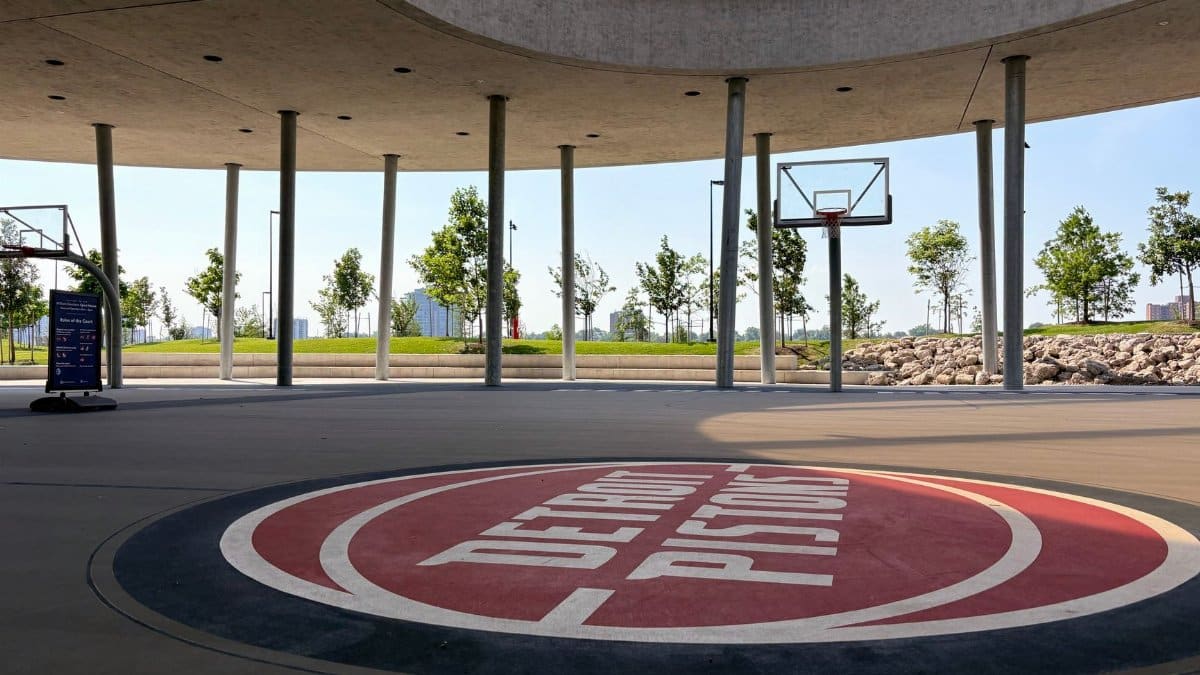
On the evening of Oct. 1, the clock in Detroit did not care about feelings. A qualifying offer deadline sat less than two hours away, and a young center who had become the Pistons most reliable presence near the rim was still unsigned. Then the standoff ended. Jalen Duren extension talks produced a five year agreement worth about $200 million, reached roughly 90 minutes before the cutoff. For a franchise that has asked its city to believe again, the number is loud. The timing is louder. Belief, in basketball as in any long devotion, often arrives just before the door closes.
A cutoff that nearly outran the handshake

Contract seasons in the NBA have their own liturgy. Agents trade numbers. Front offices model years the player has not lived yet. Fans refresh phones as if a rumor were a psalm. This one nearly missed the last hymn. Reporting from the Detroit Free Press described a standoff that ended about 90 minutes before the qualifying offer deadline on Oct. 1, with Duren agreeing to stay. The paper account is here: https://www.freep.com/story/sports/nba/pistons/2026/10/02/jalen-duren-standoff-with-detroit-pistons-is-over-time-to-go-to-work/92050557007/
Deadlines do not create value. They reveal it. A team that waits until the final hour is either bargaining hard or discovering, late, how much it fears the alternative. A player who waits is testing whether the building that drafted him still wants the version of him that showed up every night. Both impulses can be rational. Both can also curdle into pride. Detroit chose commitment over another winter of maybe.
What two hundred million is really buying

A five year deal near $200 million is not a compliment. It is a forecast. The Pistons are paying for the center they hope Duren becomes in his middle twenties, not only for the rebounds already in the book. That is how the modern salary structure works. Young big men who can finish, defend the paint, and keep a locker room steady are scarce enough that waiting for a perfect sample size can cost you the player.
The risk sits in the gaps. Centers who live on athleticism must add touch, passing reads, and the dull habit of staying out of foul trouble. If those pieces arrive, the contract looks like stewardship. If they stall, it becomes the kind of number that narrows every other choice a front office can make. Detroit is betting that the arc is still rising. That bet is the whole story of the Jalen Duren extension, more than the press release language around it.
The body in the middle of the floor

Duren arrived in the league as a teenager with a man’s frame and a rebounder’s impatience. He did not need a speech to explain his job. Get the ball. Protect the rim. Run the floor when the guard pushes. Over seasons in Detroit he became less a prospect and more a fact of the offense. When the shot clock thinned, teammates looked for him. When opponents tried to live in the paint, he was the reason the rent went up.
That kind of presence is easy to underrate in a league drunk on spacing. It is also easy to overrate if the only film you watch is the dunk. The honest view sits between those poles. He has been a tone setter on nights when Detroit needed weight more than wit. He has also had nights when discipline lagged and the whistle found him. A max adjacent commitment says the organization has watched both reels and still wants the author in the building.
Why the paint still has a congregation

Every few years someone declares the traditional center finished. Then a playoff series turns on offensive rebounds, vertical contests, and the simple problem of moving a large man who does not want to be moved. Detroit has lived that lesson. A roster built only on shooters can look modern in November and fragile in April. A roster with a real center can look old fashioned until the ball hits the floor and nobody else wants to pick it up.
Fans in this city already treat home games with a kind of weekly faith. They stand, they argue, they return. Paying the center is a front office way of joining that practice. It says the paint matters here, not as nostalgia, but as a competitive choice. The Jalen Duren extension is a basketball decision first. It also reads, for people who measure hope in winter schedules, like a promise that the middle of the floor will not be rented out to the next available body.
A core that now has a number attached
Extensions are how a contender, or a team that wants to become one, stops living on one year leases. Guards set the terms of the offense. Wings punish closeouts. Centers decide what the defense is allowed to feel. When those roles are locked in together, practice has a point. When one of them is negotiating against a clock, every film session carries a second conversation nobody wants to have out loud.
Detroit has spent years trying to make the lead guard’s timeline match the big man’s. That alignment is fragile. Injuries, trades, and the simple fact of other teams with cap room can pull it apart. Signing Duren does not guarantee a banner. It removes one excuse. The group that takes the floor this season cannot claim the future was too cloudy to work. The cloud, at least over the center spot, has a price and a term.
The qualifying offer and the art of not blinking

A qualifying offer is a procedural door, not a love letter. It keeps a team’s rights alive under league rules and forces a choice on a date everyone can see. Miss it, and the relationship changes shape. Make it, and you may still be negotiating from a colder room. The Pistons and Duren’s side used nearly all the clock and then found a larger deal instead of a smaller holding pattern.
There is no virtue in drama for its own sake. There is also no virtue in pretending hard talks are a moral failure. Players are allowed to test the market of belief inside their own building. Teams are allowed to protect payroll flexibility until the evidence feels sufficient. What matters after the signature is whether the bruise of the wait shows up in March. The healthiest version of this story is the boring one: both sides felt heard, and the work resumed before the first tip.
Risk the balance sheet cannot hide

Two hundred million dollars changes the air in a room. Teammates notice. Opponents notice. The player notices most of all, even if he says he does not. Money can free a performer. It can also make every missed box out look like a referendum. Detroit will need a coaching staff calm enough to coach through the new number, and a player sturdy enough to hear correction without hearing insult.
The franchise carries risk of another kind. Cap sheets are moral documents whether executives admit it or not. Every dollar promised to the center is a dollar not promised to a wing, a reserve guard, or the tax bill a city argues about in the abstract. If the team improves, the contract becomes the cost of adulthood. If it stalls, critics will treat the deadline rush as proof that fear wrote the check. That criticism will not be entirely fair, and it will not be entirely wrong. Big deals are arguments with the future. The future answers on its own schedule.
What this season is allowed to prove

The first honest test is not a headline in June. It is November, when the building is half full and the opponent is ordinary. Does Duren still chase the long rebound? Does he still talk on defense when the set breaks? Does he pass out of a crowd instead of forcing a finish that thrills the cheap seats and kills the possession? Those are small rites. Careers are made of them.
Detroit can also ask something of itself. A committed center needs spacing, early offense, and a scheme that does not leave him alone against traps he has not solved. Extensions fail in public when the fit was never designed, only purchased. The Jalen Duren extension will look wise if the offense keeps giving him clean decisions and the defense keeps asking him to be a wall rather than a hero. It will look hasty if the roster around him asks for a player who is not on the floor.
Patience as a civic practice

Detroit sports have taught a hard catechism. Hope arrives, gets injured, gets traded, or simply fades. People still buy tickets. That persistence is not naivete. It is a choice to keep a public ritual alive in a city that has earned the right to be skeptical. A contract cannot repay that loyalty. It can refuse to insult it.
Signing a homegrown center before the door shut is one such refusal. It tells a middle aged season ticket holder, and the kid he brings, that the team is willing to live with a person rather than a concept. Concepts are easier. They do not miss free throws. Persons do. The grown version of fandom is learning which misses belong to growth and which belong to a plan that was never serious. For now, the plan has a name on a long sheet of paper.
After the announcement, the ordinary days

The interesting part of a signing is not the graphic. It is the Tuesday after. Treatment, lifting, film, the quiet correction of a footwork habit nobody will clip for social media. Duren’s value will be settled there, in work that does not trend. If he treats the new deal as a receipt for work already done, the years will feel heavy. If he treats it as rent paid in advance for work still due, the Pistons may have bought the right problem: a standard high enough to chase.
Front offices like to say the hard part is over once the pen moves. Players know better. The hard part is the fourth quarter in February, on the second night of a back to back, when the legs are late and the contract is no longer news. That is when a city learns whether a deadline deal was panic or conviction. Detroit has made its case in dollars and in timing. The season, not the statement, will grade the paper.
A number, a clock, and a city still watching

Strip away the agents and the cap jargon and the story is plain. A young center and his team stared at a cutoff and chose each other with about 90 minutes to spare. The term is five years. The figure is about $200 million. The meaning depends on what they do with mornings that will never make a chyron.
Some commitments are loud because they are desperate. Some are loud because they are clear. Detroit will spend the winter sorting which kind this was. Fans who have kept their own quieter vows, season after season, already know how to wait for that answer without pretending the wait is easy. The Jalen Duren extension closed a standoff. It opened the only chapter that counts, the one written in games rather than in rumors.