
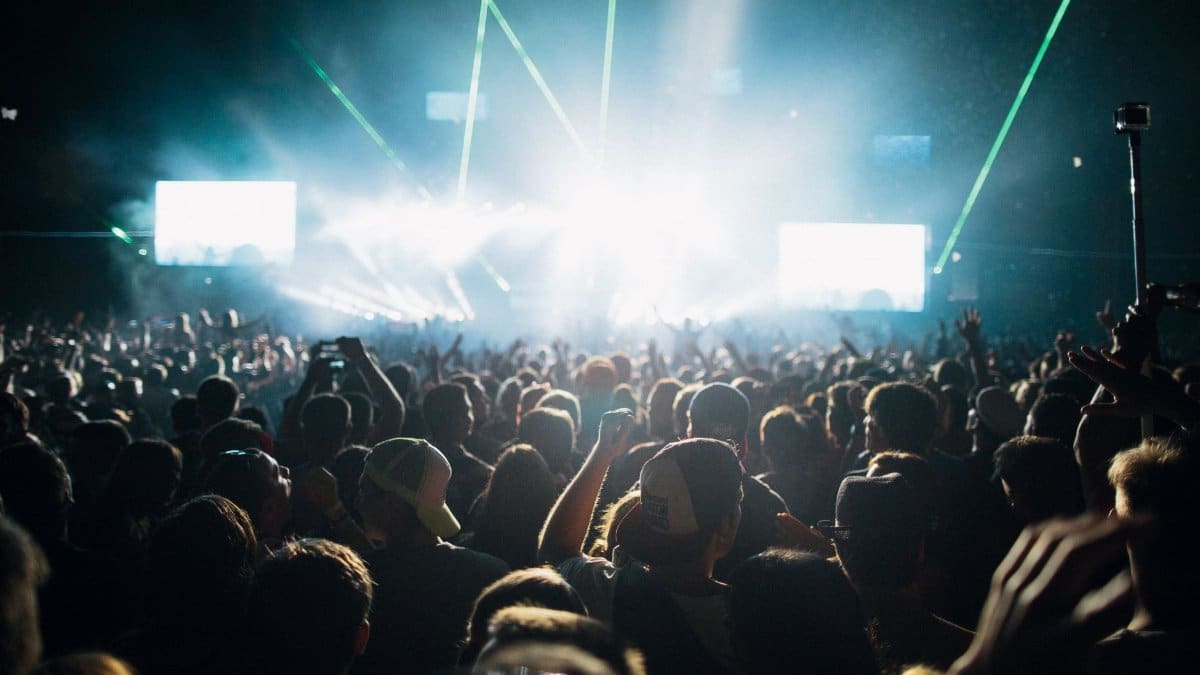
The line outside a Shakopee venue starts before dusk, a slow river of denim and tour shirts moving toward the gates. Someone mentions a daughter who flew in from Chicago. Someone else is still arguing about which album matters most. That small argument, repeated across parking lots and light rail platforms, is the texture of Twin Cities concerts Sept, a stretch when Iron Maiden headlines a week already thick with returning favorites and younger names testing a big room.
A week that refuses to thin out
Live calendars usually breathe. One heavy night, then a quieter club date, then a festival remnant. This September stretch does not breathe much. Iron Maiden takes the large outdoor stage in Shakopee on September 19, and the days around that date carry Phoebe Bridgers, Kacey Musgraves, Devo, the B52s, Herb Alpert, Role Model, Weezer, and Public Image Ltd. For a metro that already treats weekends as a second job, the pileup feels less like a coincidence than a statement: people still want to be in the room when the song starts.
I have watched enough of these weeks to know the practical cost. Dinner reservations vanish. Rides home get negotiated in group texts. A single household can hold three tickets and no shared night off. The cultural cost is different. When this many shows land together, the city stops treating music as background and starts treating it as the main appointment.
Why Iron Maiden still draws the biggest circle

Iron Maiden does not need a reinvention speech. The band has spent decades building a live reputation on precision, volume, and a catalog that fans can recite without a set list. In a market the size of the Twin Cities, that reputation converts into a crowd that spans generations without looking confused about why it is there. Parents bring adult children. Longtime fans arrive early enough to claim a sightline. Newer listeners come because the name has outlasted every fashion cycle that tried to retire it.
What holds the room is not nostalgia alone. Maiden songs are built for distance. Choruses travel. Riffs announce themselves before the lyrics do. In an outdoor setting, that architecture matters. Wind, chatter, and the geometry of a large field can swallow a delicate arrangement. They have a harder time swallowing a band that writes as if the back row is the real audience.
Shakopee as a destination, not a compromise
Shakopee sits far enough from downtown that the trip itself becomes part of the night. People plan around traffic, parking, and the last comfortable moment to leave the house. That friction used to count against suburban sheds and fairgrounds. It counts for less now. Audiences have learned that a clear stage, a manageable walk from the car, and a show that starts when promised can outweigh the romance of a downtown address.
For Iron Maiden, the site also matches the scale of the ritual. This is not a club secret. It is a public gathering with merch lines, food vendors, and the particular patience of people who have done this before. The September 19 date gives the week a center of gravity. Other concerts orbit it. Conversations at work the next morning start with who went, who stayed home, and whether the encore felt earned.
The rest of the bill, heard as a map

Read the surrounding names as a map rather than a list. Phoebe Bridgers draws listeners who want language first, a room quiet enough for a line to land. Kacey Musgraves pulls a different coalition, country craft meeting pop clarity, with fans who dress for the night and still know the verses. Devo and the B52s carry a different kind of memory, the art school grin and the dance floor that never fully left the 1980s. Herb Alpert offers something rarer in a loud week: brass, melody, and a career that predates almost everyone in the parking lot.
Role Model speaks to a younger ticket buyer who found songs on a phone before finding them in a hall. Weezer remains a reliable bridge between guitar nostalgia and singalong practicality. Public Image Ltd arrives with a sharper edge, a reminder that post punk was never only a costume. Together they sketch a metro that does not agree on taste and does not need to. Twin Cities concerts Sept works because disagreement has venues.
What audiences are actually buying
Ticket prices get the loudest complaints, and the complaints are not imaginary. A night out now includes fees, parking, a drink, and sometimes a hotel if the drive home feels unwise. Yet sell through on major dates keeps happening. The purchase is not only the song. It is proof of presence. In a year when so much culture arrives through a screen, a stamped ticket is a small argument against staying in.
That argument looks different by age. Middle aged fans often describe the show as a reunion with their own attention. Phones stay in pockets longer. Conversations before the lights drop are about work, children, and which song they hope survives the set. Younger fans document more, but they are not less serious. They have simply learned music in public. Both groups are paying for the same scarce thing: a few hours when the schedule belongs to the band.
Venues and the shape of a night
Each room edits the music. A theater flatters a singer who lives in detail. A large outdoor stage rewards bands that can project without apology. Club rooms still do the work of discovery, even in a week dominated by famous names. The mistake is to rank these spaces as if one were more real. They are different instruments.
For this particular cluster, the editing is visible. Iron Maiden needs air and distance. Bridgers and Musgraves need a crowd willing to listen between the hits. Devo and the B52s need bodies that will move. Herb Alpert needs a listener who can hear arrangement as entertainment, not as homework. When those needs are met, the week feels curated. When they are not, it feels like a traffic jam with a soundtrack.
The communal part people hesitate to name

Concerts get described as entertainment, and they are. They are also one of the few remaining civic habits that do not require a shared political script. Strangers stand shoulder to shoulder, accept the same volume, and leave with a story they can tell the same way. That is not church. It is not nothing either. In a category of life often filed under trends, the trend worth noticing is gathering itself.
I keep coming back to the small courtesies. A taller person shifts left. Someone lends a phone charger in the beer line. A stranger identifies a deep cut before the chorus confirms it. None of this repairs a city. All of it reminds people that they can share a hour without a feed mediating the share. Twin Cities concerts Sept makes that reminder hard to miss because it happens on consecutive nights, in different neighborhoods, for different tribes that still know the same basic choreography.
Memory, catalogs, and the long career
A band like Iron Maiden forces a question that newer acts can postpone. What does a catalog owe an audience after forty years? The fair answer is not endless novelty. It is stewardship. Play the songs people crossed a county line to hear. Play them cleanly. Leave room for one surprise if the night can hold it. Fans of long running acts are often caricatured as rigid. In practice they are archivists with standards. They notice tempo. They notice whether the singer is pacing for the closer. They forgive weather. They do not forgive indifference.
Shorter careers face a different test. Phoebe Bridgers and Role Model are still adding chapters. A big week can inflate a moment into a myth or expose a set that is not ready for the room. Kacey Musgraves has already survived several versions of fame and can treat a metro date as craft rather than crisis. Weezer has lived inside that tension for decades, beloved and debated in the same breath. The week is generous enough to hold all of those stages of a life in music.
How locals actually choose

Choice, in a stacked week, becomes a household negotiation. One partner wants Maiden. The other has waited months for Musgraves. A teenager has Role Model circled and no interest in brass or post punk. Money and school nights settle some of it. Taste settles the rest. The healthiest local habit is not attending everything. It is knowing why a particular night matters and letting the others go without resentment.
Promoters understand this better than they admit. They stack names because demand is real, and because a crowded calendar creates urgency. Wait a week and the poster changes. That urgency can feel manufactured. It can also be honest. Artists route through the Upper Midwest on tight schedules. If the date is September, the date is September. Twin Cities concerts Sept is less a slogan than a logistical fact.
What the morning after sounds like

The measure of a show is often the commute home. If the car is quiet, something failed, or something landed so hard that talk can wait. If the car is loud, people are already editing the night into a story: the opener who surprised them, the hit that felt thinner than memory, the moment the whole field sang. Those stories circulate at offices, schools, and kitchen tables. They are how a concert becomes civic knowledge rather than a private receipt.
Iron Maiden nights tend to produce the loud version. The catalog is built for retelling. So are the visual signatures, the pacing, the sense that a large machine ran on time. Other shows on the same calendar produce quieter afterwords. A Musgraves ballad. A Bridgers line that someone repeats badly and then looks up. An Alpert melody that refuses to leave the car. A Devo chant that embarrasses no one in the right company. The variety is the point.
A practical way to hear the week

If the goal is to understand the metro rather than to collect wristbands, pick with intent. See the spectacle if spectacle is what you have been missing. See the songwriter if language is what you trust. See the dance band if the body has been sitting too long. See the veteran instrumentalist if you want proof that popularity and longevity can share a stage without shouting. None of these choices is more serious than the others. Seriousness is attention, not genre.
Leave time for the ordinary frictions. Eat before you arrive if the venue food is a gamble. Decide on a meeting point before the encore, when phones fail and crowds thicken. Accept that September evenings cool faster than the afternoon suggested. These are small disciplines. They are also how a good bill becomes a good night instead of a story about traffic.
What this pileup says about the cities
A region shows its cultural health in ordinary weeks, not only in festival banners. Can it support a metal institution, a country pop headliner, an indie writer, a pair of new wave institutions, a jazz pop elder, a rising pop act, a guitar band with a complicated reputation, and a post punk original in the same narrow window? This September argues yes, with caveats about price and exhaustion. The audience is not infinite. The interest is broader than any one scene likes to claim.
That breadth is easy to mock and hard to fake. It requires promoters willing to risk different rooms, artists willing to route through a northern metro, and listeners willing to leave the house more than once. Twin Cities concerts Sept captures that bargain in a phrase that sounds like a search query and behaves like a diary entry. People are looking. People are going.
After the lights, the calendar keeps its promise
When Iron Maiden leaves Shakopee, the week does not emptily reset. Other stages still have work to do. Someone will discover a support act and follow that name for years. Someone will decide a beloved band has become a habit rather than a necessity, and that judgment will be fair. Someone will hear a song live for the first time and understand, finally, why a recording never quite explained it.
The packed week will be remembered less as a list than as a feeling of abundance with edges. There was more music than any one person could hold. There was one night, September 19, when the largest circle gathered for a band that still knows how to fill it. The rest of the dates filled smaller circles with equal conviction. That is a good definition of a music city: not unanimity, but enough stages, and enough people willing to cross town, that disagreement can be heard at full volume.