
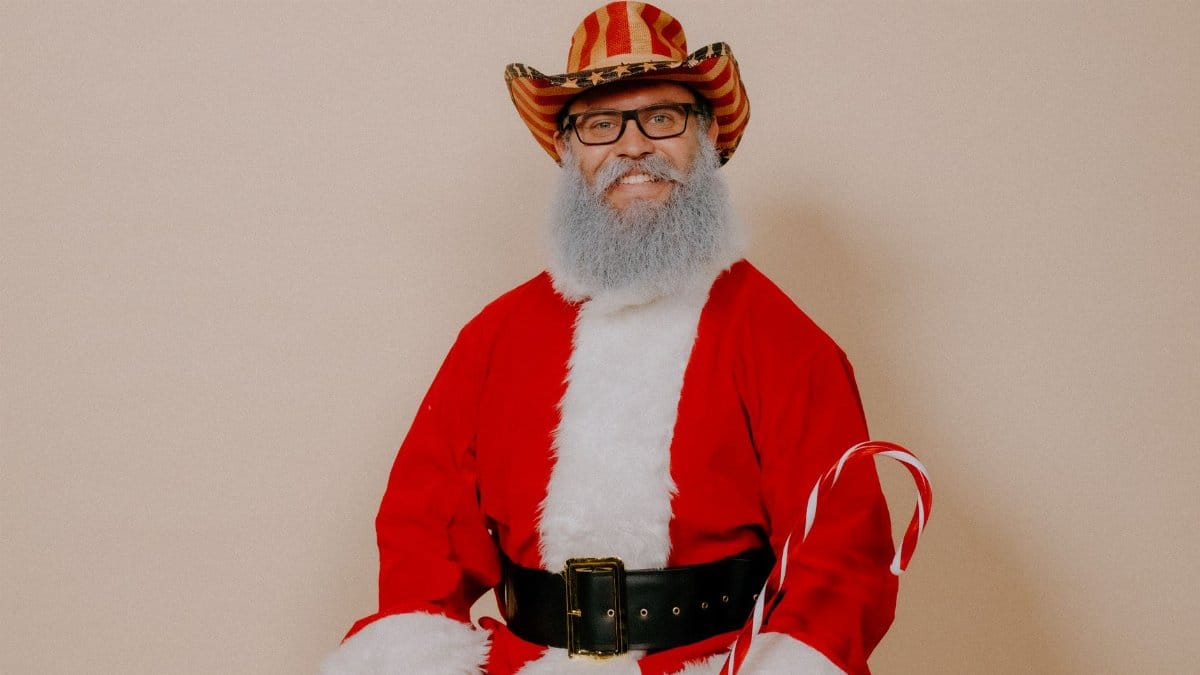
On a December night in Houston, a bright suit and a familiar laugh have long meant more than a costume. Children in the East End learned to listen for a lowrider and a greeting that arrived in Spanish and English at once. This season the ritual carries a different weight. A Pancho Claus Christmas tradition built across nearly half a century is closing, and a public fundraiser has drawn nearly $10000 as neighbors try to keep gifts moving after Richard Reyes said he has cancer and will end his run.
A figure the city already knew by heart
Pancho Claus is not a novelty invented for a single parade. In Houston he became a local language for Christmas, a Latino answer to a holiday figure who too often arrived looking like someone else’s grandfather. Reyes built the role over about 45 years, long enough that parents who once waited on curbs now bring their own children. The point was never a perfect replica of a mall Santa. It was recognition. A child could see a man who sounded like the block, who understood the jokes, and who still showed up with toys.
That longevity matters when a tradition stops. People do not mourn a costume. They mourn a reliable appearance, the sense that December had a local appointment on the calendar. Reyes made that appointment. The Houston Chronicle reported that he shared his cancer diagnosis and brought the long project to a close, and the response followed almost at once.
What the fundraiser was actually for

The GoFundMe campaign, tied to the Christmas project, raised nearly $10000. In a city of millions that sum can look modest. In the economy of a neighborhood toy run it is not. It can cover gifts, fuel, small logistics, and the unglamorous costs that turn goodwill into boxes on a porch. Reyes did not frame the appeal as a personal medical bill in the public telling that traveled with the story. The visible aim was the season itself: one more round of giving after the news that his body would not allow the old pace.
Campaigns like this succeed when the ask is concrete. Donors were not buying an abstraction called community. They were trying to keep a known route alive for children who had been promised, by habit if not by contract, that someone would come.
Illness as a public fact
Cancer announcements from public figures often slide into inspiration talk. Reyes’s news resists that smoothing. A 45 year practice depends on stamina, late nights, and a body willing to stand in cold air while families gather. When that body fails, the tradition has to admit it was never magic. It was labor.
I keep returning to how ordinary the pivot was. A man told his city he was sick. The city answered with money for toys rather than with a speech about resilience. That choice says something about Houston’s practical piety. Care showed up as a donation total, not as a slogan.
How a costume became a civic role

Reyes did not hold office. He held a character. Over decades that character did work the city sometimes fails to do on its own: it told Latino children that Christmas included them without translation. Scholars of popular religion would recognize the pattern even if they never used the term. A folk figure gathers meaning because people repeat him. Each year of appearances added authority that no branding meeting could grant.
The suit, the music, the lowrider, the bilingual patter: these were not decorations on a generic Santa. They were the message. Cultural fit is not a side issue in holiday ritual. It is how a child decides the story is about her street and not about a postcard from elsewhere.
Faith without a pulpit

The season around Pancho Claus Christmas is Christian in calendar and mixed in practice. Many families who waited for Reyes also sat in church, or did not. The project did not require a creed at the curb. What it required was presence. In that sense it belongs with a wider American habit in which spiritual life leaks out of sanctuaries and into porches, school gyms, and parking lots.
Giving toys is not a sacrament. It can still function as one of the few public acts in which strangers agree, for an evening, that children should be met with abundance rather than with scarcity. When illness interrupts the person who organized that agreement, the spiritual question is blunt. Who will keep the promise if the familiar face cannot?
Nearly $10000 and what money cannot do

The nearly $10000 raised will not restore a 45 year run. Money buys objects and miles. It does not buy the particular voice that children learned to expect. That limit is worth stating plainly, because fundraisers are often asked to carry grief they cannot lift. Supporters can honor Reyes by funding gifts. They cannot purchase his health, and the Chronicle’s account does not pretend otherwise.
Still, the total is evidence. It shows that the audience was not theoretical. People who had watched the project, or heard about the diagnosis, moved quickly enough to approach five figures. In local news that speed is its own kind of reporting. Attention became cash, and cash became a chance to finish the season with dignity.
The children who set the measure
Adults argue about representation. Children measure Christmas by whether the bag opens. Reyes understood that hierarchy. A culturally specific Santa who brings nothing is a lecture. A culturally specific Santa who brings a toy is a memory. The fundraiser, modest as large philanthropy goes, sits on that second standard. If the last circuit reaches the families who counted on it, the campaign did the job it named.
There is also a quieter group in the story: parents who used the visits to explain generosity without a lecture of their own. A child who sees neighbors fund a toy run learns that care is organized, not accidental. That lesson does not require a theology class. It requires repetition, which is what Reyes supplied until he could not.
Ending a run without erasing it

Stopping after nearly half a century is not failure. It is a boundary. Performers and community organizers often stay one year too long because the role has swallowed the person. Reyes’s decision to end the project alongside his diagnosis draws a line that protects both his health and the story’s shape. A tradition that knows when to close can be remembered as intact rather than as a fade.
Cities are bad at endings. They prefer anniversaries. The honest version of this one includes illness, fatigue, and a fundraiser that tried to catch the last gifts before the calendar turned. That is a fuller tribute than a plaque that skips the hard year.
What Houston is being asked to remember

The Pancho Claus Christmas project will be retold, in kitchens and in news briefs, as a Latino Christmas institution that outlived trends. The risk in that retelling is nostalgia that sands off the work. Remembering well means remembering routes, volunteers, donated toys, and a man who kept returning until cancer made return impossible on the old terms. It also means noticing who was served: families for whom a mainstream Santa on a screen was never quite enough.
Local culture survives when someone treats it as a job. Reyes did. The GoFundMe response suggests that enough people noticed the job to pay for its last chapter. Nearly $10000 will not rewrite a medical chart. It can still put wrapped boxes into hands that expected them.
A season measured in showing up

Holiday coverage often hunts for uplift and finds a slogan. This story is smaller and better. A Houston performer told the truth about cancer. He closed a 45 year tradition. Neighbors funded the Christmas project he could no longer carry alone. The spiritual content, if the word fits, is not a miracle claim. It is the decision to answer a public loss with a practical gift.
Years from now the dollar figure may blur. The image may not. A man in a bright suit, a lowrider on a Houston street, children who understood at once that Christmas had come in their own accent. That picture was built by repetition. Its last funded night, if the gifts go out, will belong to the same plain devotion: show up, bring something, do not pretend the body is endless.