
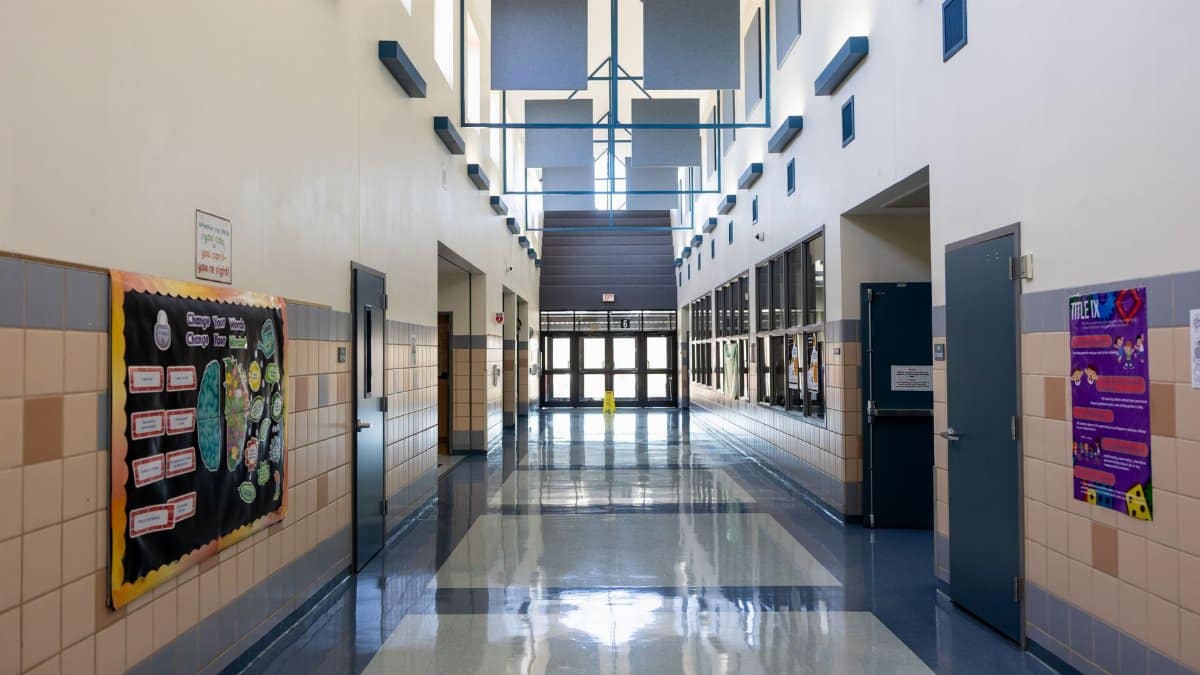
On a warm September morning, the official count that decides how a school system pays its bills arrived with a quieter set of campuses than many parents remember. Houston Independent School District recorded about 155,600 students on Sept. 4, a fall of nearly 10,000 from the year before and roughly 6 percent below last September. That shortfall is now shaping HISD enrollment staff cuts, a budget response that reaches from central offices to the people who greet children at the door. For a district this large, a missing desk is never only a number. It is a teacher who will not be hired, a clerk whose hours shrink, and a family wondering whether the school down the street will feel thinner next month.
What the September count is really for

Texas funds public schools largely by attendance and enrollment, not by the size of the building or the hopes printed in a strategic plan. The early fall snapshot is the moment when estimates meet children who actually showed up. A district can recruit, renovate, and advertise all summer. If the seats stay empty, the revenue does not arrive.
Last September is the comparison that matters to budget writers because it is the same point in the calendar, before winter transfers and before spring testing season. A drop of nearly 10,000 students is not a rounding error in a system that still serves well over 150,000 young people. It is enough to change hiring freezes into actual reductions. Local coverage of the district count put the Sept. 4 figure near 155,600, about 6 percent under the prior September. Those are the numbers administrators are using as they match payroll to pupils.
Parents sometimes hear “enrollment” and think only of kindergarten registration. Accountants hear something else: the base on which state aid, some federal allocations, and campus staffing formulas rest. When that base shrinks, the org chart shrinks with it.
Why fewer students become fewer jobs

School districts are labor organizations. Most of every dollar goes to people: teachers, aides, bus drivers, nurses, counselors, custodians, and the specialists who keep records straight. Buildings do not get cheaper in proportion to an empty classroom. Utilities, debt, and maintenance linger. The flexible part of the budget is staff.
That is the plain logic behind HISD enrollment staff cuts. If the district kept last year’s workforce while serving thousands fewer students, it would spend money it does not expect to receive. Boards rarely choose that path for long. They reduce positions, leave vacancies unfilled, or consolidate roles so that one employee covers work once split among two.
The pain is uneven. A campus that lost thirty students may lose a teacher and an aide. A campus that held steady may only feel the cut as a slower response from a central office that now has fewer clerks. Both experiences are real. Both follow from the same arithmetic.
Where families notice first

The first sign is often not a press release. It is a longer line at the front office, a counselor with a heavier caseload, or a beloved elective that does not return. Class sizes creep up before anyone uses the phrase “reduction in force.” A librarian splits time between two schools. A nurse covers a wider route.
Teachers feel it as planning time that disappears and as colleagues who are not replaced when they leave. Students feel it as fewer adults who know their names. In a city as spread out as Houston, a cut at one campus can look like stability at another. The district average hides that map.
None of this requires a dramatic scene to be serious. Public education runs on ordinary reliability: the bus on time, the roster correct, the adult in the room who was there yesterday. Staffing cuts threaten that reliability before they threaten any slogan about excellence.
Money follows the child, with a lag

Funding formulas are designed to follow students. In theory, a smaller district should need a smaller staff, and taxpayers should not pay for empty seats. In practice, the lag and the fixed costs make the transition rough. Contracts, certification rules, and the school calendar do not resize themselves in a week.
Urban districts also serve students who cost more to educate well: children learning English, students with disabilities, and teenagers who arrive midyear from another state or another country. Those needs do not fall in a neat line with total headcount. A district can lose enrollment overall and still see rising complexity in the classrooms that remain.
That tension sits underneath the current HISD enrollment staff cuts. Leaders can say, correctly, that payroll must match pupils. Teachers can say, also correctly, that the pupils who stayed are not cheaper to teach. Both statements can be true in the same budget hearing.
Why the rolls thinned

A single cause rarely explains a loss this large. Houston families have more options than they did a generation ago: charter schools, suburban districts, private schools, and homeschooling. Some parents moved because rent rose. Some never returned after the pandemic rearranged work and childcare. Birth rates have softened in many American cities, which means fewer kindergartners even when every family stays put.
Competition is not the same thing as failure, though critics will treat it that way. A family that chooses another school is exercising a legal option. The public district still has to plan for the children who remain, including those with the fewest alternatives. Enrollment decline is a fiscal fact. It is also a story about trust, housing, and whether a neighborhood school still feels like the default.
District leaders owe the public a clear account of where the students went, campus by campus, grade by grade. Without that map, staffing cuts look arbitrary even when the total math is sound.
What cuts can fix and what they cannot

Reducing staff can close a budget gap. It cannot, by itself, bring students back. If families left because of academics, safety, or a sense that no one returned their calls, a thinner payroll may deepen the very problems that drove the exit. If families left because of housing costs far from any classroom, no hiring freeze will reverse the trend.
The responsible sequence is plain. Publish the enrollment figures in language a parent can check. Show which positions are gone, which are frozen, and which campuses are protected because of student need. Then say what will be measured six months from now: attendance, teacher vacancies, and whether the students who remain are getting the services the law requires.
Vague promises waste the one asset a district still controls, which is credibility. Specific promises can be tested. That is the standard a city this size should apply to HISD enrollment staff cuts, not as a slogan but as a management test.
The people whose names are not on the roster

A staffing chart lists titles. It does not list the crossing guard who knew which child waited for a grandparent, or the clerk who fixed a birth certificate error before it blocked a free lunch form. Those losses do not show up in a test score this fall. They show up as friction.
Large systems talk about efficiency because they must. Efficiency has a human edge. When three jobs become two, the remaining worker often absorbs the unfinished third. Burnout then produces another vacancy, and the cycle repeats. Districts that cut only on paper, without redesigning the work, discover that the savings leak away in overtime, substitutes, and errors.
Houston has congregations, neighborhood associations, and parent groups that already fill gaps with tutoring, food, and rides. That help is real. It is not a substitute for a funded public school. Volunteer energy ebbs. A counselor does not. Treating charity as a staffing plan is a category error, even in a city rich with houses of worship and civic clubs.
Questions worth asking at the next meeting

Residents do not need a finance degree to judge this moment. They need a few questions asked in public and answered without fog.
How many positions are eliminated, and how many are simply unfilled jobs from last spring? Which cuts touch classrooms, and which touch administration? Are schools with high shares of students in poverty shielded, or are they absorbing the same percentage cut as campuses with more private options nearby? What happens if the October or midyear count falls further?
Those questions keep the debate on evidence. They also protect employees from rumor. A workforce that learns its fate from social media will not stay, and the next enrollment report will be worse for reasons the budget never modeled.
A smaller district is still a public trust

Nearly 10,000 fewer students is a shock. It is not the end of a school system that still educates about 155,600 children. The task is to become smaller without becoming careless. That means honest counts, visible choices, and a refusal to pretend that every lost job is painless or that every retained job is sacred.
Parents will judge the HISD enrollment staff cuts by what happens in October and in January, not by the tone of a September statement. If classes are stable, services for vulnerable students hold, and leaders can explain each reduction, the district will have done the hard adult work of matching means to mission. If the cuts land in silence, on the campuses least able to absorb them, the enrollment decline will have company. Trust will leave next.