

On a warm evening in a northwest Houston subdivision, a homeowner spreads the county tax notice across the kitchen table and does the arithmetic twice. The bill is higher. The explanation is thinner. Neighbors trade theories about flood projects, jail costs, and orders from the state capitol. The phrase that keeps surfacing is Harris County tax increase, and it has become shorthand for a harder question: who chose this bill, and what did the county buy with it?
A number that refuses to stay abstract

The latest round of argument turns on a plain claim. A county tax rate rise of about 12 percent has been tied to roughly $327 million in new spending. That is not a rounding error in a budget the size of a mid sized state agency. It is enough to hire, build, contract, and expand programs for years. It is also enough to show up in a mortgage escrow and in a landlord’s renewal letter.
Residents do not experience government as a stack of line items. They experience it as a total. When that total jumps, people look for a culprit. Some point to Austin. Some point to the Commissioners Court. The more useful habit is to separate what the state required from what local leaders chose. Those are not the same thing, even when both appear on the same bill.
What the new spending is said to buy

Supporters of the higher levy describe the money as the cost of a county that has not stopped growing. Harris County is home to millions of people, a vast road network, a jail that never sleeps, courts that run behind, and a flood control system still living with the memory of Harvey and later storms. Payroll, health coverage for employees, construction inflation, and contract prices have all climbed. A budget that stood still in dollar terms would shrink in real capacity.
Critics answer that growth is not a blank check. They argue that the $327 million figure reflects priorities, not fate. A county can add prosecutors or it can add administrative layers. It can accelerate drainage in the neighborhoods that flood first, or it can spread smaller projects so widely that none of them finish on a schedule a homeowner can see. The fight is less about whether government costs money than about whether this particular stack of costs was explained before the rate was set.
The Austin explanation and its limits

Texas counties operate inside a tight legal box. They do not write the penal code. They do not set most school finance rules. They carry unfunded or underfunded duties that the Legislature assigns and then leaves on the local books. Indigent defense, certain court functions, election administration, and jail standards all arrive with state fingerprints. When officials say Austin made them do it, they are sometimes telling the truth.
They are not always telling the whole truth. A mandate explains a floor. It does not automatically explain a ceiling. Analysts who have walked through recent county budgets argue that a large share of the new outlays reflects local program growth, pay decisions, and capital choices rather than a single statute dropped from the capitol. That is the core of the present dispute over the Harris County tax increase. If the hike is mostly a pass through of state orders, voters should be shown the orders. If it is mostly a local appetite, voters should be shown the menu.
How a county tax bill is actually built

Property tax confusion is a civic hazard. The county does not send the only bill. School districts, cities, hospital districts, and special districts each set a rate against the same taxable value. A homeowner who says the county raised taxes may be reacting to a school rate, a city rate, or a jump in appraised value that no elected board fully controls.
Appraisal growth can raise a bill even when a rate falls. A rate increase on top of rising values compounds the sting. Texas law gives large taxing units a voter approval threshold, often discussed in public as a cap, beyond which a higher rate can be forced onto a ballot. Counties sometimes adopt a rate just under that line and call the result restrained. Residents looking at a 12 percent county increase are unlikely to feel restrained. They want the arithmetic in one place: last year’s levy, this year’s levy, the share from value growth, and the share from the rate.
Public safety and the cost of custody
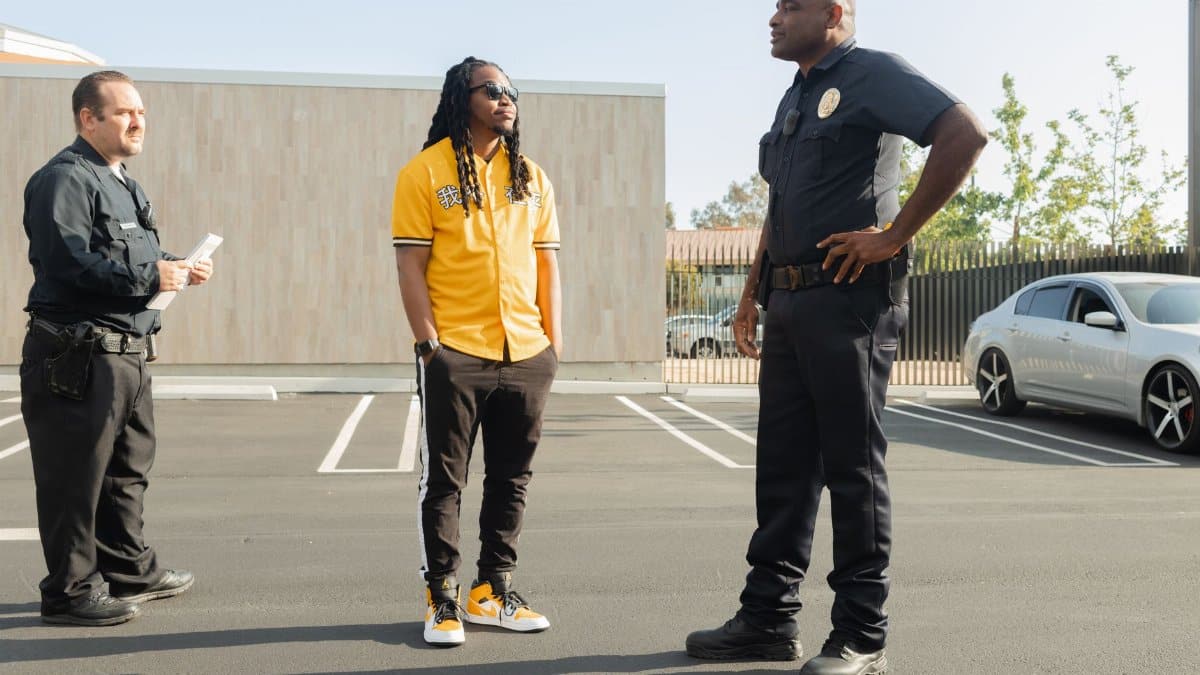
No local budget debate in Houston escapes the jail. The county lockup is among the largest in the country. Staffing it, maintaining it, and defending the county in court when conditions fail are expensive in a way that press releases rarely capture. Deputies, detention officers, medical contractors, and overtime can consume new revenue before a single new park or library hour appears.
Public safety is also the easiest political shelter for new spending. Few candidates run on a platform of a thinner patrol presence. That does not mean every dollar labeled safety is a deputy on a street. Software, consultants, fleet replacements, and headquarters costs travel under the same banner. A serious reader of the budget asks which positions are sworn, which are civilian, which are vacant on purpose, and which vacancies are the real emergency. Without that split, safety becomes a fog that justifies almost any total.
Flood control after the storms everyone remembers

Water is the other undisputed need. Bayous do not respect precinct lines. A drainage project upstream protects or endangers people downstream. Since Harvey, residents have been told that patience and bond money would produce a safer map. Some projects have moved. Others remain drawings. Inflation in concrete, pipe, and labor has eaten schedules that once looked firm.
Here the tax question becomes moral as well as fiscal. People who flooded do not want a lecture on rate policy. They want a ditch that works. People who did not flood, and who are paying the new levy, want evidence that the money is sequenced toward risk rather than toward ribbon cuttings. Both demands can be met in the same document: a public list of projects, costs, and expected completion, updated often enough that a missed season is visible.
Inside the Commissioners Court

Harris County government is not a mayor with a council. It is a county judge and four commissioners, each with a precinct, a road budget tradition, and a political base. That structure can produce negotiation. It can also produce logrolling, in which each member protects a slice of spending so that no one has to own the whole. When the total rate rises, collective responsibility is easy to announce and hard to enforce.
Party conflict has sharpened the theater. Democrats who hold the court majority describe the Harris County tax increase as the price of services Republicans would cut. Republicans describe it as proof that one party control spends first and explains later. Both lines are campaign ready. Neither substitutes for a vote by vote account of which amendments added dollars and which amendments tried to remove them. Meeting minutes are public. They are also long. Journalism earns its keep by reading them.
Who actually writes the check

Owners of modest houses often feel the rate first, because the house is their main asset and the escrow payment is not optional. Owners of commercial property and large apartments feel it as a cost of doing business, then pass a portion to tenants. Renters who believe they are exempt from property tax are mistaken. The levy is in the rent, just without a line that says county.
Fixed income households sit in a particularly exposed spot. A percentage increase on a tax bill is a percentage decrease in everything else when income does not move. Exemptions for seniors and disabled homeowners matter, and so does the homestead exemption, but exemptions do not erase a rate hike for everyone who qualifies. A county that raises revenue should be able to say, in ordinary language, how the burden falls across value brackets and across renters as well as owners.
Transparency that a non expert can use

Budget books are long because government is complicated. Length is not the same as candor. The useful public packet is short enough to read and specific enough to audit. It names the $327 million in added spending by department, not by slogan. It shows positions added, positions frozen, and one time costs that will not recur. It separates capital from operations so that a building is not confused with a permanent payroll.
Residents also deserve a before and after on the rate itself. Publish last year’s adopted rate, this year’s adopted rate, the no new revenue rate, and the voter approval rate, with the dollar effect on a sample homestead at a few price points. Those sample homes should look like real blocks in Pasadena, Spring, Katy, and the East End, not a single countywide average that matches nobody’s street. When officials skip that table, suspicion fills the gap, and suspicion is rarely generous.
The state rulebook is not a spectator

Texas has spent several sessions arguing about property tax relief, appraisal caps, and how much of the burden should shift toward state sales taxes and surplus revenue. Those fights matter in Harris County because local rates sit on top of a system the Legislature keeps revising. A homeowner can receive a state funded school tax compression in one notice and a county rate increase in another and feel, correctly, that the net story is muddled.
Compression at the school level does not cancel a county choice. It can, however, change the politics of that choice. If the overall bill falls, a county hike hides inside the relief. If the overall bill rises, the county hike becomes the villain even when schools took more dollars. Honest local leadership states its own delta and refuses to borrow credit from a school rate cut it did not enact.
What residents can reasonably demand

Nobody needs a finance degree to ask three questions at a public hearing. What is new, in dollars, compared with last year? What is required by law, with the statute named? What will be cut, delayed, or left vacant if the rate stays flat? Officials who cannot answer in a paragraph are not ready to vote. Residents who only shout a percentage are not ready to judge.
Civic groups, neighborhood associations, and newsrooms can do the unglamorous work of tracking a few departments across years. Constables, the district attorney, flood control, public health, and county administration will tell most of the story. A single dramatic anecdote about waste, or a single dramatic anecdote about an unmet need, will not. Patterns will.
A calmer standard for the next budget

The county will adopt another budget, and another rate, because that is what counties do. Growth will not pause for a cleaner spreadsheet. Storms will not pause either. The test is whether the next Harris County tax increase, if there is one, arrives with a public map of the spending it funds and a plain account of what Austin required and what the court wanted.
Until that map exists, the kitchen table arithmetic will keep winning the argument. People trust totals they can recompute. They distrust totals that arrive with a speech. A 12 percent rise tied to $327 million in new spending is large enough to justify suspicion and large enough to justify a defense. It is not large enough to justify mystery. The county owes its residents the list, the law, and the choice, in that order, before it asks them to pay again.