
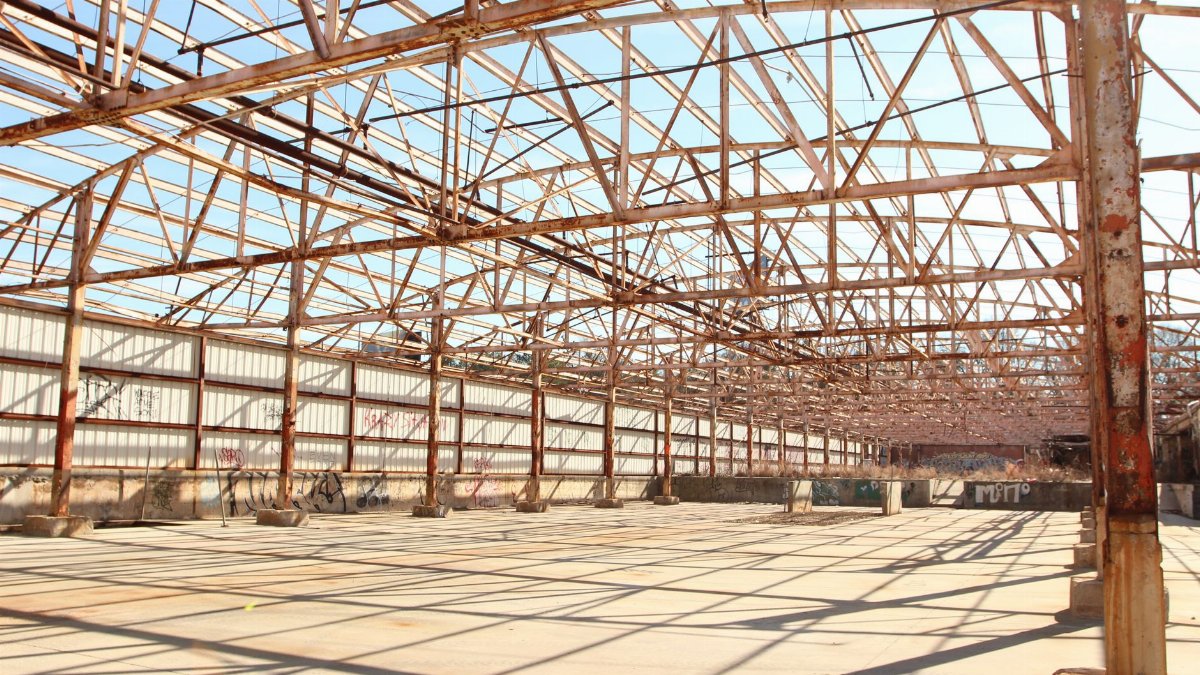
On a weekday morning in Westwood, the parking lot outside a long familiar warehouse filled earlier than usual. People arrived with empty totes and left with armfuls of marked down coats, shoes, and dresses, moving through aisles that have trained a generation of bargain hunters. Frugal Fannies Westwood, the designer discount warehouse that has anchored this corner of suburban retail for 43 years, is closing after losing its lease, and the going out of business sale has turned a routine errand into something closer to a farewell.
A warehouse that taught people how to look
Frugal Fannie’s never pretended to be a boutique. The appeal was the opposite: fluorescent light, concrete floors, racks packed tight, and the small thrill of finding a label that usually lived behind a doorman or a glass case. Shoppers learned a private grammar. They knew which tables turned over fastest, which sizes vanished by noon, and how to judge a seam in under a minute. That knowledge was not written down. It passed from mother to daughter, from neighbor to neighbor, from the friend who texted a photo of a coat and said come now.
For 43 years the warehouse made designer clothing feel reachable without asking anyone to perform wealth. A sale rack in a mall can do some of that work. A destination warehouse does more. It asks for time. It rewards patience. It turns shopping into a skill rather than a transaction, which is why the closing feels larger than a lease notice.
What losing the lease actually changes

The company has said the Westwood warehouse is closing because it lost its lease, and a going out of business sale is already underway. A lease is a dry instrument. In a town, it is also a clock. When the clock runs out, inventory becomes temporary, staff schedules shorten, and regulars start calculating how many trips they have left. The building may still stand. The habit will not.
Retail closings are often narrated as failure: weak sales, a tired concept, a brand that missed the internet. A lost lease is a different story. It can arrive even when the floor is busy. Landlords redevelop. Rents reset. A site that made sense in one era of suburban retail can be repriced for another use. Customers experience that repricing as absence. They do not negotiate the term sheet. They notice the empty rack.
The sale that feels like a farewell

Going out of business sales have their own weather. Discounts deepen. Selection thins. The best pieces leave first, and what remains is a mix of genuine finds and items nobody wanted at full price either. Regulars know this and come anyway. They are not only hunting a number on a tag. They are visiting a room while it is still a room they recognize.
There is a particular quiet in those last weeks, even when the aisles are crowded. People speak more softly near the register. They linger by a shoe wall as if memorizing it. A warehouse is not a church, and it would be foolish to pretend otherwise. Still, repeated return to the same place, for decades, creates a form of attachment that pure economics does not explain. Frugal Fannies Westwood became that kind of place for thousands of households south and west of Boston.
Why the treasure hunt mattered more than the markdown

Discount retail is often discussed as a price story. Price is real. Families stretching a clothing budget do not romanticize polyester. They need coats that last a winter and shoes that survive a school year. The warehouse mattered because it sat between two markets that often fail those families: full price designer shops that assume disposable income, and fast fashion that assumes disposable garments.
The hunt added something else. A shopper who spends an hour comparing linings is practicing attention. She is deciding what she is willing to live with. In an economy that pushes one click replenishment, that slow looking can feel almost old fashioned. It is also a small education in quality. People who learned labels at Frugal Fannie’s often say they stopped being impressed by a logo alone. They started asking whether the button would hold.
Workers, regulars, and the uncounted payroll

A closing is a labor story before it is a nostalgia story. Warehouse retail runs on people who know the floor: who reticket, who watch for theft without turning the room hostile, who remember that a customer wears a narrow shoe and will want the new shipment. Those jobs are not glamorous. They are also not interchangeable with a chatbot. When a site shutters, that local knowledge disperses. Some workers will land elsewhere. Some will not, at least not soon, and not with the same seniority.
Customers carry a different kind of unpaid labor into the store. They drive. They wait. They tell friends. That traffic is what made the lease valuable in the first place. When the doors close, the company loses a sales floor and the town loses a reason for people to cross its commercial strip with a purpose that is not a chain restaurant or a pharmacy. Frugal Fannies Westwood functioned as that reason for more than four decades.
A suburban landmark that never looked like one
Landmarks are supposed to be handsome. This one was useful. Westwood is not short on roads or office parks, but useful third places are scarcer than planning documents admit. A third place does not have to serve coffee. It has to be somewhere people return without an invitation, where they might run into someone they know and stay ten minutes longer than planned.
The warehouse did that work in work boots and sale signs. Teenagers shopped there before proms. Bridesmaids hunted there under budget ceilings set by group texts. Newly divorced adults rebuilt wardrobes there when starting over felt expensive in every direction. None of those scenes appear in a lease abstract. All of them are why a closing notice travels faster by word of mouth than by press release.
The wider pressure on places like this

Off price clothing has been one of the sturdier corners of American retail, precisely because shoppers like a bargain and because excess inventory has to go somewhere. Sturdiness is not permanence. Warehouse formats need cheap square footage, highway access, and a landlord who prefers a steady tenant to a splashier redevelopment. Those conditions are narrowing in greater Boston, where land near major roads is treated as a future medical building, a storage facility, or housing, depending on the zoning fight of the year.
Online resale has also changed the hunt. A shopper can now scroll authenticated listings at midnight. That convenience is genuine. It does not replace the social fact of a shared floor, where a stranger holds up a jacket and asks whether the color is true. Physical off price stores still win on immediacy: you can try the sleeve, you can leave with the coat, you can skip the shipping label and the return window. Lose the building, and that advantage leaves with it.
What people are already grieving

Grief is a strong word for a store, and some readers will reject it. They are not wrong that a retailer is a business, not a relative. They are wrong if they think attachment only counts when it is solemn. People grieve routines. They grieve the version of themselves who knew exactly where to park and which door to use. They grieve a mother’s shortcut, repeated until it became their own.
In Westwood, that grief is practical as well as sentimental. Where do you go for a winter coat that is not disposable and not a luxury splurge? The alternatives exist, scattered across malls and websites, each requiring a new map. Scattered alternatives are not the same as a single warehouse that concentrated possibility. Concentration is what made the trip worth it. Frugal Fannies Westwood concentrated possibility in one loud, brightly lit room.
Memory is an inventory system too
Ask longtime shoppers what they bought and many will not start with a brand. They start with an occasion. The interview suit. The funeral dress bought in a hurry and worn with more dignity than the price suggested. The sneakers that carried a kid through a growth spurt. Objects absorb errands. When the store closes, the objects remain in closets, slightly haunted by the aisle where they were found.
Journalists are trained to prefer numbers to hauntings. Numbers matter here: 43 years, a lease lost, a sale begun, a workforce whose next steps are not yet public in any complete way. The numbers do not cancel the hauntings. A community measures a closing in both currencies. One is jobs and tax base and foot traffic. The other is the private museum of things people can afford to remember.
What a town can and cannot replace

Towns cannot order a landlord to love a tenant. They can notice, earlier than the final sale, when a familiar use is fragile. That notice rarely arrives in time. Commercial real estate moves on contracts signed years before a shopper sees a sign in the window. By the time the public learns the warehouse is ending, the meaningful decisions have often already been made.
What remains possible is smaller and still worth doing. Neighboring businesses can hire people who know how to run a floor. Shoppers can spend their last dollars in the sale with clear eyes, understanding that a deeper discount does not obligate them to buy what they will not wear. Local officials can treat the next use of the site as a question about daily life, not only about yield per square foot. None of that resurrects 43 years. It does refuse the idea that a warehouse was only square footage.
The last trips

There will be a final Saturday when the good racks are thin and the parking lot is still full. Someone will find one last improbable bargain and feel briefly lucky, then sad in the car. Someone else will leave empty handed and still glad they came, because absence is easier to accept after you have seen it. Staff will tape the last signs, count the last drawers, and lock a door that has opened for longer than many of their customers have been alive.
Frugal Fannies Westwood will then exist as a story people tell when they drive past whatever replaces it. The story will be about prices, yes. It will also be about attention, thrift, and the ordinary sacredness of a place that asked you to look carefully and let you leave with something beautiful you could actually pay for. That is not a small legacy for a warehouse. It is the kind of legacy a lease cannot measure, and the kind a town feels once the lights go out.