
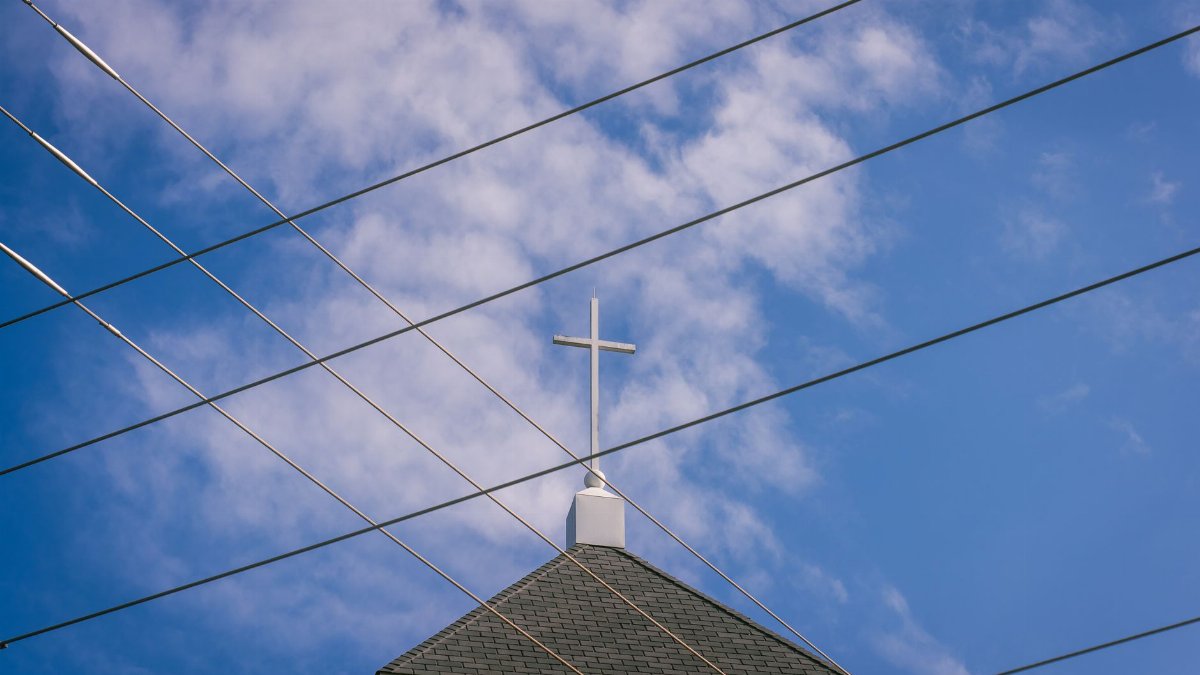
On a humid weeknight in a Florida school district office, parents argued over whether a volunteer chaplain belonged in the same hallway as a guidance counselor. A few miles away, lawyers were already shaping the next brief. That pairing of sanctuary language and courtroom paper is how James Uthmeier religious freedom cases have entered ordinary civic life. The attorney general presents the work as a defense of worshippers who feel squeezed by public rules. Critics hear something else: a state officer using the prestige of his office to press a favored faith into spaces the Constitution keeps open to everyone.
A lawyer shaped by the governor’s orbit

James Uthmeier did not arrive at the attorney general’s office as a stranger to power. He served as general counsel and later as chief of staff to Governor Ron DeSantis, roles that put him close to fights over education, speech, and the culture of public institutions. Supporters say that résumé prepared him to move fast when religious groups claimed unequal treatment. Skeptics say it prepared him to treat the law as an extension of a political project already underway in Tallahassee.
The distinction matters. An attorney general is not a pastor and not a legislator. The job is to represent the state, advise agencies, and decide which disputes deserve the weight of public lawyers. When those disputes touch worship, the office can look like a shield for conscience or like a megaphone for one constituency. Uthmeier has chosen a posture closer to the shield, at least in his own telling. He argues that Florida should not make people check their faith at the door of a school, a grant program, or a public square.
What the phrase actually covers

Talk of James Uthmeier religious freedom cases can sound like a single docket. It is better understood as a cluster of disputes with a shared theme. Some involve access: may a religious speaker use a forum that a secular speaker may use. Some involve personnel: may a school welcome a chaplain, a coach who prays, or a club that meets for Bible study. Some involve money: may a house of worship or a ministry receive public funds for a social service that a secular nonprofit could also provide. Some involve symbols and ceremonies at civic events.
Each fact pattern is different, and honest reporting has to keep them apart. A student led prayer group on equal terms with other clubs is not the same thing as a principal leading worship at an assembly. A grant for meals or counseling is not the same thing as a subsidy for sermons. The attorney general’s allies often collapse those lines into one story of hostility toward faith. His critics often collapse them into one story of establishment. The harder work is sorting which claims protect liberty and which ones ask the state to take sides.
Schools as the sharpest stage

Public schools remain the place where these arguments feel most personal. Parents trust the building with their children for most of the day. Teachers work under rules that can punish them for speech the district dislikes and also punish them for speech that pressures students. Into that tight space, Florida politics has pushed chaplain programs, parental rights rhetoric, and a suspicion of what some officials call ideological capture.
Religious liberty advocates say students of faith have spent years learning to stay quiet while other identities are celebrated. They want clubs, literature, and volunteer ministers treated as normal parts of campus life, not as contamination. Civil liberties lawyers answer that children are a captive audience. A chaplain with a district badge, even a volunteer, can look like an official recommendation. A child who does not share that faith may feel marked. The legal test is not whether religion is good. It is whether the state is coercing participation or favoring one creed.
Uthmeier has signaled that he will err toward inclusion of religious voices rather than toward a scrubbed neutrality that, in his view, hides a secular preference. That stance wins applause in churches. It also invites lawsuits the moment a district applies the welcome unevenly, or the moment a family can show pressure rather than mere exposure.
Public money and ministries

Funding fights are quieter than school board shouting matches, and often more consequential. Florida, like other states, pays private groups to feed people, treat addiction, house families, and counsel youth. Many of the most effective groups are religious. For decades, constitutional law has allowed that partnership when the aid is for a public service and when beneficiaries are not forced into worship. The line frays when the grant is loose, when alternatives are thin, or when the provider cannot separate service from proselytizing.
Here the attorney general can do more than file papers. Advice to agencies shapes who gets paid. If the office tells departments to stop excluding religious applicants, that can correct real discrimination. If the office tells them to ignore safeguards that keep public dollars out of pulpits, that is a different choice. Observers watching James Uthmeier religious freedom cases in this lane should ask a plain question: is the state buying a service, or is it buying a message.
Supporters insist the old exclusions were themselves a message, one that treated faith as suspect. They point to ministries that meet needs government offices struggle to meet. Critics reply that effectiveness does not erase conditions. A family seeking shelter should not have to sit through a creed to get a bed funded by taxpayers of every belief and of none.
Ceremonies, grounds, and the public calendar

Not every dispute is about classrooms or checks. Cities and counties host festivals, memorials, and holiday displays. Organizers invite clergy to open meetings. A Christmas tree appears beside a menorah, or a single tradition crowds out the rest. These scenes produce some of the most emotional mail an attorney general receives, because they feel like arguments about who belongs in the town.
Equal access is the cleaner principle. If a park bandstand is open to community groups, a church should not be barred for being a church. If a legislative prayer rotates among faiths, a county should not freeze the list. Trouble starts when officials curate a preferred piety: one tradition always first, dissenters always last, or a disclaimer so thin that the event reads as official worship. Uthmeier’s allies describe pushback against religious openings as a purge. Local officials, wary of litigation from both directions, often describe it as risk management.
The attorney general’s voice can calm that fear or inflame it. A letter that explains equal treatment gives a city a map. A letter that scolds any limit as hostility gives a city a political dare. Florida has no shortage of officials who would rather dare than negotiate. That is where a legal office can cross from counselor to combatant without ever saying it has done so.
The constitutional counterargument
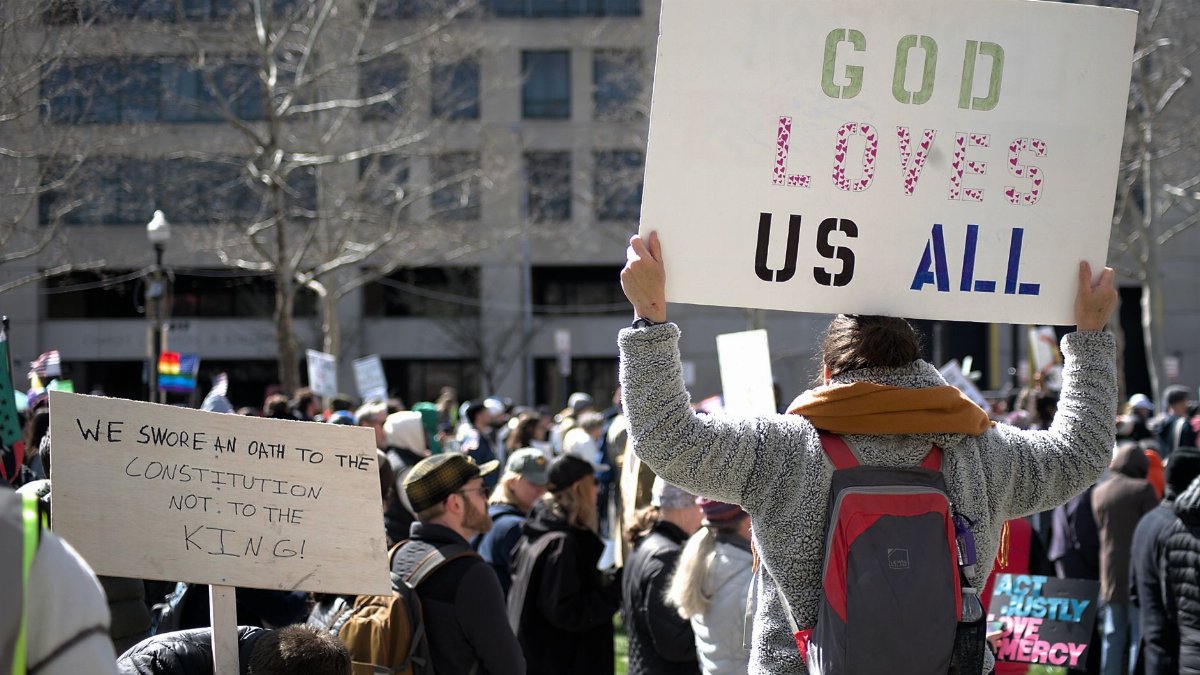
The First Amendment does two things at once. It protects free exercise. It also bars government from establishing religion. For a generation, courts have tried to hold both promises without letting either swallow the other. Recent decisions from the United States Supreme Court have been more sympathetic to religious claimants who say they were excluded from public benefits or public forums. That shift gives Uthmeier firmer ground than an attorney general would have had twenty years ago.
It does not give him a blank page. Free exercise is not a right to command the machinery of the state. Establishment is not a ban on religious people entering public life. The cases that go wrong, from any political direction, are the ones that treat one clause as the whole Constitution. Civil liberties groups in Florida argue that the attorney general highlights free exercise and whispers the other clause. Conservative religious liberty firms argue the reverse has been true for too long in schools and agencies, and that a correction is overdue.
A reader does not need to pick a team to see the structure of the fight. James Uthmeier religious freedom cases will be judged less by rally lines than by remedies. Does the state ask a court to stop discrimination against a believer, or does it ask a court to entitle a believer to advantages others do not receive. Those are not the same request, even when both are filed under the banner of freedom.
Supporters who see a long correction

In pews and at policy lunches, the praise is straightforward. Pastors say they spent years treated as problems to be managed. Parents say they want their children to hear that faith is not a private embarrassment. Republican lawmakers see an attorney general willing to spend political capital on an issue their voters rank beside taxes and schools. To them, the charge that he has crossed a line is itself evidence of the old bias: any vigorous defense of religion is framed as imposition.
There is a serious version of that view. American history includes real exclusion of religious minorities, and also periods when majority faiths wrote themselves into law. A state that learns only one of those lessons will govern badly. Uthmeier’s supporters believe Florida had learned the second lesson too well and the first not well enough. They want an office that files, threatens to file, and shows up when a district or a city treats a church as less eligible than a club with no creed.
That constituency is not monolithic. Some want maximal separation and will turn on him if a Muslim or Jewish claimant is left behind while Christian claimants are championed. Consistency will be the quiet test of whether this is a liberty project or a constituency project. An attorney general who defends only the faith that wins elections has not defended religious freedom. He has defended a voting bloc.
Critics who fear a blurred office

The criticism is not only theological. It is institutional. Attorneys general hold powers that private culture warriors do not: subpoenas, settlements, the ability to direct state lawyers, and a seal that makes a letter feel like a command. When that seal appears in a local fight over prayer or funding, school boards and city attorneys may yield even when the law is unsettled. Yielding can look like consensus. It can also look like pressure.
Opponents say Uthmeier has crossed a line when advocacy outruns the client. The client is the state and its laws, not a movement. If he reframes every loss for a religious plaintiff as an attack on Florida, he invites the mirror image from the other side: every win becomes proof of capture. Over time, the office looks less like a law department and more like a faction with letterhead. That damages religious claimants too, because judges notice when a filing reads as a campaign.
There is also a minority faith concern that deserves more than a footnote. Florida is not a single church. Catholic, evangelical, Jewish, Muslim, Hindu, and secular communities share the same statutes. A program built around the assumptions of the largest Christian networks can feel like freedom to those networks and like a closed door to everyone else. The most credible version of James Uthmeier religious freedom cases would be boringly evenhanded. The least credible version would track the Sunday morning map of one party.
Where a line can still be drawn

Lines in this area are not mystical. They are practical. Equal access is a line: open the forum, or close it to everyone. No coercion is a line: no child should have to join a prayer to stay in good standing with a public school. No diversion of worship subsidies is a line: public money may buy a meal or a counseling hour, not a required creed. Transparency is a line: if the state takes a side in a local dispute, residents should be able to read the reasoning without a public records fight.
I have covered enough of these arguments to know that both camps prefer fog. Fog lets a chaplain program sound like mere kindness, and it lets a denial of a religious club sound like mere neutrality. Fog also lets an attorney general claim every filing is principle. Clarity is less stirring and more useful. Name the claimant. Name the benefit denied. Name the burden on people who do not share the belief. Then say which constitutional promise is doing the work.
Has Uthmeier crossed a line. The fair answer, on the public record of his early tenure, is that he is walking close to several. Defense of equal treatment for religious people is within the job. Converting the office into a chaplain for one political theology is not. Residents will not settle that by mood. They will settle it by watching whether James Uthmeier religious freedom cases protect the unpopular believer with the same energy as the familiar one, and whether the remedies he seeks leave the state neutral among faiths even as they refuse to be hostile to faith itself.