

Federal Judge Jamal Whitehead’s order landed with the blunt clarity that election cases rarely allow. In the WA noncitizen ballots ruling, issued on November 8, 2026, he held that the Trump administration cannot force Washington officials to set aside ballots from more than 400 people the government alleges are not citizens. The decision does not declare those voters eligible. It does not bless every name on a county roll. It says something more limited, and for the moment more important: suspicion, even suspicion dressed up as a federal demand, is not enough to pull marked ballots out of the count.
A line between suspicion and the count

County auditors in Washington do not get to invent the electorate. They also do not get to discard a ballot because a federal agency has raised a flag. That is the practical heart of the WA noncitizen ballots ruling. Judge Whitehead refused to order state officials to quarantine votes associated with more than 400 alleged noncitizens. The administration wanted those ballots set aside. The court said no.
The order is easy to misread in both directions. Supporters of aggressive list maintenance may treat it as a judicial shrug at unlawful voting. Critics of federal intervention may treat it as a finding that every challenged voter is a citizen. Neither reading is fair. A court can deny emergency power to the executive without resolving the underlying status of each person on a spreadsheet.
What federal officials wanted
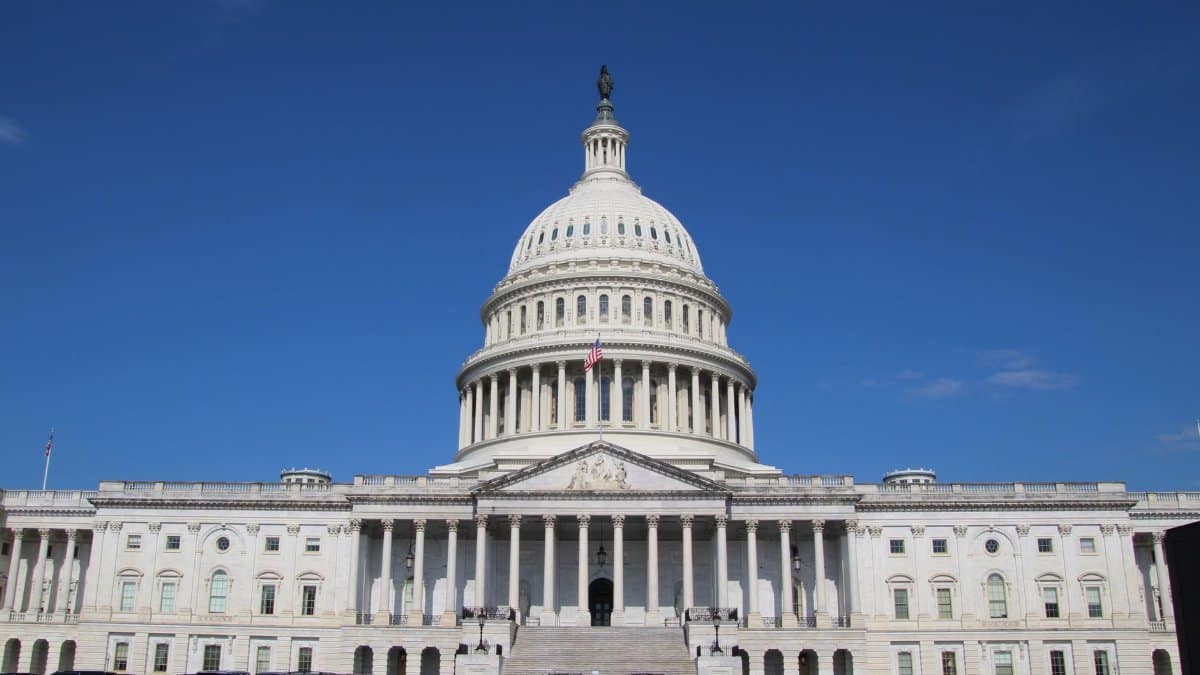
The demand was not abstract. Federal officials asked a judge to make Washington pull specific ballots from the ordinary path of counting and certification. The names, more than 400 of them, were people the government alleges lack citizenship and therefore lack the right to vote in federal elections. Citizenship has long been a qualification for voting in those contests. The fight here was about method, timing, and proof.
Setting a ballot aside is not a clerical courtesy. In a state that votes by mail, a returned ballot is a voter’s completed act. Once it is in the custody of election staff, removing it from the tally is a serious step. It can change a close local race. It can also mark a person, in public argument if not in the formal record, as someone who does not belong. Courts tend to want a clear legal hook before they order that kind of separation, especially while an election is being canvassed.
The state’s answer

Washington’s election apparatus is built around county auditors, a state office that sets rules, and a calendar that does not pause because a press conference has landed. Officials argued, in substance, that the federal government was trying to seize a lever that belongs to the state: the decision of which ballots are segregated and which are counted. States run elections. Congress can regulate the time, place, and manner of congressional contests. The executive branch does not get a free floating power to rewrite a county’s canvass because it prefers a different list.
There is also a records problem that any auditor would recognize. A name match is not a biography. Databases disagree. People naturalize. People share names. A flag that says a voter may not be a citizen can be the start of an investigation. It is a weak foundation for a court order that treats the ballot as already tainted.
Proof, not a spreadsheet

This is where the WA noncitizen ballots ruling does its most useful civic work. It keeps two ideas apart. The first is that noncitizens are not eligible to vote in federal elections. That rule is not in serious dispute. The second is that a federal allegation, standing alone, authorizes a judge to force a state to set those ballots aside before eligibility is established in a way the law recognizes.
Due process is not a slogan reserved for classrooms. If the government believes someone voted who had no right to vote, it has tools: investigation, referral, and prosecution where the facts support a charge. Those tools require evidence that can be tested. A bulk demand to park hundreds of ballots treats the allegation as if it had already survived that test. Judge Whitehead declined to let the request skip the line.
The machinery of a mail election
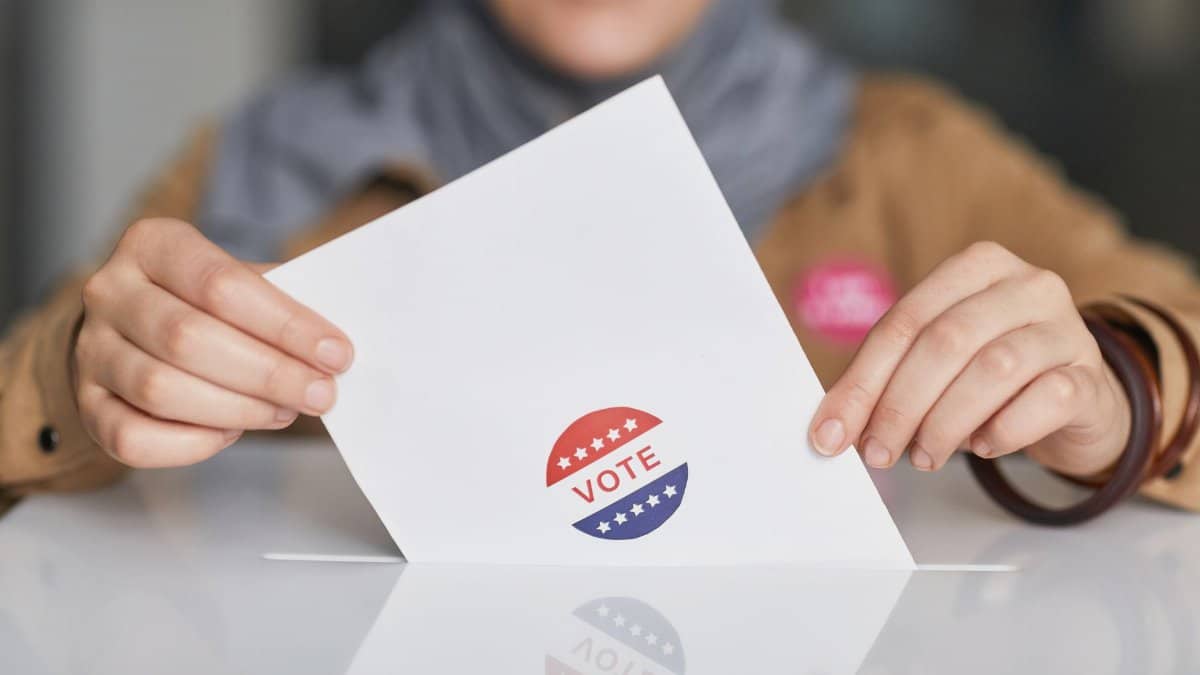
Washington votes by mail. Ballots go out to registered voters. Voters return them by mail or by drop box. Signature verification, not an in person identification check at a neighborhood precinct, is the main gate most voters encounter. Observers can watch processing. Audits and recounts have their own statutes. Certification has a date.
That system has critics, and they are not imaginary. Mail voting expands the window in which a ballot can be challenged, lost, or argued over. It also produces a paper record. The relevant point for this case is narrower. Whatever one thinks of the system, the people who run it are bound by state law about when a ballot may be challenged and how a voter may answer. A federal court order that simply commands a set aside would sit on top of that machinery. The judge refused to drop that weight.
Imperfect lists

Voter rolls are living documents. People move. People die. People become citizens after they were, at some earlier point, lawfully present without that status. Matching a voter file to an immigration file sounds precise. In practice it is a join of imperfect systems, each built for a different job. False matches are not a conspiracy theory. They are a known weakness of large administrative data.
None of that means ineligible voting is a myth. Isolated prosecutions involving noncitizen voting have occurred in various states. Those cases are specific. They name a person, a ballot, and a status. They do not, by themselves, prove that hundreds of challenged ballots in one state should be frozen because a federal agency compiled a list. Scale is not a substitute for adjudication.
The judge and the record

Judge Jamal Whitehead sits on the United States District Court for the Western District of Washington. This order will be read far beyond his docket because of the subject. The WA noncitizen ballots ruling is the sort of decision that campaigns will quote in fragments. The full idea is plainer than the fragments. A president’s administration asked a court to compel a state. The court said the showing was not there.
Readers should be wary of treating the judge as a mascot. Federal trial judges decide the record in front of them. A different record, a different timing, a completed investigation, or a statute written with clearer commands could produce a different order. That is not evasion. It is how injunctions work. Emergency power is supposed to be grudging.
What the order leaves standing

Nothing in the order amends the Constitution. Nothing in it creates a right for noncitizens to vote. Nothing in it tells county auditors to ignore credible, individualized evidence that arrives through the challenge processes state law already provides. And nothing in it prevents prosecutors from pursuing a case against a person who voted without the legal right to do so.
What it blocks is a particular remedy: a judicial command that Washington set aside the ballots of more than 400 alleged noncitizen voters because the administration demands it. That distinction will frustrate people who want a cleaner story. Clean stories are how election law gets distorted. The messier truth is that eligibility rules can be strict while emergency segregation of ballots remains hard to win.
A fight bigger than one docket

Seattle is not the only place where citizenship and voter files are being shoved together. Across the country, officeholders have argued for tighter proof of citizenship at registration, for data sharing with federal immigration systems, and for faster removals when a match appears. Civil rights groups answer that eligible citizens, especially new citizens and people with common names, get caught in those nets. Both concerns can be true in different cases. A court still has to decide the case it has.
The ruling will be cited in that larger fight, sometimes honestly and sometimes as a slogan. Its actual holding, as reported by the Seattle Times, is about compulsion. The federal government cannot force Washington officials to set those ballots aside.
Names, not a slogan

It is worth pausing on the human unit of this dispute, which is not a talking point. Each of the more than 400 names is a person who, according to the government, should not have a ballot in the count, and who, according to the fact of a returned ballot, participated anyway. Some may have voted knowing they were ineligible. If so, that is a crime, and it should be treated as one. Some may be citizens who were mismatched. Some may have become citizens and not had that fact caught by the list. The order does not sort them. It refuses to let the sorting happen by fiat, in bulk, under a federal demand.
The test for the next filing

Appeals remain available, and further filings may try to sharpen the evidence. For readers placing the WA noncitizen ballots ruling among a crowded season of election lawsuits, a simple test helps. Ask what the court was asked to do. Here the ask was force. The answer was no.