
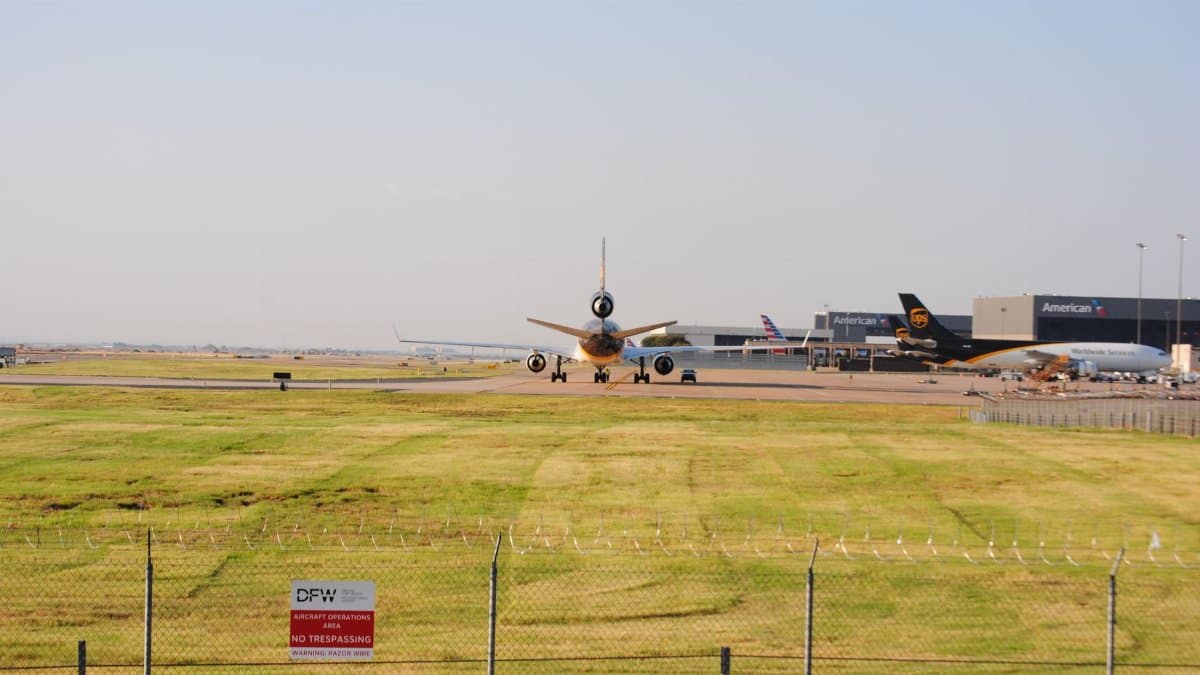
On a humid afternoon when the sky over Dallas turned the color of wet slate, departure boards that had been ticking along in ordinary fashion went still. Controllers and airline desks received the same blunt instruction from the Federal Aviation Administration: a DFW airport ground stop, imposed as thunderstorms rolled across North Texas and made the usual flow of arrivals unsafe. For a stretch of the day, aircraft that were already in the air had to be absorbed or diverted, and aircraft still on the ground elsewhere were told to wait. Inside the terminals, the pause looked less like drama than like a slow thickening of the crowd.
What the order actually does
A ground stop is not a suggestion and it is not a routine delay program. It is a hard pause on departures bound for a specific airport, issued when weather, volume, or some other constraint makes continued arrivals unsafe or unmanageable. Planes already airborne may be allowed to continue if they can be handled, or they may be sent to alternate airports. Planes that have not yet left are held at their origin until the order is lifted or replaced with something milder.
Travelers often hear the phrase and picture every aircraft at the field frozen in place. That is not quite right. The stop is aimed at traffic headed toward the airport, not necessarily at every departure leaving it. Local flights can still push back if gates, crews, and airspace allow. The practical effect, though, is a knot. Arrivals that do not come in on time do not free gates. Gates that stay full block departures. Crews time out. The schedule, which airlines build with very little slack, begins to fray at both ends.
Federal officials use the tool sparingly because it is blunt. A ground delay program, by contrast, meters traffic with assigned arrival slots so that planes still move, only more slowly. A stop is reserved for moments when even that metering is not enough, often when storms sit on the airport or on the arrival corridors that feed it.
Storms that sit on the corridors
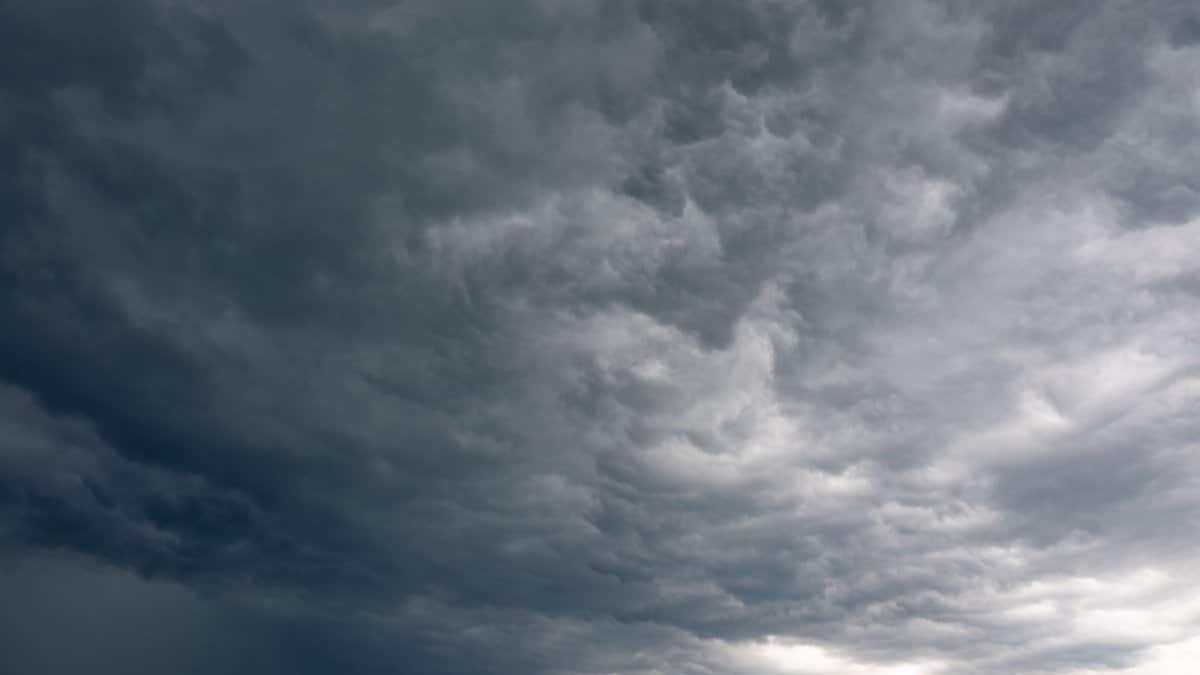
North Texas summers are built for this kind of interruption. Heat lifts moisture off the plains, afternoon towers of cloud form along boundaries of wind, and those towers throw hail, lightning, and violent downdrafts across the very slices of sky that arrivals need. DFW sits on a broad prairie with long runways and sophisticated radar, but no amount of concrete defeats a cell parked on final approach.
Pilots and controllers treat thunderstorms as moving obstacles with hard edges. A plane cannot simply thread a gap the way a car threads traffic. The margins are measured in miles, not feet, because turbulence and wind shear near a storm can exceed what an airliner is certified to accept. When several cells line up on the arrival streams from the east and the south at once, the airport can have clear pavement and still be unable to take traffic.
That is the condition that produces these orders. The sky over the field may look merely gray from a terminal window while the problem lives twenty or forty miles out, invisible to passengers and decisive to the people watching scopes. By the time the public announcement catches up, the operational decision is already hours old in the making.
Why this airport feels it so sharply
Dallas Fort Worth International is not a regional field that can shrug off a lost hour. It is a primary connecting hub for American Airlines and a major point for cargo, international arrivals, and flights that feed the rest of the domestic network. A pause here does not stay here. A missed connection in Dallas becomes a missed speech in Chicago, a missed cruise departure in Miami, a crew that cannot legally work the evening bank in Los Angeles.
The airport also runs close to the edge of its own capacity on ordinary days. Gates are scheduled in tight sequence. A wide body that arrives late occupies a stand that a narrow body was counting on. Ramp crews, tugs, and fuel trucks are staffed for a flow, not for a pileup. When the flow stops and then restarts all at once, the restart is often harder than the stop. Everyone wants to move at the same minute, and the airspace, the taxiways, and the people cannot absorb that surge.
Smaller airports in the region feel a lesser version of the same weather. They do not, as a rule, export disruption across the continent. That is the particular burden of a hub: local weather becomes national inconvenience within a single rotation of the schedule.
The hour when delays crossed a hundred minutes

Before the full stop, incoming flights were already absorbing average delays of more than 100 minutes. That figure is easy to glide past on a news alert and hard to live inside. One hundred minutes is a connection window that has already closed. It is a child who needed a meal an hour ago. It is a business traveler recalculating whether the meeting is worth the remaining day. It is also a warning light for the operation, because delays of that length usually mean the arrival queue is no longer a queue. It is a backlog.
Airlines publish averages because averages are what the system can measure cleanly. They hide the tails. Some flights in that window sat far longer. Others, already close to the field when the weather thickened, slipped through with a lesser penalty. Passengers comparing notes at a gate rarely believe they are living the same afternoon, and in a strict sense they are not. Two aircraft on the same route can have radically different days depending on when they pushed, where they were when the order landed, and whether a crew still had legal duty time left.
When the stop was later downgraded to a delay program, the language softened and the reality only partly did. Metering is better than a freeze. It is not a return to normal. Slots still have to be earned, gates still have to be found, and the flights that waited upstream still have to be threaded into an airport that has spent hours falling behind.
Inside the terminal while the boards stall
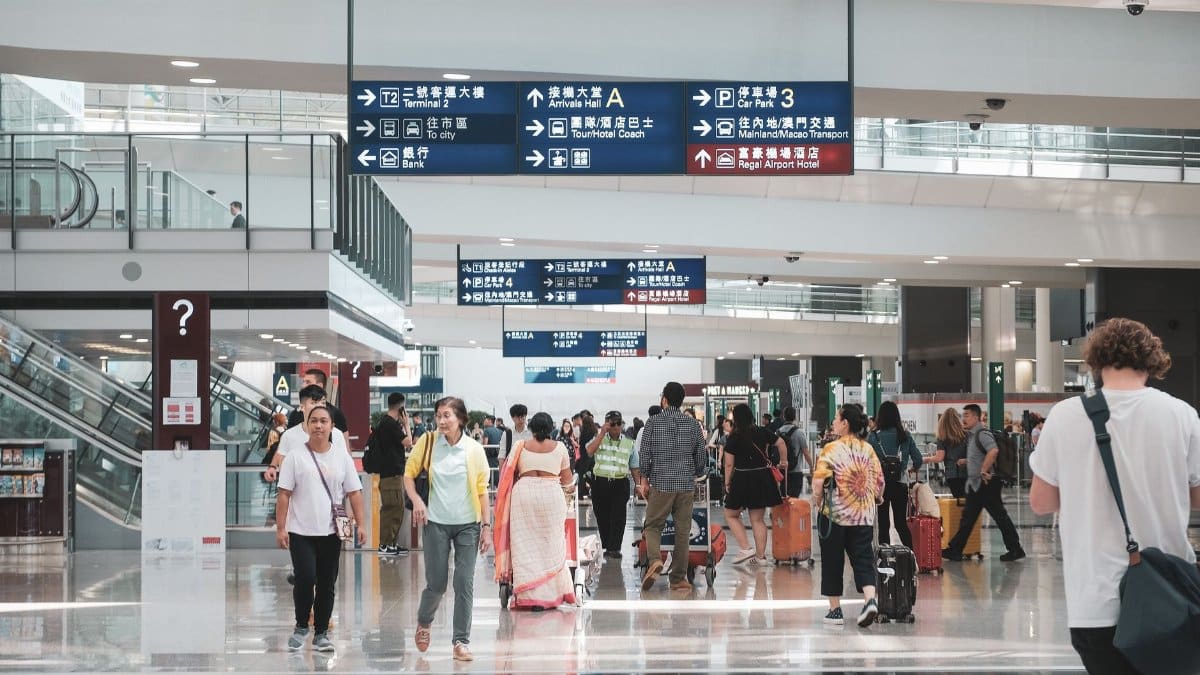
The public face of the disruption is fluorescent and ordinary. Families spread across carpet near a charging pillar. A man in a suit refreshes an app that has nothing new to say. Gate agents, who did not cause the weather and cannot end it, absorb the questions anyway. Where is my inbound aircraft. Will I make the last flight to Omaha. Is the airline putting people in hotels.
Honest answers are often unsatisfying. An agent can see a tail number and an estimated time that keeps sliding. The agent cannot see the cell that may reform over the arrival fix in forty minutes, nor the crew legality problem that will appear only after the plane finally blocks in. The best agents say what they know and decline to invent the rest. The worst hours in a terminal are built from confident predictions that collapse.
Food, outlets, and quiet corners become the real infrastructure. DFW is large enough that a passenger who walks with purpose can still find a meal and a seat, at least early in a stop. As the afternoon lengthens, those amenities thin out. Restaurants run short of the easy items. Seating near power disappears. The airport begins to feel less like a passage and more like a waiting room with excellent signage.
How airlines try to put the day back together
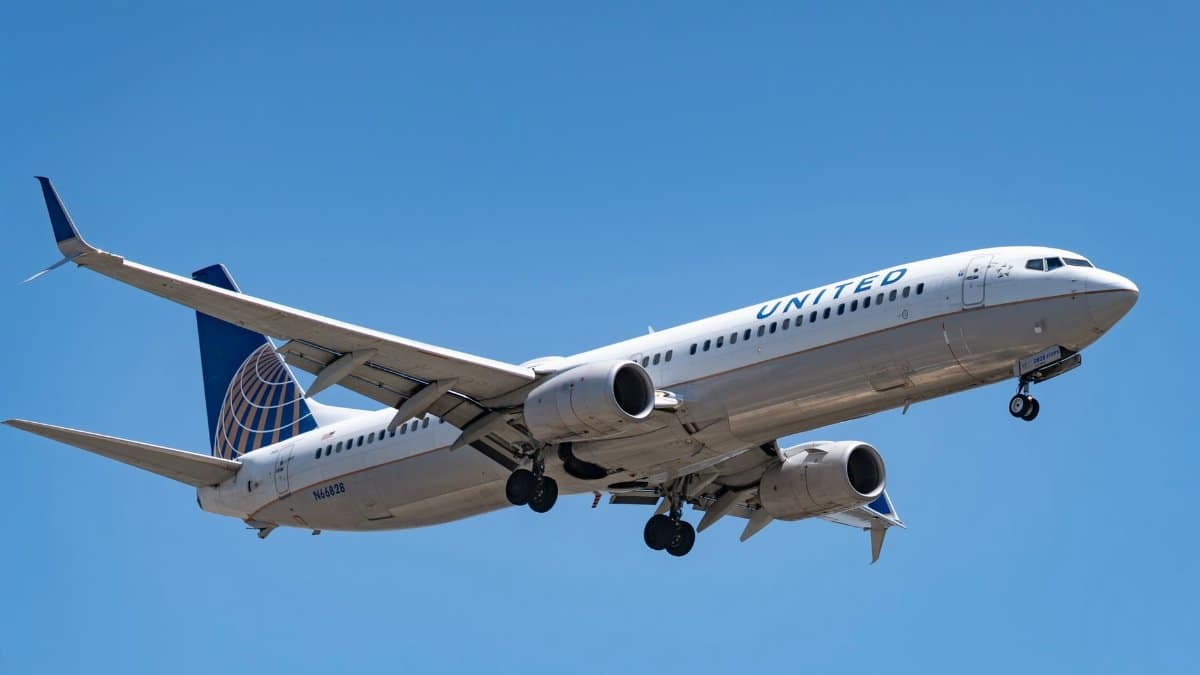
Once the order eases, the commercial problem begins in earnest. Dispatchers look at aircraft that are in the wrong cities, crews that are approaching the edge of their legal day, and passengers whose connections no longer exist. The recovery is a sorting exercise conducted at speed. Some flights are canceled outright so that the airplane and the crew can be used where they will save more of the evening bank. Some are delayed again so that a single inbound can carry three onward loads worth of people.
Rebooking is constrained by seats that were already sold. A hub on a storm day does not have a secret reserve of empty airplanes. What it has is a reservation system, a set of rules about who gets protected first, and a shrinking inventory of later flights. Elite status and flexible fares still matter in that scramble, which is an uncomfortable truth that weather does not suspend. Passengers on the cheapest restricted tickets often wait longest for a confirmed seat, even when they have been just as stranded as everyone else.
International arrivals add another layer. Customs staffing, inbound connections to smaller cities, and aircraft that must depart on a long overnight leg all depend on the same gates and the same weather window. A wide body held for two hours is not merely a late flight. It is a downstream problem for the next morning on another continent.
Crews, gates, and the clock nobody sees

Federal duty rules exist so that exhausted pilots and flight attendants do not become the next emergency. Those rules do not bend because a thunderstorm was inconvenient. A crew that has been on duty since early morning may be legal for the flight they were assigned and illegal for the flight the airline now needs them to fly. When that happens, the airplane can be at the gate with passengers boarded and still go nowhere.
Gates are a similar hidden clock. An airport can have runways open and still be unable to park airplanes. If arrivals resume in a rush, ramp control has to sequence them onto stands that may still hold aircraft waiting for crews, catering, or a simple tug. Passengers see a plane on the horizon and assume the wait is over. Between that horizon and the jet bridge there is often another half hour of negotiation that never appears on the app.
Ground workers carry the physical cost of the restart. Bags that missed an earlier connection have to be retagged. Catering trucks that were staged for a schedule that no longer exists have to be restaged. Fuelers work a line of aircraft that all want to leave in the same window. The public narrative of a storm day tends to focus on the announcement and the airline brand. The recovery is mostly performed by people whose names never appear on the departure screen.
From a full stop to a managed delay
Downgrading a DFW airport ground stop to a ground delay program is the moment officials judge that traffic can move again, but only under rationing. Aircraft are given controlled departure times from their origin airports so that arrivals at Dallas are spaced to match what the runways and the airspace can accept. It is a return to motion with a governor on it.
For passengers already at the origin, the change can feel arbitrary. A flight that was simply not allowed to leave is suddenly allowed to leave at a specific minute that may still be far away. The distinction matters operationally and barely matters emotionally. Both versions mean you are not going now. The delay program, however, gives airlines a number they can plan against. A stop gives them only a hope that the next update will be better.
The FAA watches radar, pilot reports, and airport acceptance rates before making that shift. If storms redevelop on the arrival paths, the program can tighten again. Weather does not sign a schedule. The system’s job is to refuse optimism until the sky agrees.
What a traveler can usefully do

There is no trick that defeats a ground stop. There are habits that reduce the damage. A passenger who is still at home when the alert posts should confirm whether the inbound aircraft has even left its previous city before driving to the airport. Arriving early into a stop does not create a gate. It creates a longer wait in a louder room.
Once a flight is canceled rather than merely delayed, the useful move is speed inside the airline’s own tools. The app and the website often rebook faster than a phone queue that has already filled with thousands of callers. A gate agent at the airport can sometimes see options the app cannot, especially for same day flights on partner carriers, but that help is rationed by the length of the line. Travelers who must be in a specific city by a specific hour should also look, with clear eyes, at rental cars and trains before the obvious alternatives are gone. North Texas to other Texas cities is sometimes a drive. North Texas to the coasts is not.
Documentation helps later. Boarding passes, delay notices, and receipts for meals are dull to collect and useful if a voucher, a refund, or a travel insurance claim follows. Airlines differ in what they offer when the cause is weather, and weather is the cause they are least obligated to treat as their own failure. Knowing that in advance lowers the temperature of the conversation, even when the outcome is still disappointing.
A summer pattern, not a single afternoon

One storm day is a story. A season of them is a structure. As warm months lengthen and afternoon convection becomes a near daily feature across the central United States, hub airports in that belt absorb repeated shocks. Each shock is local. The cumulative effect is a network that spends part of every summer recovering from the previous recovery.
Aviation has more data, better radar, and more precise forecasting than it did a generation ago. Those tools reduce surprise. They do not remove the physical limit. An airplane still cannot land through a mature thunderstorm, and a hub still cannot store an unlimited number of late aircraft without canceling something. Passengers who treat every summer delay as a unique scandal misread the climate they are flying through. Passengers who treat every delay as inevitable misread the days when the operation truly did fail them for reasons other than weather.
The distinction is worth keeping. A DFW airport ground stop during a line of storms is the system choosing a visible inconvenience over an invisible risk. That choice is easy to resent at a gate and difficult to argue with once the nature of the hazard is clear. The resentment belongs, if it belongs anywhere, to the hours after the sky has opened again and the airline has not yet told the truth about the new plan.
What officials watch on the way back
Recovery is judged by a few unglamorous measures. Are arrival rates climbing toward what the airport can accept in clear air. Are departure queues moving, or are they merely shifting from the runway to the alley behind the terminal. Are crews still legal for the flights that have not yet been canceled. Is the backlog of delayed inbounds shrinking, or is new weather rebuilding it.
For the public, the signal is cruder. The board starts to show actual departure times rather than rolling estimates. Gates that were dark fill with boarding calls. The density of people sitting on the floor thins, not all at once, but concourse by concourse. Somewhere in that ordinary resumption, the afternoon’s order becomes a line in an operations log.
It does not become nothing. Connections were missed. Hotel rooms were found or not found. Cargo sat. A family that planned a short trip absorbed a long one. The DFW airport ground stop ends when aircraft may launch toward Dallas again. The day it created ends much later, in cities far from the storms, when the last rebooked passenger finally closes a hotel door or finally sits down at home.