
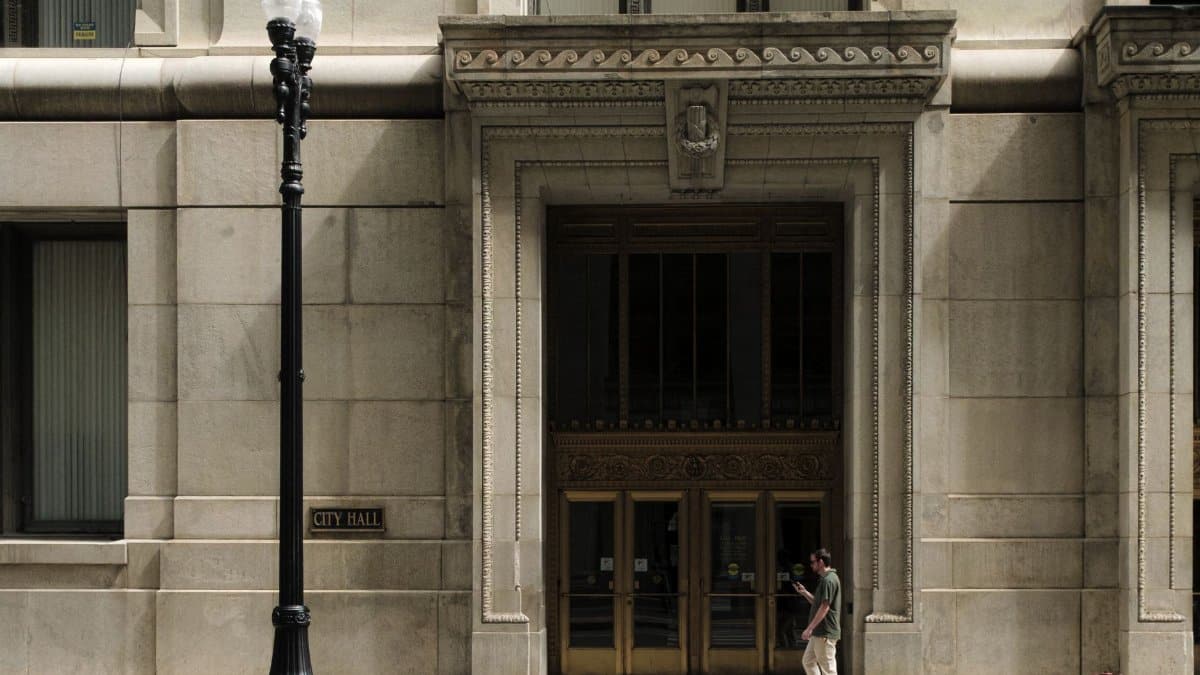
On a warm September afternoon, the usual crush outside the City Council chamber thinned before anyone called a roll. Advocates who had printed signs and landlords who had cleared their calendars learned that the fight would wait. Mayor Brandon Johnson and Ald. Gilbert Villegas agreed to hold competing measures so talks could continue, a delay that left Chicago tenants rights bills in a strange middle ground: visible enough to dominate ward meetings, unfinished enough that no one could say what the law would actually require.
A vote that never came

The decision to stall did not arrive as a dramatic speech. It arrived as a procedural quiet. Sponsors pulled items, allies texted organizers, and the calendar moved on. For people who treat City Hall as a second job, that quiet is its own kind of news. A delay can be a bridge or a burial. In this case both camps claimed the first and feared the second.
Johnson has spent much of his term arguing that housing is the pressure point underneath crime, school mobility, and neighborhood decline. Villegas, whose 35th Ward includes blocks of two flats and small courtyard buildings, has warned that a poorly drawn ordinance can push modest owners out and leave renters with fewer choices. Their pause, described by aides as a chance to negotiate rather than a surrender, kept both arguments alive and neither one enacted.
Chicago has a long habit of letting housing fights mature in committee. The Residential Landlord and Tenant Ordinance, the basic rule book for many city leases, took years of argument before it became ordinary. Veterans of that era say the current stall feels familiar. Newcomers, especially renters facing a lease renewal this fall, hear only that help promised in campaign season is still a draft.
Two visions of the same shortage

The competing packages are not mirror images, even if headlines flatten them into a simple clash between tenant power and property rights. One approach, closer to the mayor and to progressive aldermen, would tighten the reasons a landlord can end a tenancy, slow steep jumps at renewal, and require more notice when a building changes hands. The other, associated with Villegas and with owners of smaller buildings, would focus on clearer timelines, mediation before court, and exemptions meant to keep a retired couple with a single two flat from facing the same paperwork as a national firm.
Both sides say they want stability. They disagree about who is being destabilized. Tenant lawyers describe families who pay on time and still receive a nonrenewal because the unit can fetch more on the open market. Owner groups describe roofs, insurance, and property taxes that rose faster than rents they felt able to charge. The Chicago tenants rights bills now sitting in limbo try to answer those stories with different tools, and the tools do not fit in the same box.
What renters bring to the microphone

At ward nights on the South Side and the Northwest Side, the testimony has a repeated shape. A parent explains that a child changed schools twice in three years. A senior says a buyout offer arrived with a short clock and no plan for where to go. A voucher holder describes applications that vanish once the landlord learns the rent will be paid in part by a housing authority. These are not abstract market signals. They are Tuesdays.
Organizers want the council to treat nonrenewal as something that must be justified, not as a private business choice with public consequences. They also want relocation help when a building is emptied for renovation, and they want penalties that are large enough to matter. Without those pieces, they argue, another round of polite notices will not change behavior. Their patience with delay is thin because winter leasing season does not pause for negotiations.
What small owners fear losing

Landlords who do not look like landlords in the political cartoon have been just as loud. A letter carrier who inherited a three flat, a grocer who lives above the store, a couple who bought a condo and rented the second bedroom during a job loss: these owners fill Villegas events and say they are tired of being cast as extractive. They talk about a furnace that died in January and an insurance premium that doubled after a claim next door.
Their ask is not a blank check. Many say they can live with longer notice and with bans on retaliation. What they resist is a regime that makes ending a failed tenancy so slow and so expensive that they screen harder, avoid vouchers, or sell to a buyer with lawyers on staff. If the eventual deal ignores that incentive, they warn, the city will have protected tenants on paper and reduced the stock of ordinary rentals in practice.
The mayor, the alderman, and the map

Johnson needs a visible housing win that does not collapse in court or in the wards that already distrust City Hall. Villegas needs to show that a moderate voice can shape the outcome rather than merely delay it. Their decision to wait is therefore political as well as technical. A forced vote now would likely produce a narrow, bitter majority and a ordinance that the next council would spend years amending. A negotiated package, if it arrives, could claim a broader coalition and a cleaner legal defense.
The ward map makes the coalition harder than a press release suggests. Lakefront precincts with large rental towers do not experience a lease the way a bungalow belt precinct does. Aldermen who represent both a stretch of subsidized housing and a row of owner occupied two flats are trying not to choose a single anecdote as the whole city. That is why Chicago tenants rights bills keep picking up amendments and why each amendment births a new opponent.
The clauses that still will not yield

People close to the talks describe a short list of stuck points. How much notice is enough when a landlord does not claim a lease violation? Should relocation money scale with the size of the building or with the length of the tenancy? Which owners count as small, and does that status survive if a relative manages the property from another state? What happens when a tenant wants to stay and the owner wants to move a child into the unit?
Court process is another fault line. Tenant advocates want violations to carry city fines and an easier path to damages. Owners want a required mediation step so that a paperwork error does not become a lawsuit before anyone picks up the phone. Illinois law already limits how far a city can go on rent caps, which pushes the fight toward eviction standards, fees, and notice rather than a hard ceiling on monthly price. That legal frame narrows the menu. It does not settle the meal.
Life in the gap between drafts

While the ordinances wait, ordinary calendars do not. Leases signed in October will renew or end next fall under rules that may have changed, or may not. Property managers are writing renewal letters with extra caution and extra vagueness. Legal aid offices are telling callers that they cannot yet rely on a protection that has been announced in spirit and withheld in text. The gap is where rumors grow. A neighbor hears that just cause is already law. A group chat insists that all late fees are now illegal. Neither is a safe guide.
Judges and sheriff deputies will keep applying the ordinances that exist, not the ones that might. That plain fact is easy to lose in a rally. It is also why some housing lawyers, hardly allies of delay, privately prefer a clean statute to a symbolic vote that invites years of confusion. Confusion is not neutral. It falls hardest on people who cannot afford a lawyer to sort it out.
What a real bargain would have to hold

A durable deal would have to do several plain things at once. It would tell a renter, in language a person can read after a shift, when a landlord may refuse renewal and what notice must come first. It would tell a small owner how to reclaim a unit for a family member without being treated as a speculator. It would set fees that punish bad faith and do not turn a late week into a spiral. It would name an enforcement office with staff, not a promise that someone at the city will look into it.
It would also admit tradeoffs. Faster mediation may frustrate a tenant who wants a judge. Broader exemptions may anger an advocate who has watched abuse hide behind a mom and pop label. Publishing clear data on nonrenewals, evictions, and building sales would let the council see whether the compromise works, instead of arguing forever from the loudest hearing. None of that requires a slogan. It requires text that can survive a skeptical reading by both sides.
The politics of waiting

Delay has a constituency. Lobbyists gain time to count votes. Organizers gain time to fill buses. Aldermen who would rather not be on the roll yet gain cover. The risk is that waiting becomes the policy. Chicago has watched other housing ideas fade between a press conference and a final draft, not because anyone held a funeral but because the next crisis arrived and the file stayed open.
Johnson and Villegas have staked a little reputation on the claim that this pause is different. If talks produce a package that can pass with more than a partisan sliver, the stall will look like craft. If spring comes and the file is still a stack of rival markups, the stall will look like avoidance. Residents do not need another seminar on how hard housing politics are. They already live inside the difficulty.
What to watch when the calendar returns

The next meaningful signal will not be a slogan. It will be whether sponsors release joint language, whether small building exemptions are defined in square numbers rather than vibes, and whether tenant groups and owner groups can each point to a clause they dislike and still urge a yes. Watch also for quiet amendments on enforcement funding. A right without an office to answer the phone is a press release with a section number.
Until then, the honest description is the one City Hall offered by its silence on the floor. The Chicago tenants rights bills are neither dead nor done. They are in the narrow space where negotiation can still change the outcome, and where delay can still waste the moment. Renters and owners will keep showing up. The question is whether the council, when it finally calls the roll, will have something worthy of the wait.