
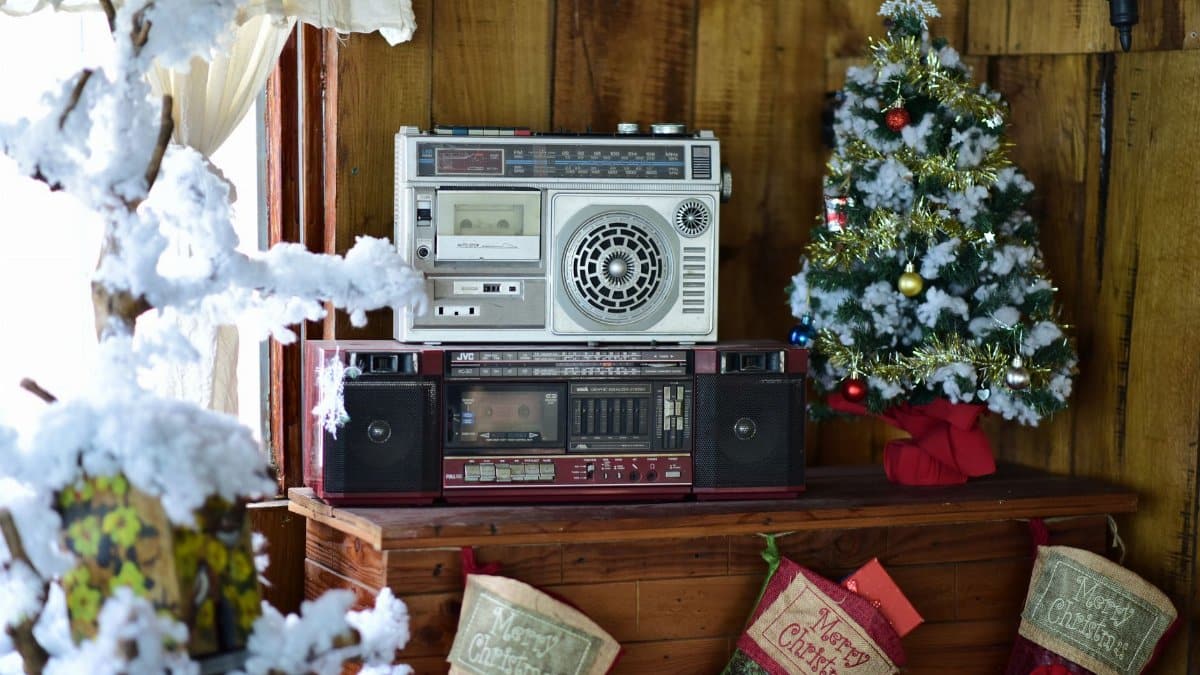
At noon on November 20, a familiar voice on the Bay Area dial stopped sounding like late autumn and started sounding like a department store in December. 96.5 KOIT, the adult contemporary station that has made this switch a local ritual, flipped to an all Christmas format and opened its 24th annual holiday season. KOIT Christmas music arrived with carols, standards, and the bright insistence of sleigh bells, even though Thanksgiving was still a week away. For some listeners the change felt like a gift. For others it felt like the calendar had been overruled by a playlist. Either way, the season had a new start time, and it was not the one printed on most family plans.
A switch that no longer surprises anyone

The flip itself was simple. One moment the station was doing what it does for most of the year, playing the soft pop and familiar voices that fill offices, kitchens, and long drives across the bridges. The next moment the library narrowed to holiday songs and stayed there. Listeners who have followed the station for two decades knew the date was coming. The surprise, if there was one, was only that the surprise has worn off. Early Christmas radio is no longer a stunt. It is a scheduled event, announced in advance and received as part of the regional calendar.
That familiarity matters. A format change used to feel like a prank on the month of November. Now it feels like infrastructure. People plan errands around it, or they plan to avoid the presets until after the turkey. The station does not need to explain the concept. It only needs to throw the switch and let the argument begin again in cars, group texts, and grocery lines.
Twenty four years of the same argument

This is the 24th year KOIT has devoted a stretch of the calendar to nothing but holiday music. A habit that lasts that long stops being a programming experiment and becomes a local custom. Customs do not require everyone to like them. They require enough people to expect them that breaking the pattern would feel stranger than keeping it.
The repetition also explains the tone of the complaints. They are rarely shocked. They are weary, fond, or performative. Someone will say the station has lost its mind. Someone else will say they have been waiting since the first cold morning. Both reactions are part of the show. A tradition that produces no disagreement is usually a tradition nobody notices.
What actually comes out of the speaker

The catalog is narrower than people remember and wider than purists admit. There are sacred carols, Broadway arrangements, country crossovers, and the same handful of pop records that have survived every fashion since the compact disc. A station in this mode is not curating a museum. It is building a mood that can survive a commute, a waiting room, and a teenager who would rather hear anything else.
That mood is the product. The individual song is almost secondary. What listeners buy, in attention if not in money, is the promise that the next track will not break the spell. No news of ordinary heartbreak. No summer single lingering into fall. Just bells, choirs, and the particular cheerfulness that American radio has decided belongs to December, even when December has not arrived.
Thanksgiving still has a week left

The timing is the real provocation. Thanksgiving is not a minor prelude. It is a holiday with its own table, its own arguments, and its own music, thin as that shelf may be. When a major station declares Christmas early, it does not cancel the Thursday feast. It does crowd the days before it. Shopping lists start to share mental space with gift lists. The radio in the kitchen, which might have carried a football pregame or a quiet afternoon, carries “Silent Night” while the cranberries are still in the bag.
Some households treat that overlap as a mercy. The stretch between the two holidays is short, travel is hard, and a soundtrack can make a cramped week feel intentional. Others hear a kind of disrespect, as if gratitude had been edited out to make room for retail. Both readings can be true in the same family, which is why the dial becomes a small domestic politics.
The commercial calendar versus the kitchen calendar
Radio does not invent the early season by itself. Stores have been dressing aisles in red and green before the pie cools for years. Streaming playlists follow the same clock. What a terrestrial station adds is unavoidability. A playlist on a phone is a choice. A flip on a heritage frequency is a public notice. It tells a region, without asking, that the commercial calendar has moved.
That notice has a logic. Holiday advertising is concentrated, and a station that waits for December 1 may be late to the only weeks when certain sponsors are spending. Listeners who want the music will find it somewhere. A station that provides it first, and loudly, keeps them from leaving the preset. None of that is sinister. It is ordinary media economics. It just happens to collide with a holiday that many people still want to protect from the next one.
Why these songs land so hard

Christmas records are unusually good at collapsing time. A song associated with a particular kitchen, a particular loss, or a particular year of childhood does not behave like other pop. It arrives already attached to rooms and people. When KOIT Christmas music takes over a frequency, it is not only filling airtime. It is pulling private memories into public space, whether the listener asked for that or not.
That is why the reaction is rarely mild. A person who loves the format is often defending a feeling, not a programming decision. A person who hates it may be defending a boundary around grief, fatigue, or a simple wish to finish one holiday before starting another. The station cannot sort those listeners. It can only play the next track and let the feeling do what it does.
A secular liturgy with sacred songs still in it
There is a spiritual oddity in the mix, and it is easy to ignore because the presentation is so glossy. Many of the records are frankly religious. They name a birth, a hope, a humility that does not fit easily into a sales season. They sit beside songs about snowmen and shopping with no announcement that the subject has changed. For believers, that jumble can feel like a small mercy or a small dilution. For everyone else, it can feel like background culture, the way a hymn becomes a melody you know without knowing why.
Bay Area radio is not a church, and it should not pretend to be one. Still, the annual flip puts sacred language into cars and break rooms at a volume few congregations can match. That does not make the station a spiritual authority. It does make it a distributor of words that once belonged, more clearly, to worship. Listeners are free to hear them as faith, as nostalgia, or as noise. The frequency does not adjudicate.
The people who turn it up
The fans are not a cartoon of shoppers in a hurry. Some of them work jobs that offer little ceremony. A radio season is the ceremony they can get without tickets or a dress code. Nurses on a night shift, drivers crossing the Bay before dawn, parents packing lunches: they are not waiting for a perfect theological moment. They want a sound that marks time. When the station changes, their year changes with it.
Others are simply efficient. They have lists, travel, and relatives arriving on a schedule that does not care about aesthetic complaints. Early music helps them start. It is hard to sneer at that without sneering at the labor of hosting, which still falls unevenly and still has to be done whether or not the radio is tasteful.
The people who change the station

The refusal is just as reasonable. Not every listener wants to be drafted into cheer. Some are observing a different calendar, religious or not. Some are stretched thin and hear forced joy as pressure. Some like Christmas music in its place and dislike the way November gets eaten. Changing the station is a small, available act of dissent. In a season full of obligations, that act can feel larger than it is.
There is also a aesthetic objection that deserves a straight answer. A narrow playlist, repeated for weeks, can flatten songs that were meant to be occasional. Familiarity is the point of the format and the risk of the format. By the time Christmas Day arrives, some listeners will have heard their favorite record enough times to stop hearing it. The station is betting that enough people will not reach that point, or will not mind if they do.
What the Bay Area is really debating

The argument is not only about one frequency at 96.5. It is about who gets to say when a shared season begins. In a region of many faiths, many incomes, and many ways of spending late November, no single start date will feel fair. A radio station picks one anyway, because a format cannot be plural in the way a city can. That bluntness is what makes the flip news every year. It forces a private preference into public time.
People will keep score in the usual ways. They will note the date, compare it with last year, and decide whether the station has gone too far. They will also keep listening, or they will not. Ratings, in the end, are a blunter instrument than a family argument, and they will matter more to the people who run the station than any op ed will.
A season that starts when the switch flips

None of this requires a listener to surrender Thanksgiving. The table can still be set. The game can still be watched. The thanks, if they are real, do not depend on what a pop station is playing in the next room. What has changed is the background assumption. December no longer waits for the calendar to catch up. It arrives when a programmer decides the audience is ready, and a large part of the audience has decided to agree.
KOIT Christmas music will keep its hold until the station decides the season is over, as it has for more than two decades. Between now and then, the Bay Area will do what it always does with an early carol: argue a little, remember a lot, and keep driving. The turkey can still have its day. It will just have to share the speakers.