
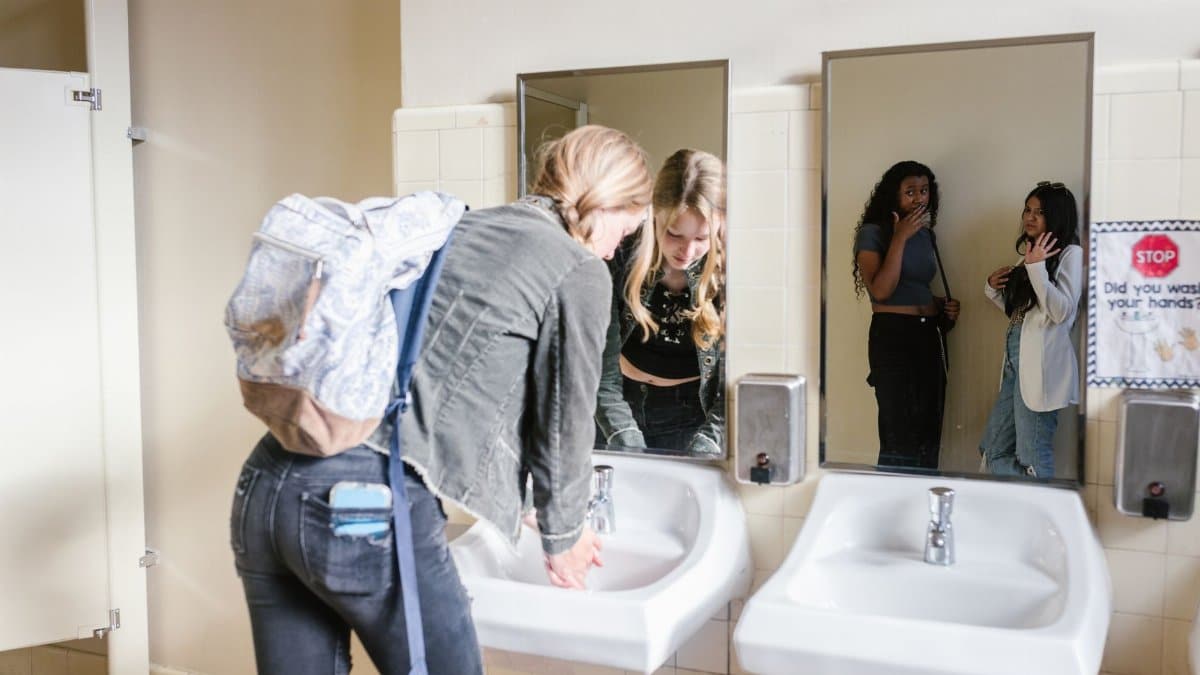
On a November evening in the Inland Empire, a school board room that has become a regular stage for national arguments over sex, privacy, and parental authority took one more vote before its most recognizable leader stepped away. Chino Valley Unified approved a ban that would keep transgender students out of girls sports and out of girls restrooms, and the decision landed at the last meeting of board president Sonja Shaw. The room was full. The legal fight that follows is unlikely to stay inside it.
A farewell vote with a long shadow
Shaw has spent years turning a suburban district east of Los Angeles into a test case for conservative school governance. Supporters call her a parent who refused to defer to Sacramento. Critics call her a politician who used children as props. Both descriptions were in the room when the board acted. What changed on this night was not the argument. It was the permanence of the rule she leaves behind, and the fact that she will not be the person who has to defend it in every subsequent hearing.
District meetings in this community have rarely been quiet. Parents line up with prepared remarks. Students sometimes speak in voices that shake. Trustees interrupt one another. The pattern is familiar across California districts that have tried to write local policy against state guidance on gender. Familiarity does not make the stakes smaller for the teenagers who use a locker room or who want a place on a team.
What the policy actually does
The measure, as described by the board action and by early news accounts, bars students whose sex assigned at birth was male from participating on girls athletic teams and from using girls restrooms. In plain terms, transgender girls would be directed to boys teams and boys facilities, or to whatever alternative the district designs. The policy does not invent a new cultural dispute. It tries to settle one by administrative rule, and it does so in a state whose education officials have repeatedly said local boards may not exclude students from programs on the basis of gender identity.
Supporters framed the vote as a matter of fairness in competition and of bodily privacy for girls. They spoke about scholarships, about changing rooms, about the discomfort of adolescent bodies sharing space. Opponents framed it as a targeted exclusion that singles out a very small number of students and exposes the district to lawsuits, state intervention, and the quieter harm of telling a child that the school will not recognize who they are.
Sonja Shaw and the politics she built
Shaw did not arrive at this vote as a newcomer. She rose to statewide notice by championing parental notification rules, by challenging materials and lessons she viewed as ideological, and by treating the board dais as a platform rather than a clerical post. Allies in the parental rights movement have treated her tenure as proof that local majorities can resist agencies in Sacramento. Democratic officials and civil rights groups have treated the same tenure as a warning about what happens when culture war politics capture a school board.
Her exit matters because personality and policy have been hard to separate in this district. A rule adopted on her last night can outlast the person who championed it. It can also lose its most skilled public defender. The next president will inherit the lawsuits, the angry emails, the athletes who feel unprotected, and the transgender students who feel erased, without automatically inheriting Shaw’s national profile.
California has already drawn a line

State law and guidance from education officials protect transgender students in school programs in ways that sit in direct tension with the new local rule. California has spent several years telling districts that students may participate in activities and use facilities consistent with their gender identity, and that schools should not force disclosure of a student’s gender identity to parents in every case. Those positions are not abstract. They come with compliance reviews, funding leverage, and the attention of the attorney general when a board tests the boundary.
That is the clash the vote invites. A local board can pass a policy on a Thursday and discover on a Friday that the state regards the policy as void. Chino Valley Unified has been in versions of this argument before. Each round has cost time, legal fees, and trust. None of those costs fall only on trustees. They fall on classrooms that need counselors, coaches, and quiet.
Sports and the argument about fairness

Athletics is where the debate sounds most concrete, because wins and roster spots are visible. Parents of girls describe a fear that a student who went through male puberty will dominate a race, a court, or a wrestling mat. Medical and sports bodies disagree among themselves about thresholds, age, and whether bans or case by case eligibility rules are the lesser harm. What a school board cannot honestly claim is that the science is settled in a single sentence, or that every transgender girl is an elite threat to every team.
In a comprehensive high school, most transgender students are not chasing state titles. They are trying to stay in a sport with friends, or to avoid the isolation of sitting out. A categorical ban answers the hardest cases by sweeping in the ordinary ones. That may be what a majority of speakers in the room wanted. It is still a blunt instrument, and blunt instruments are what courts and state agencies tend to examine first.
Restrooms are a different kind of fear
Restrooms and locker rooms raise privacy questions that do not depend on a stopwatch. Girls and their parents describe anxiety about undressing near someone they understand to be male. Transgender students describe the opposite risk: harassment, avoidance of school, and the health consequences of not using a bathroom all day. Both fears are reported often enough that pretending either is invented would be dishonest.
Districts that have tried to lower the temperature sometimes add single stall options without making those stalls a scarlet assignment. A ban that routes transgender girls into boys spaces does something else. It announces a theory of sex that state officials reject, and it places the most vulnerable students in the facilities where many of them say they feel least safe. Safety, in this fight, is a word both sides claim and neither side owns exclusively.
The students who do not get a vote
Board policy is written by adults and lived by minors. A transgender student in this district did not elect Shaw and will not elect her successor. A cisgender girl on a soccer team did not write the education code. Journalism that treats only one of those children as real is not journalism. The harder task is to hold two facts at once: some girls and their families experience shared sex segregated spaces as a protection, and some transgender students experience exclusion from those spaces as a punishment for existing.
Schools are not seminars. They are places where a fourteen year old has to change clothes before sixth period. Policy that sounds clean at a microphone becomes a hallway problem by the next morning. Staff will be asked to police bodies. Mistakes will be public. The child who is misidentified, or who is correctly identified and then isolated, will remember the institution more vividly than any trustee will.
Parents, churches, and the moral language of the vote

Much of the support for the ban arrives in religious and parental language. Speakers talk about creation, about mothers protecting daughters, about a duty to resist what they see as confusion imposed by elites. That language belongs in an American public square. It does not, by itself, decide what a public school governed by state law may do. Faith can shape a vote. It cannot immunize a district from the constitution or from statutes passed in Sacramento.
Opponents also speak in moral terms: dignity, welcome, the command not to harm the vulnerable. Those appeals are equally sincere and equally insufficient as legal briefs. The meeting was a contest of consciences. The aftermath will be a contest of jurisdiction. Confusing the two is how communities convince themselves that a cheer in a board room is the same thing as a settled right.
What the state can actually do
California officials have several tools short of a dramatic courtroom scene, and they have used them with other districts. They can notify a board that a policy conflicts with law. They can open investigations. They can threaten or withhold certain funds. They can seek court orders. None of that is instantaneous, and none of it is painless for a district budget already stretched by staffing and special education costs.
Local voters sometimes hear those tools as bullying. State officials hear noncompliance as a dare. Chino Valley Unified now sits in that familiar standoff with a fresh policy and a departing figurehead. If the district implements the ban while appeals or negotiations drag on, students will live under a rule that may later be struck. If the district pauses implementation, the majority that cheered the vote will say the board blinked. There is no path that satisfies both audiences.
A board learning to speak without its loudest voice

Succession is an underrated part of school politics. Shaw’s style, combative and media ready, set the tempo of meetings and the national attention they received. A quieter board could narrow the policy, seek a compromise on facilities, or double down and dare the state to sue. Colleagues who voted with her may discover that agreement in her presence is not the same as a shared strategy in her absence.
Residents who opposed her will not automatically gain a majority because she left the dais. The coalition that elevated her did not dissolve at adjournment. What changes is the face on the cable segment and the name in the headline. Governance continues in the less glamorous work of implementation: training coaches, rewriting handbooks, answering a principal who needs to know which door a student may use on Monday.
The national script and the local bill
Versions of this ban are moving through statehouses and school boards across the country. California is an outlier in the other direction, which is precisely why a district here becomes a symbol. National advocates on both sides will cite the vote. They will not pay the legal invoices. They will not sit with a student who stops coming to practice. Symbolism is cheap. Administration is not.
That gap between national script and local bill is the part of the story that middle aged parents, whatever their politics, tend to recognize once the microphones leave. Property taxes, bus routes, and a child who hates school do not track viral clips. A board that governs for the clip will keep producing them. A board that governs for the Tuesday after the clip has a narrower and harder job.
What to watch in the weeks ahead

Watch whether the district publishes procedures that staff can actually follow, or whether the policy remains a declaration without a playbook. Watch whether California education officials or the attorney general respond in writing, and how quickly. Watch whether families of transgender students sue, and whether families who supported the ban organize to defend it at the next election. Watch whether girls sports programs change in any measurable way, or whether the practical effect is a handful of students pushed to the margins while the teams look the same.
Also watch the tone of the first meetings without Shaw. If the board treats the vote as a closed moral victory, the collision with the state will harden. If it treats the vote as the start of a negotiation over privacy, single stall options, and eligibility rules that can survive review, some of the heat may come down. Neither outcome is guaranteed by the applause that followed the gavel.
A community that will still share the same schools

The students affected by this decision will keep passing one another in hallways named for local history, not for national factions. Chino Valley Unified can win news cycles and still fail those hallways. It can lose in court and still have named a fear that many parents refuse to abandon. The adult temptation is to declare a side and stop listening. The journalistic obligation is plainer: a board used its last night with a famous president to draw a bright line, the state is positioned to challenge that line, and the children who did not draw it will be the ones who have to cross it.