
In the space of a few careful sentences, Chinese officials have acknowledged that talks are underway about something that would have seemed improbable even a short time ago: a Xi Trump Putin meeting. The confirmation did not come with a date, a city, or a promise. It came the way Beijing often speaks when it wants the world to notice without locking itself in. For readers who remember Cold War summits and later eras of staged handshakes, the prospect raises an old question in a new form. Can three leaders who distrust one another sit in the same room and change the temperature of a dangerous decade, or will the photograph outrun the substance?
What Beijing actually confirmed
The language from China was narrow, and narrow language is the point. Officials said discussions were underway. They did not say an invitation had been accepted, a venue chosen, or an agenda drafted in public. In diplomatic practice, that gap is not a mistake. It is a tool. A confirmation of talks lets each capital test domestic reaction, allied nerves, and market mood before anyone has to own a failure.
Readers should treat the headline as a signal, not a schedule. Great power meetings of this scale are assembled in layers. Staff work comes first. Then a possible encounter on the margins of some larger gathering. Only later, if the politics hold, does a standalone summit appear. Beijing’s phrasing fits the first layer. It is enough to move the conversation. It is not enough to book the plane.
Why the idea has returned now

The timing is not mysterious if you look at the pressures rather than the personalities. Wars grind on without clean endings. Trade fights have become a standing feature of politics rather than a temporary quarrel. Energy routes, shipping lanes, and semiconductor supply chains are treated as strategic assets. In that setting, leaders look for moments that suggest control, even when control is partial.
A three leader gathering would also serve a simpler need. Each man wants to be seen as indispensable. A room with only two of them leaves the third to comment from outside. A room with all three lets each claim he shaped the outcome, whatever the communique actually says. That incentive does not guarantee a meeting. It does explain why the rumor refuses to die.
Photographs and power
Summits are theater, and theater is not trivial. The seating chart, the length of the handshake, the decision to smile or not to smile: these details travel farther than any paragraph of agreed text. For audiences at home, the image can matter more than the clause. A leader under pressure can point to the picture and say the world still needs him at the table.
That is also the risk. A photograph can freeze a moment that the underlying politics cannot sustain. Voters remember the image. Negotiators remember the footnotes that never got written. If talks about a Xi Trump Putin meeting advance, the first fight may not be over territory or tariffs. It may be over who appears to have summoned whom.
Three agendas that do not match
Washington, Moscow, and Beijing do not arrive with the same shopping list. The United States wants leverage on trade, technology, and the wars that drain attention and money. Russia wants relief from isolation and a stage that treats it as a peer rather than a pariah. China wants stability on its own terms, room to manage economic strain, and a process that does not look like mediation on behalf of either rival.
Those aims can overlap at the edges. All three can prefer a pause in escalation to an uncontrolled spiral. All three can prefer talking to a surprise that rattles markets. Overlap is not agreement. A summit built only on overlap tends to produce statements about dialogue, respect, and the need to avoid miscalculation. Those words are not empty. They are also not a settlement.
Ukraine sits in every chair

No serious discussion of this idea can skip the war in Ukraine. European governments will read any three way encounter through that lens first. If the meeting looks like a bargain struck over their heads, the backlash will be immediate. If it looks like pressure on Moscow without a path Kyiv can accept, the backlash will come from another direction. Either way, the absent parties will shape the politics of the present ones.
History offers a warning rather than a script. Deals announced without the people who must live with them rarely hold. A conversation among Xi, Trump, and Putin could explore ceasefire ideas, prisoner issues, or energy flows. Exploration is not the same as a map. Anyone selling a single meeting as the end of the war is selling a story the facts will not support.
Taiwan and the sentences left unsaid
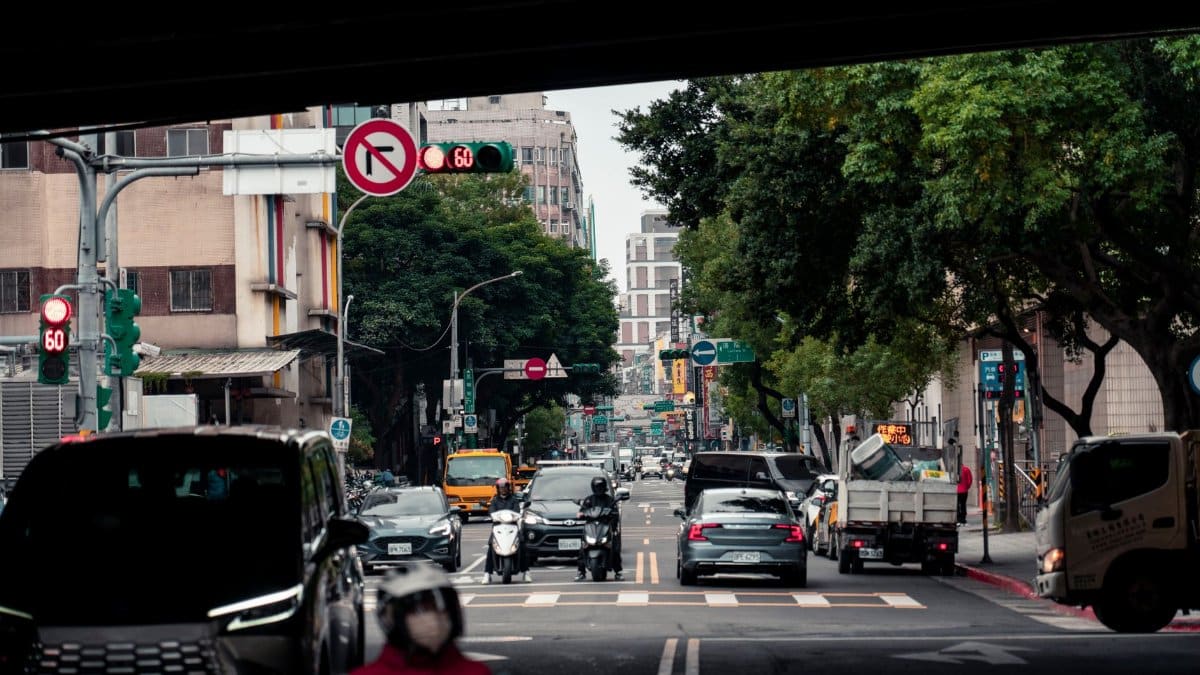
Taiwan will not need to be on the public agenda to be in the room. Beijing treats the issue as internal. Washington treats arms sales, transits, and alliance language as matters of law and strategy. Moscow has its own reasons to echo Chinese talking points when it wants favor in Beijing. A joint appearance that blurs those lines would be read in Taipei, Tokyo, and Canberra within hours.
This is where careful phrasing becomes a battlefield. One adjective in a readout can be framed as a concession. Silence can be framed as one too. If discussions continue, expect long arguments over words that sound bland to a general reader and explosive to a specialist. That is not pedantry. It is how these governments keep score.
Allies who are not invited

A meeting of three would leave many powerful governments outside the door. European capitals, Japan, South Korea, India, and others have direct stakes in trade rules, security guarantees, and energy prices. They will not wait politely for a summary. They will call, leak, and reposition. The diplomacy around the diplomacy can become as intense as the event itself.
There is a practical lesson here for anyone watching from a distance. Great power theater often produces a second track of reassurance tours. Leaders fly to allied capitals to say nothing fundamental has changed. Sometimes that is true. Sometimes the reassurance is the policy, because the summit itself produced little that can be implemented.
Markets hear the rumor first
Investors do not need a final communique to move. A hint of dialogue can lift risk appetite for a day. A hint of breakdown can do the opposite. Oil, grains, currencies, and defense shares all respond to the possibility that a war might cool or that a trade fight might sharpen. The confirmation from Beijing is already a market event, even if no plane has left the ground.
The wiser reading is slower. Prices react to headlines. Livelihoods react to contracts, sanctions lists, and shipping insurance. A summit can change the mood without changing the invoice. Households feeling grocery prices or factory orders should not treat a diplomatic photo as a forecast. It is a data point, and a noisy one.
What a real agenda would require

If the talks move past symbolism, the homework is unglamorous. Teams would need a shared sense of what is discussable and what is off limits. They would need a plan for what each side says in public if the private session goes badly. They would need a way to brief allies before the press does it for them. None of that work shows up in the first confirmation. All of it decides whether a meeting is historic or merely loud.
Past summits that aged well had something smaller and harder than a vision. They had a mechanism: a channel for prisoners, a schedule for inspectors, a tariff pause with a date attached. Past summits that aged badly had adjectives. The difference is not charisma. It is whether someone is assigned to do a specific thing by a specific time.
Domestic politics will write the captions

Each leader faces a home audience that will caption the same picture in a different language. In the United States, any encounter with Putin still carries the weight of an unpopular war and a long argument about American purpose. In Russia, state media can turn a meeting into proof that isolation failed. In China, the leadership will want to look steady, not eager, and certainly not like a junior partner in someone else’s drama.
Those captions limit what can be conceded. A leader who needs to look strong at home has less room to trade in public. That is why many of the meaningful exchanges, if they happen at all, will be described later in vague terms. Vagueness is often a shelter. It can also be a way to claim progress that staff cannot deliver.
The habit of overreading silence

When officials say little, commentators fill the space. A delayed answer becomes a snub. A polite formula becomes a breakthrough. This habit is understandable and often wrong. Silence after a confirmation can mean bargaining. It can mean scheduling trouble. It can mean that one capital floated an idea and another has not decided whether to kill it.
A useful discipline is to separate three questions. Has anyone agreed to meet? Has anyone agreed on a subject? Has anyone agreed on a result? Beijing has spoken only to the neighborhood of the first question, and even there the verb was discuss, not decide. Until the other two questions have answers, the historic label is a prediction, not a fact.
History is a crowded room

Comparisons will come quickly. Yalta. Reykjavik. The odd staged encounters of the early nineteen nineties. Each comparison flatters the present by borrowing gravity from the past. The world those meetings addressed is not this one. Nuclear risk remains. Ideology is less tidy. Economic interdependence is deeper and more weaponized. A Xi Trump Putin meeting, if it occurs, will be judged in that messier setting, not in a black and white photograph from another century.
Still, the old meetings are worth remembering for one plain reason. They show that leaders can talk while remaining adversaries. Conversation is not conversion. A table is not a treaty. The public sometimes wants those distinctions collapsed because collapse feels like hope. Reporters should keep the distinctions intact.
How to watch the next few weeks

The tells will be boring, which is how you know they matter. Watch for a proposed city that all three can accept without looking summoned. Watch for whether foreign ministers speak in sequence or contradict one another within a day. Watch for allied briefings that sound prepared rather than surprised. Watch for any mention of a working group, because working groups are where summits either grow a spine or quietly expire.
Also watch what is not said. If Ukraine, Taiwan, and tariffs are all declared too sensitive for the first encounter, the meeting may still happen and still matter as a pressure valve. It will not matter as a settlement. Readers can hold both ideas at once. Lowering the chance of a miscalculation is worth doing. Pretending that a valve is a peace is not.
A meeting is a means
The confirmed discussions deserve attention because the three capitals involved can move markets, armies, and alliances with a sentence. They do not deserve myth. Power is not a dinner. Power is what remains after the dinner, in orders, budgets, and the willingness of other countries to go along.
If the Xi Trump Putin meeting moves from discussion to date, the honest coverage will be unromantic. It will ask who gains a pause, who pays for it, and who was not in the room when the pause was designed. That is a quieter story than a historic summit. It is the story that tells you whether the history was real.