
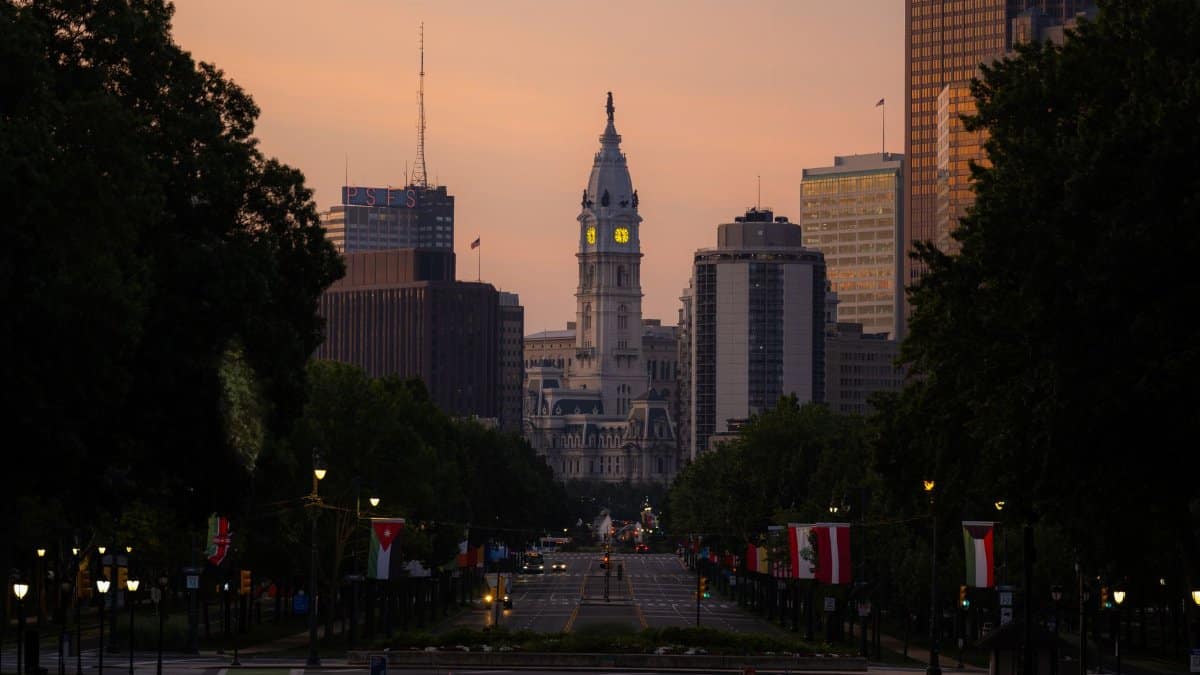
On a weekday morning the sidewalks around Rittenhouse and along Market Street already feel full, and the cranes above them suggest the crowding is not an accident. A recent Center City District assessment, described in reporting by The Philadelphia Inquirer, finds that two in five new homes built in the city rose in greater downtown. That concentration is the clearest recent picture of Center City housing growth, and it raises a quieter question than the skyline does. If so much of Philadelphia’s new housing is landing in one compact geography, what happens to price, to daily life, and to the neighborhoods that sit just outside the glow of that boom?
A downtown share that reshapes the map
Two in five is not a modest footnote. It means a large slice of the city’s newest addresses, from rental towers to smaller infill buildings, has been stacked into a few square miles rather than spread across a city of neighborhoods. The Inquirer account of the Center City District report frames greater downtown as the engine of Philadelphia’s recent housing boom, not a side stage. Readers who live in the Northeast, in Southwest, or along the far reaches of Germantown may feel that imbalance before they ever see a chart. Construction cranes are a kind of census. They announce where capital believes people will pay to live.
Concentration is not the same thing as health. A downtown that adds homes can relieve pressure if those homes are numerous enough and varied enough. It can also pull investment, retail, and political attention toward a core that already has transit, restaurants, and employers, leaving other blocks to wait. The report’s finding matters because it turns a feeling into a proportion. Philadelphia did not merely add housing. It added a striking share of that housing in one place.
Why builders keep returning to the core

Developers do not choose sites out of civic poetry. They follow land they can assemble, zoning that allows height or density, lenders who understand the product, and buyers or renters who will show up. Greater downtown offers all of those conditions more reliably than many outlying corridors. Office workers, hospital staff, university employees, and people who simply want to walk to a train already form a deep pool of demand. A building near a station can be marketed without a long explanation of how to get to work.
There is also a story about risk. A lender looking at a familiar high rise or a mid block rental near existing amenities sees a path that has been walked before. A project on a thinner commercial street, far from that pattern, must argue harder for the same money. Over years, those private calculations become a public map. Center City housing growth is what that map looks like when it is allowed to draw itself.
Who the new doors are actually for
A boom counted in units can hide a boom counted in incomes. Many of the newest downtown homes are rentals aimed at households that can absorb center city prices, or condominiums marketed to people trading space for location. That is a legitimate market. It is not the whole city. Philadelphia still has families looking for an extra bedroom, older residents hoping to stay near a doctor and a grocery, and workers whose wages do not match a new lobby with a gym.
When two in five new homes land downtown, the mix inside those homes becomes a citywide question. If the new stock is mostly small and expensive, the boom houses a particular kind of resident and leaves others competing for older buildings. If some share is reserved, subsidized, or simply built at a scale that softens rents, the same geography can do more public work. The report does not settle that argument by itself. It forces the argument into the open, because the location of growth is no longer vague.
The blocks just beyond the postcard
Greater downtown is not only the postcard grid of restaurants and office towers. It includes edges where rowhouses, old factories, and new rentals meet. Those edges often absorb the spill of a core that has grown more expensive. A household priced out of a new tower may land a few blocks north or south, raising rents on streets that still look residential rather than monumental. Growth, in that sense, does not stop at a boundary drawn for a report. It leaks.
Neighbors on those edges tend to notice delivery trucks, new residents who leave early, and storefronts that shift from practical shops to places that close before dinner. Some welcome the activity. Others worry that the street they could afford is being rewritten without their consent. Both reactions can be true at once. A housing boom is never only a count of permits. It is a change in who feels at home on a given block.
Empty offices and the hope of conversion
Philadelphia, like other old downtowns, has spent recent years staring at office floors that no longer fill the way they once did. Turning some of those floors into apartments is an attractive idea: use what is already built, add residents who walk to dinner, and avoid paving new land. The idea is harder than the slogan. Deep floor plates, plumbing stacked for a workplace rather than a kitchen, and owners waiting for a better office lease all slow the work. Conversions that do happen tend to favor buildings with the right bones and the right price.
Still, the logic fits the pattern the report describes. If the market already wants homes in greater downtown, obsolete offices are a reservoir sitting inside that demand. Whether the city captures that reservoir, or watches it sit dark while new towers rise nearby, will shape the next chapter of Center City housing growth. A boom that only builds new, and never reuses old, spends more concrete than it needs to.
Transit, schools, and the ordinary day

People do not move downtown only for a view. They move for a day that can be managed without a car, or with a car left in a garage most of the week. Regional rail, subways, buses, and the simple fact of being able to walk to an errand are part of the housing product, even when they never appear in a sales brochure. If service thins, or if stations feel neglected, the premium people pay for location starts to look like a bet that may not hold.
Schools sit in the same ordinary category. A downtown full of young renters can thrive for a while without a family conversation. A downtown that wants residents to stay past a first job needs classrooms, parks, and pediatric offices that do not require a move to the suburbs. Housing growth that ignores those supports produces a rotating population rather than a neighborhood. The cranes can keep rising. The block still has to work on a Tuesday.
Prices, and the cost of a crowded core
Adding homes should, in a simple model, ease prices. In practice, a popular core can add homes and still grow more expensive, because demand keeps arriving faster than keys. New buildings set a high rent, older buildings nearby follow, and households with less income look farther out. Philadelphia has lived with that pattern long enough that it should not surprise anyone who has tried to renew a lease near the center.
The danger is treating downtown success as proof that the housing problem is solved. A city can celebrate occupancy, restaurant receipts, and a lively evening street while teachers, cooks, and home health aides commute from farther away. That is not a moral failure of the people who rent the new apartments. It is a planning failure if public tools, from subsidies to zoning to public land, never push a share of the boom toward people the private market will not house on its own.
What city power can still change

Private builders will keep preferring the core until the rules or the subsidies change the math. City Council, the planning commission, and housing agencies are not spectators. They decide where density is legal, how much of a project must be affordable, whether public land goes to the highest bidder or to a mixed income plan, and how fast permits move on corridors outside downtown. Those choices do not erase Center City housing growth. They decide whether it remains the overwhelming story or becomes one chapter among several.
Patience matters as much as a press conference. A neighborhood outside the core does not become buildable because a report says the center took two in five new homes. It becomes buildable when zoning, transit, and local demand line up, and when lenders believe the city will not change the rules halfway through a project. Leaders who want a wider boom have to make that belief credible, not merely announce it.
A boom measured in people, not cranes
Population is the quieter twin of construction. Homes added downtown only matter if people occupy them, stay, and spend their days in the city rather than treating an apartment as a weekday perch. The Center City District has long argued that a lived in downtown is safer, richer in small business, and more convincing to employers than a district that empties after six. The new housing figures give that argument fresh weight. Greater downtown is not merely retaining residents. It is capturing a remarkable share of the city’s new ones.
That success should be named without being romanticized. A full sidewalk is not justice. It is evidence that a place works for the people who can afford it. Philadelphia can be glad the core is alive and still ask who is missing from the count.
Reading the next permit, not the last headline

The useful habit, after a report like this, is to watch the next round of permits rather than replay the last headline. If greater downtown continues to absorb something close to two in five new homes, the pattern is a structure, not a fluke. If the share falls because other neighborhoods finally add housing at scale, the city will have done something harder than celebrating a boom. It will have spread one.
Until then, the skyline remains an honest document. It shows where Philadelphia has chosen, by market and by policy together, to grow. Center City housing growth is that choice made visible, floor by floor, on streets that were already among the most desired in the city. The open question is whether the next decade of building will look like a repetition or like a correction. Residents do not need another slogan to tell the difference. They will see it in the rent, in the crane, and in whether a door opens on their own block.