
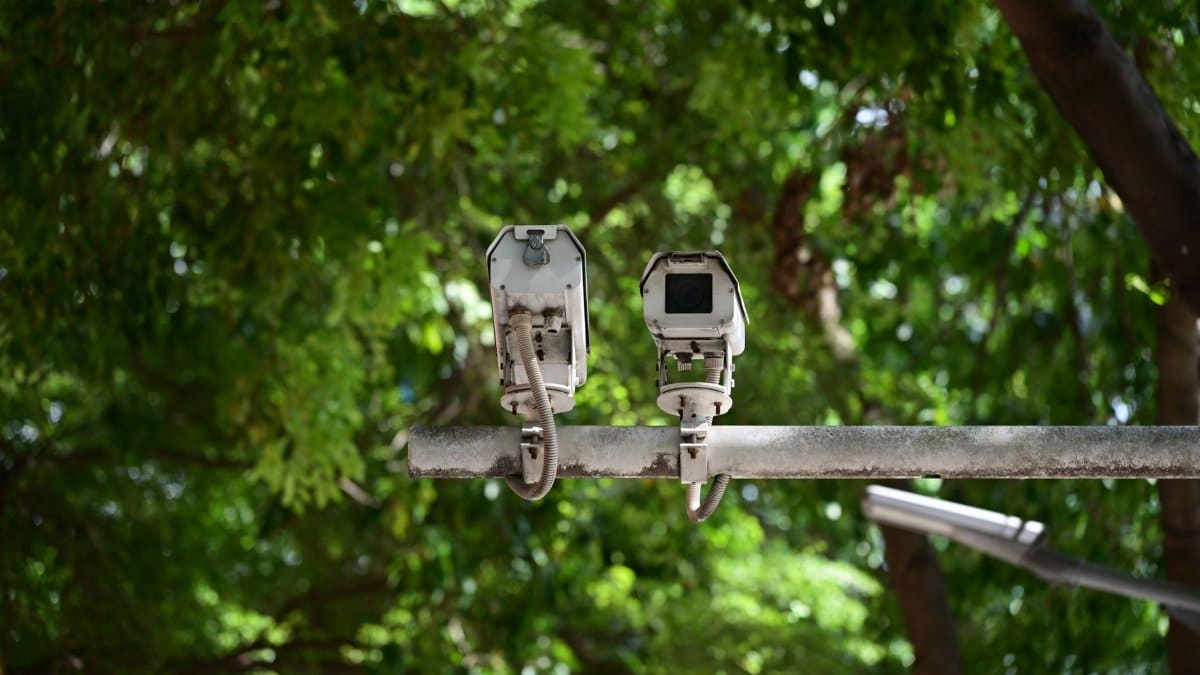
On a quiet block in North Dallas, a patrol car passes an intersection and a small camera on a pole keeps its own watch. It does not linger on a face for a news clip. It reads a license plate, marks the time, and sends the record into a private network the Police Department now treats as ordinary equipment. That habit has a price. Dallas Flock camera funding is no longer a quiet grant buried in a state program. It is a public argument about cash, crime, and how much of the street a city is willing to record.
A network the department does not want to switch off
Dallas police say they rely on about 690 Flock cameras, automated license plate readers leased from Flock Safety, a private company that has sold similar systems to departments across the country. Officers describe the cameras as a way to find stolen cars, locate vehicles tied to violent cases, and shorten the time between a call and a stop. The readers sit on poles and over lanes. They log plates that pass. They do not, in the department’s telling, replace patrol. They feed it.
The trouble is the bill. Reporting by The Dallas Morning News describes a contract on the order of $5.7 million and a department scrambling to rewrite the deal after state support stalled. Without a new path to pay, the cameras do not simply pause. The subscription ends, the alerts go dark, and investigators lose a tool they have folded into daily work.
What the readers actually capture

A plate reader is narrower than a body camera and broader than a single traffic stop. It records which vehicle passed which point, and when. Over weeks, those hits become a map of movement. Supporters call that map a trail of evidence. Critics call it a log of ordinary life: school runs, clinic visits, church parking lots, late shifts.
Flock markets speed. A hit on a plate listed as stolen or wanted can reach an officer in real time. Dallas officials have leaned on that promise when they defend the system in public meetings. They talk less, at least in the early years of the rollout, about how long images stay on a vendor server, who else can query the network, and what happens if a partner agency in another state asks for a search.
When the state money stopped

The immediate crisis is not a sudden vote to rip cameras off poles. It is a pause. Gov. Greg Abbott’s administration halted grants that local departments had counted on to cover public safety technology, including plate readers. Dallas had built its plan on the assumption that outside money would carry a large share of the Flock bill. When that assumption failed, the contract language no longer matched the cash on hand.
City staff moved to rewrite the agreement rather than let it lapse in silence. A rewrite can stretch payments, shrink the camera count, or shift costs onto the general fund. It can also force a clearer vote. Once local tax dollars are the source, council members own the choice in a way a pass through grant never required.
The rewrite on the table

Rewriting a $5.7 million license plate contract is not a clerical edit. Lawyers have to say who pays, for how many readers, for how long, and what the city may do if the vendor changes its data rules. Police leaders want continuity. Budget staff want a number that survives a tight year. Civil liberties advocates want limits written in plain language: retention periods, audit logs, and a ban on searches that have nothing to do with a Dallas case.
None of those demands is free. Fewer cameras cost less and cover less. Shorter retention reduces risk and also reduces the chance that an old hit solves a cold case. A strict bar on outside queries protects residents and may frustrate investigators who have grown used to a regional web of readers. The rewrite is where those tradeoffs stop being slogans and become clauses.
Privacy groups and the data trail
National watchdogs have warned for years that plate reader networks can be searched for reasons far from the car thefts used in sales pitches. Reproductive rights lawyers worry about searches tied to clinic travel. Immigrant advocates worry about federal partners mining local hits. Dallas is not the first city to discover that a camera bought for stolen vehicles can answer other questions if policy is loose.
Local critics do not need a hypothetical to make the point. They ask who inside the department can run a search, whether every search needs a case number, and whether the public can see a yearly count of queries. Those are governance questions, not technical ones. They also cost staff time. A serious audit program is part of the true price of Dallas Flock camera funding, even if it never appears as a line next to the lease.
Council politics and a visible vote
Dallas City Council members hear two rooms at once. In one, residents describe break ins, reckless drivers, and the relief of a quick arrest. In the other, residents describe a city that already films too much and explains too little. Both rooms vote. Both show up when a contract hits the agenda.
A grant lets officials say the state is paying. Local dollars do not offer that cover. Members who want the cameras must defend them against parks, libraries, street repair, and police overtime. Members who want them gone must explain what replaces the alerts on the night a stolen car is still moving. The rewrite turns a vendor relationship into a political record.
Neighborhoods that want the poles to stay

In parts of the city with high auto theft, the argument is concrete. A camera that flags a plate can end a chase before it starts, or point officers to a lot where a stripped car was dumped. Neighborhood association leaders have stood up at briefings and asked the city not to blink. They do not love a private company holding the archive. They love the idea that a repeat offender in a known vehicle is easier to find.
That support is real, and it is uneven. Cameras cluster where the department chose to place them, not always where every resident feels the same fear. A funding cut that removes readers at random will feel arbitrary. A cut that follows a public map of crime and of complaint will at least be explainable. The department has not always been eager to publish that map.
Crime numbers and the temptation to overclaim

Plate readers produce success stories that travel well: a kidnapping suspect stopped, a homicide vehicle spotted, a stolen truck recovered within the hour. Those stories matter. They are also a weak substitute for a full account. A honest briefing would say how many hits led to an arrest, how many were false, and how many serious cases would have been solved another way.
Dallas has not settled that accounting in public in a form residents can check without a records fight. Until it does, both sides will talk past each other. Supporters will recite the dramatic recoveries. Opponents will recite the scale of passive collection. Dallas Flock camera funding decisions made on anecdotes alone will not age well when the next contract comes due.
What other cities learned the hard way

Departments from the Southeast to the Mountain West have signed Flock deals and then faced backlash when searches, sharing rules, or immigration related queries came to light. Some councils added sunset clauses. Some paused new installs. A few tried to pull data back from the vendor and discovered how little leverage a mid size city has once the archive lives on someone else’s servers.
Dallas can read those episodes as a warning rather than a script. The useful lesson is procedural. Write the limits before the invoice, not after a headline. Publish the search log. Name the partner agencies. Decide in advance what the city will refuse, even if a powerful official asks. Technology contracts punish vagueness. They reward the city that treats data rules as part of the purchase, not as a press release.
Budget math inside City Hall

A multi million dollar lease is large next to a community grant and small next to the full police budget. That middle size is why it is politically slippery. It is big enough to notice and small enough to hide inside a technology package until someone asks a direct question. The Abbott pause removed the hiding place.
If the council keeps all 690 readers, it must name the offset: delayed hiring, deferred equipment, or a draw on reserves. If it keeps a smaller grid, it must tell neighborhoods which poles go dark. If it walks away, it must tell investigators what replaces the alert on a moving stolen car. There is no option that spends nothing and changes nothing. Dallas Flock camera funding is, at bottom, a choice about which disappointment the city will accept.
Stewardship and the moral weight of watching

Public safety debates in this city often sound like spreadsheets. They are also arguments about care. A community that refuses to look for a missing person fails a basic duty. A community that records every passing car, stores the record with a private firm, and cannot say who searched it fails a different duty, the duty to treat neighbors as citizens rather than as a data set.
Religious and civic leaders in Dallas have language for that tension even when they do not sit on the public safety committee. Stewardship means you do not spend money you do not have, and you do not collect power you cannot govern. Watching the street can be an act of protection. Watching without limits can be an act of suspicion dressed up as service. The contract rewrite will not settle that moral question. It will show whether City Hall is willing to hold both truths in the same document.
What residents should ask before the vote

The useful questions are specific. How many cameras remain if local money is the only source? How long does a plate image live? Who outside Dallas police can search it? What audit will the council see each year? What crime outcomes, not vendor testimonials, justify the next renewal? Those questions do not require a technical degree. They require a council that will not adjourn until the answers are on paper.
Residents who want the cameras should ask them too. A system that cannot survive daylight is a system that will eventually be yanked out in a panic, which helps no victim and no officer. Sunlight is not the enemy of a tool that works. It is the condition for keeping it.
The clock on the poles
For now the readers are still up. Alerts still move. The legal and budget work is the part the public cannot see from the sidewalk. Staff are trying to reshape a $5.7 million agreement so the department does not lose 690 cameras in a single lapse. Abbott’s pause on state grants made that work urgent. It did not make it simple.
Dallas can pay, cut, or quit. Each path has a cost in dollars and in trust. The mature move is to pick one in public, with rules tight enough to deserve the money and results clear enough to deserve the watch. Until that vote, Dallas Flock camera funding remains what it has become in this season of City Hall: not a gadget story, but a test of whether the city will govern the tools it already switched on.