
A photograph can travel farther than the prayer that produced it. On October 25, 2026, two Catholic bishops said they regretted a White House image made during prayer with President Trump, because the picture had been put to political use. Within hours the phrase Catholic bishops Trump photo was moving through parish notes, cable chyrons, and group texts that rarely agree on much else. The bishops did not deny that they had prayed. They denied the use that followed. In a country where sacred gesture and campaign craft often share the same frame, that distinction is both sincere and fragile.
What the bishops say they meant
The account that emerged is plain enough. The bishops took part in prayer at the White House. A photograph was made. Later they concluded that the image was being used to suggest a political endorsement they did not intend to give. Their regret is not a retraction of the prayer itself. It is a protest against the caption the picture acquired once it left the room.
That protest matters because Catholic bishops do not speak only for themselves. A collar in a presidential setting is read as a signal to millions of believers, whether the wearer wants that reading or not. When the signal is political, people who never entered the room still feel addressed. The bishops appear to have discovered, after the fact, how little control they kept over that address.
A room built for more than devotion
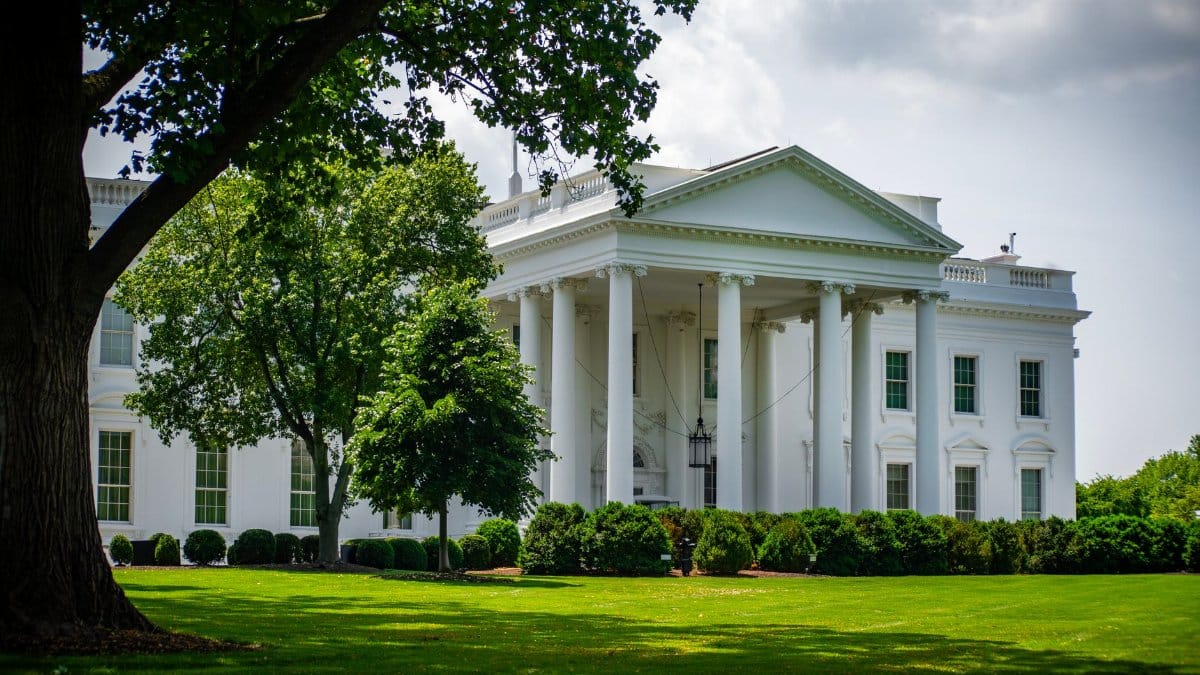
The White House is not a neutral chapel. Every corridor has been staged for history, and every visitor knows that a camera may be part of the hospitality. Prayer there can be genuine. It can also be useful to the host. Those two facts can occupy the same minute without either one canceling the other. The bishops seem to have felt the first more strongly while they were present, and the second more strongly once the picture circulated.
Presidents of both parties have long invited clergy into those rooms. The invitation flatters. It also places the guest inside a visual language the White House already knows how to deploy. A bowed head beside a president reads, to many viewers, as blessing. Blessing, in an election year or in any year of sharp division, is a political commodity. Regret after publication is an attempt to withdraw a currency that has already been spent.
How an image leaves its authors

Once a picture exists, intention is only one of its authors. Staff, allies, opponents, and algorithms finish the work. A still frame can be cropped, paired with a slogan, dropped into a fundraising note, or set beside a rival’s face for contrast. None of that requires the bishops to say a word. The Catholic bishops Trump photo, as it traveled, was no longer only a record of prayer. It was an argument about who stands with whom.
Religious leaders often underestimate that second life. They think of the people in the room, the words spoken, the sincerity they can vouch for. Audiences think of the last campaign they watched, the last scandal they remember, the last time a pulpit seemed to lean. The gap between those two understandings is where regret usually begins.
The political reading was predictable
It is fair to ask whether surprise was available. President Trump has treated religious imagery as part of his public style for years. Supporters hear in that style a defense of faith in public life. Critics hear a transaction. A prayer photograph with him was never going to circulate as a private devotion. It was going to be tested, immediately, for allegiance.
The bishops’ statement, as reported, treats that testing as a misuse. Many viewers will treat it as the ordinary fate of any such picture. Both descriptions can be partly true. Misuse does not require a secret plot. It requires only a political culture that converts every prominent religious gesture into a vote signal. In that culture, innocence of motive is not the same as innocence of effect.
Parish life absorbs the argument
The cost of the picture is not confined to Washington. Pastors will hear about it at the door after Mass. Some parishioners will be pleased that bishops were near the president. Others will feel that the church lent its face to a cause they oppose. A third group will be tired of both reactions and will want the homily to stay on the Gospel. All three groups share a pew.
I have sat in enough of those pews to know that a national photograph becomes local very fast. People do not debate media theory. They ask whether their bishop, or a bishop who looks like authority, has chosen a side. The October 25 regret is an effort to answer that question with a no. Whether the answer arrives before the picture does is another matter. In most parishes the picture arrives first.
Endorsement is not the only political act
Catholic teaching draws lines between moral witness and partisan campaigning. Bishops are expected to speak on abortion, migration, poverty, war, and the dignity of people at the margins. They are also expected, by their own conference norms and by a wary public, to avoid looking like operatives for a candidate. The line is real. It is also easy to cross without a speech, because a photograph can cross it in silence.
Standing beside a president while praying is not a printed endorsement. It can still function as one. Viewers supply the missing sentence. If the bishops did not want that sentence supplied, the setting was a hard place to prevent it. Their later regret concedes the point without quite saying that the visit itself was a mistake. That half step will satisfy some critics and strike others as too late and too soft.
Trump’s side of the frame
From the president’s perspective, clergy at the White House is a familiar asset. It signals openness to religious voters who have been central to his coalition. A prayer photograph offers warmth without the mess of a policy briefing. It suggests concord. If the bishops later say the image was used politically, the White House can answer that publishing a picture of a real event is not a distortion. That answer will sound reasonable to supporters and evasive to the bishops.
The dispute, then, is less about whether the camera lied than about who owns the meaning. The bishops claim a meaning limited to prayer. Political distributors claim a meaning that includes proximity to power. Neither side can force the other to accept its caption. The public, which does not attend these negotiations, keeps the version that fits the story it already believes.
Earlier seasons of the same conflict
American churches have been here before, under other names and other parties. Clergy have prayed with presidents, marched against them, and later wished a photograph had stayed in a drawer. The pattern repeats because the incentives repeat. Politicians want moral cover. Religious leaders want access, or want to believe access serves the people they shepherd. Cameras want a face the audience already recognizes.
What changes is the speed. A generation ago a regrettable picture might fade in a weekly paper. Now it is copied before the participants have left the grounds. Regret issued days later speaks to an archive that does not pause. The Catholic bishops Trump photo is a case study in that lag. The moral clarification follows the visual claim, and the visual claim has already done its work.
Who feels spoken for
Catholic life in the United States is not a single political bloc. Immigrants and long settled families, labor voters and business owners, people who admire President Trump and people who fear his return to the center of the frame, all claim the same sacraments. A picture that seems to lean toward one camp lands as a slight on another. Bishops who insist they leaned toward no camp still have to live with the slight.
That is why the language of regret is pastoral as much as political. It tries to tell divided Catholics that authority was not quietly reassigned to a campaign. Whether believers accept the reassurance depends on trust already built in dioceses far from the White House. A national photo can scratch that trust. It rarely creates it.
The limits of a correction
A statement of regret corrects the record for people who read statements. It does less for people who only saw the picture. Visual memory is stubborn. The bishops can explain context in interviews and letters. They cannot unpublish the frame. They also cannot police every account that reposts it with a cheer or a sneer.
There is a further limit. If the church wants freedom to pray with officeholders, it will keep entering rooms where cameras are part of the furniture. If it wants freedom from political captioning, it may have to decline some of those rooms, or insist on terms that campaigns dislike. The October 25 regret does not resolve that choice. It only shows the price of postponing it.
What journalists should resist
Coverage of the episode can flatten it into team sport. One version treats the bishops as naive guests who lent holiness to a brand. Another treats them as brave clerics punished for civility. Neither version is adequate. The more useful question is narrower. What did the participants think the picture would do, and what did it actually do once other hands held it?
Readers deserve that distinction without being recruited. The prayer can be granted as prayer. The political afterlife can be granted as real. Holding both ideas at once is not equivocation. It is the minimum honesty a photograph of this kind requires. The Catholic bishops Trump photo became news because those two ideas collided in public, not because one of them can be edited out.
A test for the next invitation
Other bishops, pastors, and lay leaders will watch how this regret is received. If it calms their people, some will treat it as a model for damage control. If it is dismissed as spin, some will decide that presence itself is the error, and that no later sentence can unsay a picture. Campaigns will draw their own lesson. If the image still helps after the apology, the incentive to seek the next clerical guest remains intact.
The test is practical. Before the next invitation, religious leaders can ask who will publish the picture, with what words, and for what audience. They can ask whether they are willing to own every likely caption, not only the one they prefer. If the answer is no, declining is a form of clarity. It is less dramatic than regret, and often more credible.
Prayer, power, and the caption
None of this requires cynicism about prayer. People in office need it, and people outside office are right to offer it without waiting for a perfect host. The problem is not the act of praying with a president. The problem is pretending that the photograph of that act can remain a private spiritual fact. In this presidency, and in this media culture, it cannot.
The bishops’ regret names that problem after it has already spoken. It asks the country to hear a narrower claim than the picture made. Some will hear it. Many will not. The Catholic bishops Trump photo will keep its political reading for as long as the image is easier to share than the explanation. That is the hard lesson of October 25, and it will outlast the news cycle that delivered it.
What remains after the statement
What remains is a record of two intentions in conflict. The bishops intended prayer and later insisted on that limit. Political users intended, or at least accepted, a message of alignment. The public received a single frame that could serve both stories and therefore fully served neither. Regret is the bishops’ attempt to pull their name back from the second story. It is an honorable attempt. It is not a deletion.
For readers trying to place the episode, the useful posture is neither scorn nor automatic defense. Ask what the church owes a divided flock when its leaders stand in a political house. Ask what a president owes guests whose symbols he displays. Ask what any of us owe a picture before we pass it on. Those questions will still be here when this particular Catholic bishops Trump photo has slipped down the feed, waiting for the next room, the next camera, and the next delayed regret.