
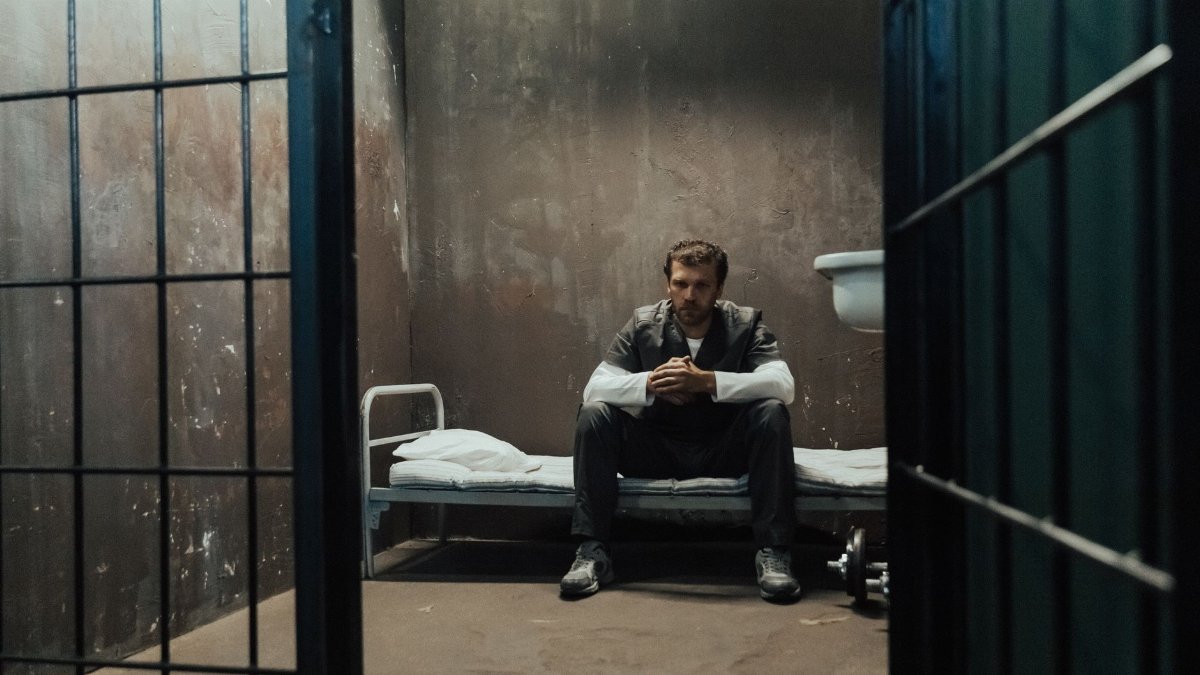
In a county better known for river towns, school board fights, and the long commute into Philadelphia, a judge has attached a hard number to a harm many neighbors still do not know how to name. The Bucks County AI deepfake sentence, seven to 10 years, concerns a man convicted for using artificial intelligence to manufacture sexual images of an underage neighbor. The pictures were not photographs taken in a bedroom or a park. They were synthetic. The child was real. That distinction is the whole case, and it is why the punishment now sits at the center of a wider argument about what the law owes a minor when the abuse is assembled by software.
What the court was asked to punish

The reported facts are narrow, and they should stay narrow. A Bucks County man received a sentence of seven to 10 years for creating deepfake pornography of an underage neighbor with the help of artificial intelligence. Public accounts of the case do not require anyone to see the images, and no responsible retelling should try to reconstruct them. The offense is the production of child sexual abuse material, even when the pixels were generated rather than captured by a camera.
Judges in cases like this are not grading a technology demo. They are weighing harm to a child, the intent of the defendant, the risk that files will travel, and the message a sentence sends to the next person who thinks a computer can launder a crime. Seven to 10 years is not a symbolic tap on the wrist. In Pennsylvania sentencing practice, a minimum and a maximum of that span means years of confinement, years of supervision, and a record that will follow the man long after the models he used are obsolete.
I have covered enough local courts to know that neighbors often want two incompatible things at once: a full public accounting, and protection for the child who never asked to be a case study. The second duty wins. Names of minors, descriptions of bodies, and any walkthrough of how the images were built have no place in a news story about this sentence.
Why a fake picture is not a victimless file

A common defense in the early years of generative tools was that nothing happened if no camera was present. That argument collapses when the subject is a real child who lives nearby. The neighbor is not an abstract dataset. She has a school, a street, and adults who are supposed to keep her safe. A sexual image built from her likeness teaches her, and anyone who sees it, that her face can be stolen and put to a use she cannot consent to and is not old enough to understand.
Psychologists who work with exploited children have long said that the harm is not limited to the moment of production. It includes the fear that the image still exists, the shame of being recognized, and the loss of control over how one is seen. Those injuries do not vanish because a graphics program did part of the work. If anything, the ease of copying makes the fear larger. A file can move farther than a rumor, and it can return years later in a search the child did not run.
There is a second injury that is easy to skip past. When synthetic abuse images flood the same channels as images of real assaults, investigators spend scarce hours sorting what is fabricated from what documents a child who still needs rescue. Every false trail has a cost measured in delayed warrants and tired analysts. A sentence that treats fabrication as serious crime is also a sentence about that bottleneck.
The neighbor who did not volunteer to be a test case
Local crime stories often flatten the person next door into a plot device. Here the underage neighbor is the reason the law exists. She is not a prompt. She is not training data. Whatever likeness was used, whether a social media photo, a school portrait, or an image taken without her knowledge, the moral fact is the same. An adult chose her.
Communities around a case like this tend to split into whispers. Some residents want the street address. Some want the software brand. Neither detail helps the child. What helps is a record that the conduct was named as a sex offense against a minor, not as a tasteless prank or a privacy mixup between adults. The Bucks County AI deepfake sentence does that naming in the only language courts fully control, which is time.
Parents on the same block will still have questions they cannot ask in open court. Did anyone else receive the files. Is the child changing schools. Who is paying for counseling. Those are private matters. Journalism can insist that they matter without publishing the answers.
How the law has had to catch a moving tool

Statutes written for cameras and darkrooms did not imagine a laptop that could invent a scene. Legislators in several states have spent the past few years rewriting definitions so that a visual depiction of a minor engaged in sexual conduct includes images created or altered by a computer. Federal law has long reached morphed and computer generated child sexual abuse material when it involves an identifiable minor or meets other elements prosecutors must prove. The point of those updates is simple. The crime is the sexual exploitation of a child, not the brand of tool.
That legal shift matters in a county courtroom because defense lawyers will test every gap. If the statute says photograph and the file is a render, a sloppy charge can fail. If the statute says visual depiction of a minor and the evidence shows a real child was the intended subject, the gap closes. The seven to 10 year term suggests prosecutors found a charge that fit, and a judge found the range appropriate. Readers should not treat a single sentence as a national template. They should treat it as proof that at least one Pennsylvania court refused to call the conduct harmless because the medium was new.
Appeals, if any are filed, will likely argue about intent, about whether the images meet the statutory definition, and about whether the term is excessive next to older cases involving cameras. Those fights belong in briefs. They do not require the public to inspect the files.
What seven to 10 years actually means

A range, rather than a flat term, is familiar in Pennsylvania. The minimum sets the earliest point at which parole can be considered. The maximum is the outer wall. Nothing in the reported sentence promises release at year seven. Behavior in custody, treatment requirements, and the rules that govern sex offenses will shape what happens next. Registration, limits on contact with minors, and restrictions on internet use are common companions to this kind of conviction, though the precise conditions in this case are a matter for the order itself, not for speculation dressed up as fact.
For the defendant, the number is life altering. For the child, it is not a repair. Prison does not delete files, and it does not restore a sense of safety on a familiar street. Courts are blunt instruments. They can incapacitate, deter, and declare a wrong. They cannot unmake an image. Anyone who treats the Bucks County AI deepfake sentence as a full remedy is asking a judge to do work that belongs also to platforms, parents, and the adults who still share photos of children as if the internet were a closed album.
Platforms, police, and the work that is not a how to

Technology companies like to say they are building detectors. Police like to say they are training. Both claims can be true and still leave a gap on a Tuesday night in a suburb. This article will not describe how generative systems are steered, which settings produce illegal images, or how anyone might hide them. That information does not serve the public. It serves the next offense.
What the public can usefully know is organizational. Schools should have a plain rule that sexual images of students, including fakes, are reported to administrators and, when they depict minors, to police. Platforms should treat reports of a real child in sexual deepfakes as child safety emergencies, not as copyright spats or adult nonconsent disputes that can wait in a queue. Prosecutors should charge the conduct under child exploitation law when the facts support it, rather than reaching only for a weaker privacy count because the tool feels unfamiliar.
Bucks County is not a lab. It is a place where a neighbor can be a minor and an adult with a computer can still decide to hurt her. The institutional response has to be boring and fast. Boring means written policies. Fast means a human answers the report.
The speech argument, and where it stops

Adults will argue, as they always do when a new medium appears, that code is speech and that punishing pixels chills art. That debate has a place when the subject is a consenting adult, a satire of a politician, or a film that labels its fiction. It stops when the subject is a child and the content is sexual. The First Amendment has never required the state to host a market in child sexual abuse material. Calling the file artificial does not draft a new constitutional right.
There is a narrower, serious argument about overbreadth. A badly written statute could sweep in a teenager who edits a joke, or a researcher who never possesses illegal images. Good drafting draws lines around sexual depictions of minors, knowledge, and intent. A seven to 10 year sentence in an individual case does not settle those drafting questions. It does reject the idea that identifiable children are fair game for sexual invention.
Opinion writers sometimes reach for balance until the balance becomes an alibi. The balanced view here is not that both sides have a point about whether a child may be turned into pornography. The balanced view is that punishment should be proved, proportionate, and appealable, and that the child should be left out of the spectacle.
A moral vocabulary older than the software

The file format is new. The wrong is not. Religious and secular traditions in this country have long treated the sexual use of a child as a bright line, not a taste. You do not need a theology degree to say that a neighbor child is not raw material. You need the older civic habit of refusing to confuse cleverness with permission.
Some readers will want this story filed under gadgets. It belongs under duty. The adult had a duty not to sexualize a minor. The court had a duty to measure that breach without turning the hearing into a show. The rest of us have a duty not to demand the pictures as the price of believing the harm. Faith communities, if they speak at all, can do something useful that a docket cannot. They can offer the family privacy, practical help, and a refusal to gossip. That is not soft. Gossip is how a child gets harmed twice.
What local readers should watch next

Watch whether charging language in nearby counties keeps up with the tools, not whether a brand name trends. Watch whether schools tell families, in plain words, that a fake sexual image of a student is a reportable emergency. Watch whether the sentence is appealed, and on what legal ground, without expecting the briefs to entertain. And watch the temptation, strong in every newsroom and every group chat, to fill silence with invention.
The Bucks County AI deepfake sentence is already being asked to carry more meaning than one docket can hold. It is evidence that a suburban court will imprison a man for synthetic sexual images of a real child. It is not a complete map of artificial intelligence, not a verdict on every creative use of software, and not a substitute for care of the neighbor at the center of the file. Seven to 10 years is a number. The child is not.
A line that should stay bright

Journalists will keep meeting this fact pattern. The software will change names. The counties will change. The ask from readers will stay the same. Tell us how it was done. Show us what it looked like. Name the child so we can be properly outraged. Those asks should be refused. The public record can carry the charge, the county, the age category, and the term. The Bucks County AI deepfake sentence can be discussed as law, as warning, and as a measure of what a community will tolerate. It cannot be discussed as a tutorial, and it cannot be discussed as spectacle.
If there is a closing judgment worth making, it is this. An adult who builds sexual images of an underage neighbor has committed a crime against a person, not a glitch against a machine. The court answered with years. The rest of the answer is quieter, and it belongs to everyone who still has a child living next door. Do not ask for the file. Do not share the file. Do not pretend the file was only code.