
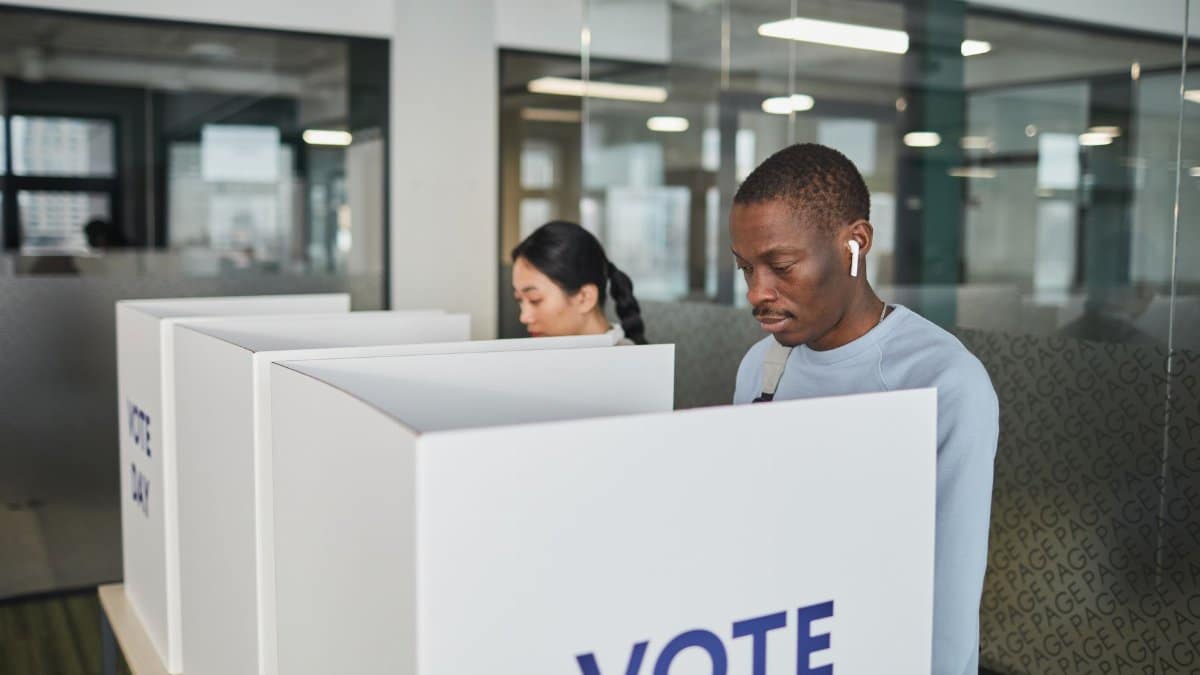
California voters are not treating the race for governor as a purely local audition. They are reading it as a verdict on the national climate, and that shift is rewriting the math. A fresh Becerra governor poll, published by the Los Angeles Times and fielded by the Institute of Governmental Studies at the University of California, Berkeley, puts Xavier Becerra at 61 percent and Steve Hilton at 34 percent among likely voters. The spread is wide enough to change how donors, county parties, and late television buyers see the final stretch. It also poses a harder question. When a state election becomes a proxy for feelings about Donald Trump, what is left of a campaign about housing, water, schools, and the price of staying in California?
A contest pulled into the national argument

Governors still run prisons, sign budgets, and appoint regulators. Campaigns, though, increasingly borrow their energy from Washington. The latest survey suggests that opposition to Trump is now the organizing fact of the California governor’s race, not a side note. Voters who describe that opposition as a top priority are clustering behind Becerra, the former state attorney general and federal health secretary. Hilton, a Republican commentator who has tried to sell a sharper critique of Sacramento, is holding a loyal share and struggling to expand it.
That pattern is familiar in a state where Democrats hold a durable registration edge. What feels new is the intensity. People are not merely choosing a party label. They are choosing a posture toward a former and future president whose name still organizes fundraising emails, protest signs, and dinner table arguments. In that environment, a candidate’s résumé matters, but so does the story voters tell themselves about who will stand up and who will accommodate.
Reading a 61 to 34 split
According to the Los Angeles Times account of the Berkeley survey, Becerra leads Hilton 61 percent to 34 percent. A gap of that size is not a photo finish and it is not a rounding error. It implies that Becerra has consolidated much of the Democratic coalition and picked up independents who want a clear contrast with Trump. Hilton’s 34 percent looks less like a collapse than like the rough ceiling many Republican statewide candidates meet when the national brand is unpopular here.
Polls are snapshots, not verdicts. A lead can narrow if turnout falls in coastal cities, if a scandal lands, or if voters decide the frontrunner is taking the race for granted. Still, a 27 point margin forces every other actor in the campaign to adjust. Consultants stop talking about a toss up. Allied groups shift from persuasion to mobilization. Reporters start asking not whether Becerra can win, but how he would govern if the map stays this lopsided.
Trump as the organizing fact
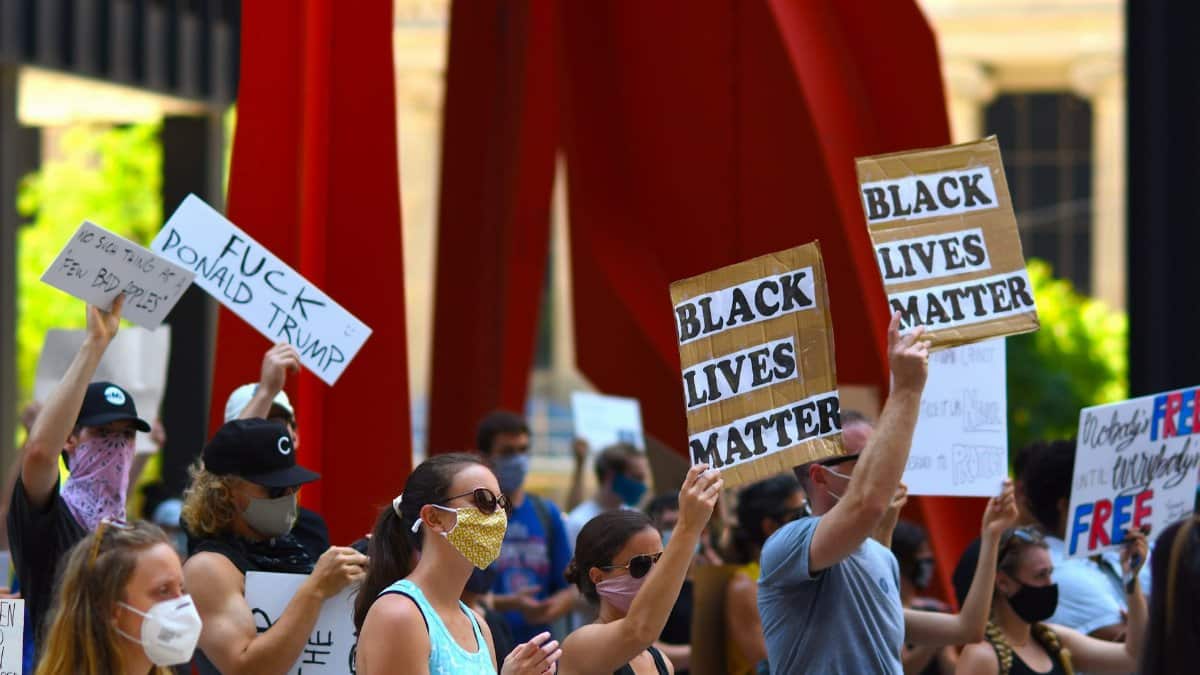
The survey’s most important finding is not a horse race number. It is a ranking of motives. California voters, the poll indicates, are prioritizing opposition to Trump as they look at the governor’s race. That priority does several kinds of work at once. It simplifies a crowded issue list. It gives Democrats a shared language. It makes Hilton’s task harder, because any gesture toward the national party can be read as a gesture toward Trump, and any break with Trump can be read as a break with the voters he still needs.
Becerra is well positioned for that frame. He spent years as the state’s top lawyer challenging federal policies, then served in a Democratic administration in Washington. Supporters hear continuity and competence. Critics hear a résumé built in courtrooms and cabinet meetings rather than in the daily grind of fixing homelessness or insurance markets. The Becerra governor poll suggests that, for now, the first hearing is louder than the second.
Hilton and the ceiling on a protest vote
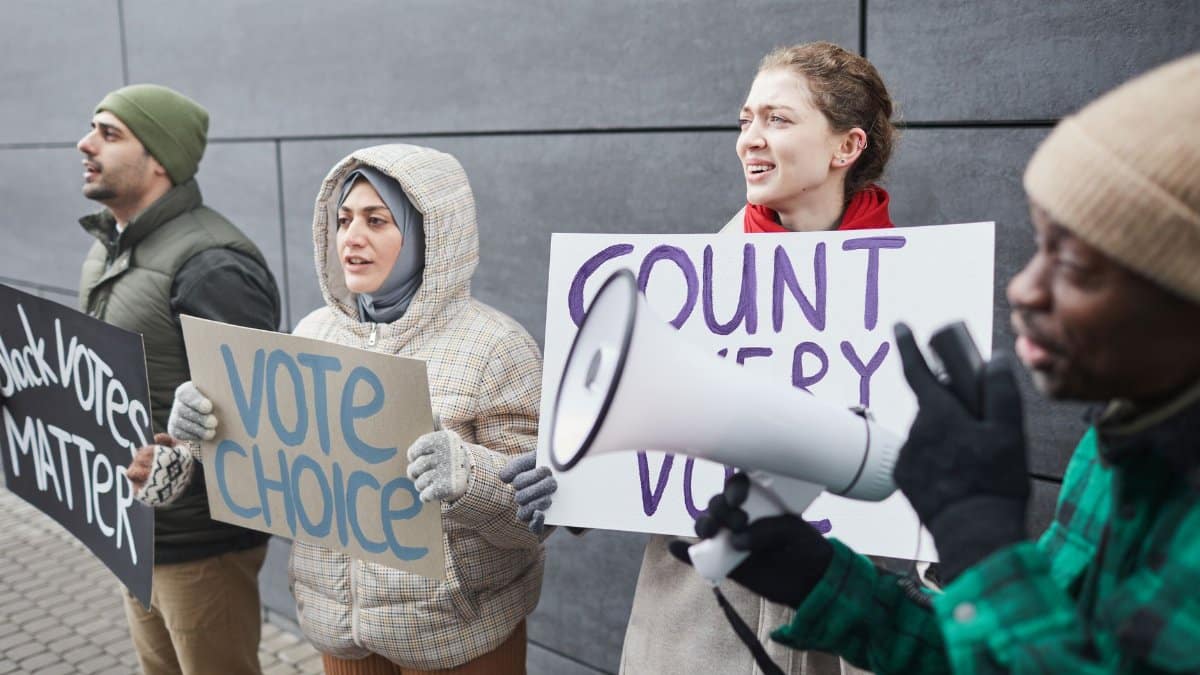
Steve Hilton has tried to run as more than a cable personality. His argument is that California’s costs, crime worries, and regulatory thicket are the product of one party rule, and that voters who are exhausted by that rule should be willing to cross lines. There is a real audience for that case. Housing costs remain brutal. Insurance withdrawals have rattled homeowners. Parents argue over schools. A purely national frame can hide those grievances.
The numbers show the limit of the protest vote when the protest is aimed at Sacramento but the ballot is also read as a referendum on Trump. Hilton can win Republicans and a slice of independents. He has not, in this survey, found a way to make cost of living louder than the national fight. Until he does, 34 percent is less a launching pad than a description of the coalition he already has.
Geography still matters

Statewide percentages flatten a state that is really several political countries. The Bay Area and much of Los Angeles County supply Democratic margins that inland counties cannot match. The Central Valley, the Inland Empire, and rural north still produce Republican pluralities, often on water, energy, and public safety. A candidate can lose those regions badly and still win the state if coastal turnout holds.
That geography shapes how each campaign should spend the remaining weeks. Becerra does not need to flip Kern County to protect a lead of this size. He does need to keep Latino voters, younger renters, and suburban women engaged enough to cast ballots rather than assume the outcome. Hilton’s rational map is different. He needs unusually high turnout in the interior and some defection in suburbs that have drifted left since 2016. The poll does not show that defection at scale.
The issues voters say they want and the ones they reward
Ask Californians what worries them and the list is concrete. Rent. Insurance. Grocery bills. Fentanyl. Traffic. The time it takes to permit a duplex or a transmission line. Campaigns that ignore those subjects sound evasive. Yet the Becerra governor poll, read alongside the shift in voter focus, suggests a gap between what people name as problems and what they use as a sorting tool in this particular race.
Opposition to Trump functions as a shortcut. It tells many Democrats and independents which candidate shares their threat assessment. It does not tell them how either man would speed housing approvals or stabilize the insurance market. Journalists should keep pressing both questions. A voter can care deeply about Trump and still deserve a straight answer on premiums and permits. A campaign that treats the national fight as a substitute for governing plans is borrowing time it may have to repay after Election Day.
Money, airtime, and the late calendar
Wide leads change the economy of a campaign. Donors who were hedging begin to consolidate. Outside groups decide whether attack ads are worth the cost when the target already looks safe. Television stations in Los Angeles and the Bay Area remain expensive enough that a trailing candidate must choose between a thin statewide buy and a thicker buy in a few media markets. Neither choice is kind.
Becerra’s advantage is not only numerical. It is logistical. A candidate at 61 percent can spend some of the late calendar introducing a governing agenda rather than only defending a biography. Hilton must spend his on persuasion that the survey says is not yet landing. Debates, if they draw an audience beyond activists, are one of the few remaining stages where a challenger can force a subject change. Even then, viewers often hear what they came prepared to hear.
Where the survey can mislead

No single poll should be treated as scripture. Likely voter screens can overstate people who enjoy answering political questions. Spanish language interviewing, cellphone reach, and the timing of news events all move results. A survey taken while Trump dominates the news will capture that dominance. A survey taken after a state specific crisis, a wildfire, a budget shock, a scandal in Sacramento, might reorder the ranking of motives.
Readers should also watch the undecided and the softly committed. A 61 to 34 split leaves little room, but soft support can harden or leak. If later polls from other firms show a similar gap, confidence should rise. If they do not, the honest conclusion is that one instrument caught a moment rather than a stable majority. The responsible use of the Becerra governor poll is as evidence of a current mood, not as a promise about November.
Trust, conscience, and the mood of the electorate
There is a civic dimension to these numbers that is easy to miss if the story stays inside horse race language. Many voters describe their choice in moral terms. They talk about dignity, truth telling, and whether public life still has room for people who disagree without treating disagreement as treason. That language is not a platform. It is a mood. It helps explain why a national figure can crowd out a state issue list. People are not only hiring a manager. They are signaling who they believe is on the side of a decent common life.
Campaigns that mock that impulse usually misunderstand it. Voters can hold a moral view of Trump, positive or negative, and still be practical about freeways and clinics. The task for the next governor, whoever it is, will be to convert a season of symbolic voting into administration that feels fair in cities and towns that did not support the winner. A landslide that is read only as vengeance tends to govern poorly. A landslide that is read as a mandate to listen more carefully has a chance to lower the temperature.
What the next surveys must test
Future polls should do more than repeat the head to head. They should ask which state problems would actually change a vote, how firm the opposition to Trump is as a priority, and whether voters can describe either candidate’s plan on housing and insurance in a sentence. They should report results by region, age, and language, not only by party. They should say who was called, who answered, and how likely voter was defined.
Until those details accumulate, the picture is still clear enough to report without embroidery. Becerra has widened his lead. Hilton remains a distinct second, not a vanished one. And the electorate, at least in this reading, is using the governor’s race to say something about Trump as much as about Sacramento. That is the story the Becerra governor poll is telling. The harder story, the one about whether California can still argue about its own problems in its own voice, will be written after the ballots are counted.