

In a season when many governments treat the United Nations as a stage rather than a workshop, the prime minister of Barbados chose a narrower path. Mia Mottley did not put her name forward for the institution’s highest office. She used the moment instead to describe what a credible global body would have to change. The Mottley UN reform comments, offered in the plain cadence she has made familiar at climate summits and finance meetings, tied legitimacy to money, voice, and speed. Listeners who expected a campaign heard a ledger. Small islands, she has long argued, cannot wait for a bureaucracy that moves more slowly than the water at their shores.
A refusal that clarified the ask

Declining a job can be a tactic, a matter of timing, or a statement of limits. In Mottley’s case the refusal did something more useful than a speculative candidacy would have done. It separated the person from the program. Too often a call for institutional change is read as a résumé. Once the top post is off the table, the argument has to stand on its own. That is a harder test, and it is the one she invited.
Barbados is not a great power. It does not command a veto, a vast army, or a reserve currency. What it has is a leader who speaks as if the rules were written by people and can be rewritten by people. That stance is less romantic than it sounds. It is a claim about agency inside a system that prefers to look permanent.
Terms for a body that wants to be believed

The Mottley UN reform comments did not arrive as a single slogan. They read, across her public record, as a set of terms. A world body that asks vulnerable states to trust it must show that trust is rational. Trust, in this telling, is not a mood. It is a pattern of decisions: who gets heard before a crisis, who gets cash after one, and who is allowed to block both.
She has pressed three linked ideas. First, climate danger is not a side issue for the United Nations. It is a test of whether the charter’s promise of security still means anything. Second, the financial machinery that sits beside the United Nations, from development banks to debt rules, cannot remain a museum of an earlier economic order. Third, representation is not a courtesy. If the Security Council and the wider system keep looking like 1945, they will keep failing states that did not write those rules.
Climate money as the first proof
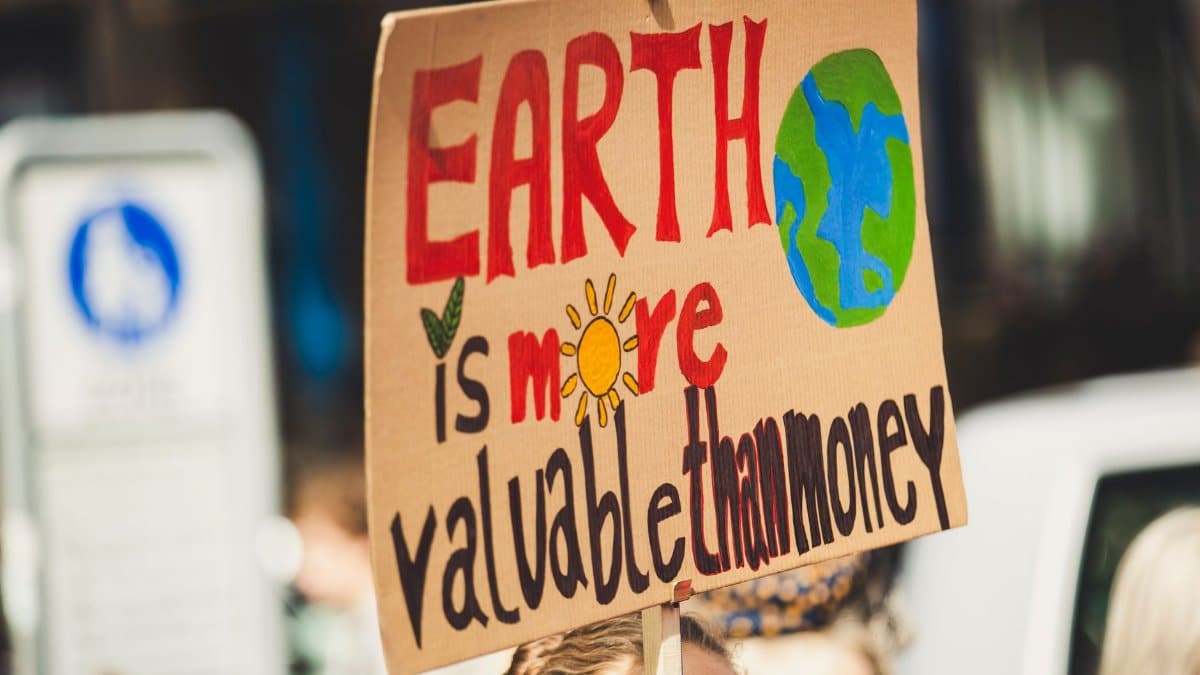
For small islands, finance is not an abstraction beside the weather. It is the difference between rebuilding a school and abandoning a coast. Mottley has argued that pledges which arrive years late, or loans that deepen the hole, are a form of institutional indifference. The Bridgetown idea, associated with her government, asks creditors and lenders to treat climate shocks as systemic events, not as private misfortunes.
That means pauses on debt when a hurricane wrecks an economy. It means cheaper capital for countries that did little to heat the planet and much to suffer from the heat. It means grant money that matches the scale of loss, not the scale of a photo opportunity. None of this requires a new theology of markets. It requires institutions to price risk as it actually falls, and to stop charging the wounded a premium for being wounded.
Islands that live inside the forecast

Barbados, like its neighbors, lives with forecasts that are no longer hypothetical. Salt in the wells, hotter nights, fisheries under stress, and storms that erase a year’s revenue in an afternoon are not metaphors. They are budget lines. When Mottley speaks about reform, she is translating those lines into diplomatic language that larger states can understand.
There is a temptation in rich capitals to praise island leaders for eloquence and then file the speech under atmosphere. The more serious reading is logistical. If the United Nations cannot move money and political attention at the speed of a rising sea, then its claim to coordinate global security is thinner than its stationery suggests. Small states are not asking to be pitied. They are asking to be treated as early evidence.
Who sits at the high table

Security Council reform is the part of this argument that makes permanent members uncomfortable, which is why it matters. Mottley has been among the voices saying that Africa, the Caribbean, and other regions cannot remain guests in a room that decides questions of force and legitimacy. The Mottley UN reform comments fit a wider impatience: a council designed for the victors of a world war is a poor instrument for a century of climate stress, pandemics, and debts that cross every border.
Expanding seats is not a magic cure. A larger council can still deadlock. But a council that excludes whole regions teaches those regions a lesson about whose emergencies count as universal. Mottley’s point, stated without theatrics, is that exclusion is itself a security risk. People do not obey institutions that do not see them.
Debt after the storm

The reform terms also reach the dull machinery of spreadsheets, which is where many high speeches go to die. After disaster, a small economy often faces a cruel sequence. Revenue falls. Imports of food and fuel rise. Creditors expect payment on the old calendar. Ratings agencies mark the country as risky precisely because it was hit. The result is a second storm made of interest.
Mottley has treated that sequence as a design flaw, not as bad luck. If the international system can invent swap lines for banks in a weekend, it can invent breathing room for a country whose airport roof is gone. The comparison is deliberately unsentimental. It asks whether speed is reserved for actors who already have power.
Why skipping the race can still shape it

Campaigns for secretary general reward coalition building, quiet bargains, and a talent for not alarming the permanent members. A candidate who leads with hard terms on finance and council seats starts at a disadvantage. By skipping the bid, Mottley kept the terms intact. She did not have to sand them down for a race she was not running.
That choice also protects a different kind of influence. A prime minister who remains in office can return to the same argument year after year, with a domestic mandate and a regional constituency. A candidate who loses, or who wins and is captured by the building, may lose the freedom to say the uncomfortable part twice. Refusal, in this light, is not retreat. It is a way of staying legible.
How capitals translated the message

Different rooms heard different sentences. Climate diplomats heard a demand for money that matches physics. Finance ministries heard a challenge to debt orthodoxy and to the habits of development banks. Political staffers heard a warning that the next secretary general, whoever it is, will be judged on delivery rather than on charm.
Some larger states will pocket the praise and ignore the invoice. Others, especially states that share the exposure without sharing the microphone, will treat the comments as cover. That is how norms move when formal amendment is blocked. A sentence repeated by enough governments becomes harder to dismiss as the hobby of one island.
Applause is not a statute

I have sat in enough conference halls to know that a standing ovation can hide a refusal to change the rules. The risk for any gifted speaker is that admiration becomes a substitute for amendment. Mottley is quoted, clipped, and cheered. The test is whether budgets, voting weights, and emergency instruments move with the applause.
The Mottley UN reform comments should be read as a checklist, not as a mood. Does a climate shock trigger an automatic pause on payments? Do small states have a path into the rooms where force and sanctions are debated? Do development banks lend as if the next thirty years of heat were already in the model? If the answers stay no, the speech was entertainment.
What would count as real reform

Real reform would be boring in the best way. It would show up in legal text, in board decisions, and in the calendar of payments after the next major storm. It would give regions now shut out of permanent status a durable voice, not a rotating courtesy. It would measure the United Nations by whether a coastal town can rebuild before the next season, not by whether a communiqué used the right adjectives.
None of that requires Mottley to hold the top job. It requires other governments to adopt terms they did not invent and to spend political capital they would rather save. Institutions change when enough members decide that the cost of the old rules exceeds the cost of a fight. Island leaders can name that cost. They cannot pay it alone.
Conscience without a pulpit

There is a moral register in this debate that religious communities will recognize, even when the speaker is not preaching. Stewardship of a shared earth, honesty about who caused a harm and who bears it, and the duty to repair what one has broken are old ideas. They appear in scriptures, in parish halls, and in the quieter language of conscience. Mottley’s public case does not need a pulpit to touch that register. It asks whether a world organization can tell the truth about responsibility and then act as if the truth were binding.
That is why the story travels beyond diplomacy desks. Congregations that fund relief after hurricanes already know the gap between sympathy and structure. A reform agenda that closes the gap is not a distraction from spiritual concern. It is one of the places where concern either becomes habit or stays a feeling.
The pressure that remains

The top job will be filled by someone else. The weather will not wait for that person to settle in. Nor will the debt clocks in capitals that contribute almost nothing to global emissions and absorb a disproportionate share of the damage. The useful legacy of this episode is a standard that outlives a personnel decision.
If the Mottley UN reform comments are remembered only as a graceful no, the moment will have been wasted. If they are remembered as terms, they can still haunt the next secretary general, the next bank board, and the next council debate. A small country cannot reorder the United Nations by volume. It can, by refusing the wrong prize and naming the right conditions, make evasion a little harder. That is not a small achievement. It is the beginning of accountability, which is the only reform that counts.