
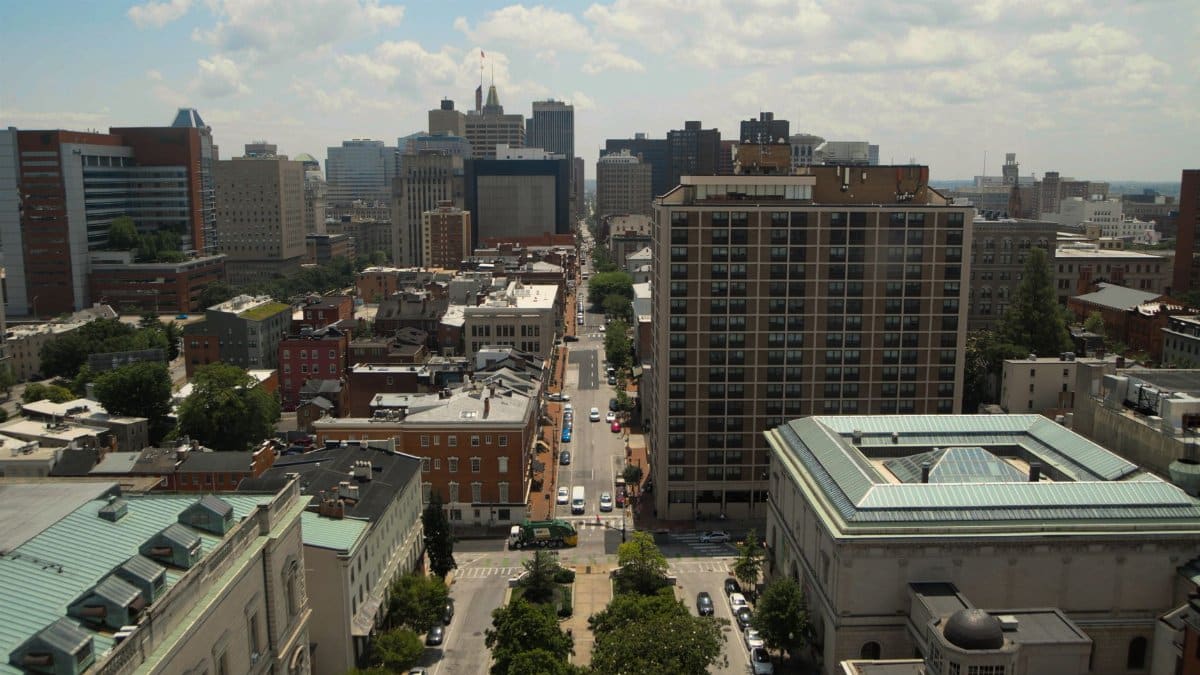
The light over Baltimore Harbor on a clear October morning does little to hide how quiet parts of the central business district have become. Office lobbies that once emptied onto crowded sidewalks now release smaller streams of workers, and several blocks still show the long aftermath of remote work. Into that quiet, city leaders have asked Maryland to create what they describe as the state’s largest transit oriented development district in the core. They want the label Baltimore downtown TOD attached to a wide stretch of the center city, a designation that would give downtown developers an edge on state grants and loans. The request is technical on paper and political in practice. It asks whether public money meant to cluster homes and jobs near transit should follow the rail lines into the heart of a downtown that is still searching for its next use.
What the designation is meant to unlock

Transit oriented development, often shortened to TOD, is a planning idea with a simple promise. Put homes, shops, and workplaces within a short walk of frequent transit, and people drive less, streets feel fuller, and public investment in rail or bus lines returns more value. Maryland already uses the idea as a filter for certain grants and loans. A formal district does not build a single apartment or repair a single sidewalk by itself. It changes the order of the line. Projects inside the boundary can score better when agencies rank applications for housing funds, infrastructure help, and other tools tied to stations and frequent service.
City officials argue that downtown already has the bones of that model. The Metro Subway, the light rail, MARC commuter trains, and a dense bus network meet in a compact area. What is missing, they say, is a district large enough to treat the core as one transit place rather than a scatter of station circles. If the state agrees, Baltimore downtown TOD would become a formal claim on that advantage, not merely a slogan in a planning document.
Why the city wants the largest district
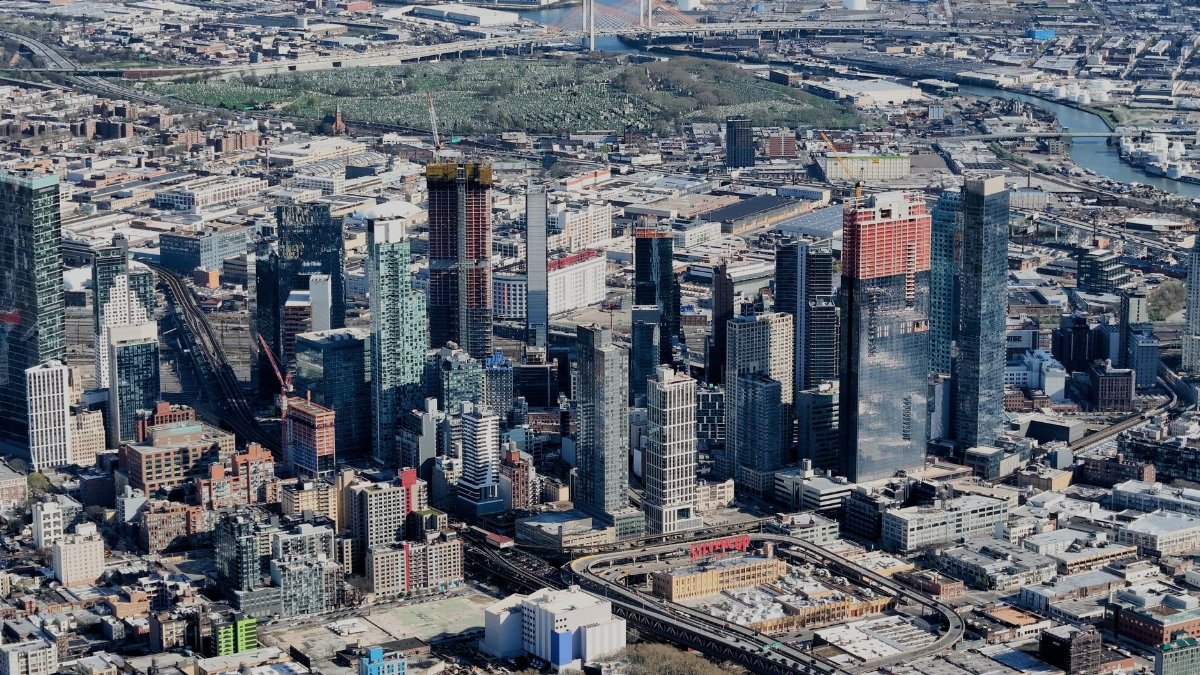
Size is the point of the request, and also the part most likely to draw questions. Station area plans often stop a half mile from a platform, a distance planners treat as a comfortable walk. Downtown Baltimore is bigger than any one of those circles. City Hall wants a boundary that covers much of the central business district, so that a conversion on one block and a new building three blocks away can both sit inside the same state designation.
Supporters say a narrow circle would miss the way people actually move downtown. Riders transfer. They walk farther when the sidewalks are continuous and the destinations are close together. A courthouse, a campus, a theater, and a grocery can all feed the same transit trip even if none of them sits on top of a station entrance. A large district would let the city package those pieces as one investment story when it goes to Annapolis and to state agencies.
Critics of large boundaries, including some planners who have watched the tool used in other cities, worry that a wide line dilutes the idea. If almost every downtown parcel qualifies, the designation stops distinguishing projects that truly lean on transit from projects that would have been built anyway. That tension sits at the center of the request. Baltimore is not asking for a modest station district. It is asking to be treated as the state’s biggest one.
Empty offices and a different kind of density
The timing is not an accident. Downtown office vacancy remains high years after the pandemic rearranged white collar work. Towers that were financed on the assumption of full floors now carry dark windows. Converting some of those buildings to homes is harder than a headline suggests. Floor plates are deep. Plumbing stacks were never designed for dozens of kitchens. Owners and lenders do not always agree on what the building is worth after the market shift.
A transit designation will not solve those engineering problems. It might change the math at the margin. Gap financing, infrastructure grants, and loan products that favor projects near transit can be the difference between a conversion that closes and one that stays on a brochure. City leaders have been blunt that they want downtown developers to have that edge when they compete with projects elsewhere in Maryland. In that sense Baltimore downtown TOD is as much a housing and reuse strategy as it is a transportation strategy.
There is also a civic argument that does not fit neatly on a spreadsheet. A downtown that houses more people after 6 p.m. supports restaurants, makes streets feel safer, and gives transit a reason to run strong service outside the old rush hour. The designation is a way of saying the state should help pay for that shift, because the rail and bus network is already there.
Who would feel the difference

For a rider, the change would be slow and indirect. No new train is promised by the paperwork. What might change is the land around the stations riders already use. More homes within a walk of Charles Center, Shot Tower, Lexington Market, or the Camden and Penn MARC stops would mean more people for whom the existing system is the practical way to get to work, school, or a night out. Service decisions still belong to the transit agencies. Land use decisions still belong to the city, to owners, and to lenders.
For a developer, the difference is more immediate and more competitive. Applications for state support often turn on scoring sheets that award points for location, affordability, and readiness. A recognized district can add points or open a door that is closed to projects outside it. That is why the phrase Baltimore downtown TOD matters to people who never ride a bus. It is a credential. It tells an agency reviewer that this parcel is inside a place the state has already agreed to treat as a priority.
For nearby neighborhoods, the stakes are less abstract. West Baltimore, East Baltimore, and the communities just beyond the central business district have long experience with plans that concentrate attention and capital downtown while promising that benefits will ripple outward. A large core district can look, from a few blocks away, like another round of that pattern. City officials will have to show that a downtown designation does not starve station areas elsewhere of the same tools.
The state’s interest in saying yes or no

Maryland has reasons to like the request and reasons to be careful. The state has spent heavily on transit in the Baltimore region over decades, and it has an interest in land use that makes those lines more useful. A core that adds residents is, in theory, a core that fills seats that are already being operated. That is cheaper than building a new line to chase development at the edge.
The careful part is precedent. If Baltimore receives the state’s largest downtown district, other cities will ask why their cores should be drawn more tightly. Agencies also have finite grant and loan pools. Giving downtown projects a systematic edge means some suburban or neighborhood projects will rank lower. That is not a hidden side effect. It is the policy. Lawmakers who represent places outside the city will want to know what their constituents get in return, whether in regional transit funding, in housing production, or in a credible plan that downtown growth does not stop at the district line.
Affordability inside a desirable boundary

Transit access raises land value. That is part of why governments chase it, and part of why residents fear it. If a designation makes downtown parcels more attractive to capital, rents and sale prices can move before a single new affordable home is delivered. Baltimore already has a shortage of homes that lower income workers can afford near the jobs and services of the core. A district that only produces market rate apartments would meet a real demand and still miss a public obligation.
The request does not, by itself, require a share of affordable homes. Those requirements usually live in zoning, in subsidy contracts, and in the scoring of the very grants the city hopes to win. Advocates who follow housing money will watch whether Baltimore downtown TOD is paired with rules that keep some of the new homes within reach of transit riders who are not high earners. Without that pairing, the designation can function as a location bonus for projects that price out the people who most depend on the bus and the subway.
What the map still leaves unresolved

Even a generous boundary leaves hard questions outside the designation. Downtown sidewalks, in places, are wide and well kept. In other places they are cracked, poorly lit, or interrupted by garages and highway ramps that make a short walk feel long. Transit oriented development assumes the walk. If the walk is unpleasant or unsafe, the district is a line on a map rather than a place people choose.
Service frequency matters just as much. A building next to a station that runs infrequently is not the same product as a building next to a line that comes every few minutes. Riders know the difference even when scoring sheets treat both as near transit. Any serious use of the designation will have to be matched with operating budgets, not only capital grants for buildings. The city can draw the district. It cannot, alone, decide how often the trains run.
There is also the question of which downtown. The central business district is not one market. Blocks near the harbor, blocks near the university and medical campuses, and blocks still marked by vacancy do not share the same rents or the same risks. A single label can hide that variety. Lenders will still underwrite building by building. The designation may open a conversation. It will not replace it.
A bid that is also a test of intent

Baltimore has written many plans for its center. Some produced real buildings and real public spaces. Others gathered dust after the press conference. Residents can be forgiven for reading a new district request as another document until money moves and leases are signed. The difference this time is that the city is asking the state to attach a competitive advantage to a specific geography. That is harder to ignore than a vision statement, because it changes who wins scarce funds.
If the state grants the request, the useful test will not be the size of the boundary. It will be whether, a few years on, more people live within a walk of frequent service, whether some of those homes are affordable, and whether the sidewalks between the stations and the front doors are places a person would actually use after dark. If the state declines or trims the map, the city will still have the transit network and the empty floors. It will simply have a weaker claim when it asks for help filling them.
Either outcome will say something plain about how Maryland wants to use the infrastructure it already owns. The phrase Baltimore downtown TOD is a bid for priority. The answer will show whether priority, in this state, still belongs to the places where the trains already meet.