
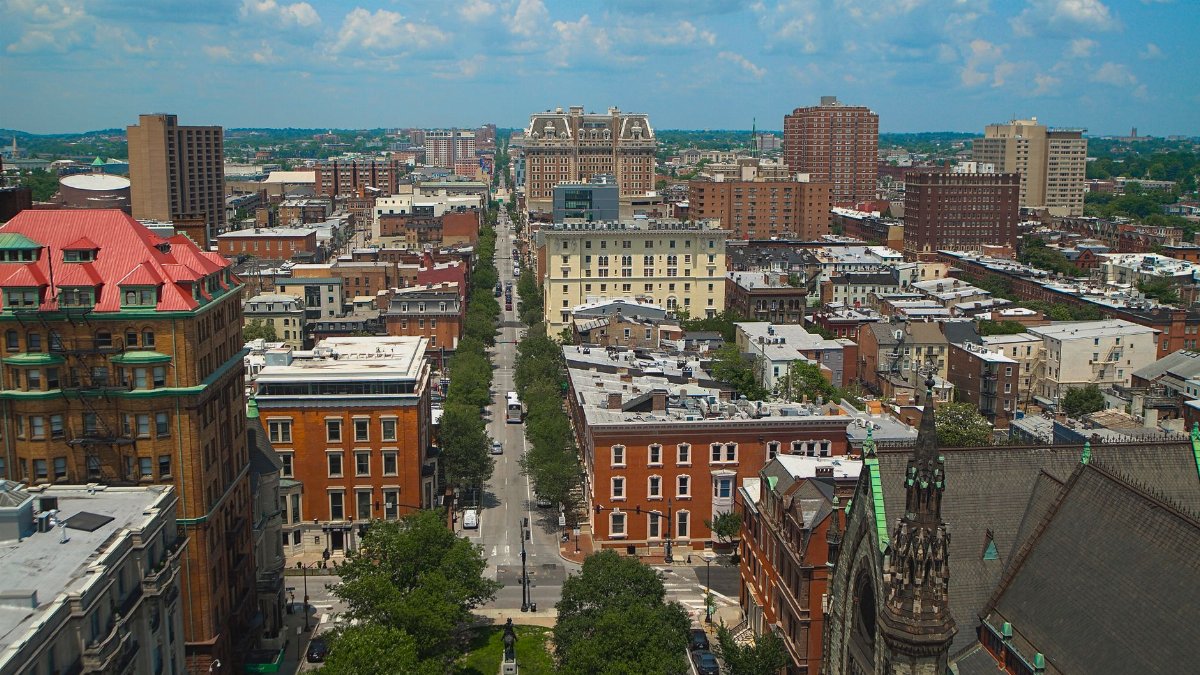
On a humid afternoon outside a city office on East Fayette Street, a woman in a work uniform asked a clerk whether a library card would be enough to open a recreation center account for her son. It was not. That small refusal is the kind of friction advocates have described for years while pressing Baltimore to issue its own identification. After a decade of studies, hearings, and stalled budgets, officials now say a Baltimore municipal ID pilot is slated for fall 2027, with a broader citywide launch eyed for 2028.
A civic promise that outlasted several budgets

Municipal identification is not a new idea in American cities. New York, San Francisco, and a handful of smaller governments already offer a card that proves a person lives in the city, even when a state license is out of reach. Baltimore has talked about joining that list since the middle of the last decade. Task forces met. Reports circulated. Council members asked for legal opinions. Then the money moved to other emergencies, and the file went quiet.
The latest timetable is more specific than those earlier pledges. A limited pilot in fall 2027 would test enrollment, document checks, and card production. A citywide opening in 2028 would follow only if the pilot holds up under ordinary use. That sequencing matters. Cities that rushed a card into every neighborhood at once later spent years repairing broken intake lines and confused partner agencies.
I have covered enough delayed civic projects to know that a date on a slide is not a card in a wallet. Still, a published season and year is harder to walk back than a vague commitment to explore options. Residents who have waited through multiple administrations will judge the city on whether intake sites actually open, not on whether another resolution passes.
What the card is supposed to prove

A Baltimore municipal ID, as described by supporters and by the reporting that set this timetable, would be a local credential. It would not replace a passport. It would not confer voting rights. It would not change immigration status. Its job is narrower and, for many households, more immediate: to show a name, a photo, and a Baltimore address in settings that currently demand a state license or a passport.
Think of the ordinary doors that close without that proof. Signing a child up for a recreation program. Picking up a prescription when the pharmacist asks for a photo card. Entering certain public buildings. Opening a bank account at an institution willing to accept a city credential. None of those tasks is glamorous. Together they decide whether a person can move through the week without borrowing someone else’s papers or paying a friend to stand in line.
Critics sometimes treat the card as a symbolic gesture. Symbolism is part of politics, and pretending otherwise is naive. But the practical test is simpler. If a recreation clerk, a clinic receptionist, and a bank teller will honor the card, it is a tool. If they will not, it is a laminated reminder of a press conference.
Who is likely to seek one

The people most often named in these debates are immigrants without easy access to state identification, including people whose status is temporary, pending, or undocumented. They are not the only likely applicants. Older residents who no longer drive, young adults aging out of school IDs, people leaving incarceration, and transgender residents whose state documents lag behind their lived names have all appeared in similar city programs elsewhere.
Baltimore’s population is smaller than New York’s, and its agency map is different. A card that works in one city can fail in another if libraries, police districts, and hospitals never receive a clear instruction. The pilot year is the moment to learn which groups actually show up, which documents they can produce, and which offices still wave them away.
Eligibility rules will decide the politics. A card open only to people who already hold a state license would be nearly pointless. A card with rules so loose that fraud becomes easy would collapse partner trust. The durable middle is boring and necessary: proof of identity from a published list of documents, proof of city residence, a photo taken on site, and a process for people who lack a single perfect paper but can assemble several lesser ones.
Privacy fears that slowed the file

Every serious municipal ID debate eventually reaches the same fear. If the city builds a database of names, addresses, and photos, who else can demand it? Local police? Federal immigration agents? A private vendor that stores the images? Residents who want a card for the pharmacy do not want that same card to become a map of their household.
Other cities have tried to limit retention. Some keep application scans for a short period and then delete them. Some bar employees from asking why a person wants the card. Some write into local law that the database is not a tool for civil immigration enforcement. Those promises are only as strong as the statute, the contract with the vendor, and the habit of the people at the window.
Baltimore should publish the retention schedule before the first applicant sits for a photo. How long are documents kept? Who can query the file? What happens if a federal subpoena arrives? Vague comfort is not a policy. Residents can accept risk when they can see its edges. They should not be asked to accept a black box.
Lessons from cities that already issue cards

New York’s IDNYC program, described on the city’s own site, became the largest municipal identification effort in the country after its launch. It showed both the demand and the friction. Hundreds of thousands of people enrolled. Banks, cultural institutions, and city agencies were pressed to accept the card. Advocates also fought over data, vendor contracts, and whether benefits attached to the card would survive changes in City Hall.
Smaller cities offer a different lesson. A program can be legally sound and still fail if only one office downtown knows how to issue it. Evening and weekend hours matter in a city where many applicants work shifts. Language access matters in a city where Spanish, and other languages, are part of daily life in whole neighborhoods. A pilot that runs only in English, only on weekdays, and only in one civic center will measure the wrong thing. It will measure who can afford to miss work, not who needs the card.
Baltimore does not have to copy New York’s scale or another city’s benefit package. It does have to copy the discipline. Train the clerks. Publish the accepted documents. Tell partner agencies, in writing, that the card is valid for specified purposes. Then audit whether those agencies comply.
Money, staffing, and the shape of a fall pilot

Cards are cheap. Trust is not. The expensive parts are staff time, secure printers, translation, outreach, and the legal work that keeps the program from collapsing in court or in a contract dispute. A pilot scoped too small will teach little. A pilot scoped like a full launch will blow the budget and the calendar.
A sensible fall 2027 test would pick a limited number of sites, perhaps a downtown office and one or two neighborhood locations, and cap enrollment at a number the staff can actually serve. It would track wait times, rejection reasons, and whether accepted cards are honored at a short list of partner desks. It would also budget for a fix period before 2028, because the first version of any public process contains errors that only real applicants reveal.
Council members should ask for those metrics in public, not in a private briefing. How many applications were completed? How many were denied, and for which missing document? How long did a typical visit take? Which agencies refused the card, and why? Without those numbers, the 2028 launch will be a leap based on optimism.
Banks, clinics, and the errands that actually matter

The value of a Baltimore municipal ID will be set less by the mayor’s announcement than by the private and public desks that choose to honor it. A clinic that updates its intake script can change a morning. A bank that refuses the card can erase the promise for anyone whose main goal was a checking account.
City government can require its own agencies to accept the credential. It cannot, by proclamation, force every credit union or pharmacy chain to do the same. What it can do is negotiate. Letters of agreement with major health systems, recreation partners, and financial institutions willing to participate should be in hand before the pilot opens, not months later when applicants discover the gap at the counter.
There is also a fairness question inside city government itself. If housing offices accept the card but police property rooms do not, or if libraries accept it but schools do not, residents will experience the program as a lottery. Consistency is a form of respect. It is also the only way to know whether the pilot succeeded.
The argument from opponents, stated plainly

Opposition is not only about immigration, though that is the loudest version. Some residents argue that a city card invites fraud, strains a thin budget, or signals that local government is doing the state’s job. Others worry that a card designed for people without licenses will be treated by employers or landlords as a lesser document, marking the holder rather than including the holder.
Those objections deserve direct answers. Fraud controls belong in the application rules, not in a slogan. Budget tradeoffs belong in the same hearing as other quality of life spending, so the public can see what is delayed to pay for printers and staff. And the stigma risk is real if agencies treat the card as a scarlet letter instead of as ordinary proof of residence. Training should forbid extra questions about why someone holds a city card rather than a state license.
A program that cannot survive that scrutiny should not launch. A program that can should not be stalled forever by the mere existence of disagreement. Baltimore has already spent years in the second condition.
What to watch between now and 2028

The calendar from this fall’s reporting to a live card is long enough for the plan to improve and long enough for it to dissolve. Residents who care about the outcome can watch a few concrete milestones rather than the mood of each headline.
First, the ordinance or administrative rule that defines eligibility, document lists, fees, and data retention. A fee that looks small at a press conference can still shut out the people the card is meant to reach. A fee waiver that exists only on paper will do the same. Second, the vendor contract, including who owns the data and what happens if the company is sold. Third, the list of agencies and private partners that have agreed, in writing, to accept the card during the pilot. Fourth, the locations and hours. If every site closes at four on a weekday, the program has already chosen its clientele.
Language access belongs on that list as well. Application help in Spanish, and in other languages spoken in the city, is not a courtesy added after launch. It is part of whether the pilot measures real demand.
A narrower kind of belonging

There is a temptation, in a city with as many unmet needs as Baltimore, to dismiss identification as paperwork. Paperwork is how a city decides who counts at the window. A parent who cannot register a child, a patient who cannot pick up medicine, a worker who cannot cash a check without paying a punishing fee: each of those moments is small, and each of them repeats.
The Baltimore municipal ID will not fix rents, schools, or violence. It should not be sold as if it will. Its honest claim is more limited. For people who already live here and already use city services, a reliable local card can remove a needless barrier. That is a worthy public task if the city does the unglamorous work: clear rules, short retention of sensitive files, trained clerks, and partners who actually take the card.
Fall 2027 is far enough away that officials can still get those pieces right. It is also close enough that another round of delay will be obvious. Residents have heard the promise before. This time they should be able to see the sites, the hours, the fee, and the privacy rules before anyone is asked to trust a new piece of plastic. If those details appear, the 2028 citywide launch can be a genuine expansion. If they do not, the pilot will only prove that Baltimore can schedule a future and then miss it again.