

On a cold morning in North Texas, the blue flame under a kettle is easy to take for granted. It depends on a private web of pipes, meters, and pressure controls that most households never see. That system is now the subject of an Atmos Energy investigation by the Texas Railroad Commission, the state agency that oversees oil and gas and much of the pipeline safety regime inside Texas. The Texas Tribune reported on November 25, 2026, that inspectors identified seven alleged violations at the Dallas gas utility, and that the company could face fines of up to $2 million. For customers, the useful question is not whether a headline sounds severe. It is whether the rules meant to keep gas inside the pipe are being followed, documented, and enforced.
What the public record actually shows

The clearest public account so far comes from The Texas Tribune, which described a commission review tied to seven alleged violations and a possible penalty reaching $2 million. That is a specific claim, and it should be treated as a claim under review rather than as a finished judgment. An allegation is not a conviction. In regulatory practice, a company usually receives notice, a chance to explain its records, and an opportunity to contest how a rule was applied. Readers who want the originating report can start at The Texas Tribune. Until the commission publishes an order, the durable facts are narrower than the rumor mill prefers: an inquiry is underway, the alleged count is seven, and the fine exposure is large enough to matter.
A utility most people meet only on a bill

Atmos Energy is a familiar name on monthly statements across Texas and in several other states, even if the corporate structure is not. The company distributes natural gas to homes and businesses, which means its daily work is less about drilling wells than about moving a fuel the last miles to a stove, a furnace, or a water heater. Its headquarters are in Dallas. Its public face is a call center, a truck in a neighborhood, and a line item that rises when wholesale prices or delivery charges change. Company background is available through Atmos Energy. Size does not prove negligence, and it does not prove excellence. It does mean that a safety lapse, if one is confirmed, would touch a great many kitchens.
Why this agency, and not some other office

People outside the energy business often assume the Railroad Commission still spends its days on trains. Its modern portfolio is oil, gas, and related infrastructure, including intrastate pipeline safety. Federal pipeline rules set a floor. Texas applies and enforces a large share of the day to day obligations for lines that do not cross state borders. The agency explains its role at the Railroad Commission of Texas. When inspectors believe a utility failed to comply, the path is administrative rather than theatrical. Notices, responses, hearings, and agreed orders are the ordinary machinery. The Atmos Energy investigation sits inside that machinery, which is slower than social media and, when it works, more precise.
What seven violations can and cannot mean

Seven is a countable number, which gives it force. It is also an incomplete number. A single missed record can be listed as a violation, and so can a defect that raises a more immediate safety concern. Without the inspection narrative, outsiders should not rank the items from paperwork to peril. That caution is not a favor to the company. It is a favor to the truth. Regulators sometimes group related failures, and sometimes they treat each missed requirement as its own count. Either method can be defensible. What residents deserve is a plain description of each alleged breach, the date, the location type, and the rule cited. Until that list is public, moral certainty is premature.
How a fine of this size gets decided

A ceiling of $2 million is not the same thing as a check for $2 million. Penalty math in pipeline cases often weighs the number of days a condition persisted, the seriousness of the risk, the quality of the company response, and whether the problem was corrected before anyone was hurt. Cooperation can lower a number. A pattern of similar findings can raise it. Commissioners may accept a settlement, or they may push a case toward a more formal hearing. None of that theater changes the core public interest. A fine is a signal. It is not, by itself, a repair. The Atmos Energy investigation will be judged by whether any confirmed failures are fixed in the field, not only priced on paper.
The customer view from the other side of the meter
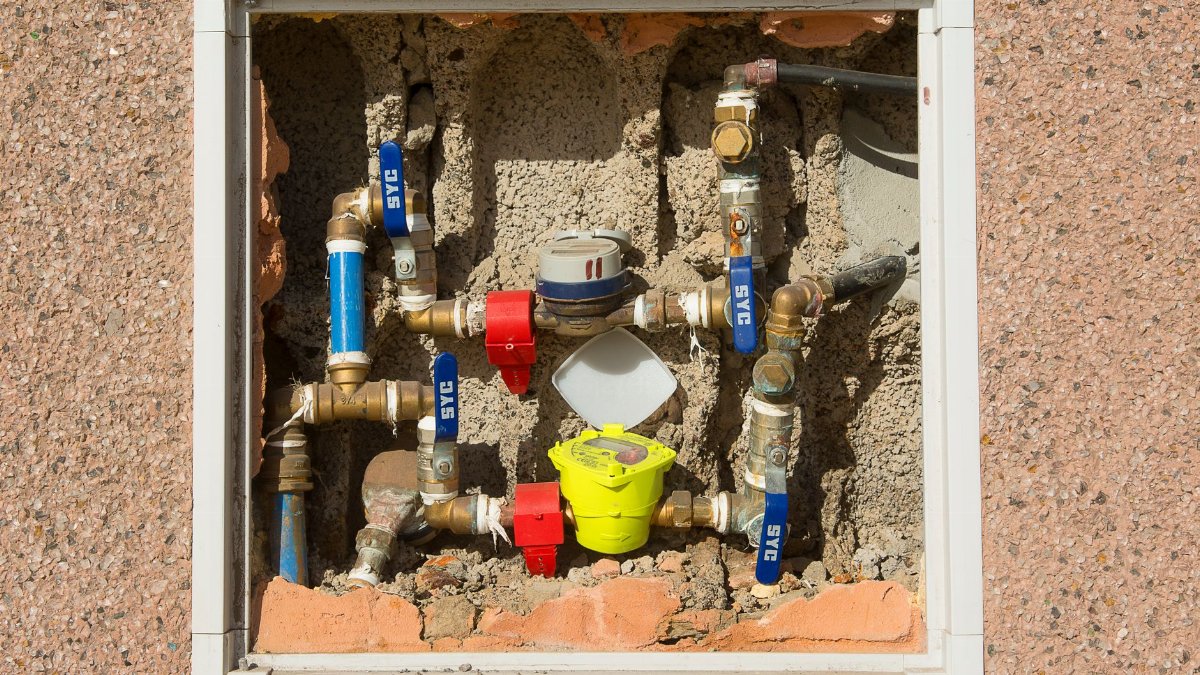
Most people will not read an inspection file. They will notice odor calls, slow leak response, unexplained outages, or a crew that digs up a street and leaves the patch uneven. Those experiences are not the same as a formal violation, and a formal violation may exist where no neighbor ever smelled gas. Still, the household perspective is the right test of whether regulation is real. Natural gas is convenient and, when mishandled, unforgiving. A small leak in a confined space can become a fire or an explosion. That is why odorant is added, why meters are checked, and why operators are supposed to survey lines on a schedule. Enforcement is the backup for habits that should already be routine.
Memory of a freeze, without forcing a link

Texas still carries the memory of the February 2021 winter storm, when power and fuel systems failed together and people died in their homes. That disaster was not a simple story about one gas utility, and it should not be stapled onto this case without evidence. The connection that does hold is cultural. After that week, residents became less willing to treat energy oversight as a technical hobby for specialists. They learned that molecules, electrons, and weather can fail in combination. A later inquiry into alleged violations at a major distributor lands in that climate of attention. Context explains the audience. It does not supply the facts of this file.
What a careful company would do next

A utility under review has a choice of posture. It can treat the moment as a legal contest only, speaking through counsel and saying little until a settlement is signed. Or it can publish, in ordinary language, what inspectors questioned, what the company disputes, and what it has already changed. Investors will watch the earnings footnotes. Customers will watch the street. The better standard is the street. If a procedure was weak, say which procedure. If a contractor missed a survey, say how the next survey will be audited. Silence is lawful in many phases of a case. It is rarely reassuring. Transparency is not an admission. It is a way to let the public test the story.
Questions worth asking at the next public moment
When commissioners or staff next speak on the record, a few questions would do more work than a stack of adjectives. Which rules are alleged to have been broken, and were any of them tied to leak survey, corrosion control, emergency response, or operator qualification? Were the findings isolated, or did they repeat across districts? What deadlines, if any, were set for correction? Will the agreed order, if there is one, be posted in full? And will the commission explain, in words a nonlawyer can follow, why the penalty landed where it landed? Those questions keep the Atmos Energy investigation from dissolving into a number without a narrative.
The wider habit of looking away

Gas distribution is easy to ignore because it usually works. The bill arrives, the burner lights, and the pipe stays buried. That success is an argument for maintenance, not for complacency. Private utilities earn a return on capital and a duty of care at the same time. Regulation exists because the two motives do not always point the same direction. A commission that inspects, writes plainly, and follows through is doing the unglamorous part of self government. A company that treats an inquiry as a prompt to tighten its own audits is doing the unglamorous part of operating a dangerous convenience. Neither performance requires a speech. Both require records that survive a second look.
What readers can reasonably expect

No one outside the file should pretend to know how this ends. The honest expectation is procedural. The commission should finish its review, the company should answer in public, and any order should name the conduct at issue with enough detail that a customer in Dallas or beyond can tell a clerical miss from a safety miss. Fines, if imposed, should match the harm and the risk, not the outrage of a news cycle. Until then, the Atmos Energy investigation is a reminder that the flame in the kitchen has a regulator, a balance sheet, and a set of rules behind it. Those rules matter most on the days when nothing dramatic happens, which is exactly when they are easiest to neglect.