

On a windy afternoon in Cedar Rapids, volunteers folded yard signs while a sound check thumped from a nearby lot. The crowd was not yet large, but the choreography was familiar: flags, a short local speech, then the promise of a presidential visit meant to pull hesitant voters off the couch. In that small theater of logistics and loyalty, Ashley Hinson Iowa has become a case study in how a Senate nominee stays close to President Trump without letting his voice swallow the rest of the ticket.
A nominee formed by a restless state
Hinson came up through local television and then the Iowa House before winning a seat in Congress. That path matters. She learned early how to speak to viewers who do not live inside party meetings, and she learned later how little patience those viewers have for Washington jargon. Iowa has moved right in recent presidential cycles, yet its politics still reward candidates who can sound practical about farms, factories, schools, and the price of a grocery run.
The Senate bid asks her to do something harder than a House race. A statewide campaign has to hold together suburban professionals, small town business owners, and rural counties where church suppers still double as civic forums. Trump remains the most powerful draw in that coalition. He is also the figure most likely to dominate a news cycle that a nominee would rather spend on her own record.
Why a presidential stop is both gift and hazard

Party strategists treat a Trump visit as a turnout machine. In a midterm, the president’s voters do not always show up with the same force they bring to a presidential year. A rally can remind them that the Senate seat is part of the same fight. It can also freeze the local story. Cameras follow the headliner. Clips travel farther than any policy paper.
For Ashley Hinson Iowa, the calculation is blunt. She needs the energy he brings, especially in counties where enthusiasm, not persuasion, decides the margin. She also needs room to talk about flood recovery, child care shortages, and the cost of fertilizer without every sentence being read as a referendum on the White House. Campaigns rarely admit that tension in public. Voters notice it anyway.
The art of agreement with a narrow exit
Republicans in competitive or newly safe states have practiced a similar routine since Trump remade the party. Praise the direction. Avoid a public break. Reserve disagreement for moments when silence would cost more than friction. Hinson’s version of that routine has been careful rather than theatrical. She has aligned with the president on border enforcement, energy production, and judicial appointments. On selected questions of tone, trade disruption, or the wisdom of a particular attack, she has sometimes chosen a cooler phrasing than the rally script.
That is not rebellion. It is sequencing. A nominee can say she supports the president’s goals and still decline to repeat every insult. Advisers call it message discipline. Critics call it hedging. Both descriptions can be true at once. The test is whether the distinction survives a weekend when Trump is physically in the state, speaking in paragraphs that do not pause for local nuance.
What the crowd actually hears
Rally audiences are not focus groups. They come for recognition. They want a candidate who will not flinch when the president names enemies. They also want someone who seems rooted in Iowa rather than imported for a national narrative. Hinson’s advantage is biographical familiarity. She can talk about Mississippi River towns and manufacturing floors without sounding like she memorized a briefing book on the flight in.
The risk is compression. A twenty minute local argument about crop insurance or rural hospitals can vanish inside a ninety minute presidential performance. Afterward, the clips that travel are rarely the careful ones. They are the lines about vengeance, loyalty, or the other party’s legitimacy. A Senate campaign then spends days explaining what the nominee did or did not endorse. That cleanup work is part of the balancing act, even when no one on stage calls it that.
Turnout math without the mythology

Midterm elections punish assumption. A party that won the presidency can still lose Senate seats if its voters treat the off year as optional. Iowa Republicans believe Trump can shrink that drop off. History is mixed. Presidential visits raise money and media attention. They do not automatically convert sporadic voters into reliable ones, especially if the local race feels settled or if bad weather and long drives intervene.
Democrats watching the same calendar have their own problem. They need a contrast that does not rely on voters already opposed to Trump. In much of Iowa, a message that is only anti Trump has a ceiling. A message about wages, hospitals, and who shows up when a town floods can travel farther. Whether that message finds a nominee with equal name recognition is the other half of the race, and it will not be settled by one presidential weekend.
Faith communities and the civic weeknight

Iowa’s political culture still runs through congregations, campus ministries, and parish halls as much as through party offices. That does not make the Senate race a theological contest. It does mean many voters sort candidates through habits formed on Wednesday nights: who seems steady, who seems angry for sport, who can disagree without treating neighbors as enemies.
Hinson’s events often brush against that world without preaching it. Pastors and lay leaders want to know whether a Senator will treat religious liberty as a slogan or as a set of concrete disputes over schools, charities, and speech. They also want a politics that does not turn every Sunday into a precinct meeting. A nominee who can accept Trump’s help and still sound like she remembers that distinction may keep voters who are loyal to the party but weary of permanent spectacle.
Money, ads, and the story donors buy

National Republican committees see Iowa as part of a map, not a mood piece. If the seat looks favorable, money flows toward defense of the majority rather than toward persuasion experiments. If polls tighten, the ad wars arrive fast, and the nominee’s every aside about Trump becomes raw material. Donors in that environment purchase two stories at once: closeness to the president for the base, and competence for voters who want a Senator more than a surrogate.
Hinson has spent years raising money in that split market. The presidential visit helps the first story. It complicates the second only if the visit produces a moment she cannot contextualize. Campaigns prepare for that the way they prepare for weather. They draft statements before the plane lands. They decide in advance which topics are safe to share a stage on and which ones will be answered later, in a quieter room, with fewer flags behind the podium.
Democrats looking for daylight
The opposing campaign will hunt for inconsistency. If Hinson stands beside Trump, they will say she owns his record. If she hedges, they will say she lacks conviction. That pincer is standard, and it works only when the hedge looks evasive rather than adult. Voters can tell the difference more often than consultants admit. A clear sentence about where she agrees and where she would govern differently is harder to caricature than a fog of adjectives.
Iowa Democrats also have to decide how much of their own message should be national. A race that becomes a pure proxy for feelings about Trump may favor the Republican nominee in this state. A race that stays partly local, about who can work a Farm Bill, who understands ethanol politics, who will answer when a bridge or a hospital is on the line, gives them a narrower but real path. Hinson’s team knows that path exists. The presidential visit is designed, in part, to close it with enthusiasm rather than with policy detail.
The House record as a shield

Incumbent members running for Senate lean on votes, not vibes. Hinson can point to committee work, district projects, and a style that has usually preferred television clarity over congressional theatrics. That record is the shield when national noise gets loud. It lets her argue that a Trump rally is one day on a calendar, not the whole job.
Shields have limits. A vote that tracked the president closely can be framed as independence from the old Republican establishment or as dependence on the new one. Opponents will choose the frame that hurts. Supporters will choose the frame that flatters. The nominee’s task is to supply a third frame: here is what the vote did for Iowa households, in language a neighbor can repeat without a party cue card.
How other Republicans are watching
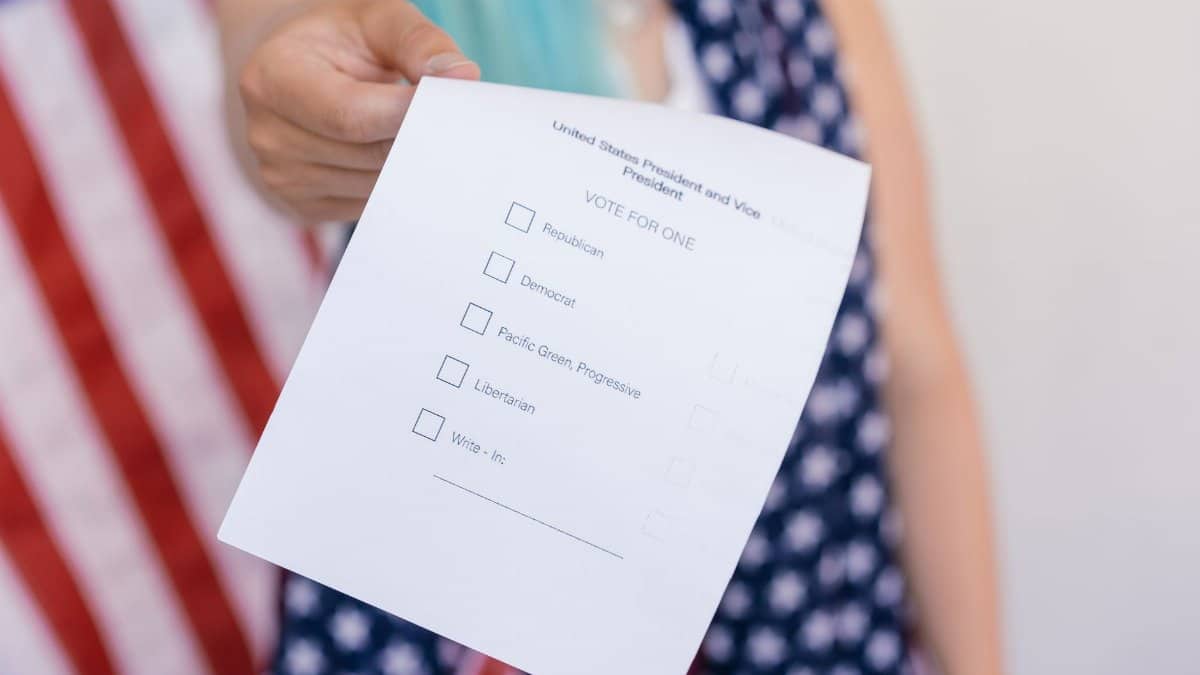
Hinson is not the only Republican trying to share a stage with Trump without disappearing into it. Senate hopefuls in other states will study the Iowa stop for clues. Did the president praise the nominee by name and then move on, or did he redefine the race in his own image? Did local media lead with her agenda or with his grievances? Did small dollar donations spike, and did they come with new volunteers or only with online heat?
Those questions sound technical. They are really questions about power. A party leader who can deliver crowds sets the terms. A nominee who can harvest the crowd and still own the following Monday owns her campaign. Few candidates manage both. The ones who do usually sound specific, grateful, and slightly unhurried, as if the motorcade is a guest in their state rather than the author of it.
After the motorcade leaves

The useful test comes forty eight hours later, when the airport is quiet and the clips are still circulating. Can the campaign return to grain prices, workforce training, and the condition of rural clinics without sounding like it is changing the subject? Can it thank the president and then speak in full sentences about governing? Voters who already adore Trump do not need that second act. Voters who are merely willing to mark a Republican ballot often do.
Ashley Hinson Iowa will be judged less on whether she smiled at the right moment than on whether the week still belongs to her by its end. That is the midterm balancing act in plain form. Accept the boost. Refuse the erasure. Keep enough daylight to govern if the votes come in, and enough loyalty that the voters who came for Trump do not feel tricked on the way out.
A narrower kind of loyalty

Loyalty in this party is often described as total. The more interesting version, the one that still shows up in county fairs and church basements, is narrower. It asks whether a candidate will fight for the coalition’s main goals and whether she will tell the truth when a tactic hurts the people she claims to represent. Hinson’s public posture aims at that narrower standard. Whether voters believe it depends on repetition over months, not on a single roar from a loudspeaker.
Trump’s trip can raise the ceiling on Republican turnout. It can also lower the ceiling on patience for ambiguity. The nominee who survives both effects will sound like a person with a state, not a person with a guest. That is a modest ambition. In this election, modest ambitions are harder than they look, and they may be the only ones that last past the motorcade.