

On trading floors from lower Manhattan to Chicago, the screens that had bled red for much of the week finally steadied. Portfolio managers who had spent Thursday rewriting risk notes found themselves, by Friday afternoon, talking less about panic and more about patience. The phrase moving through research chats was AI stocks midterms, a shorthand for a market trying to price an election result and a technology boom in the same breath.
A rebound that felt more like a breath than a celebration

The recovery was real enough to change the tone of the day, yet modest enough that few veterans treated it as a verdict. After a sharp selloff tied to election night uncertainty, shares linked to artificial intelligence found buyers again as investors digested Democratic midterm victories and asked a narrower question: what, exactly, changes for the companies that build, power, and rent the machines behind modern computing?
That question is harder than a headline. Markets do not wait for committee markups. They assign probabilities in real time, then revise them when a speech, a committee chair, or a power bill refuses to cooperate. Friday looked like one of those revisions. Selling that had treated every large technology name as a single political bet gave way to a more ordinary sorting of balance sheets, order books, and power contracts.
The Inquirer reported the turn in tone as Wall Street worked through the results, a useful snapshot of a session that was less about triumph than about digestion. Readers who want the market dispatch can find it in the paper’s business coverage at https://www.inquirer.com/business/markets-wall-street-ai-stocks-economy-20261106.html.
Why an election can rattle a sector that still sells out its chips

Artificial intelligence spending has been the loudest growth story in American equities for several years. Data centers rise on the edge of cities. Utilities negotiate new load. Chip designers book capacity years ahead. When that story meets a national election, traders do not suddenly doubt that companies want faster models. They doubt the path: permits, tax treatment, export rules, antitrust posture, and the price of electricity.
Democratic gains do not arrive with a single industrial policy stamped on them. They arrive as a coalition. Some lawmakers want stricter rules on large platforms. Some want faster grid buildout so factories and server halls can open. Some want both, and will fight over which comes first. Equity markets, which prefer clean narratives, spent the week discovering that the narrative was messy. The rebound suggested that messiness is not the same thing as collapse.
Data centers move from backdrop to political object

For a long time, the warehouse full of servers was infrastructure that most voters never saw. That anonymity is ending. Communities argue about water, noise, tax abatements, and whether a campus of machines deserves the same welcome as a plant that hires thousands on a shift. Statehouses, not just Washington, will shape the next wave of construction.
Investors watching AI stocks midterms are really watching that local friction as much as any Senate speech. A friendlier federal tone toward clean power procurement can help a developer who needs a decade of electricity. A tougher tone on subsidies, land use, or utility rates can slow the same project. Friday’s buying did not erase those conflicts. It suggested that traders no longer assumed the worst case for every campus on every drawing board.
The practical test is boring and decisive. Can a company get a substation? Can it sign a power purchase that survives a rate case? Can it hire electricians in a tight labor market? Politics sets the weather. Engineering sets the schedule.
Regulation shifts from campaign language to committee work

Campaigns speak in broad strokes about safety, jobs, and the power of a few technology firms. Governing speaks in drafts. After midterm victories, the majority that emerges will decide which hearings become bills and which bills become law. Antitrust, privacy, liability for automated systems, and the rules around government use of commercial models are all plausible arenas. None of them is settled by a single night of returns.
Wall Street has learned, sometimes expensively, to separate rhetoric from statute. A sharp speech can knock a stock for a session. A drafted bill with a realistic path can reprice a sector for a year. The Friday rebound looked like a move from the first category toward the second: less reaction to victory speeches, more attempt to imagine what a chair of a commerce or judiciary committee might actually advance.
That attempt will be wrong in places. It always is. The value, for a long horizon investor, is not perfect foresight. It is refusing to treat every regulatory headline as a liquidation event.
Chips, cloud landlords, and the uneven tape

The artificial intelligence trade is not one stock. It is a chain. Designers of processors sit at one end. Foundries and equipment makers sit beside them. Cloud landlords who rent computing power sit further along. Software firms that promise productivity gains sit at the end closest to the customer, where proof is still uneven.
When politics spooks the tape, the chain often moves together. When politics becomes specific, the chain splits. A rule aimed at the largest platforms does not land the same way on a specialist chip firm with customers overseas. A delay in domestic power hookups hurts the company that must build a hall in Ohio more than the company that already owns one in Virginia. Friday’s session, by the accounts coming off trading desks, began to honor those differences again.
That sorting is healthy. A market that bids every ticker with the letters of a fashionable theme is not analyzing. It is herding. Herds reverse hard. Analysts who spend their days on capacity, gross margin, and customer concentration tend to outlast the herds, even if they look slow on the exciting days.
Power is the constraint investors keep rediscovering
Ask engineers what limits the next cluster of machines and many will not say algorithms. They will say megawatts. Transformers are on long lead times. Transmission lines cross counties that did not ask to host them. Natural gas plants, nuclear restarts, and new renewable projects each carry their own politics.
Democratic victories can cut in more than one direction here. A coalition that prioritizes climate goals may accelerate certain clean generation projects and slow others that rely on fossil peakers. A coalition that prioritizes consumer electric bills may resist the rate structures developers want. A coalition that wants industrial jobs in swing regions may clear permits faster than purists expect. The point is not to invent a single partisan outcome. The point is that electricity has become a capital markets issue, and elections are one of the ways the country argues about it.
Anyone tracking AI stocks midterms without tracking utility commissions is watching only half the field.
The bond market still writes the discount rate

It is tempting, in an election week, to explain every tick with politics. Seasoned investors know better. Growth stocks, including the ones tied to artificial intelligence, are long duration assets. Their value depends on cash flows that arrive years from now, discounted by interest rates that arrive from the bond market and the Federal Reserve.
If yields rise because investors fear larger deficits, expensive technology shares can fall even when product demand is strong. If yields ease, the same shares can rise even when a hearing on Capitol Hill sounds hostile. Friday’s rebound sat inside that larger frame. Election results mattered. They did not repeal the discount rate.
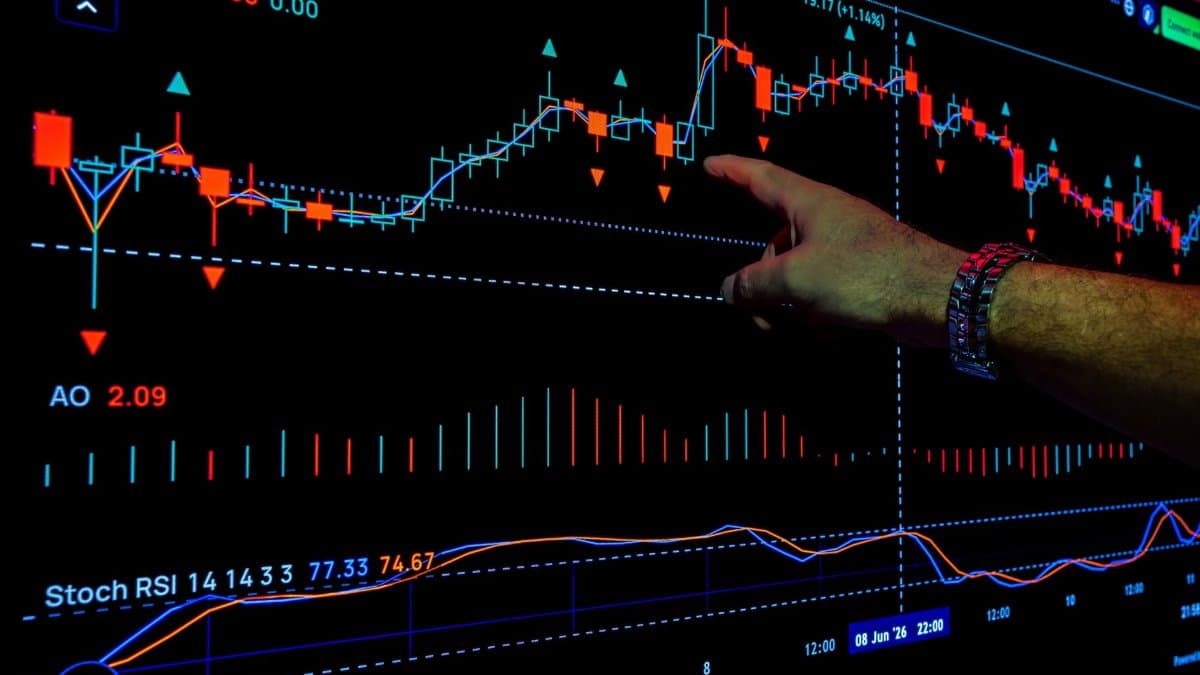
That is a useful discipline for readers who do not trade for a living. A red arrow on a famous ticker is not a moral judgment on a technology, and a green arrow is not a vote of confidence in a party. It is a price, struck by people with different time horizons, some of whom will reverse themselves before the next opening bell.
How the campaigns talked past the engineers

On the trail, artificial intelligence was often a prop. One side warned of runaway systems and concentrated wealth. Another warned of regulation that would hand the lead to rivals abroad. Both messages contain a grain that serious people recognize. Neither message maps cleanly onto a 10-K.
Engineers inside these firms spend their weeks on training runs, cooling systems, and customer deployments that fail in ordinary ways. Policy staffs spend theirs on comment letters. The distance between those rooms is where misunderstanding grows. Markets, sitting in a third room, try to translate both dialects into earnings per share. The translation is crude. It is also the only translation equity prices know how to make.
A more grown up public conversation would admit the tradeoffs. Faster deployment can mean productivity and also displacement. Tighter rules can mean safer products and also slower ones. Export controls can protect a lead and also shrink a market. Voters deserve that candor. Shareholders, who already live with the tradeoffs, should not pretend an election erases them.
What a careful reader should watch next

The next useful signals will not all come from cable news. They will come from hearing calendars, from state utility filings, from corporate guidance on capital spending, and from whether announced data center projects still have construction dates that survive contact with transformers and town councils.
Watch who takes the gavels. A chair with a history of tough questioning is not the same as a chair with the votes to pass a sweeping statute. Watch appropriations, because agencies enforce what Congress funds. Watch allied governments, because supply chains for advanced computing do not stop at the border. And watch the companies themselves when they stop speaking in themes and start speaking in delayed projects or, just as telling, in projects that stay on schedule.
None of that requires a trader’s terminal. It requires the habit of reading past the first adjective in a market headline.
Separating a week’s mood from a decade’s buildout

The buildout of computing infrastructure is large enough to shape regional economies. It is also young enough that forecasts will be wrong in both directions. Some promised productivity will arrive late. Some unglamorous uses, in logistics, medicine, and manufacturing, will matter more than the demonstrations that draw crowds. Share prices will overshoot both the hope and the disappointment, because that is what share prices do.
Democratic midterm victories change the roster of people who will write rules around that buildout. They do not change the physics of a power line or the curiosity of a research team. Friday’s recovery in the stocks most associated with the theme was a reminder of that distinction. Fear had a few sessions. Then investors asked again what they are actually buying.
I keep a simple test for weeks like this. If the only reason to own a company was a campaign slogan, the position was never an investment. If the reason was a customer who keeps paying for a scarce product, an election is a risk to underwrite, not a reason to forget the product.
A market that prices stories before it prices statutes

There will be more swings. A draft bill, a surprising appointment, a municipal fight over a substation, a hot inflation print: any of them can send the same names lower again. The honest description of Friday is not that politics stopped mattering. It is that politics stopped being a single blunt instrument.
Readers following AI stocks midterms should expect the phrase to keep showing up whenever Washington and Silicon Valley collide on a trading screen. The collision is not going away. The useful work is to notice when the market is reacting to a story, and when it is finally reacting to a rule, a permit, or a bill that has a number on it.
For now, the tape has chosen digestion over drama. That is a quieter outcome than election night promised, and a more reliable one. Companies will still have to earn the valuations the boom assigned them. Lawmakers will still have to decide what they are willing to pass, not merely what they are willing to say. Between those two obligations, the rebound is only a pause, which is often the most informative thing a market can offer.