

The wind above Santa Clarita moves through sage and buckwheat before it reaches the valley floor. On the day tribal members gathered on a newly acquired ridge in the San Gabriel foothills, that wind carried more than dust. The Fernandeño Tataviam Band of Mission Indians had secured 51 acres of ancestral land with a state grant of 1.9 million dollars, and people who walked the boundary lines called the moment a Tataviam land return. Joy showed up in ordinary gestures. An elder knelt. A child asked the name of a shrub. Someone laughed because the laugh had been waiting a long time.
How 51 acres came back into tribal hands
For years the Fernandeño Tataviam Band of Mission Indians has worked in public and in quiet offices to reassemble a homeland broken by mission history, ranch titles, and the spread of suburbs. The 51 acres sit above Santa Clarita in the San Gabriel foothills, on ground the tribe identifies as ancestral. Covered by a state grant of 1.9 million dollars, the price is small beside the loss it answers and large beside a household budget. Leaders framed the closing as a return, a word they used with care rather than as a slogan.
County files will tell one story, a transfer of title and a public purpose. The people on the ridge told another. They spoke of grandparents who pointed toward these slopes from roads they were not always free to leave. They spoke of place names that survived in family talk after they faded from maps. In that telling, coming home is less a scene staged for cameras than a correction of the record, slow and incomplete.
What the state money was meant to do

California has put public dollars toward tribal land acquisition and habitat care after generations of policy that did the opposite. The grant of 1.9 million dollars did not invent the claim of the Fernandeño Tataviam Band of Mission Indians. It made a willing sale possible near Santa Clarita, where foothill parcels do not linger. Without that support, joy would still have been imaginable. It would not have had a deed.
Public money invites fair questions. Residents can ask what the acres will host, who may walk them, and how fire, water, and wildlife will be tended. Tribal governments answer with plans. The Fernandeño Tataviam Band of Mission Indians has described the Tataviam land return as a chance to care for land in line with inherited responsibility, not as a wall against neighbors. Access, teaching, and habitat work will be decided season by season, on the soil itself.
Joy without costume
Joy is an easy word to distrust. It can sound borrowed from a press office. On this ridge it sounded like relief. People cried and then joked about the crying. They took photographs and then lowered their phones because the view did not need proof. Readers who have bought a house, or lost one, know the shock of a key in a lock. Widen that shock to a people and it does not become abstract. It becomes heavier, and more tender.
I have walked other hills in Los Angeles County where the official story was growth and the unofficial story was absence. The absence here is old. To see a tribe stand on its own acreage again is not to pretend those centuries close. Grief and joy can share a trail. The people who spoke of joy were not denying history. They were refusing to let history be the only feeling permitted on ancestral ground.
Prayer on open ground

For many Tataviam families, spiritual practice is not an idea hovering above land. It is land. It is the direction of a mountain, the season a plant is ready, the duty to speak to a place before taking from it. The 51 acres give those practices a permanent address. Ceremony can happen in a rented room. It changes when the room is chaparral and the roof is sky over ground the people regard as their own.
Brush scratches. Animals do not attend hearings. In tribal teaching, as in many older religious traditions, the sacred includes inconvenience and risk. What title changes is authority. The Fernandeño Tataviam Band of Mission Indians can decide how prayer, teaching, and care share the same paths. That authority is the quiet center of a Tataviam land return. A visitor may see a celebration. The lasting work looks like calendars, fire plans, and children learning plant names where the plants grow.
Chaparral is already inhabited

From a freeway, foothill slopes can look like one brown green wall. Walk them and the wall splits into sagebrush, buckwheat, yucca, oak in the draws, and birds that use those plants as pantry and cover. These 51 acres are not a blank lot waiting for a monument. They are already full of lives that do not file papers. Care, if it follows what leaders have said about responsibility, means learning those lives at the pace of seasons rather than at the pace of a headline.
Water is the constraint every serious plan must name. The foothills stay dry for long stretches, then winter storms cut brief creeks into soil that hates pavement. A tribe taking land back inherits that rhythm. So does any neighbor who hopes the slope above a house will hold. It names a steward with a reason older than zoning to keep the slope from being treated as leftover space.
Fire season on ancestral ground
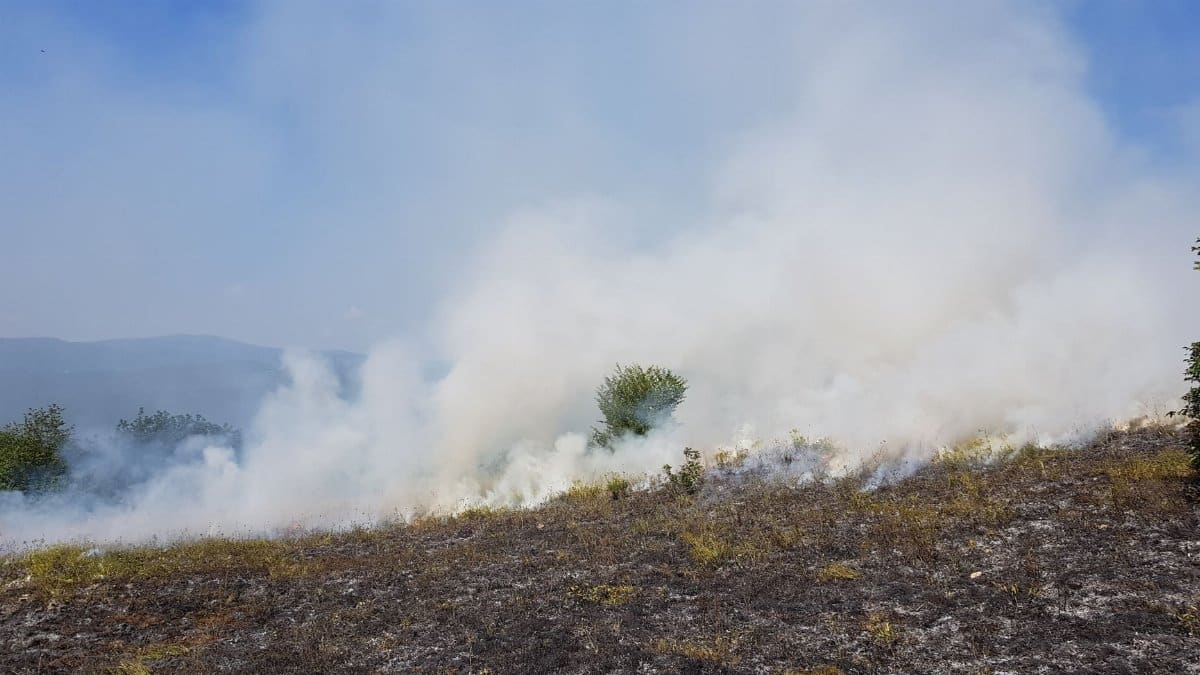
Anyone who has lived through an autumn wind in this county knows why acres in the San Gabriel foothills are not only a picnic story. Chaparral is made to burn on a cycle that neighborhoods interrupted and then feared. Tribal burning practices, restored with agencies and with care for homes below, belong in any honest talk about California fire. One parcel will not fix a regional danger. Ownership does change who speaks when fuel, roads, and escape routes are planned.
Celebration in the morning and a fire plan in the afternoon are not opposite moods. Spiritual life that ignores flame is sentiment. Fire policy that ignores the people who carried these hills in story is unfinished. With title in hand, the Fernandeño Tataviam Band of Mission Indians can practice both kinds of knowledge where the brush actually stands.
The city that looks up
Santa Clarita is a city of commuters, newer rooftops, and older ranch memory, set where a river valley meets rising ground. People look toward these foothills on clear evenings. Some will welcome a tribal neighbor. Some will worry about trails, gatherings, or the unknown. What the purchase asks is a habit of speaking to a tribal government as a government, not as a symbol wheeled out for heritage month.
Valley schools still struggle to give enough room to nations that were here before the missions and are here now. A Tataviam land return within sight of classrooms is a lesson no printer had to schedule. Young people can learn that Indigenous nations live in the present tense. The ground under a playing field has a longer name than the field. That is a spiritual fact as much as a historical one, because it changes how a child locates the self.
Limits of a deed
Honesty sets a boundary. Fifty one acres do not restore a language by themselves. They do not unwind the missions, the ranchos, or the laws that treated Native nations as obstacles. To call this purchase a final healing would shrink a story the tribe is still living. Joy can be true and still leave decades of work on the table.
Habitat ignores fences. Animals cross. Flame crosses. So do weeds and road noise. Caring for 51 acres means caring about the next parcel, which means negotiation rather than isolation. The Fernandeño Tataviam Band of Mission Indians has reason to be protective. On a foothill, protection is a relationship with everything that flows down and everything that climbs.
After the laughter
The photographs will circulate, and they should. Then the harder, better story begins: paths kept clear, plants named correctly, fire plans written with neighbors, children brought uphill until the ridge feels ordinary. Ordinary is not an insult. Ordinary is what return looks like when it stops being a headline and starts being a Tuesday.
A Tataviam land return of this size will not reorder Los Angeles County. Fifty one acres, held by the Fernandeño Tataviam Band of Mission Indians, are enough to prove that ancestral land can move from memory into title without losing its spirit. The wind will keep moving through the sage. The difference is who gets to stand in it and say, without asking permission, that they are home.