
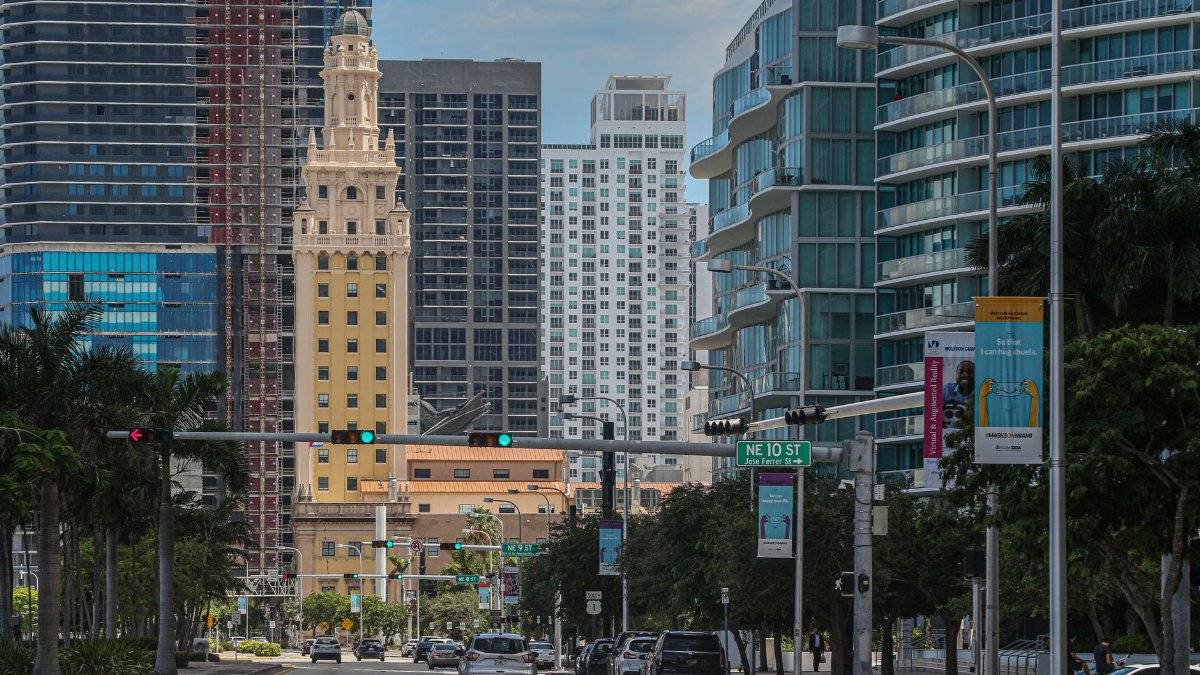
On a humid afternoon along Flagler Street, the storefronts still carry the look of a corridor that Miami outgrew and then half forgot. Metal gates sit halfway down. Tourists angle toward the water instead of lingering at the curb. Into that quiet, the Miami land king downtown has decided to plant a new bet, arguing that the historic commercial spine deserves the same seriousness once reserved for flashier districts. He is Moishe Mana, a billionaire whose name has become shorthand for patient land assembly. After selling a Wynwood portfolio valued at $1.1 billion to Ken Griffin, he is turning toward downtown and toward Flagler in particular. The line attached to the shift is plain. It is time to take downtown seriously. For a city that often chases the next skyline, that claim is less a slogan than a test of whether the old center can still hold a future.
A buyer who treated land like a long wager
Mana did not arrive in Miami as a polished downtown brand. He built a reputation by buying when a neighborhood still looked unfinished, then waiting while the city caught up. Wynwood, once a warehouse district with more grit than glamour, became the clearest exhibit. Over years he assembled parcels, courted tenants, and watched art, restaurants, and later institutional money rewrite the map. Supporters describe a developer with an immigrant’s appetite for accumulation and a gambler’s tolerance for vacant years. Critics see a speculator who benefited when public attention and private capital arrived together. Both readings can be true. What is harder to dispute is scale. A portfolio that could be sold for $1.1 billion is not a side hobby. It is a civic fact.
That history matters because downtown is not a blank canvas. It already has a government core, a waterfront, transit ambitions, hotels, courtrooms, and blocks that have been promised revival more than once. Anyone stepping in with Wynwood money and Wynwood mythology will be measured against those earlier promises. The Miami land king downtown is not starting from obscurity this time. He is starting from a record that investors, shopkeepers, and city officials already know how to quote.
What the Wynwood sale actually changed

The sale to Ken Griffin, the hedge fund billionaire who has been relocating pieces of his empire and his personal capital to South Florida, redrew ownership in a district that had come to symbolize Miami’s cultural boom. Griffin is not a landlord in the old warehouse sense. He represents a different kind of concentration: finance capital with the means to hold property through cycles that would exhaust smaller owners. For Mana, the transaction did something equally important. It converted years of assembly into liquidity and into a public signal that the Wynwood chapter, at least in his hands, had reached a peak price.
Sales of that size are often narrated as exits. They can also be rotations. A developer who has spent a decade arguing that an overlooked district will matter may decide the next overlooked place is the one everyone drives through on the way to somewhere else. Downtown fits that description more often than boosters like to admit. The towers photograph well. The street, especially west of the brighter waterfront blocks, can still feel thin after dark. Taking the sale seriously means asking what Mana intends to do with attention, not only with proceeds.
Flagler Street and the memory of a main street
Flagler is not a metaphor. It is a named street with a particular past as Miami’s retail artery, a place where department stores, jewelers, and ordinary errands once shared the sidewalk. Decline did not arrive in a single season. Suburban malls pulled shoppers outward. Later, Brickell and the beaches captured newer money. Efforts to restitch the corridor have come in waves: facade programs, transit talk, cultural events, and landlord strategies that sometimes improved a block and sometimes left it looking staged. Residents who remember the fuller street are not nostalgic for congestion. They are nostalgic for a reason to be there that was not a conference badge or a condo tour.
Revitalization language can flatten that memory into a marketing deck. A serious plan has to say which uses belong at the ground floor, who can afford the rent, and how a block stays alive on a Tuesday in August rather than only during a festival weekend. Mana’s stated turn toward Flagler puts him in a lineage of owners who believed the old retail street could be coaxed back. The difference is capital and timing. He is making the case after a billion dollar realization elsewhere, not before one.
Why downtown resists the Wynwood script

Wynwood rewarded a certain kind of storytelling. Empty industrial shells could be painted, leased to galleries, and gradually normalized as a destination. Downtown already has density, politics, and competing claims. Judges, commuters, cruise passengers, unhoused people, small merchants, and luxury buyers occupy overlapping geographies. A landlord cannot curate that mix the way a single arts district was curated. Zoning, historic fabric, and the simple fact of public institutions make the work slower and more public.
There is also a market question. Downtown retail has struggled when rents assumed a customer who never quite arrived in sufficient numbers. Office use remains unsettled across American cities, and Miami is not immune to that uncertainty even when its residential demand looks strong. A plan that treats Flagler as the next Wynwood risks importing the wrong lesson: that cultural heat alone fills a street. Heat helped Wynwood. So did a finite supply of interesting buildings and a moment when visitors wanted somewhere new to photograph. Downtown will need everyday commerce, not only a narrative of discovery.
Ken Griffin’s shadow on the next bet

Griffin’s purchase does not dictate what happens on Flagler, but it changes the comparison. Miami now has a highly visible owner in the district Mana is leaving behind, and a highly visible seller announcing a civic priority a few miles away. Observers will watch whether the Wynwood properties under new ownership become more institutional, more expensive, or more carefully managed, and whether Mana’s downtown push looks bold or like a search for the next underpriced story. Neither man is a neutral figure in a city where billionaire migration has become its own weather system. Their transactions set rents, expectations, and the tone of what counts as serious investment.
For smaller owners along Flagler, that shadow can be useful or crushing. A prominent buyer can pull lenders and tenants toward a corridor. The same buyer can also reset land prices so quickly that the merchants who give a street its particular character cannot stay. The civic test is not whether a billionaire believes in downtown. It is whether belief leaves room for businesses that are not themselves spectacles.
What taking the center seriously could mean

Seriousness, if the word is going to earn its place, has to be more specific than optimism. It would mean holding property long enough for tenants to establish themselves, not flipping a revived block at the first uptick. It would mean ground floor uses that people can enter without a reservation or a conference lanyard: grocers, repair shops, clinics, bookstores, late kitchens, and offices that spill people onto the sidewalk at lunch. It would mean coordination with transit, policing, sanitation, and the unglamorous maintenance that makes a street feel claimed rather than staged. It would mean saying aloud which historic buildings stay and which lots are meant for new construction.
Mana has the advantage of a simple public sentence. Take downtown seriously. The sentence invites a reply from everyone else with a stake. City commissioners can ask what public improvements match private assembly. Merchants can ask about lease terms. Residents of nearby neighborhoods can ask whether a brighter Flagler pulls investment toward them or merely photographs well from a helicopter. The Miami land king downtown will be judged less by the confidence of the announcement than by the leases, the vacancies, and the sidewalk a few years from now.
The people who already work the block
Any revival story that begins with a billionaire and ends with a skyline leaves out the people who open the gates each morning. Jewelers, lunch counters, electronics shops, and storefront churches have persisted on and near Flagler through cycles that were supposed to erase them. Some own their buildings. Many do not. Their calculation is immediate: higher foot traffic is welcome, higher rent without that traffic is not. They have heard revitalization before, sometimes in the form of a streetscape project that narrowed a lane and widened a promise.
A fair account of Mana’s turn has to include that skepticism without sneering at it. Downtown Miami has been declared ascendant often enough that doubt is a form of local knowledge. If new ownership brings tenants who complement rather than displace those shops, the corridor can thicken instead of merely rebrand. If the plan depends on clearing the old retail so that a cleaner concept can arrive, the street may look improved in renderings and poorer in practice. The difference will show up in who still has a key to a front door.
Capital, patience, and the risk of another false dawn

Land assembly is slow power. It does not trend on a weekend the way a new museum opening does, but it decides what can be built and who must negotiate. Mana’s method in Wynwood was accumulation followed by a market that eventually agreed with him. Downtown may not offer the same agreement on the same schedule. Interest rates, insurance costs, construction prices, and the national mood about offices can all interrupt a handsome thesis. A developer with fresh proceeds can wait longer than a strained landlord. Waiting is not the same as succeeding.
There is a civic risk on the other side of patience, too. When one owner controls enough of a corridor, the street’s future becomes a private timetable. That can produce coherence. It can also produce a holdout pattern in which blocks stay quiet because the owner is waiting for a tenant prestigious enough to justify the basis. Miami has seen both coherence and vacancy wearing the costume of vision. Readers should treat renderings as hypotheses.
A downtown that has to earn the next chapter
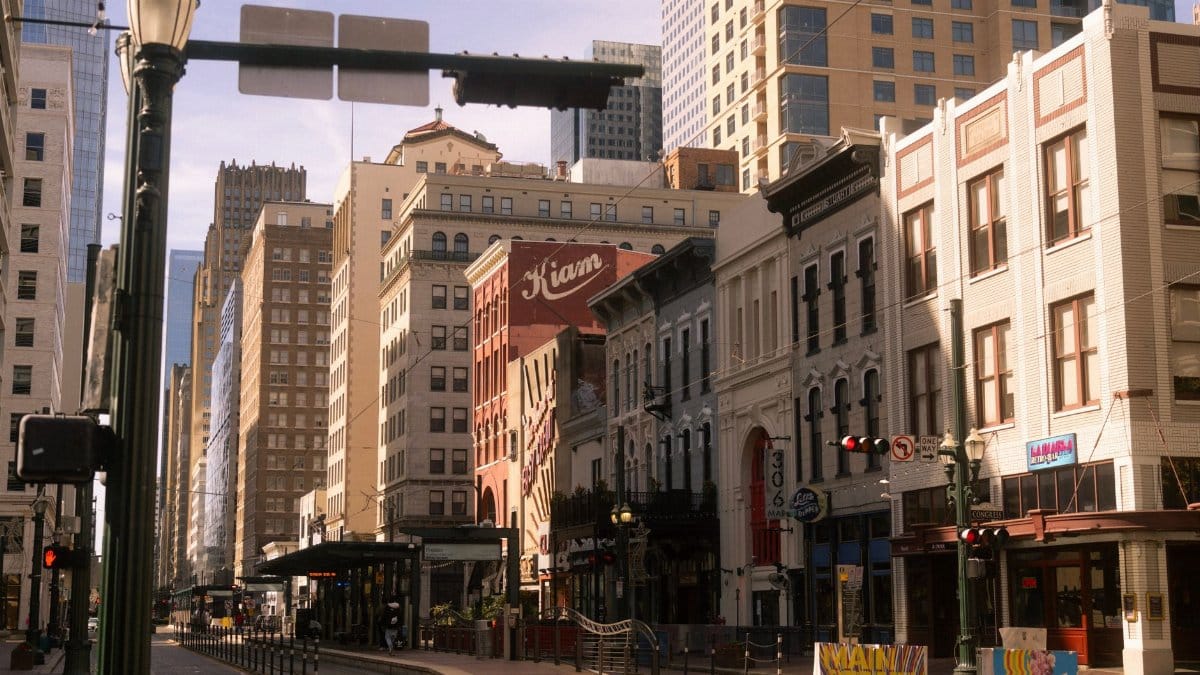
Miami’s growth story is usually told from the edge inward: beaches, then Brickell, then Wynwood and the Design District, then whatever district a developer can rename. The center gets mentioned when a new tower tops out or when a storm reminds the region that government still sits downtown. Mana’s pivot, as described in reporting on his Flagler focus after the Griffin deal, asks the city to reverse that habit. The center is not the leftover. It is the assignment.
Whether that assignment sticks depends on more than one man’s portfolio. It depends on whether employers keep people in the urban core during the week, whether visitors walk past the waterfront and into the grid, and whether public agencies treat Flagler as infrastructure rather than as a backdrop. It also depends on whether the Miami land king downtown is willing to let the street be ordinary in the ways that make a city usable. Glamour brought Wynwood its price. Usefulness may be what downtown still lacks.
The phrase take downtown seriously will either age into a description of leases signed and lights left on, or it will join the archive of Miami lines that sounded inevitable and then did not. For now it is a direction, attached to a seller who has already proved he can wait for a neighborhood to become expensive. Flagler Street does not need to become expensive in the same way. It needs to become necessary again. That is a harder standard, and it is the only one that would make the new focus more than a rotation of capital from one famous district to the next.