
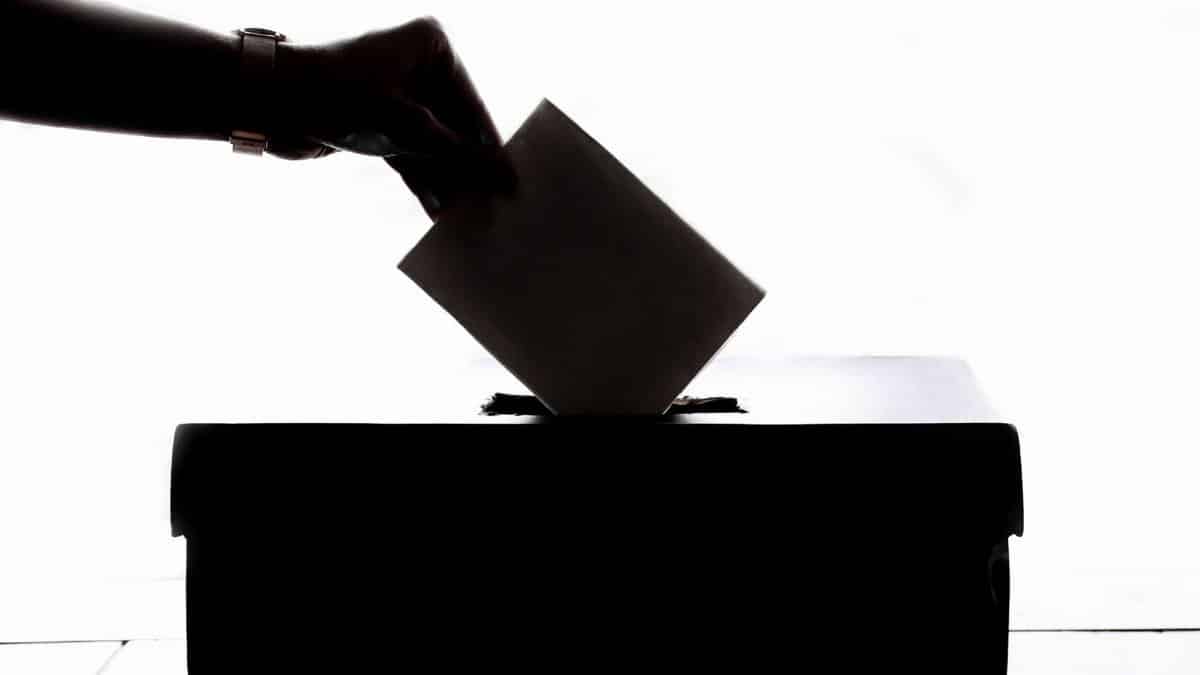
In Pierce County, election workers are preparing to lift ballots from trays and read them one at a time. Eighty votes separate Democrat Jenn Marie Strickling from Republican Rep. Cyndy Jacobsen in a race for the Washington House in the 25th District. That margin has set a Washington legislative recount for December 4, a hand review required when a legislative contest is close enough that machines alone are not the last word. The district covers communities in Western Washington where commutes, school funding, and housing costs shape daily life, and where a single seat can shift the tone of a caucus in Olympia. For the candidates, the number is a lead and a warning at once. For voters, it is a reminder that a certified tally can still be opened again when the law says the gap is too narrow to leave untouched.
A lead that fits inside one precinct

Eighty votes is not a tie, and it is not a landslide. It is the kind of margin that can be produced by a handful of households on a single block, or by ballots that arrive in the last hours before a deadline and clear every check on the envelope. In a legislative race, that number is large enough to name a leader and small enough to keep both campaigns in the room. Strickling holds the advantage. Jacobsen, already a representative, remains close enough that the statute does not treat the contest as finished.
Readers sometimes hear a figure like this and assume a mistake must be hiding in the machines. The better reading is simpler. Close elections happen in districts that are politically mixed, and Washington counts almost every ballot that meets the rules, including those sent by mail and those cured after a signature question. A narrow lead is often a portrait of the district, not a defect in the count.
Two candidates and one House seat
The ballot listed Jenn Marie Strickling, a Democrat, against Cyndy Jacobsen, the Republican who currently holds the seat. The office is a two year term in the state House, one of two positions voters fill in each legislative district alongside a state senator who serves a longer term. Nothing in the public tally turns either woman into a symbol. The recount is about whether the ballots, read again by hand, still show Strickling ahead.
Incumbency carries name recognition, a voting record, and the habits of constituent work. A challenger carries the burden of introduction and the chance to argue that the district wants a different emphasis. Those political facts matter on Election Day. They do not change the arithmetic that county staff will apply in a recount room. Each valid ballot counts once, for the candidate marked, under rules written long before either campaign printed a sign.
Pierce County as the whole map

The 25th District sits in Pierce County, in and around Puyallup and nearby suburbs and city edges south of Seattle. It is Western Washington in the civic sense that people mean when they talk about the sound, the ports, and the commute north, and it is also its own place: school boards, small businesses, warehouses, and neighborhoods that do not vote as a single bloc. A legislative recount here is local work with statewide consequences, because the House majority is built one district at a time.
County election offices already know these ballots. They sorted them, checked signatures, and fed them through tabulators during the canvass. The December 4 review does not start from rumor. It starts from a stack the county has already accepted as eligible. That distinction is easy to lose when national arguments about elections drift into a local story. The question on the table is not whether Pierce County held an election. The question is whether a second, slower reading of the same paper changes an eighty vote lead.
Why the law demands human eyes

Washington does not order a hand recount because a candidate feels uneasy. It orders one when the margin crosses a line the Legislature wrote down. For many offices that are not statewide, a manual recount is required when the difference is under 150 votes and also under one quarter of one percent of the votes cast for the two candidates. An eighty vote gap meets the first part of that test. County officials scheduled the Washington legislative recount because the full statutory test was met, not because a campaign purchased a second look.
The text lives in state law, including the recount rules in RCW 29A.64.021. Mandatory recounts are a public obligation, paid as the statute directs, rather than a private audit bought by the trailing candidate. That design is meant to keep the closest races on the same footing, whether or not a campaign can raise money for lawyers and extra staff.
What a hand count looks like in practice

A hand recount is slower than a scanner and, in a different way, more public. Teams examine ballots and record marks according to the voter intent rules the state already uses. A clear mark in an oval counts. A stray line, a hesitation, or a note in the margin is judged by those written standards, not by a worker’s preference. Ballots are handled so that each one is seen, logged, and returned to its batch. The point is not to rediscover the campaign. The point is to confirm the marks.
Observers from the campaigns and from the parties are generally allowed to watch, within rules that keep them from touching ballots or coaching the count. Their presence is part of the design. A recount that no one can see would answer the math and fail the harder test, which is whether people who lost can still recognize the process as theirs. The Seattle Times account of the race heading to a hand review is here, and it matches the narrow public facts: Pierce County, December 4, and a lead of eighty votes.
Machines, paper, and the habit of checking

Washington voters mostly return ballots by mail or by drop box. Those ballots are paper. Tabulators speed the first count. They do not destroy the record. A hand recount is possible only because the paper remains. That is a quiet strength of the system, and it is worth saying without romance. Paper can be mishandled. Paper can also be read again when a result sits inside a legal margin. The Washington legislative recount in the 25th District is an instance of that second use.
Voters who cured a signature, or who tracked a ballot and saw it accepted, are not being asked to vote again. The electorate is closed. What changes, if anything changes, is the reading of marks already made. Campaigns sometimes speak as if a recount were a new election with new persuasion. It is not. It is a second examination of a finished electorate, under brighter light and at a human pace.
What the seat can still shape

A single House seat rarely writes a budget by itself. It does change who sits on committees, who can force a hearing, and who returns phone calls from school districts and city halls in Pierce County. In a chamber where majorities are negotiated bill by bill, eighty votes in one district can matter more than a much larger margin in a safe seat elsewhere. That is not a reason to inflate this recount into a crisis. It is a reason to count carefully.
Residents will care less about the ceremony of the tally than about what follows: taxes, housing rules, public safety, ferries and roads, and the ordinary bills that never make a national headline. Whoever is sworn in will inherit those files. The recount decides the name on the office door. It does not decide, by itself, whether the district feels heard after January.
How campaigns should carry themselves now

The days before a hand count are a test of tone. A leader can say the lead is real and still welcome the review. A trailing candidate can ask for every lawful check and still refuse to tell supporters that the process is a sham. Both postures are available. Only one of them leaves the district easier to govern in February.
Supporters will refresh results and trade theories. That is ordinary. What is not useful is treating election staff as suspects because the margin is small. Pierce County workers did not draw the district lines, and they did not write the eightieth vote. They have a date, a statute, and a room full of paper. The public interest is that they finish the Washington legislative recount in view of observers, publish the result, and certify it without theater.
Trust as a civic practice

People sometimes speak of faith in elections as if it were a mood. It is closer to a practice. You believe a result partly because you have seen, over years, that close races are recounted, that paper exists, and that losers concede when the second count holds. You also believe it because winners do not treat a narrow victory as a license to sneer. The moral content of this week is modest and specific: count the ballots you already accepted, in public, by the rules you published before Election Day.
That practice will not settle every argument about politics in Western Washington. It can settle this one. If Strickling’s lead remains, Jacobsen’s supporters deserve a clear accounting, not a shrug. If the hand count reverses the order, Strickling’s supporters deserve the same. Dignity here is not soft language. It is the refusal to ask the law for a different answer than the ballots give.
After December 4

When the hand count ends, the county will report whether the eighty vote margin held, shrank, or flipped. Certification follows the recount, and the winner takes the seat through the ordinary path into the House. Further fights, if any, belong in the narrow channels the law allows, not in vague claims that a close result is illegitimate because it is close.
For everyone else, the useful memory is smaller than the headlines. A Washington legislative recount happened because eighty votes were not enough, under state rules, to skip a human reading. Workers in Pierce County will do that reading on December 4. The district will still be the same place the next morning, with the same schools, the same commutes, and a representative whose name the paper, read twice, was willing to stand behind.