

On a warm November weekend, when Miami fills with readers carrying tote bags and paperbacks, a quieter question sits inside the noise. What does home mean when the door that once led there no longer opens? A prison writing anthology titled Say It With Your Chest gathers incarcerated Florida authors who answer that question in their own sentences, and its editors brought the conversation to the city ahead of the Miami Book Fair. The book does not treat home as a postcard. It treats home as a wound, a kitchen, a prayer, and sometimes a rumor.
A fair built for voices that rarely travel

Book fairs are usually celebrations of arrival. Authors fly in, sign stock, and speak from stages about the lives they have already lived on the page. This gathering asked something harder of the audience. Many of the writers in the collection could not walk the aisles or take questions in person. Their work had to stand in for their bodies. That absence is not a flaw in the event. It is the condition the literature is trying to name.
Listeners who came for plot or for celebrity found a different kind of reading. The sentences were plain, often, and then suddenly not plain at all. A street name, a mother’s voice, the hour a shift used to start: these details did the work that a plot summary cannot do. They made a room feel inhabited even when the writer was miles away, under count, under rules, under time that does not belong to him or her.
What the title asks of a reader

Say It With Your Chest is a phrase that sounds like a dare. In ordinary speech it means speak without hiding, put the truth where the breath is. Inside a prison, that dare has a cost. Candor can be punished. Tenderness can be mocked. Naming a place you miss can look, to the wrong listener, like weakness. The title refuses that bargain. It tells the writer to risk the full voice anyway, and it tells the reader to meet that voice without flinching.
The phrase also hints at the body. Chest is lungs, heart, the place a letter is held before it is sent. Home, in these pages, is not only a house. It is the feeling of being able to breathe without calculating who is listening. That is a spiritual claim as much as a geographic one, which is why the book belongs in a conversation about faith and longing as much as it belongs on a shelf of contemporary letters.
Home as a room that keeps moving
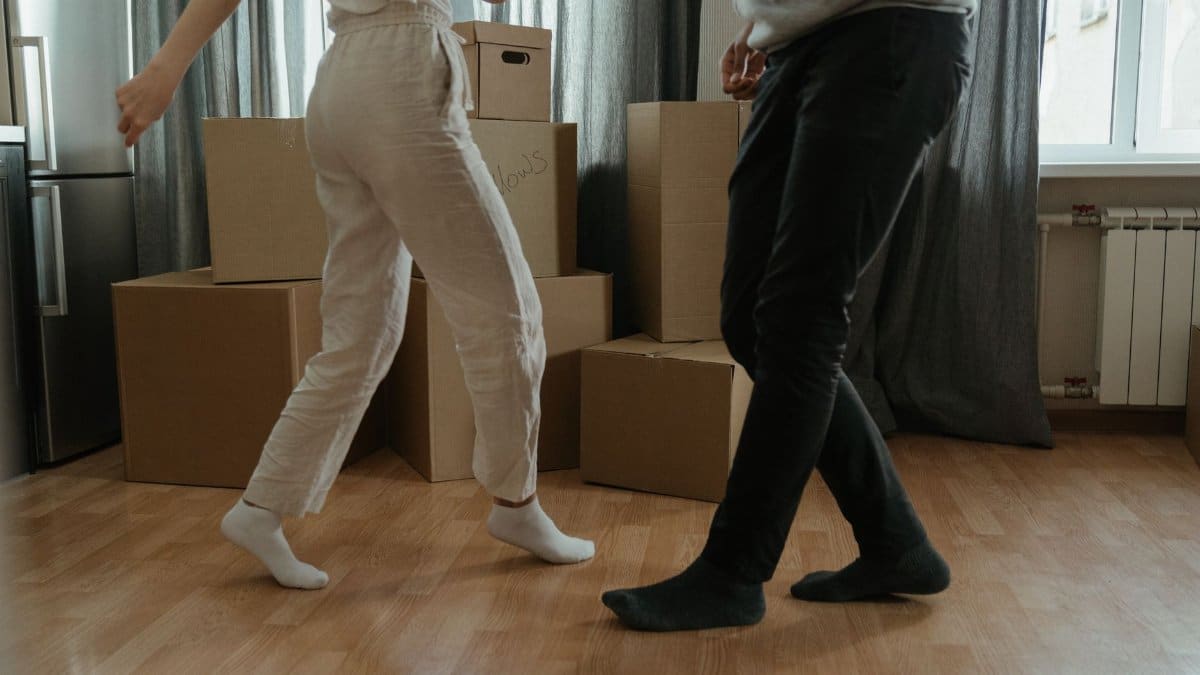
Ask ten people what home is and you will get ten maps. For someone serving a sentence in Florida, the map is often split. One half is the cell, the yard, the chow line, the rules posted on a wall. The other half is a city block in Miami, a porch in Jacksonville, a church in the Panhandle, a cousin’s apartment where a child still sleeps. The writing does not choose one half and discard the other. It holds both, and the holding is the art.
Some pieces remember home as food. Rice, café con leche, a pot that used to be on the stove at a certain hour. Smell is a stubborn witness. It survives transfer, lockdown, and the long stretch of years when visits thin out. Other pieces remember home as a voice on a phone that cuts off too soon, or as a photograph that has been folded so many times the face is wearing away. These are not decorative details. They are how a person proves, to himself or herself, that a life existed before the number.
The editors and the work of carrying pages out

Before the fair, the editors spoke about what it takes to assemble writing from inside Florida’s prisons and to place it in front of a public that mostly meets incarceration through headlines. Their task is part literary and part logistical. Manuscripts move slowly. Mail is delayed. Workshops, where they exist, depend on volunteers, on permission, on the fragile fact that a program has not been cut. An anthology is not only a book. It is a record of many small permissions that could have failed.
Editing this kind of work also means resisting the urge to smooth every sentence into the voice of the free world. A prison writing anthology earns its name when the pressure of the institution remains audible. The editors’ job is not to translate pain into something polite. It is to keep the language exact, to cut what is unclear, and to leave what is true even when the truth is unfinished. Readers who want a neat redemption story will be disappointed, and that disappointment is useful.
Longing that does not ask for pity

The danger in writing about incarceration from the outside is pity. Pity flattens. It turns a person into a lesson. The stronger pages in a project like this refuse the lesson. They describe a particular Tuesday. They argue with a sibling. They admit to having been cruel, or afraid, or proud of a skill that no one on the outside can see. Longing, in that register, is not a performance of sadness. It is a claim on a life that continues.
Home, under that claim, can be uncomfortable. Some writers do not want to return to the house they left. The house may have been violent. The neighborhood may have been the scene of the harm that led to the sentence. To ask what home is, then, is not always to ask for a key. Sometimes it is to ask whether a person can build a habitable inner room when the outer rooms have failed. That question is old. Monastics, exiles, and migrants have asked it for centuries. Prison gives it a lock and a count time.
Faith, ground, and the hour after lights

Spiritual language appears in this literature even when the writer does not name a church. Ground is a spiritual word. So is return. So is the hope that someone on the outside still sets a place, even if the place stays empty. Florida’s religious landscape is dense: storefront churches, large sanctuaries, family altars, prayers said in Spanish and Creole and English in the same kitchen. When those practices show up in prison writing, they are not ornaments. They are technologies for staying a person.
There is also a faith that has nothing to do with doctrine. It is the faith that a sentence written at night will be read by someone who does not already know the ending. Publication is a kind of visitation. It does not replace a mother’s visit. It does something else. It lets a stranger carry a writer’s weather for a few pages, and then set the book down changed, or at least less certain.
Florida as more than a backdrop

Place matters here in a concrete way. Florida’s prisons are not an abstraction, and neither are its cities. Heat, hurricanes, tourist economies, immigrant households, and long drives between facilities all shape what home can mean. A writer in the Panhandle and a writer in South Florida may share a system and share almost nothing else. An anthology that gathers both is doing geographic work as well as moral work. It refuses the idea that incarcerated people are from nowhere.
The Miami Book Fair is a fitting room for that refusal. The fair has long treated the city as a crossroads of languages and migrations. To place this book in that crossroads is to say that prison writing is not a side genre. It is part of the region’s literature, as bound to Miami and to the rest of the state as any novel about exile or arrival. The writers may be absent from the tent. Their Florida is not.
What publication can and cannot do

It is tempting to claim that a book sets people free. It does not. A poem does not shorten a sentence. An essay does not fix a visitation room or restore a job or return a child to a parent’s arms. Honesty about those limits is a form of respect. If the literature is asked to do the work of courts, legislatures, and families, it will be crushed under a job it cannot finish.
What publication can do is narrower and still serious. It can interrupt the habit of speaking about incarcerated people only as cases. It can give a reader a voice to carry into a vote, a classroom, a dinner argument, a prayer. It can remind editors, teachers, and relatives that craft is not a luxury reserved for the already free. A person can be exact about a metaphor while living under conditions designed to make exactness difficult. That exactness is a kind of dignity, and dignity is not nothing.
How a reader might listen

The useful way to read Say It With Your Chest is slowly, and without hunting for the most tragic line to quote later. Notice who is addressed. Some pieces speak to a child. Some speak to God. Some speak to a former self who still thinks he will be home by Friday. Notice what is withheld. Not every harm is narrated. Not every longing is explained. The gaps are part of the form, because mail, memory, and shame all cut sentences short.
Notice, too, the ordinary. A complaint about noise. A joke that only makes sense if you have stood in a particular line. Humor in this writing is not a softening. It is evidence that a mind is still choosing its own weather. Readers who skip the jokes in search of suffering will miss the point. Home is also the place where someone was allowed to be funny.
The sentence that remains after the tents come down

Fairs end. The tents come down, the authors who could attend fly home, and the city returns to its ordinary traffic. The question the book poses does not pack up with the chairs. What is home to those behind bars is not a riddle with a single answer waiting in the last chapter. It is a standing assignment for anyone who lives in a state that locks so many people away and then forgets the texture of their days.
A prison writing anthology cannot answer for every reader, and it should not try. Its power is cumulative. One voice describes a doorway. Another describes a hymn. Another describes the fear of being released into a city that has rearranged itself. Together they make a map that official language never draws, because official language prefers counts to kitchens. If the fair did its job, some of those kitchens are now harder to ignore.
There is a last discipline for the reader who leaves with the book. Do not treat the pages as proof that the system is gentle because it sometimes allows a poem. Treat them as proof that people remain people under pressure, and that home is the name they give to whatever still answers when they speak with a full chest. The rest, the laws, the visits, the years, belongs to a public that can still decide whether it is listening.