
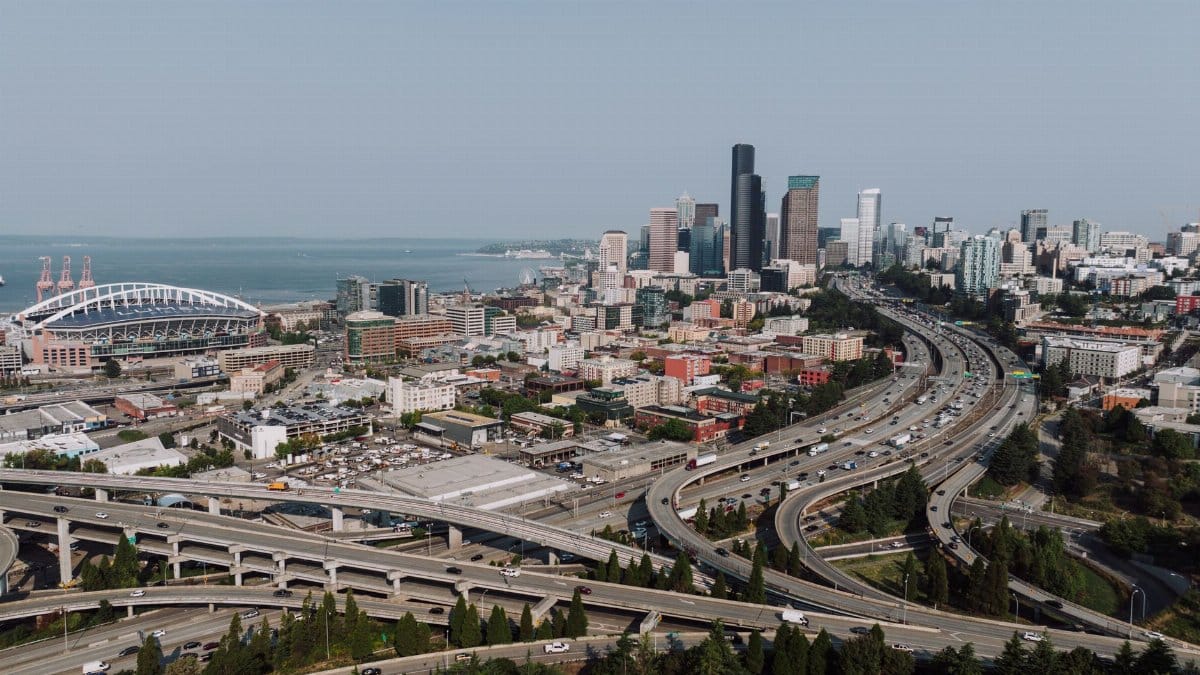
Before sunrise, the reversible roadway that usually siphons thousands of cars through the heart of Seattle sat empty, blocked by cones and a warning that the pavement itself had given way. Commuters who depend on the I-5 express lanes learned of the closure in the usual modern way, through a push alert, a radio traffic report, or a sudden wall of brake lights on the mainline. What looked at first like a routine maintenance pause was something more unsettling: crews had found concrete so badly fractured that keeping vehicles on it was no longer a reasonable risk.
A closure that arrived without a long warning
The Washington State Department of Transportation did not stage this as a planned weekend project with detour maps printed weeks ahead. Inspectors and maintenance crews, working near the Ship Canal Bridge, encountered severely broken concrete and moved to shut the reversible lanes. For drivers, the practical effect was immediate. A facility that can flip direction with the commute was simply gone, and the traffic it normally absorbs spilled onto the already crowded general purpose lanes.
Sudden is the right word. Seattle freeways fail in familiar ways, a stall in the left lane, a collision at a merge, a rainstorm that turns the deck slick. Structural cracking is a different category of trouble. It asks not how long the backup will last this morning, but whether the road can be trusted tomorrow.
What the broken concrete actually means

Concrete on a heavily used urban freeway does not fail in a single dramatic crack the way a movie might suggest. It fatigues. Joints open. Water finds a path. Reinforcement corrodes. A panel that looked serviceable on a dry inspection can spall, rock, or break into pieces once traffic and weather work on a weakness. Near a major water crossing, the stakes are higher because the structure is not a simple slab on dirt. It is part of a bridge system that has carried the region for decades.
WSDOT’s decision to close rather than cone off a single lane is itself a form of information. If a patch and a reduced speed were enough, that is what crews would have done before the peak. Severe cracking that prompts a full shutdown of the reversible roadway signals that the damage was widespread enough, or located in a critical enough spot, that partial use was not defensible.
Why this stretch carries more than its share of the city
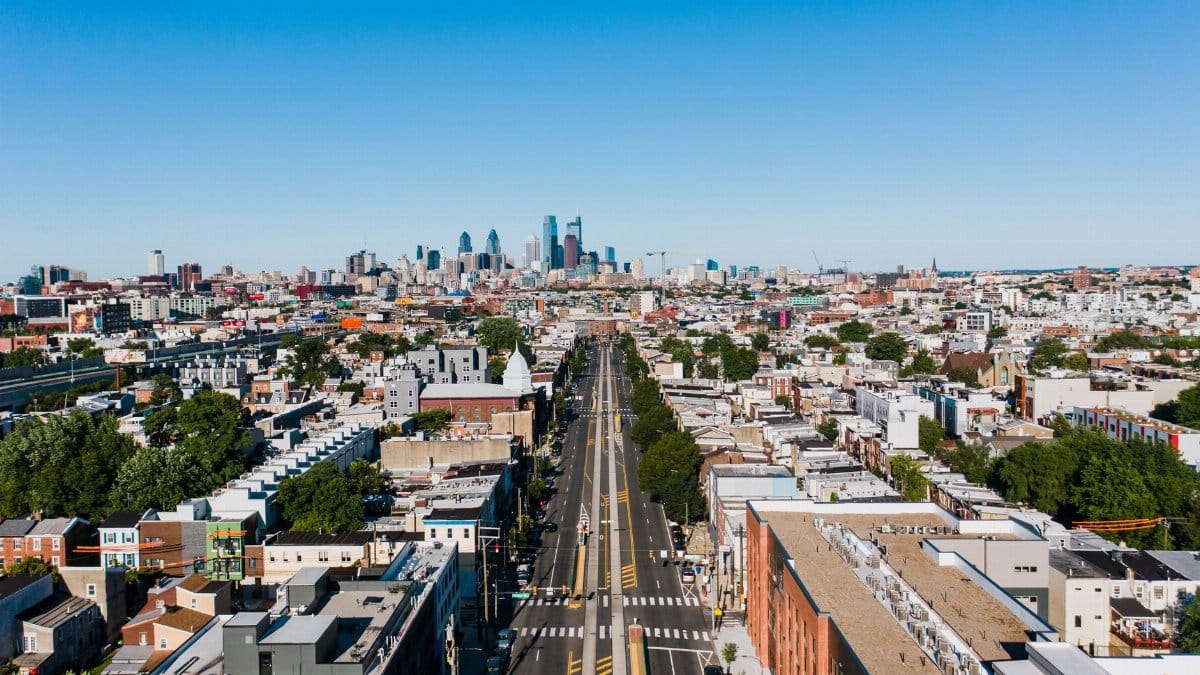
The Ship Canal Bridge is one of those pieces of infrastructure Seattle notices only when it stops working. It lifts Interstate 5 over the Lake Washington Ship Canal, linking neighborhoods north of the water with downtown, the University District, and everything south. The reversible lanes threaded through this corridor are not a luxury add on. They are a pressure valve. In the morning they typically favor the dominant inbound flow. In the afternoon they reverse. Take them away and the same number of cars must fit into fewer lanes at the exact point where the geography already squeezes the network.
That is why a pavement problem here ripples farther than a similar defect on a suburban arterial. Buses, freight, hospital shifts, school runs, and airport trips all share the same narrow throat. When the valve sticks closed, delay is not an abstract average. It is a missed connection, a late opening, a parent calculating whether the school pickup is still possible.
How the I-5 express lanes usually earn their keep
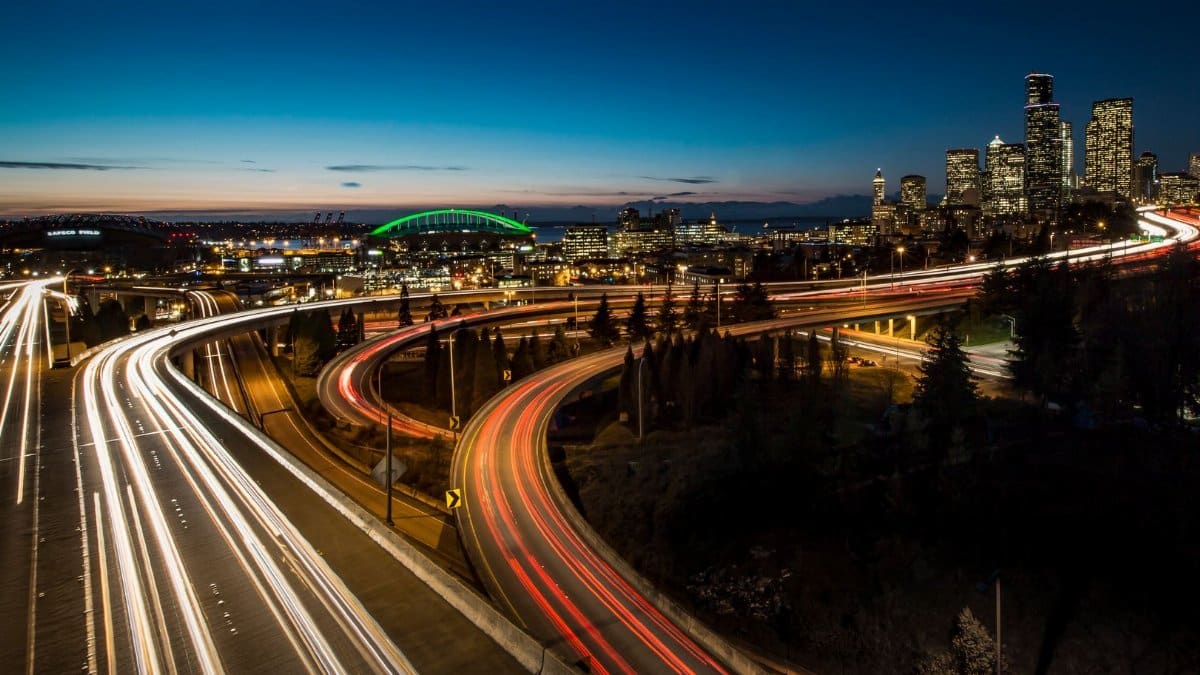
On an ordinary weekday the I-5 express lanes function as a movable piece of capacity. Barriers and signals tell drivers which way the road is pointed. The design accepts a trade. You cannot enter or exit wherever you like, and you must trust the direction signs. In return you get a lane group that matches the tidal flow of the city better than a fixed roadway can. Regular users learn the rhythm the way ferry riders learn a schedule. They know which ramps work, which merges are tight, and how early they must be to beat the wave.
That familiarity is part of why an abrupt closure feels personal. The road is not anonymous asphalt. It is a habit. When the habit is interrupted, people do not merely lose a few minutes. They lose a route they had already optimized, sometimes over years of trial and error.
The delay that showed up on the clocks

Reports from the first disrupted peaks described delays of 50 minutes and more on approaches that were already slow. Those figures will vary by hour, direction, and whether a separate crash piles on. They are still large enough to reorder a morning. A trip that was budgeted at 35 minutes becomes an hour and a half. Employers see a scatter of late arrivals. Delivery windows slip. People who had arranged their lives around a reversible lane suddenly share the mainline with everyone else, and the mainline has no spare room to offer.
I have sat in that kind of backup on other mornings, watching the clock and the fuel gauge argue with each other, and the feeling is less panic than a dull recalculation. You text. You move a meeting. You wonder whether the person behind you is doing the same math. A closure caused by broken concrete adds a second question the ordinary jam does not: how many mornings will look like this one.
Where the traffic went instead
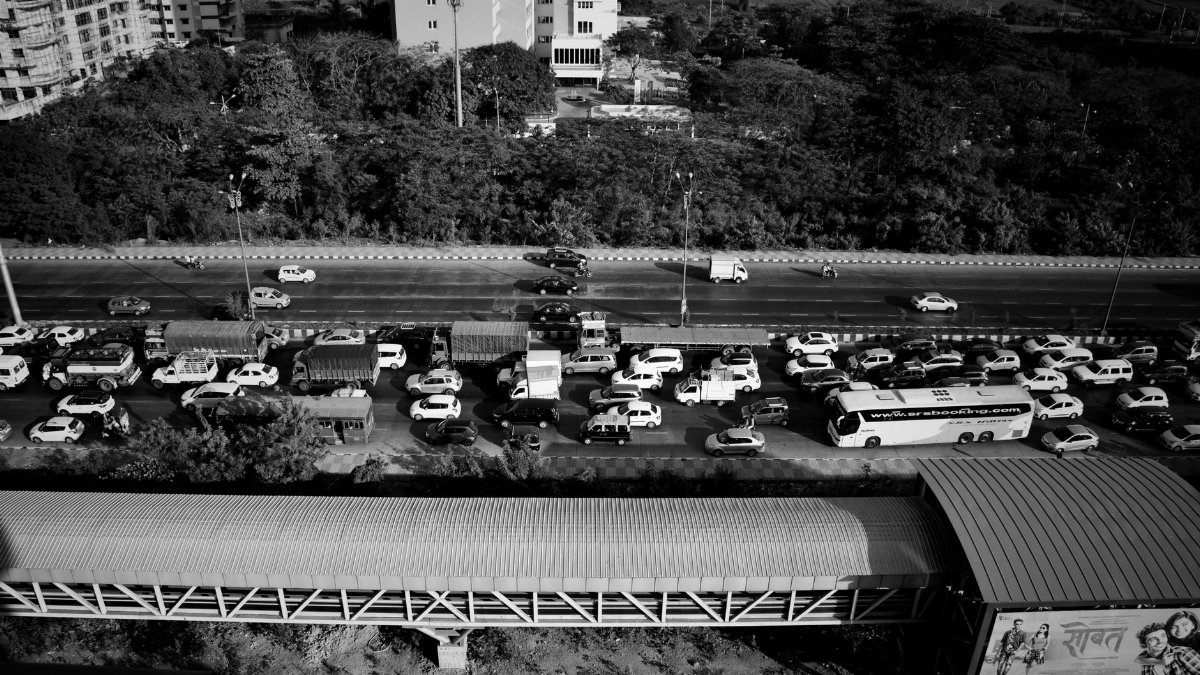
With the reversible lanes dark, drivers did what drivers always do. They stayed on the general purpose lanes of Interstate 5. Some peeled off toward Aurora Avenue, Lake City Way, or surface streets through Wallingford and Fremont, trading freeway speed for signals and narrower lanes. Others shifted their departure, leaving earlier or later in the hope of finding a gap. Transit riders watched the same congestion swallow bus schedules, because many coaches have no private path through this particular pinch.
None of those substitutes is a true replacement. Neighborhood streets were not built to absorb a freeway’s overflow without friction. Residents hear it as well as see it: more engines, more impatient turns, more risk at crossings where children and cyclists already negotiate tight space. A pavement failure on a state freeway becomes, within an hour, a local street problem.
An aging deck in a wet, salty climate

Seattle’s freeway generation is largely a mid century inheritance. The structures were engineered for the loads and the lifespan assumptions of their time. They have since carried heavier trucks, more daily repetitions, and winters that push water into every joint. Deicing chemicals and marine air are not kind to steel hidden inside concrete. When a panel breaks severely, it is tempting to treat the event as an isolated defect. Often it is a symptom. The question for engineers is whether neighboring panels, bearings, and joints are telling a similar story that has not yet become visible to a driver at 60 miles an hour.
That does not mean the bridge is about to vanish. It means the maintenance ledger is coming due in public, on a weekday, rather than in a quiet overnight lane closure that most people sleep through. Readers who want the agency’s own project language can find it through the Washington State Department of Transportation, which posts closures and bridge work as conditions change.
What a responsible inspection looks like from the outside

From the driver’s seat, an inspection is invisible until it becomes a barricade. From the agency’s side, the sequence is more deliberate. Crews document the break, measure how far the damage runs, and decide whether traffic can be restored over a temporary surface or whether panels must be cut out and replaced. Concrete repair is not a matter of pouring a patch and waving cars through by lunch. The material needs time. The reinforcement needs to be sound. The joint has to meet the next panel so that a wheel does not strike a lip at highway speed.
If the damage sits on or beside a bridge element, structural engineers join the conversation. A spall in a noncritical wearing surface is one problem. Cracking that suggests movement, settlement, or loss of support is another. The public rarely sees those distinctions in the first alert. The public sees a closed road and a promise of updates. Clarity about which kind of problem this is would do more to steady commuters than another vague assurance that crews are working around the clock.
The politics of a road people cannot avoid

Transportation arguments in this region are rarely only about transportation. A closure on the state’s busiest urban freeway becomes a referendum on funding, on whether reversible lanes still make sense, on how much disruption a city should accept while larger projects inch forward. Those debates are legitimate. They are also easy to inflate in the first 48 hours, when the facts are still the width of a crack and the length of a backup.
A measured reading starts smaller. A public agency found damage it judged unsafe, closed the facility, and owes the region a plain account of cause, repair method, and reopening window. Commuters owe themselves a plan that does not assume tomorrow will look like last Tuesday. Elected officials owe both groups something harder: a maintenance budget that finds this kind of cracking before a weekday morning does. The Seattle Times account of the shutdown, available at the original report on the sudden closure, is the place to start for the sequence as reporters first established it.
What reopening will and will not restore

When the lanes return, the first morning will feel like relief and also like a test. Drivers will watch for rough joints. They will notice whether the speed feels confident or tentative. A repaired panel can carry traffic and still announce, with every thud of a tire, that the surrounding deck is old. Restoring the reversible schedule will put capacity back where the commute expects it. It will not erase the underlying age of the corridor, nor the likelihood that another panel, somewhere between the canal and the downtown ramps, is closer to the end of its service life than the map suggests.
There is a discipline in saying that out loud. Cities that treat every reopening as a return to normal tend to be surprised by the next closure. Cities that treat it as a temporary restoration of a tired asset plan differently. They fund inspection. They schedule replacements before failure. They tell transit riders and freight dispatchers the truth about how thin the margin is.
A practical week for people who still have to cross the canal
Until the pavement is sound, the useful advice is unglamorous. Leave earlier than pride prefers. Check the agency feed before leaving the driveway, not at the bottom of the on ramp. If a meeting can move, move it. If a trip can shift to a time outside the peak, that single choice does more for the people who cannot shift than any social media complaint. Freight dispatchers and hospital schedulers already know this arithmetic. The rest of the city is learning it in real time.
Surface street cut throughs will tempt anyone with a navigation app. Some of those routes are reasonable. Many dump freeway volume onto blocks that have crosswalks, schools, and driveways. The courteous version of adaptation is to stay on routes built for through traffic when you can, and to accept that the honest travel time is the long one. Patience is not a slogan here. It is the only tool left once the cones are up.
The longer argument hiding under the cones

A cracked deck near the Ship Canal Bridge is a local emergency and a regional parable. Seattle has spent years arguing about where new capacity should go, which tunnels and light rail lines deserve the next dollar, and how to price or manage the lanes that already exist. Meanwhile the concrete poured for an earlier generation keeps a quiet tally. Every heavy axle adds a line. Every winter adds another. The morning the tally becomes a hole in the road, the argument stops being abstract.
None of this requires panic, and none of it should be smoothed into a reassurance that everything is fine. The responsible stance is narrower and more adult. The closure was warranted if the concrete was as badly broken as crews reported. The delays of 50 minutes and beyond were the predictable price of removing a tidal lane at the city’s narrowest freeway point. The repair should be explained in ordinary language, with a date that is allowed to change if the structure demands it. And the next budget cycle should treat this episode as evidence, not as an anecdote that fades when the cones come down.
What readers should watch for next

Watch the inspection findings, not only the reopening announcement. A date without a description is a press release. A description that says which panels failed, whether the break reached structural elements, and what was replaced is an account a citizen can use. Watch whether the reversible schedule returns in full or in stages. Watch the mainline travel times in the week after, because a repaired road can still be a changed road if drivers have formed new habits or if a temporary joint remains.
Most of all, watch whether the region treats the I-5 express lanes as a permanent convenience or as a piece of aging public machinery that will fail in public if it is only maintained in private. The cones went up because the concrete could not keep the promise the lanes make every morning. Putting the promise back together is the immediate job. Deciding how many more mornings the city is willing to gamble is the job that remains after the backup clears.