
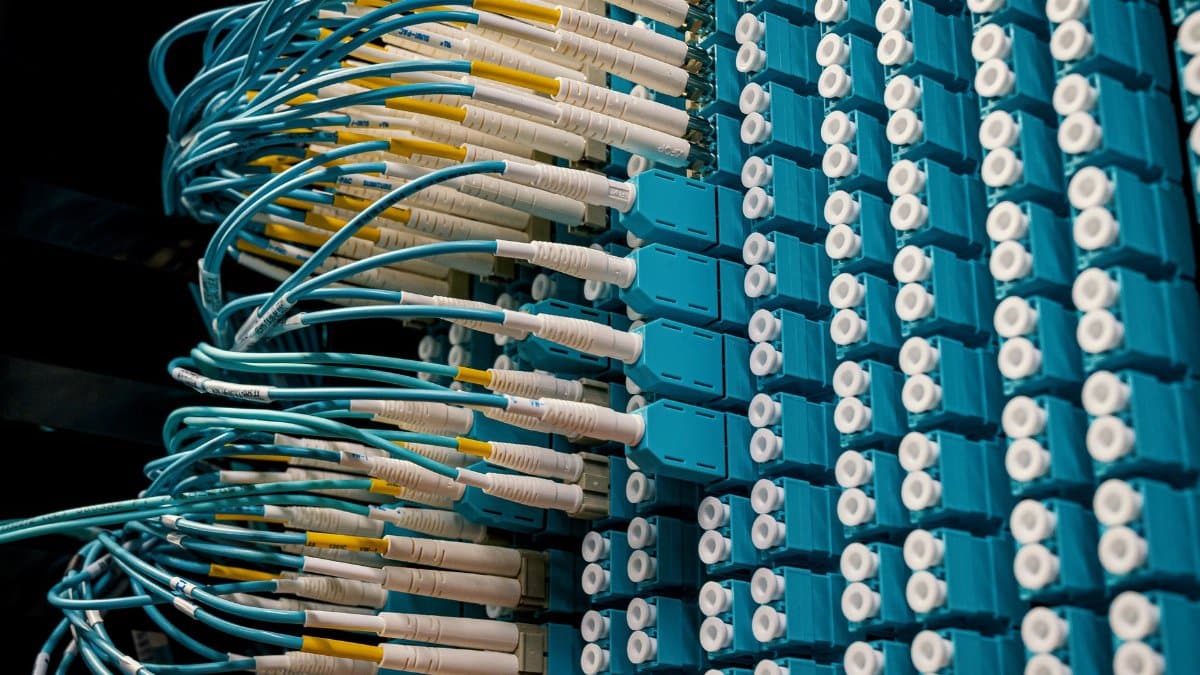
On a Tuesday evening in Loudoun County, Virginia, a retired teacher opened her electric bill and found a number that did not match the life she thought she was living. The lights were the same. The thermostat had not budged. What had changed, neighbors told her, was the forest of server halls rising a few miles away, drawing power the way a steel mill once did. That kitchen table arithmetic is now sitting in front of Congress, where a permitting bill would try to speed new energy projects and, at the same time, send a large share of the bill to the companies building those halls.
A plan with two jobs and one argument

The proposal, still being shaped in committee rooms and late calls between leadership staff, is sold as a single package with two purposes. First, it would shorten the years of review that often stand between a proposed power line, gas plant, or renewable project and the day construction can begin. Second, it would require the largest data centers to pay an added charge for the grid capacity they consume, money that supporters say could offset costs now landing on ordinary households. Backers speak of billions over a decade. Critics hear a slogan in search of a statute.
Neither aim is new on its own. What is new is the insistence that they travel together. Members who want faster permits have struggled to assemble a majority. Members worried about household rates have struggled to name a payer with both deep pockets and a visible appetite for power. The data center boom hands them a target that is hard to ignore and easy to explain on a Sunday show.
Why the server halls became the story

For most of the last generation, a data center was a quiet tenant. It needed land, fiber, and a reliable feed from the local utility. Then artificial intelligence training runs and always on cloud services changed the scale. A single campus can now ask for as much electricity as a mid sized city. In northern Virginia, parts of Texas, and stretches of the Midwest, utilities have warned regulators that new requests are arriving faster than plants and lines can be built.
Households do not see the servers. They see the consequence: higher capacity charges, delayed retirements of older plants, and proposals for lines that cross farms and suburbs. When a company the size of a major technology firm signs a power deal measured in hundreds of megawatts, the politics stop being abstract. Neighbors ask a plain question. If your machines need a new substation, why should my grocery budget help pay for it?
What households are being promised

The political pitch is blunt. Charge the largest users more, and families pay less. Sponsors have floated figures in the billions, spread across regions where data center load is growing fastest. Those numbers are estimates, not checks already written, and they depend on how the charge is designed, how many facilities qualify, and whether companies respond by siting projects elsewhere or generating power on their own land.
Still, the promise lands because electric bills have become a monthly referendum. Inflation cooled in some aisles of the store and not in this one. A retiree in Ohio and a renter in Georgia do not need a white paper to know that a forty dollar jump matters. Lawmakers who can say they shielded that bill, even partly, will carry the line into town halls. Lawmakers who cannot will be asked why a permitting bill helped builders and forgot the people who flip the switches.
The long wait that nobody defends

Almost everyone in the energy world can tell a story about a project that sat in review for the better part of a decade. A transmission line that would have moved wind power from a windy plain to a crowded city. A gas plant sought as a bridge. A solar field stalled over habitat findings that arrived years after the application. Environmental groups argue that some of those delays prevented real harm. Developers argue that many of them prevented nothing except timely power.
The permitting bill would try to set clocks: clearer timelines for federal reviews, tighter coordination among agencies, and limits on how long a challenge can freeze a project that has already cleared major hurdles. Supporters say the country cannot meet demand, or climate goals, if every mile of wire is a decade long argument. Opponents say speed without care is how communities lose rivers, views, and the right to be heard. Both sides have scars from the last attempt to write this kind of law.
Who would actually write the check

The charge on data centers is the part that will decide whether the package is a reform or a press release. Drafters are debating thresholds. A facility using power above a set megawatt level might pay an access fee tied to the new grid equipment its load requires. Smaller operations, hospitals, and factories would sit outside the net, at least in the versions circulating now. Utilities would collect the money and apply it against the costs that would otherwise flow into general rates.
That sounds tidy until the accountants arrive. Some data centers already pay for dedicated substations through special contracts. Some buy power directly from generators. Some promise to curtail use during peaks. A blunt fee on top of those arrangements could double count. A fee with too many exceptions could collect little. State regulators, who still set most retail rates, will not simply salute a federal formula. The permitting bill can order a principle. It cannot, by itself, make fifty commissions agree on the math.
States that already feel the surge

Virginia has lived this future longest. Tax breaks drew the industry. The grid is now crowded. Local officials praise the construction jobs and worry about water, noise, and schools when a rural county becomes a campus of windowless buildings. Texas has welcomed load and generation in a market that lets prices spike. Georgia and the Carolinas are weighing nuclear restarts and gas builds partly because large users have asked for firm power that wind and solar alone do not yet guarantee every hour.
In each place, the household question returns. If a technology firm wants power that is available at 3 a.m. and at 3 p.m., someone must build the plant that does not sleep. Someone must pay the debt on that plant. The fairest reading of the congressional plan is that the someone should be the firm, not the teacher. The hardest reading is that firms will simply move the request to a state with a softer welcome, and the teacher will still need the lights.
Industry argues it already pays its way

Technology companies and their trade groups do not accept the portrait of a free rider. They note that they sign long contracts, fund substations, and in some cases build or buy generation outright. They argue that their load gives utilities a customer big enough to justify new clean power that households could not anchor alone. They warn that a special federal charge will chill investment, push computing overseas, or into states that opt out of the spirit of the law.
There is a narrower complaint that even some skeptics of the industry accept. A fee written in Washington can miss the contract already signed in Richmond or Austin. If Congress taxes the same electron twice, the result is not fairness. It is a reason for lawyers. The companies want any charge credited against money they have already committed. Household advocates want the credit to be real, not a stack of promises that never reach the rate case.
Climate goals and the clock

Environmental advocates are split, and they should be. Faster permits can unlock transmission that carries clean power to cities that still burn coal and gas for reliability. Faster permits can also unlock gas plants and pipelines that lock in emissions for decades. A bill that speeds everything equally is not a climate bill. It is a construction bill with a climate argument attached.
Some greens will trade review time for a requirement that new load be matched with new clean supply. Some will refuse any deal that weakens community challenge rights. The data center charge does not resolve that fight. It only changes who sits at the table with money on it. A company asked to pay billions for grid access may prefer to build its own solar, storage, and nuclear deals. That private build could help the climate. It could also leave the public grid still short, still aging, and still funded by people who never asked for a training cluster down the road.
The politics of a crowded calendar

Passing this will require a coalition that energy bills rarely hold. Republicans who want permits and fossil projects must accept a fee that sounds, to some of their donors, like an industrial tax. Democrats who want household relief and clean power must accept timelines that their allies in conservation groups distrust. Leadership can bundle the two and dare each side to kill the part it likes in order to stop the part it hates.
That dare has failed before. It can work when bills at home are angry enough and when a few senators from data center states decide the status quo is worse. The permitting bill will live or die on those senators, not on the elegance of the draft. Hearings will produce maps of congested lines and photographs of rate notices. Markup will produce exceptions for projects already underway, for rural cooperatives, for defense facilities, for anything with a champion and a phone list.
What faster approval would change on the ground

If the clocks in the bill actually run, the first visible change would not be a data center fee. It would be a stack of transmission and generation applications moving from study to shovel. Communities along those routes would get less time to organize and, if the bill is written well, clearer notice earlier. Unions would see years of work. Landowners would see offers, and some would see condemnation. None of that is theoretical. It is the trade the country keeps postponing while demand does not postpone itself.
The fee, if it survives in recognizable form, would show up later, in rate cases and in the site selection memos of companies deciding between Virginia, Indiana, and a province abroad. Billions is a large word. Spread across a national industry and a decade, it may be a cost of doing business. Concentrated on a few campuses in a few counties, it may reorder the map. Households will judge the law by a simpler test: did the next bill stop climbing quite so fast?
A fair grid is a political choice

Electric systems hide their morals inside tariffs. Who pays for a line that serves a new factory, a new neighborhood, or a new hall of servers is a choice about belonging. For a long time the choice was smoothed by growth that felt shared. The present surge does not feel shared. It feels like a private appetite with a public invoice.
Congress can answer that feeling with a permitting bill that hurries steel into the ground and asks the largest new users to carry more of the cost. It can also answer with a gesture that collects little and speeds projects neighbors will fight anyway. The difference will be in thresholds, credits, timelines, and whether state regulators are partners or spectators. Those details lack poetry. They are the whole policy.
The test waiting after the vote

Even a signed law would begin, not end, the argument. Lawsuits will test the clocks. Utilities will test the fee. Companies will test the exits. Households will test the promise against the envelope that still arrives every month. If the numbers on that envelope ease, the coalition will claim a rare win in a capital that usually splits energy into tribes. If they do not, the next Congress will inherit the same servers, the same crowded wires, and a public even less willing to hear that reform takes time.
The teacher in Loudoun County is not waiting on a theory of administrative law. She is waiting to see whether the people who use the most power are asked to pay for the system their use requires. That is the standard this permitting bill has set for itself. It is a fair standard. Meeting it will be harder than announcing it.