

On a warm evening in the fall of 2022, Karen Bass told Los Angeles that her gift was people. She had spent decades in rooms where egos collided, she said, and she knew how to keep a coalition from coming apart. Four years later, that claim sits at the center of a hard political question. Several Karen Bass allies who helped carry her into the mayor’s office have moved their support to Councilmember Nithya Raman. The break did not arrive in a single press conference. It accumulated through arguments over homelessness, the aftermath of the Palisades fire, and a city budget that left old friends feeling unheard.
The promise that opened doors

Bass did not win the mayor’s race as a celebrity or as a billionaire with a private theory of government. She won as a translator. In Congress and earlier in Sacramento, she had a reputation for sitting with people who did not like one another and finding a sentence both sides could live with. That skill was not a side note in her campaign. It was the product. Voters tired of spectacle were told that competence would look like phone calls returned, unions consulted, and neighborhood leaders treated as partners rather than props.
The pitch fit the moment. Los Angeles was exhausted by tents on sidewalks, by a sense that City Hall spoke in programs while residents spoke in emergencies. A mayor who could hold a coalition together seemed, to many, like the only kind of mayor who could hold the city together. Relationship skills were not soft language in that telling. They were a theory of power.
Labor and the memory of 2022

Unions did not merely applaud from the sidelines. They supplied the ground game, the credibility with working people, and the argument that Bass would not govern as a visitor to their lives. Hotel workers, building trades members, public employees, and service unions had reasons of their own, and those reasons were not identical. What they shared was a bet: that a mayor fluent in coalition politics would protect wages, respect bargaining, and keep the door open when a crisis forced ugly choices.
That memory now hangs over the split. Endorsements are not love letters. They are calculations about who will answer when a contract, a project, or a layoff is on the table. When Karen Bass allies in labor began to drift, they were not erasing 2022. They were saying the bargain had changed, and that gratitude is a weak platform if the next four years feel hostile to the people who knocked on doors.
Homelessness as a test of loyalty
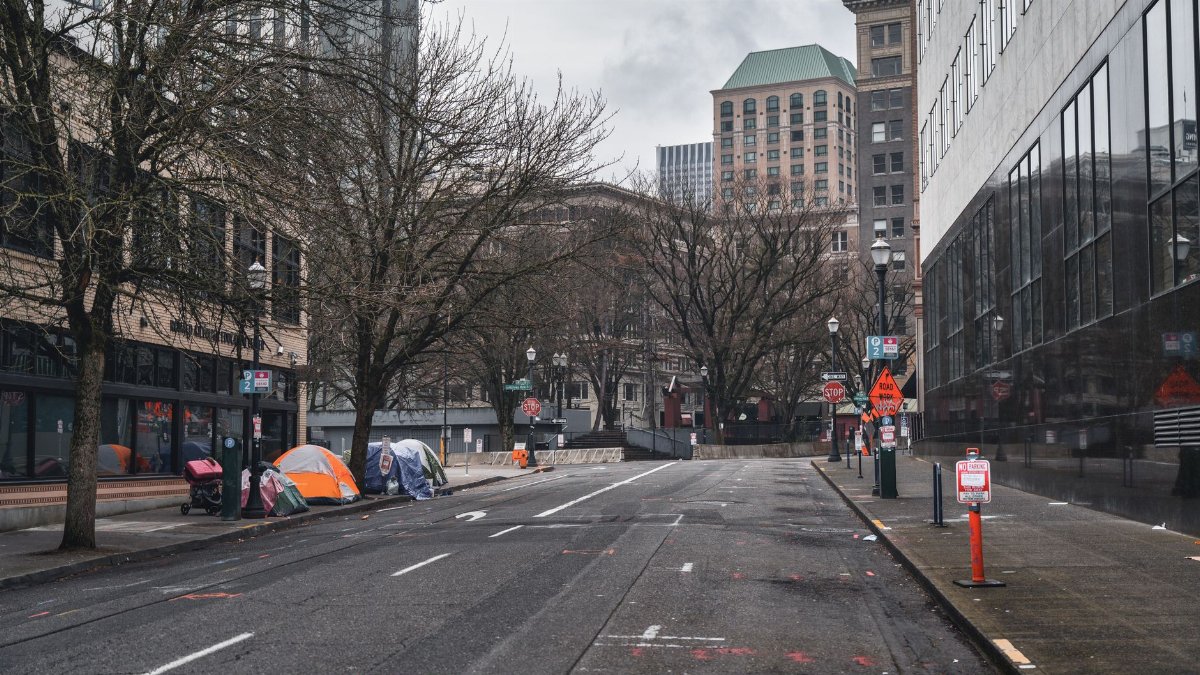
No issue has defined the Bass years more than homelessness, and no issue has done more to strain the circle that elected her. Supporters who came from housing advocacy and from street outreach wanted speed, housing, and a mayor who would treat encampments as a failure of systems rather than a failure of manners. Neighborhood groups, including some who had backed her, wanted streets cleared and a visible sense of order. Both camps believed they had been promised a listener.
Listening, it turned out, is not the same as choosing. Inside the work of moving people indoors, numbers move slowly, and every delay looks like indifference to someone. Service providers complained of shifting rules and of a City Hall more attentive to headlines than to the dull labor of case management. Homeowners near long standing encampments complained that compassion had become a reason to wait. The mayor could describe both pains with real fluency. Fluency did not settle the fight.
Raman’s appeal, for some of those frustrated supporters, was not that she offered a magic count of beds. It was that her record on housing had a clearer through line. She had spent years arguing that Los Angeles cannot shelter its way out of a shortage, and that the politics of saying no to homes is part of the crisis. To organizers who felt Bass had trimmed her ambitions to keep peace, that clarity looked like courage.
What the Palisades fire changed

Wildfire does not negotiate. When flames tore through Pacific Palisades, the city’s usual arguments about process met a simpler demand: get people out, get water on the hills, tell the truth about what failed, and do not make survivors beg for a straight answer. In the weeks after, the mayor’s relational style was tested in a register she could not fully control. Press conferences can gather officials in one frame. They cannot restore a house, or explain why warnings felt late, or soothe a family that slept in a car while agencies sorted jurisdiction.
Allies who had defended Bass on homelessness found less room to defend her here. Fire is legible. People can see a ridge burn. They can time the hours between a call and a truck. Community leaders on the Westside, some of them longtime Democrats who had treated Bass as a steady hand, began to describe a mayor’s office that seemed surprised by the scale of its own city. Whether that verdict was entirely fair mattered less, politically, than the fact that it stuck.
Raman did not run the fire response. Distance can be an advantage in a campaign. She could speak as a council member who had watched emergency government from close range without owning every minute of it. For residents who wanted accountability more than they wanted continuity, that distance was not a flaw. It was the point.
A budget that felt personal

If homelessness was a moral argument and the fire was a shock, the budget was where friendships went to be priced. Los Angeles entered another hard year with familiar pressures: pension costs, public safety demands, a shelter system that consumes money faster than it produces exits, and a business climate still uneasy after the pandemic years. Cuts are never abstract to the unions that live inside the spreadsheet. A frozen hire, a delayed raise, a program trimmed in the name of balance reads, on the shop floor, as a choice about whose work counts.
Bass argued, as mayors do, that arithmetic is not betrayal. A city cannot promise what its revenues will not carry. Some of her remaining supporters accepted that. Others heard a mayor who had asked for patience in 2022 and was now asking for sacrifice without the long conversations that once made sacrifice feel shared. The complaint was not only about dollars. It was about sequence. People who expected to be in the room early said they learned the shape of the plan from a briefing, not from a negotiation.
Why Raman looked like a safer bet

Nithya Raman is not a consensus figure, and that is part of her attraction for voters who think consensus has become an excuse. She came into office as a critic of the city’s housing politics and has remained willing to anger neighbors who prefer the map as it is. To union leaders weighing a switch, she offered something Bass could no longer easily offer: the sense that a fight would be named as a fight, rather than smoothed until nobody could tell what had been decided.
That does not mean the unions that moved share Raman’s entire agenda. Labor in Los Angeles is not a single choir. Trades locals care about construction pipelines. Service unions care about staffing and wages. Tenant groups care about who gets evicted when a building changes hands. Raman’s coalition is untidy. So was Bass’s. The difference, in the telling of those who left, is that untidy no longer felt like a strategy. It felt like drift.
Campaigns love a conversion story because it supplies drama. The quieter truth is that many of these decisions were provisional. An endorsement can be a warning as much as a wedding. Some leaders wanted Bass to feel the loss before a ballot was printed. Others had already concluded that another term would repeat the same meetings, with the same polite tone, and the same shortage of results they could defend to their members.
Inside a City Hall built on friction

Los Angeles government is a machine of overlapping authority. The mayor proposes, the council disposes, departments interpret, and the county sits next door with its own budget and its own pride. A leader who works well with others can thrive in that maze. A leader who works well with others can also lose track of which relationship is serving the public and which is merely keeping the peace.
People who still speak warmly of Bass describe a mayor who hates unnecessary conflict and who believes most political wounds are self inflicted by pride. People who have turned away describe the same trait as avoidance. They say hard calls on encampments, on rebuilding after fire, and on which programs survive a deficit were delayed until the politics of delay became the policy. Both descriptions can be true of one person. Governing is not a personality test with a single correct score.
Trust once given is hard to rebuild

The departure of Karen Bass allies is not only a campaign story. It is a story about how trust works in a city this large. Trust here is rarely intimate. It is institutional. A union trusts that its phone call will matter before a vote. A neighborhood group trusts that a promise made at a church gym will survive contact with a deputy mayor. An advocate trusts that data will not be rearranged to protect a headline. When those expectations fail, the failure travels. It shows up in endorsement meetings, in group texts, in the decision to lend a volunteer list to someone else.
Bass still has friends, and she still has the advantages of incumbency: name recognition, a record she can narrate, and the simple fact that many Angelenos do not follow City Hall until a ballot arrives. Among Karen Bass allies who stayed, the defense is practical. They argue that no mayor inherits a solvent miracle, that homelessness was decades in the making, and that judging a fire response by the standard of a perfect afternoon is a luxury of people who were not in the command post. That defense will persuade some voters. It will not automatically win back the organizations that already felt dismissed.
What voters will actually hear

Most residents will not parse the minutes of a budget hearing. They will hear a simpler contrast. One candidate asked to be trusted because she could keep people in the room. Another is asking to be trusted because some of those people walked out and chose her. The walking out is the message. It tells a voter who does not know the footnotes that the original theory of the Bass mayoralty, the theory of relationships as a governing method, has been challenged by the very partners who once sold it.
Raman will be asked, fairly, what she would do differently when the room includes enemies as well as friends. A council member can be a sharp critic. A mayor has to sign the paper, face the union that feels cut, and stand in a burn scar and explain the next month. If she wins the argument that Bass lost the coalition, she inherits the job of building one. Los Angeles does not become easier because the endorsements moved.
For Bass, the path back is narrower than a slogan. She cannot rerun 2022 as if the years between were a misunderstanding. She has to show, in decisions people can point to, that relationship skills still produce results: faster housing placements, a fire recovery that feels organized, a budget explained early enough that partners can shape it rather than mourn it. Karen Bass allies who left are not a mysterious force. They are a verdict on whether those skills, so central to her rise, still describe the way she governs. The city will decide whether that verdict is the last word, or only the hardest one she has had to answer.