

On a weekday afternoon along Broadway, the light hits the front windows of New Helvetia Brewing before the evening crowd arrives, and the room still looks like a place people intend to return to. Glasses dry on the bar. A chalkboard lists what is pouring. Nothing about the scene announces an ending, which is why the news landed so hard among regulars who treated the address as part of their week. This Sacramento brewery will shut its Broadway taproom at year’s end after fourteen years, closing a room that had become as much a civic habit as a business.
The notice that turned a rumor into a date

Closures in the beer business often begin as whispers: a slower Tuesday, a staff meeting that runs long, a landlord conversation that does not resolve. New Helvetia made the timeline public. The Broadway taproom will pour through the end of the year and then go dark. Fourteen years is not a flash in the pan. It is long enough for a neighborhood to rearrange its routines around a single door.
For readers outside Sacramento, the name may not carry the same weight it does for people who live within a short drive of the taproom. Locally, New Helvetia has been a reference point: a place to meet before a show, to decompress after work, to introduce an out of town friend to the city’s independent beer culture. The closing is not only a line item in a trade report. It is a subtraction from the map people carry in their heads.
What fourteen years on Broadway actually built

A brewery that lasts more than a decade in California has usually survived more than one economic weather system. Rent moves. Ingredient costs move. Tastes move. The customers who found New Helvetia in its early years are not the same customers walking in now, even when some of the faces overlap. Children who once sat with coloring sheets are old enough to order their own food. Office patterns changed. Some regulars moved to other cities and still asked about the place when they came back.
That kind of tenure creates a quiet archive. It lives in staff who know which stool someone prefers, in the way a room fills on a particular night, in the arguments people have about which beer belongs with which season. None of that appears on a balance sheet, and none of it pays the bills. It does explain why a closing notice can feel, to people who never worked there, like a personal loss.
A Sacramento brewery inside a thinning statewide field

California helped invent the modern American craft beer boom, and it is also living through the correction. More rooms opened than the drinking public could sustain once growth slowed. Supermarket shelves stayed crowded. Younger adults drank less alcohol than the generation that built the taproom habit. Inflation raised the price of grain, cans, utilities, and labor at the same time that customers grew more careful with a night out.
The Brewers Association, the national trade group for small and independent brewers, has documented the shift from rapid openings to a period in which closures and openings run much closer together. Its public materials at https://www.brewersassociation.org/ describe an industry that is no longer expanding on autopilot. That national picture does not dictate any single company’s fate. It does describe the water this Sacramento brewery has been swimming in.
Owners rarely get to choose a flattering explanation. Some closings follow a clear failure of product or service. Others follow math that stops working even when the beer is respected and the room is loved. From the outside, New Helvetia’s long run suggests the second story more than the first. Fourteen years of neighborhood presence is not what a neglected brand looks like.
The costs that never appear on the menu board

A pint price is a public number. The costs behind it are not. Commercial rent in California cities has a way of resetting upward even when sales do not. Insurance has become a heavier line for businesses that serve alcohol. Energy costs hit anyone who boils wort and keeps cold rooms cold. Packaging, if a brewery also sells beyond its own taps, adds another set of contracts that do not pause for a slow month.
Distribution can look like growth and function like a tax. Getting beer into bars and stores requires sales effort, margins shared with wholesalers, and the risk that a crowded shelf makes a local name invisible. Staying small and taproom focused avoids some of that, then concentrates risk in a single room: weather, parking, a nearby construction project, a change in how people spend Friday night.
Labor is the part outsiders most often misread. A good taproom depends on people who can talk about beer without lecturing, who can read a room, who will stay late when a private event runs over. Those skills cost money in a state where wages and housing have both climbed. Cutting staff to save a month can hollow out the very hospitality that kept people coming back.
Why a taproom can feel like a spiritual room
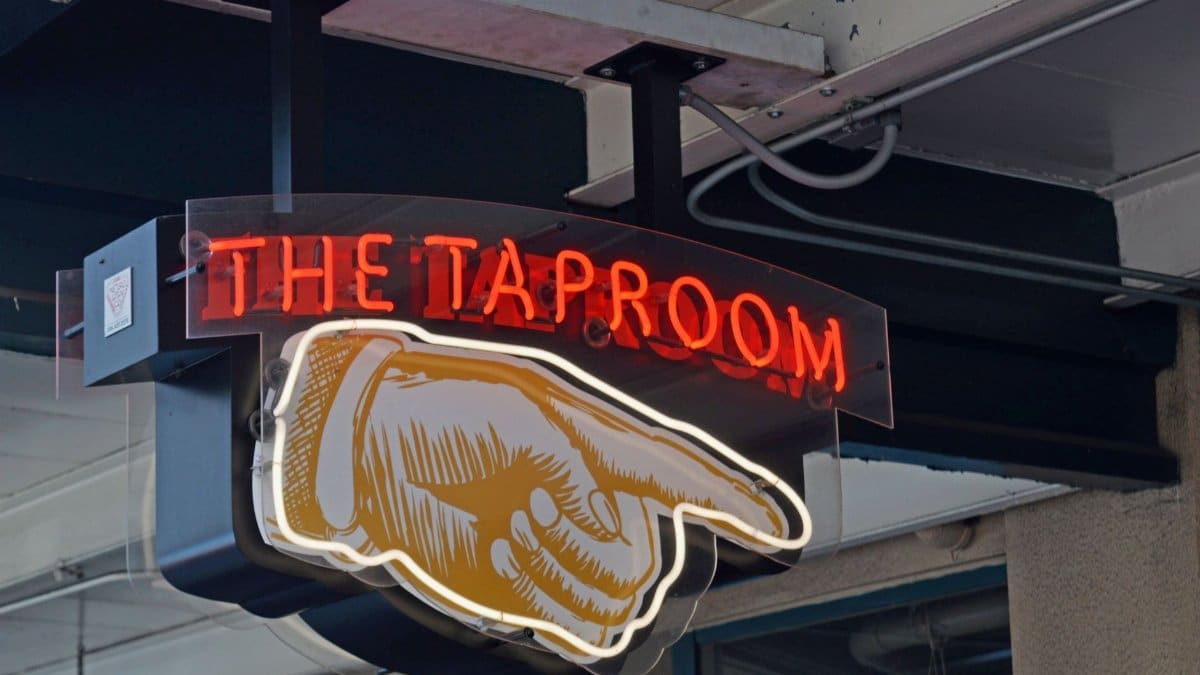
Calling a brewery spiritual will strike some readers as a stretch, and it should be handled carefully. New Helvetia is not a church. It sells alcohol, which carries real harms alongside pleasure, and no closing story should romanticize drinking as a moral good. Still, the category of meaning is not limited to sanctuaries with pews.
Sociologists have long described “third places,” rooms that are neither home nor work, where people linger without an appointment. Ray Oldenburg’s writing on that idea remains a useful frame, summarized for a general audience in many public discussions of civic life, including overview material hosted by libraries and civic groups that point back to his book The Great Good Place. The spiritual piece, if the word fits, is repetition. People return. They mark ordinary weeks. They sit with grief or boredom or a small celebration and let a room hold it.
In Sacramento, as in other cities, those rooms have been under pressure from delivery apps, from screens, from the simple fact that going out costs more. A Sacramento brewery that functioned as a third place did work that a liquor store cannot do and that a restaurant with a ninety minute table turn often will not do. Losing it does not erase community. It does remove one of the easier doors into it.
What regulars are likely to mourn first

Ask people what they will miss and the answers rarely start with a technical tasting note. They start with a person behind the bar, a dog friendly patio hour, a beer they ordered without reading the board, the fact that nobody rushed them. They mention birthdays, breakup nights, the afternoon they brought a parent who does not usually drink beer and watched that parent relax.
That is not nostalgia for its own sake. It is evidence of design. A taproom that lasts fourteen years has usually made a series of small choices about light, noise, service, and who feels welcome. Those choices are easy to underestimate until the door is about to lock. The mourning is specific because the room was specific. A generic “support local business” slogan does not capture it.
The Broadway block after the last pour

A vacant storefront changes a block faster than a planning document does. Foot traffic dips. Neighboring shops lose the spillover of people who came for a beer and stayed to browse or eat. Evening light in an empty room reads differently from evening light in a full one. For a corridor like Broadway, which has spent years trying to hold a mix of independent businesses against rising costs, one closure is not a collapse. It is a warning light.
Cities sometimes respond with grants, facade programs, or zoning tweaks aimed at small manufacturers. Those tools can matter at the margin. They rarely arrive in time for an owner who has already decided the next lease does not pencil out. The more useful civic question is plainer: what kinds of rooms do residents want within walking or short driving distance, and what costs make those rooms impossible to staff?
How California’s beer map is being redrawn

The state’s beer geography is not disappearing. It is concentrating. Strong regional names with multiple locations, tight operations, and a clear audience still find ways to last. Brewers who treat the taproom as a hospitality business first, and a manufacturing story second, often have a sturdier path than those who bet everything on wholesale. Collaboration beers, food partnerships, and nonalcoholic options have become ordinary parts of the toolkit rather than side experiments.
None of that is a moral ranking. A beloved single location can still close if the rent and the volume refuse to meet. A larger company can still feel impersonal. Readers looking for a simple villain, whether landlords, big beer, or changing tastes, will not find one that explains every shuttered door. The pattern is a stack of pressures, each survivable alone, costly together.
What remains pourable in the capital
Sacramento is not about to run out of local beer. Other breweries, brewpubs, and beer bars continue to operate across the city and its suburbs, and some of them will absorb regulars who need a new Tuesday. That transfer is imperfect. Loyalty is not a liquid that pours cleanly from one glass into another. People may drink less often, or drive farther, or decide the habit itself was tied to one address.
For the industry, that scatter is the point. A healthy local scene is a set of rooms with different moods, not a single flagship. When one Sacramento brewery closes, the test for the city is whether enough other independent doors stay open, staffed, and priced so that a weeknight still has somewhere to go that is not a chain.
Reading a closing without turning it into a eulogy only

It is tempting to write a closing as pure loss, and there is real loss here. It is also worth noticing what fourteen years produced: wages paid, recipes tested, friendships started, a patch of Broadway given a reason to stay lively after dark. Those outcomes do not cancel the ending. They keep the ending from being the only sentence.
Owners who announce a date, rather than vanishing over a weekend, give customers a chance to say goodbye in person. That is a form of respect. It also creates a strange season, in which every visit carries a little extra weight and the staff must keep doing ordinary work inside an extraordinary countdown. Kindness in that window matters more than a speech.
A practical way to mark the last months

People who care about the room can still show up while the taps are open. They can pay for what they order, tip the people who are working through the close, and skip the performance of grief that makes a bartender manage someone else’s feelings on a busy shift. If there is a final beer to try, try it. If there is a story worth telling the staff, tell it briefly and then let them work.
Buying a gift card for a business that has announced a permanent close is a poorer idea than simply visiting. Supporting other independent brewers nearby is a better sequel than a social media post that vanishes by morning. The point is continuity of habit, not a spectacle.
What this ending asks of the next owner

Someone else may eventually lease the Broadway space. They will inherit sightlines, plumbing, and a neighborhood memory that does not transfer with the keys. If the next business is another brewery, it will be compared, fairly or not, with what New Helvetia was. If it is something else, a cafe, a shop, a restaurant, it will still be measured against the foot traffic and the feeling the taproom left behind.
The useful inheritance is not a demand to copy the old menu. It is a reminder that duration is a product. People return to places that let them be regulars. Building that takes longer than a launch party and costs more than a clever name. Any new operator on that block will learn the same lesson this Sacramento brewery spent fourteen years teaching: affection is real, and rent is also real, and a room survives only when both are acknowledged in the same budget.
Holding the loss and the lesson together

New Helvetia Brewing’s Broadway chapter ends at year’s end. The city will still have beer, still have Broadway, still have people looking for a table that is not their kitchen. What it will not have is this particular accumulation of years, staff knowledge, and weekday light through those front windows.
That is enough reason to pay attention, without inflating a business closure into a symbol of everything wrong with California. A popular room is closing because the conditions that once supported it no longer add up in the same way. Neighbors can grieve that honestly, visit while they can, and keep asking what kinds of gathering places their city is still willing to make possible. The spiritual trend worth naming is not a new doctrine. It is the old hunger to sit with other people, on purpose, more than once.