

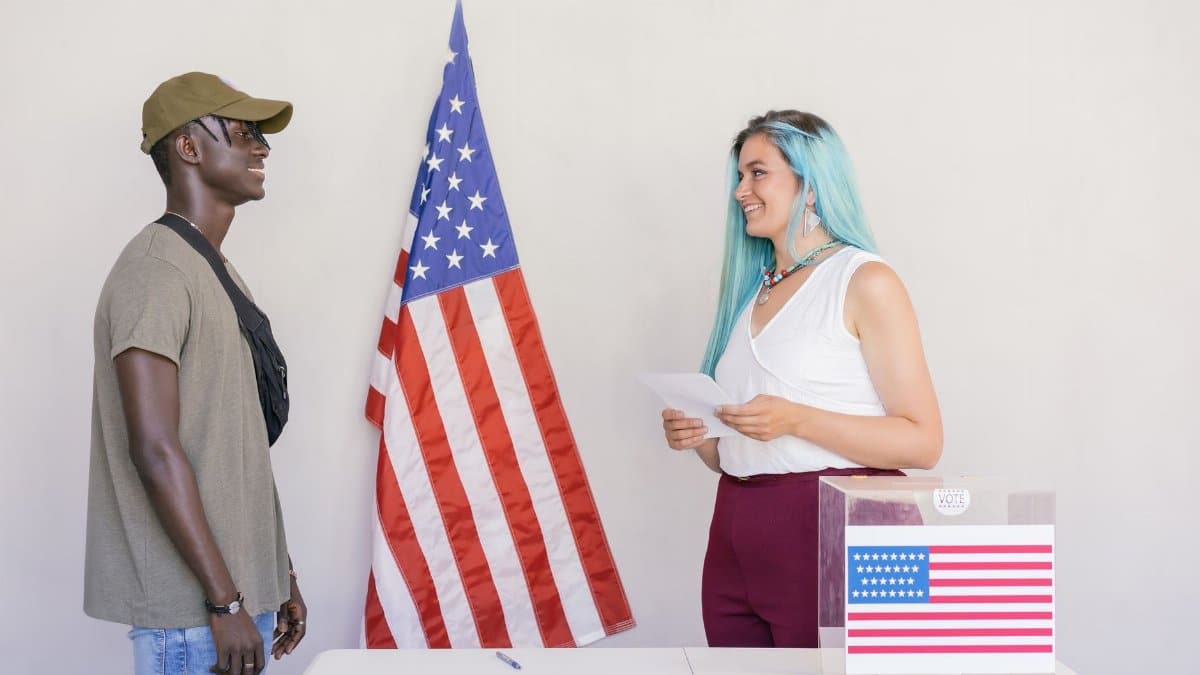
On a cold weeknight in a Minneapolis church basement, volunteers taped handwritten names to folding tables and argued, quietly, about whether fear was a reason to stay home or a reason to show up. That argument, repeated in suburbs, union halls, and apartment lobbies, became the real contest behind the Operation Metro Surge election. Federal officials had promised order. Republican candidates had promised that voters would reward a harder line. Minnesota answered with record midterm turnout and a strong night for the DFL, a result that still surprises strategists who treated enforcement as a simple winning message.
A show of force that was supposed to settle the argument

Operation Metro Surge was the federal immigration crackdown that put agents, checkpoints, and rumor into the daily life of the Twin Cities in the months before voters went to the polls. Supporters described it as a necessary correction after years of strained local cooperation with Immigration and Customs Enforcement. Critics described workplace sweeps, family separations, and a climate in which people avoided clinics, schools, and even grocery stores. The operation was never only a law enforcement story. It was a political bet that visibility would equal legitimacy, and that legitimacy would equal votes.
The bet had a surface logic. Immigration ranks high in national surveys. Television images of federal action can look like competence to viewers who never meet the people caught in the net. In Minnesota, though, the images landed inside a state with long resettlement networks, tight labor markets, and neighborhoods where enforcement is not an abstraction. A crackdown staged for a national audience can read, locally, as a disruption of ordinary life.
How Republican planners misread their own voters
Party memos, as described by operatives who later spoke with unusual candor, treated the surge as a gift. The theory was that swing voters in the second and third ring suburbs wanted someone, anyone, to look decisive. Candidates were urged to echo federal talking points, to tie Democratic officials to disorder, and to avoid dwelling on individual cases. Compassion, in this framing, was a trap. Specificity was a trap. The safer move was to speak of rules, borders, and a government finally willing to act.
That advice underestimated how many Republican and independent voters separate a general desire for enforcement from approval of a particular method. A homeowner in Eden Prairie can want faster asylum processing and still recoil at a coworker whose spouse vanished after a traffic stop. A small manufacturer can complain about federal gridlock and still lose shifts when workers stop coming in. The surge did not create those tensions. It made them impossible to ignore during a campaign that needed those same voters.
What people thought they were voting about

Interviews after the election, gathered by local reporters and by campaigns on both sides, did not yield a single slogan. Some voters said they were punishing cruelty. Some said they were punishing chaos. Some said they were tired of being asked to treat neighbors as props. The common thread was not a sudden conversion to open borders. It was a judgment that the operation had been sold as precision and experienced as blunt force.
Democrats did not need to invent that judgment. They needed to keep it attached to names, workplaces, and school pickup lines rather than to a cartoon of the other party. Where they succeeded, the Operation Metro Surge election stopped being a referendum on an abstract border and became a referendum on whether government power had been used with proportion. Proportion is a dull word. In a midterm, dull words sometimes beat loud ones.
Turnout as the quiet verdict

Record participation is easy to celebrate and hard to explain. Weather, candidate quality, national mood, and ballot measures all pull on the same numbers. Even so, organizers in Minneapolis, St. Paul, and several inner suburbs described a registration and volunteer surge that tracked the weeks when enforcement stories dominated local news. People who had skipped recent midterms showed up because someone they knew had been questioned, detained, or simply frightened into changing a routine.
High turnout is not automatically liberal. In other cycles, anxiety has lifted conservative candidates. Here the anxiety cut against the party that had claimed ownership of the operation. When fear is widely shared, the party associated with the source of that fear has to work harder to define the stakes. Republicans spent much of the fall defining stakes that many voters had already defined for themselves.
The suburbs refused the script
The most costly error may have been geographic. Planners assumed the urban core would oppose the surge and that the suburbs would applaud it. Parts of the core did oppose it, loudly. Parts of the suburbs did not applaud. School districts that had spent a decade integrating new families suddenly faced parents asking whether a field trip or a parent teacher conference was safe. Employers in health care, food processing, and construction reported absences that showed up as delayed projects, not as cable news segments.
Suburban politics in Minnesota has long been a negotiation between order and fairness. The surge offered order as a spectacle and fairness as an afterthought. Voters who prize both did not experience that bargain as conservative. They experienced it as sloppy. Sloppiness is a hard brand to carry into a state legislative race where the opponent can talk about a specific clinic, a specific classroom, or a specific missing employee.
Immigrant communities were not a monolith, and that mattered

It is a mistake, and a common one, to treat Latino, Somali, Hmong, and other communities as a single bloc waiting to be mobilized by outrage. Some residents supported stricter enforcement, especially those who had waited years in legal channels and resented shortcuts. Some wanted no part of partisan politics at all. What the surge did was raise the cost of silence. Legal residents worried about mistaken identity. Citizens worried about parents and cousins. Mixed status households, already expert at risk, recalculated the risk of staying invisible on Election Day.
Churches, mosques, mutual aid groups, and unions became informal information desks. They did not all endorse candidates. Many limited themselves to rides, document clinics, and reminders that citizens have a right to vote without explaining their family tree to a stranger. That practical help, more than any viral video, widened the electorate. Campaigns noticed late. The people doing the work had noticed early.
Faith communities and the language of responsibility
Minnesota still has a civic dialect shaped by congregations, even among people who rarely sit in a pew. In the weeks of the surge, pastors and imams did not need to invent a theology of elections. They returned to older language about the stranger, the neighbor, and the duty not to hide from public life. Some clergy were explicit. Many were not. The effect was similar: voting was framed as care for people who could not safely be careless.
That framing traveled beyond immigrant pews. Mainline Protestant and Catholic parishes in second ring suburbs hosted forums that were less about party platforms than about whether a federal show of force matched the stories members were hearing from teachers and nurses. A spiritual vocabulary does not dictate a ballot. It does make it harder to treat collateral damage as a talking point. Republicans who dismissed that vocabulary as sentimental missed how often it functions, in this state, as a test of seriousness.
Democrats had to earn the backlash, not just receive it
A backlash is not a strategy. The DFL still had to recruit candidates who could talk about public safety without sneering, about immigration without euphemism, and about federal power without pretending the state could nullify it. The campaigns that did well tended to be specific. They criticized the surge for errors, for poor coordination with local police, and for the message it sent to workers the state cannot afford to lose. They did not promise that enforcement would vanish. They promised that it would be lawful, targeted, and answerable to someone a voter could name.
That distinction mattered in debates. Voters who wanted some enforcement did not hear a blank check for the status quo. They heard an argument that Operation Metro Surge had failed its own stated test. A crackdown that sweeps up the wrong people, chills crime reporting, and empties job sites is not control. It is a different kind of disorder, wearing a federal jacket.
National consultants brought a map that did not fit

The episode also exposed the weakness of imported scripts. National Republican messaging treated Minnesota as a smaller version of a border state argument. National Democratic messaging sometimes treated every enforcement action as indistinguishable cruelty. Neither script matched a metro area where refugees, refugees children, and long settled citizens share bus routes with voters whose main immigration contact is a headline. Local knowledge was not a luxury. It was the difference between a message that landed and a message that sounded dubbed.
Consultants are paid to find a reusable story. Elections punish reusable stories when the facts on the ground are particular. The particular facts here included union density, church networks, a competitive state legislature, and a press corps that still covers school boards. A surge designed to look decisive on a national feed looked, in that ecosystem, like a decision imposed from far away.
The backlash thesis has limits worth stating plainly

It would be convenient, and wrong, to say the operation alone produced the DFL night. Candidate scandals, presidential approval, household costs, and map drawing all sat on the same ballot. Some Republican incumbents with durable local brands survived. Some Democratic candidates in rural districts did not convert urban anger into rural trust. Enforcement still polls as a priority, and a future operation run with tighter rules, clearer local notice, and fewer widely publicized mistakes could land differently.
The honest claim is narrower. Party leaders who expected a clean political profit from visible federal force underestimated the voters who would treat that force as a character test. They also underestimated turnout among people who do not usually see midterms as their fight. Those two errors compounded. A motivated electorate and a clumsy message are a bad pair for the party holding the megaphone.
What a chastened party might do next

Republican officials who want to revisit immigration before the next statewide race have a narrower path than the one they took into this fall. They can argue for faster courts, workplace verification that employers cannot dodge, and cooperation agreements that local police will actually sign. They will have a harder time arguing that spectacle is a substitute for those tools. The Operation Metro Surge election did not retire enforcement as an issue. It raised the standard of proof for anyone who claims to be conducting it.
Democrats face their own temptation, which is to treat a favorable turnout wave as a permanent coalition. Waves recede when the immediate threat fades and when governing produces its own disappointments. If the lesson absorbed in St. Paul is only that outrage wins, the next cycle will be harsher. If the lesson is that voters noticed who was careful with power, there is work to do that does not fit on a placard.
A result that was less a miracle than a miscalculation
Minnesota did not reveal a hidden national majority on immigration. It revealed something more useful for anyone who still thinks campaigns are arguments among adults. People can hold a hard view of the border and a hard view of how their own metro area should be policed. They can want laws enforced and still punish a party that confuses enforcement with display. The GOP did not lose because voters stopped caring about immigration. It lost ground because too many of its candidates acted as if caring and cheering were the same act.
I keep returning to those folding tables in the church basement, not because they explain a state, but because they explain a kind of politics that spreadsheets miss. Someone wrote a name. Someone else offered a ride. Nobody in that room needed a consultant to tell them the surge was on the ballot. By the time the professionals agreed, the Operation Metro Surge election had already been decided by people who understood the stakes in the most ordinary way possible: as a question of who would still be there in the morning.