
Just after the last voters left a school gym in Coral Gables, a poll worker stacked unused ballots and listened to a radio host already calling the night. The numbers on the county website refused to cooperate with that confidence. In the race for a United States House seat based in Miami, the margin sat inside the range that Florida law treats as too narrow for a casual victory lap. That is why a Miami House recount has moved from rumor to a likely next step, even as party lawyers and county staff still speak of María Elvira Salazar as the probable winner over Eliott Rodriguez.
A margin too thin for a victory speech

Close House races used to feel like rare weather. In recent cycles they have become a familiar climate, especially in districts where Cuban, Venezuelan, Colombian, and Haitian voters do not move as a single bloc and where newcomers from other states arrive with their own habits. The Miami seat at the center of this count is one of those places. Campaigns spent months arguing about inflation, immigration, housing costs, and the tone of national politics. On election night those arguments collapsed into a simpler question. Which stack of ballots is larger, and is the difference large enough to survive another look.
Officials have been careful with verbs. They do not say the race is over. They say Salazar appears ahead, that outstanding ballots are unlikely to reverse her, and that state thresholds may still require a formal recount. That combination, probable winner and unfinished procedure, is awkward for television and perfectly ordinary for election administration. A candidate can be the likely victor and still owe the public a second pass through the machines.
How Florida decides when to count again
Florida does not leave recounts to the mood of the trailing campaign. If the margin falls within one half of one percent, an automatic machine recount is triggered. If it falls within one quarter of one percent, a manual recount of overvotes and undervotes follows, the ballots a scanner could not read cleanly. Those rules exist so that a sore loser cannot invent a process and a nervous winner cannot skip one. They also exist because paper, ink, and software are imperfect in small ways that matter only when the electorate splits almost evenly.
A machine recount is not a romantic image. Workers rerun ballots through tabulators under observation. A manual recount is slower and more human. Teams examine ambiguous marks, consult standards, and record decisions that lawyers may later challenge. Neither step is designed to discover a hidden majority in a drawer. Both are designed to reduce the chance that a smudge, a timing mark, or a miscalibrated scanner decides a seat in Congress.
What a Miami House recount would actually examine
If the canvass confirms a margin inside the legal band, the Miami House recount would focus on ballots already cast, not on a new election. Vote by mail envelopes that met the deadline and passed signature review would already be in the pool. Provisional ballots would be accepted or rejected under existing rules before the recount math is final. The work is clerical, legal, and public, which is a combination that tests patience more than ideology.
Observers from both campaigns would stand close enough to see and far enough to avoid touching the paper. That distance is the whole point. Trust in a count depends less on speeches than on whether a rival can watch the same ballot you watch and still disagree only about the rule, not about what happened in the room.
The two names on the ballot
Salazar entered the count with the advantages of incumbency, name recognition built over years in local television, and a coalition that has rewarded a hard line on socialist governments in Latin America paired with a more pragmatic pitch on small business. Rodriguez, a journalist turned candidate, argued that the district wanted a representative less bound to national party combat and more attentive to rent, insurance, and the daily cost of staying in Miami. Their biographies gave voters a choice between a known incumbent and a challenger asking to be heard as a neighbor with a microphone.
None of that biography changes a tally. It does explain why the finish was tense. In a district this diverse, a few thousand voters shifting on housing or on a single foreign crisis can erase a polling lead. Campaigns knew it. That is why both sides spent the final weekend not on new ideas but on turnout, rides, and reminders.
Why Miami makes close counts feel personal
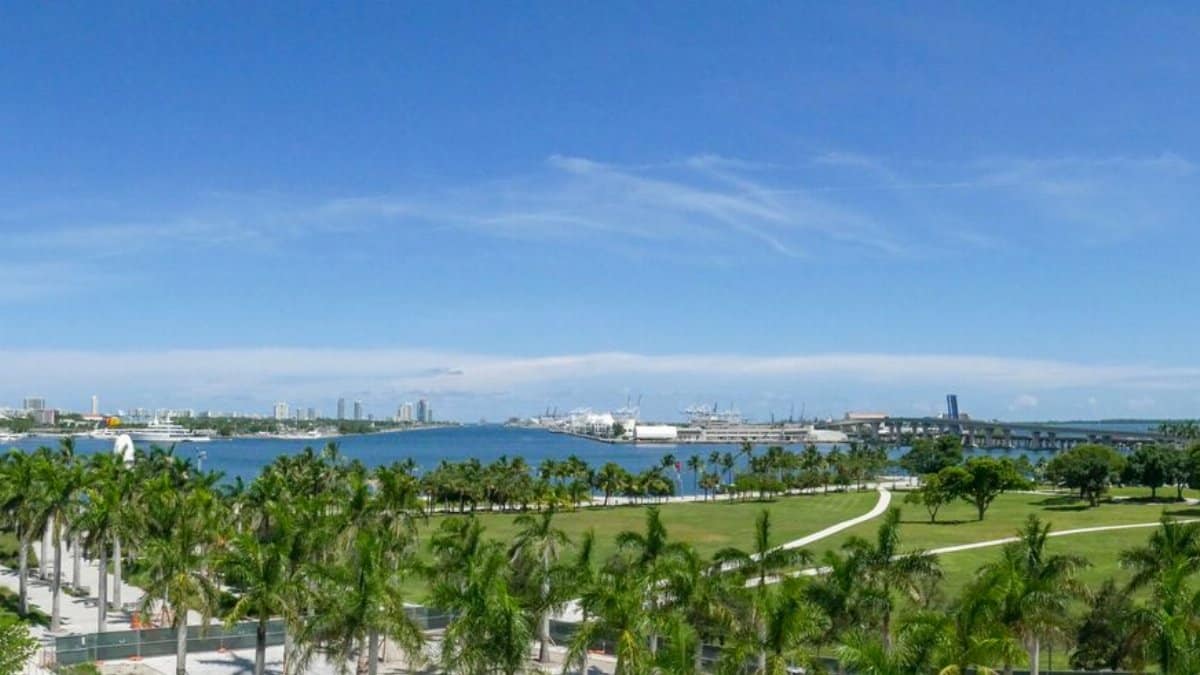
Miami does not experience elections as abstract civics. Families here carry political memory from places where a published result was not a reliable description of the vote. That history does not make every narrow margin a scandal. It does make silence from officials feel heavier. When a county site stalls, or when a spokesperson says only that ballots remain, people fill the gap with stories they already know.
Local radio, group chats, and church parking lots moved faster than the canvass on election night. Some listeners heard that Salazar had won. Others heard that Rodriguez was gaining in late precincts. Both reports contained a piece of the night and neither contained the legal end of it. The healthiest response from voters was also the least satisfying. Wait for the canvass. Then wait, if the law requires it, for the recount.
The people who keep the paper moving
Recounts are often described as battles between candidates. The people who make them function are temporary workers, election supervisors, and county attorneys who will still have jobs when the cameras leave. They sort, log, and initial. They break for coffee under rules about who may be in the room. They know that a single unsigned form can become a hearing.
That labor is easy to romanticize and easier to ignore. It is also where elections are most vulnerable to fatigue. A tired team is more likely to misfile a batch. Good supervisors slow the room down on purpose. Speed is a campaign value. Accuracy is a public one. When those values collide, the statute is supposed to pick accuracy.
Lawyers, standards, and the fights that follow
Even a clean recount attracts lawsuits, or at least the threat of them. Campaigns look for inconsistent signature cures, uneven treatment of provisional ballots, and any moment when an observer was asked to step back. Some of those claims protect real rights. Some are filed because conceding too early is treated as weakness inside a party. Courts in Florida have seen both, and judges tend to ask a blunt question. Did the alleged error affect enough ballots to matter.
Voters deserve that skepticism. They also deserve not to be told that every legal motion is a coup. A challenge to a mismatched total is not the same thing as a demand to throw out a neighborhood. The distinction is the difference between oversight and sabotage. News coverage that flattens both into drama does the public no favor.
What officials are willing to say out loud

In conversations around the canvass, the cautious consensus has been that Salazar remains the probable winner and that Rodriguez would need an unusually large pocket of uncounted ballots to pass her. Probable is not the same word as certified. Certification comes after the recount window closes and after the county and state sign the result. Until then, a lead is a lead, not a commission.
That language frustrates supporters who want a celebration or a concession. It is still the language the law earns. A candidate who is ahead can prepare a transition without pretending the count is theater. A candidate who is behind can keep counsel in the room without pretending a miracle is a plan.
National eyes on a local stack of ballots

House majorities are built from seats like this one. Party committees in Washington watch Miami not because they love the humidity but because a single member can matter in a tight Congress. That attention brings money, and it brings a style of commentary that treats every local delay as a national omen. The omen is usually wrong. A slow upload from a precinct is more often a printer jam than a plot.
Still, the audience is real. Donors, strategists, and voters in other states will read the outcome as a signal about South Florida, about Hispanic voters, about whether incumbency still protects a member who has to explain Washington to a city that feels it directly. Those readings will be argued for months. They should not be allowed to rush the people holding the ballots this week.
Rumors travel faster than tabulators

Every close count now includes a second election, the one conducted in posts and forwarded videos. A photo of a ballot box in a parking lot, stripped of context, can look like misconduct. A clip of a worker carrying a bin can be captioned as theft. Local officials have learned to answer with timestamps, chain of custody logs, and live observation rather than with scorn alone. Scorn does not travel as far as a scary image.
Readers can help by asking a plain question before sharing. Does this image show a broken rule, or does it show a boring rule I have not seen before. Most of the time it is the second. The cost of the first kind of error is not abstract. It is a neighbor who decides the next election is not worth the drive.
What the result will not settle
A recount can settle a number. It cannot settle the argument that produced the number. If Salazar is certified, she will return to a House that expects loyalty and to a district that expects results on insurance, immigration processing, and the price of staying housed. If Rodriguez were somehow to overtake her, he would inherit the same pressures with less seniority and a narrower mandate. Either way, the winner governs a city where many residents are one rent increase from leaving.
That is the part of election night that recount procedure cannot touch. The ballots record a choice. They do not implement it. The morning after certification, the winner still has to answer mail, still has to vote, and still has to explain those votes to people who split almost evenly on whether to send them.
Waiting without turning waiting into doubt

There is a civic skill in letting a count finish. It is not passive. It is a decision to prefer a verified total to a faster story. Miami has practiced that skill in storms, in court fights over maps, and in elections that ended long after the speeches. The practice is imperfect. People still shout. Campaigns still test the edges. The alternative, treating every delay as proof of theft, corrodes the only method we have for choosing a representative without violence.
For now the public record is incomplete on purpose. Canvassers are matching totals. Lawyers are reading the margin against the statute. Salazar is treated by those closest to the numbers as the likely winner. Rodriguez retains the right to see the same paper. If the threshold is met, the Miami House recount will be less a drama than a procedure with witnesses. That is what a close election is supposed to look like when the system is doing the dull work it was built to do.