
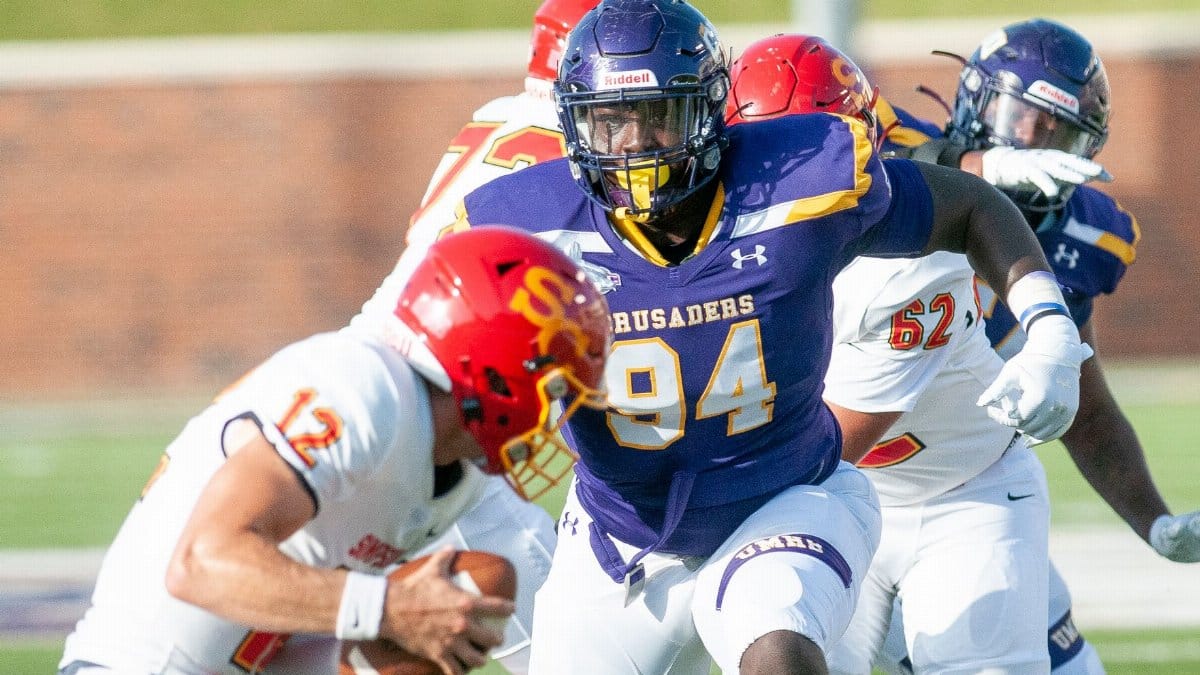
On a gray afternoon at Halas Hall, the conversation kept returning to one interior lineman whose reputation arrives before his cleats. Coaches talk about pad level and leverage. Teammates talk about the way a rep ends. Opponents, when they are honest, talk about dread. That is the reputation attached to Bears Jeffery Simmons, the defensive tackle now asked to make Chicago meaner in the middle. The franchise did not add a novelty piece. It added a player other offensive lines have spent years trying to sort, usually with an extra blocker and rarely with much comfort.
The reputation that walked in the door

Jeffery Simmons has been, for most of his professional life, the sort of tackle who makes a protection call feel personal. He is long. He is sudden. He plays with a violence that stays controlled rather than chaotic, which is the distinction coaches chase and announcers sometimes flatten into a slogan. The line that has followed him from old scouting reports into Chicago meeting rooms is blunt: a terrifying guy to go against. It is not poetry. It is a working sentence, the kind that survives because the film keeps agreeing with it.
I have watched enough interior rush tape to know the difference between noise and displacement. Simmons creates the second. Guards who set late end up on their heels. Centers who try to help often arrive a half count behind the damage. That is not mystique. That is length, leverage, and a temperament that does not negotiate with a stalemate.
What the film has been saying for years
The useful way to study him is not through a highlight that ends in a sack. Those clips flatter almost any capable rusher. The more revealing frames are the ordinary ones: a first and ten against a slide protection, a zone run to his side, a third and medium when the quarterback wants to climb. In those snaps the traits repeat. He wins with a first step that is not merely fast but aimed. He stacks the blocker instead of running around the block and losing the lane. When the rush stalls, he does not drift out of the play. He resets his hands and looks for the quarterback’s escape.
That combination is why evaluators have treated him as more than a specialist. Some tackles are run anchors who rush on passing downs as a courtesy. Some are rushers who become liabilities when the ball is handed off. Simmons has spent his career refusing that split. The learning, for a new city, starts there. Chicago is not importing a single skill. It is importing a weekly argument with both phases of offense.
Why the interior changes the math

Edge pressure is visible. It bends the pocket and makes for clean television. Interior pressure is ruder. It arrives in the quarterback’s lap before the play has a shape, and it punishes the precise footwork modern offenses depend on. A guard who loses immediately cannot help the tackle. A center who has to stay home cannot climb to a linebacker. The whole protection becomes a smaller room.
That is the practical case for Bears Jeffery Simmons in a league that still tries to buy time with quick throws and condensed splits. You can scheme around a famous outside rusher with chips and slide protections. You cannot fully hide from a tackle who wins through the A gap and the B gap on the same series. The quarterback feels it as a crowded pocket. The play caller feels it as fewer clean answers. Fans may not chart it, but they will recognize the result: throws that leave early, runs that die at the mesh, and drives that lose their rhythm before they lose the sticks.
A Mississippi State education in leverage

Simmons arrived in the league already fluent in the unglamorous parts of the position. At Mississippi State he was not a mystery athlete waiting to be taught how to play low. He was a prospect whose power and length were obvious, and whose draft spring was complicated by a knee injury that forced teams to trust the tape more than the workout. Tennessee took that trust in the first round in 2019. The bet was that the player on film, not the player in a suit at a combine, was the real evaluation.
That history matters in Chicago because it explains the professionalism people around him tend to describe. A player who has already had to rebuild trust in his body does not treat conditioning, hand placement, or recovery as optional extras. He treats them as the job. The spiritual language sometimes attached to sport can get syrupy, but there is a plainer version that fits: attention, repeated without an audience, becomes a kind of faith. Simmons has looked, for years, like a man who keeps that faith in the details.
How a front absorbs a star

A dominant tackle does not automatically make a dominant defense. He changes the menu. Coordinators can be more aggressive with simulated pressures because the interior is less likely to be a soft spot. They can ask linebackers to fit downhill instead of hesitating for a lineman who might lose ground. They can mix two gap responsibilities with attacking one gap looks and expect the star to handle either instruction without a weekly tutorial.
The danger is organizational laziness. A famous defensive tackle can become an excuse. If the edges do not set a firm edge, if the secondary loses leverage, if the linebackers guess, the star will still make a few plays and the scoreboard will still tell the truth. Chicago’s staff will be judged on whether it builds around Simmons or simply points at him. The great fronts of recent years have shared the work. They let the tackle wreck one gap and trusted someone else to be correct in the next.
The weekly argument in the run game

Pass rush gets the applause. Run defense gets the season. Simmons has long been valuable because he can two gap, spill a run, or penetrate and still chase. Offensive coordinators notice that range. They will test him with wide zone, with pullers, with trap looks designed to make a pursuer overrun the ball. They will motion a tight end and see whether the new tackle and the new linebackers speak the same language on Sunday.
What should encourage Chicago is not a claim of perfection. It is the pattern. Teams that have faced him have rarely treated him as a player you can run at for four quarters and feel clever. They have treated him as a problem that requires extra attention, which is another way of saying the attention has to come from somewhere else. That redistribution is the hidden value of Bears Jeffery Simmons. A blocker devoted to him is a blocker who is not climbing to a second level defender.
What teammates tend to notice first

Veterans rarely gush about another man’s sack total in the locker room. They talk about whether he makes their job smaller. A linebacker wants the tackle in front of him to occupy the guard so the running back has no clean crease. An edge rusher wants the interior to collapse the pocket so the quarterback cannot step up and reset. A safety wants the play to end before the route concept fully blooms.
Those are the early reports that matter more than any canned praise. If Simmons is winning his one on one, the defense can play faster. If he is demanding a double team, someone else is free. Culture talk is cheap until it shows up as fewer missed fits. The terrifying label is an opponent’s complaint. The teammate’s compliment is quieter: he makes the call easier.
The limits of one arrival

Honesty requires a boundary. One tackle, however complete, does not repair a pass rush by himself, and he does not fix coverage that loses at the top of routes. Simmons can shorten the time a quarterback has. He cannot tackle the receiver forty yards downfield. He can wreck a run fit. He cannot call the right run fit for eleven men. Chicago’s season will still depend on health, on the edges, on the linebackers’ eyes, and on whether the offense gives the defense a lead worth protecting.
There is also the ordinary attrition of the position. Interior linemen absorb low blocks, cut blocks, and double teams that do not appear in the box score. Managing that wear is part of using him well. A staff that asks him to play every snap because the name is famous will eventually get a lesser version of the player. A staff that chooses spots, keeps him fresh on third down, and still trusts him in short yardage will get closer to the film that made the acquisition sensible.
A standard, not a souvenir

Chicago has collected defensive reputations before and learned that reputation is a loan. It comes due every Sunday in Green Bay, in Detroit, in Minnesota, and in whatever January the standings allow. The question is not whether Simmons can look imposing in a practice period. The question is whether the standard he carries becomes the standard of the room. That is a slower story than a signing headline, and it is the only one that lasts.
Fans will want a number: sacks, stops, a grade that fits in a sentence. Those numbers will come, and some of them will be noisy. The cleaner test is behavioral. Do offenses keep sliding help his way in December? Do running backs bounce away from his gap instead of through it? Do teammates play a step faster because they trust the man in front of them? If the answers tilt yes, then Bears Jeffery Simmons will have been more than a frightening scouting phrase. He will have been a change in the math.
What the next month should teach

The next stretch of the season is a better classroom than any press conference. Watch the protections. If opponents devote a tight end or a running back to his side, the respect is real. Watch the run menu. If coordinators stop testing his gap and start running away from it, the respect is real in a different language. Watch Chicago’s own linebackers. If they arrive clean, the front is sharing information as well as glory.
None of that requires mythology. Simmons is not a symbol of a city’s toughness, and he should not be asked to carry that weight. He is a highly skilled defensive tackle with a long record of making blockers uncomfortable and quarterbacks hurried. Chicago’s task is plain: put him in positions that match that record, surround him with players who can finish what he starts, and resist the temptation to treat one terrifying matchup as a finished defense. The learning is already available on film. The proof, as always, will be whether opponents keep dreading the snap.