

On a humid Houston afternoon, the language of law met the language of grief. A Harris County grand jury indicted an ICE agent after a vehicle strike involving an immigrant, and the city answered in the only way it knows when federal power and local pain collide: statements, silence, vigils, and argument. The Houston ICE indictment reaction arrived fast, not as a single chorus but as a scatter of official caution and neighborhood alarm, the sort of civic weather that tells you a case has already left the courthouse and entered the moral life of the place.
A charge that refuses to stay technical

An indictment is a formal accusation, not a verdict. Lawyers will say that until the record is complete, and they are right. Residents hear something else. They hear that a person sworn to enforce immigration law has been accused in connection with a crash that struck an immigrant. The gap between those two hearings, the legal one and the human one, is where Houston is living now.
For readers outside Texas, the setting matters. Houston is a port city and a refuge city, a place where federal agents are not abstractions. They work near neighborhoods where families already measure risk in traffic stops, workplace raids, and the question of whether a hospital visit is safe. When the accused wears a badge tied to immigration enforcement, the charge cannot be filed away as an ordinary traffic matter. It becomes a test of whether the uniform still answers to the same rules as everyone else.
How city leaders chose their words

Local officials tend to speak in two registers after a case like this. One register is procedural. They note the grand jury, praise the independence of the process, and warn against speculation. The other register is pastoral, even when the speaker is not a pastor. They acknowledge fear. They say the victim deserves dignity. They ask the public to let investigators work.
That split is not cowardice by itself. A mayor or a council member who invents facts before discovery can poison a prosecution. A mayor who offers only process, though, can sound as if the city has outsourced its conscience. The early Houston ICE indictment reaction from municipal figures has lived in that narrow corridor: respect for the jury, concern for the person who was struck, and a reluctance to try the agent in a press release.
Residents notice what is missing as much as what is said. They listen for whether an official names the immigrant as a neighbor rather than as a case type. They listen for whether the statement would sound the same if the driver had been a private citizen. Tone is not evidence. Tone is still politics.
Austin watches, then measures its distance

State leaders have a different incentive. Immigration enforcement is a national argument that Texas has made local for years. An indictment of an ICE agent complicates a story in which federal authority is often treated as either savior or occupier, depending on the speaker. Supporters of aggressive enforcement do not want one crash to indict a policy. Critics of that policy do not want the crash treated as a regrettable exception that changes nothing.
The careful statewide response, where it has appeared, has stressed the presumption of innocence and the seriousness of any death or injury on a public road. That is the language of officials who know a clip can travel. It is also a way of declining to own a federal employee. ICE does not report to the Governor. Harris County does not set national detention policy. Yet voters do not sort jurisdiction as cleanly as organizational charts do. In their minds, a uniform on a Houston street is the state talking.
Neighborhoods that already keep score

In parts of the city built by migration, the news did not arrive as a surprise so much as a confirmation. People who drive to early shifts, who translate for relatives, who have taught children what to do if a parent does not come home, read an indictment as both rare and overdue. Rare, because agents are seldom charged. Overdue, because many believe harm by authority is routinely renamed as procedure.
Community groups have urged witnesses to come forward and families to seek counsel before speaking to anyone with a badge. That advice is practical, not theatrical. A crash investigation can become an immigration inquiry in the same afternoon. Trust is the scarce resource. Once it is spent, no press conference restores it.
The Houston ICE indictment reaction in these neighborhoods has been less about party labels than about whether the legal system can see an immigrant as a full person when the other party works for the government. That question is older than this case. This case simply gives it a docket number.
What a grand jury can and cannot settle

Harris County grand juries hear evidence in private. They decide whether probable cause exists to require a defendant to answer in court. They do not decide guilt. They do not write immigration policy. They do not heal a family. Their power is narrow, and that narrowness is a civic good. It keeps accusation from becoming punishment by headline.
Still, the symbolism is heavy. For critics of ICE, an indictment is proof that local law can reach a federal agent when a car becomes a weapon or a reckless instrument, whichever the evidence later supports. For defenders of the agency, the same indictment is a reminder that agents face split second choices in chaotic stops, and that one charging decision should not be converted into a blanket condemnation. Both claims can be true as politics and still be premature as fact. The record has to do the work.
Faith communities and the moral weather

Houston’s congregations have long treated migration as a spiritual question as well as a legal one. Sanctuary debates, food pantries, and funeral funds are not side projects here. They are how many parishes, mosques, and temples understand neighbor love when papers are uncertain. After news of the indictment, the religious response has been less a unified doctrine than a set of practices: prayer for the injured or the dead, calls for truthful testimony, and warnings against revenge.
That moral vocabulary does not replace a trial. It does something trials are bad at. It asks whether a society can demand enforcement and still refuse cruelty. It asks whether grief belongs only to citizens. In a category of public life often filed under trends, the deeper trend is old. People reach for sacred language when secular institutions feel both necessary and insufficient.
Clergy who speak carefully are doing civic work. They can cool a crowd. They can also launder avoidance if they never name power. The better sermons this week will hold two sentences at once: no one is guilty because a crowd is angry, and no one is invisible because a badge is involved.
Law enforcement culture under a hard light

Police and federal agents share a professional fear. They fear that one indictment will be used to paint an entire force as lawless. They also fear the opposite lesson, that silence from command will read as protection. Internal cultures answer that tension with training memos, union statements, and private talk about whether the job is still worth the risk.
Use of a vehicle is a particular flashpoint. Cars are tools and, in the wrong moment, instruments of force. Departments write policies about pursuit, pinning, and when a driver may treat a vehicle as a threat. Those policies sound clean in a manual. They look different on a frontage road at night, with radios talking and fear in both cars. None of that excuses unlawful conduct. It explains why colleagues will watch this case as a referendum on split second judgment, even if the court is answering a narrower question.
Accountability advocates counter that professional solidarity too often arrives before the facts and stays after the facts. They want body cameras, independent prosecutors, and charging standards that do not shift with citizenship. The Houston ICE indictment reaction among reform groups has centered on that demand: same road, same rules, same court.
National politics looking for a local face
Every hard case in immigration now risks becoming a national prop. Cable segments need a villain and a victim before the charging document is public in full. Social feeds reward certainty. Houston has seen this movie. A local tragedy is lifted out of its street, stripped of names that are hard to pronounce, and returned as a slogan.
That extraction harms everyone who still has to live here. It harms the accused, who is entitled to a defense not conducted by montage. It harms the person who was struck, whose life is not a metaphor for a bill in Congress. It harms jurors who may later be asked to ignore a chorus they cannot actually ignore. Leaders who want to be useful will refuse the extraction. They will keep saying the name of the city, the name of the court, and the limits of what they know.
The quiet arithmetic of trust

Trust in institutions is not a mood. It is a series of small predictions. Will a witness be safe? Will a prosecutor follow the evidence if it points at an agent? Will a defense lawyer get the video? Will a hospital bill become a deportation risk? Each prediction, confirmed or broken, teaches the next family what to do.
Houston has reasons for skepticism that predate this indictment. It also has reasons for patience. Grand juries do charge people with power, sometimes. Trials do end in acquittal when proof fails, and that outcome is not always a cover up. The adult position is to hold both memories. Cynicism that decides the ending in advance is as careless as loyalty that decides the ending in advance.
Readers looking for the Houston ICE indictment reaction in a single quote will be disappointed, and that disappointment is informative. The city is not of one mind. It is of many minds sharing roads.
What reporters still do not know

Honest coverage starts with a list of absences. The public does not yet have a full narrative of speed, intent, commands given, or injuries suffered. It does not have the agent’s account tested under oath. It does not have a medical record or a complete witness list. Filling those gaps with inference is how false certainty spreads.
What can be said is structural. A local grand jury believed there was probable cause to indict. An immigrant was struck by a vehicle in an incident now tied to an ICE agent. Leaders at city and state levels have responded with the caution of people who expect a long case. Communities have responded with the urgency of people who expect the case to be forgotten if they do not watch it.
Between those responses is the work of the next months: discovery, motions, possible plea talks, possible trial. Journalism’s job is to keep the human facts attached to the legal ones, and to correct itself when early framing overreaches.
A standard worth defending
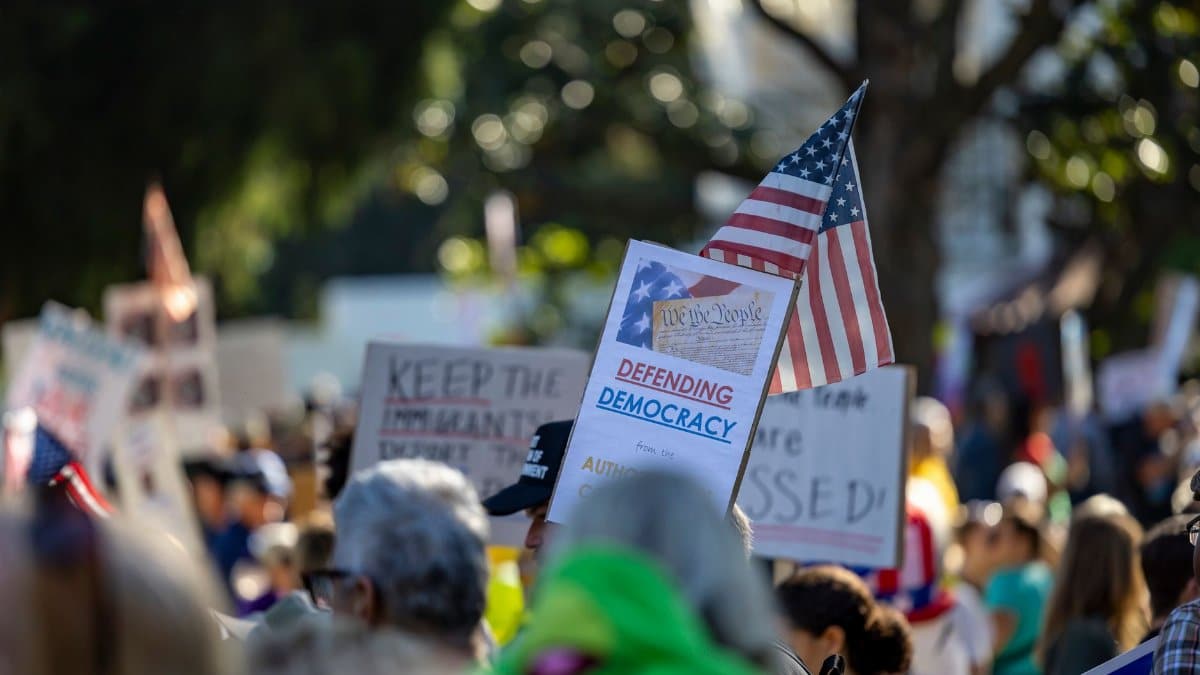
There is a principle available that does not require anyone to romanticize ICE or to romanticize every critic of ICE. Agents are not above the criminal law. Immigrants are not below the protection of that law. Juries, not rallies, decide guilt. Grief is not evidence, and neither is a uniform.
Houston has the institutional pieces to honor that principle: a grand jury that has already acted, courts that can compel records, a press that can sit through hearings, and civic groups that can help a family navigate a system designed for people with lawyers. Whether those pieces function together is the real test. The Houston ICE indictment reaction will be judged less by the first day of statements than by whether anyone is still paying attention when the cameras leave.
Living with an unfinished story

Middle aged readers know unfinished stories. They have watched trials outlast outrage. They have watched policies change their name and keep their habits. They also know that a single case can still matter, not because it explains a nation, but because it tells a family whether the promise of equal protection was a slogan or a practice.
I keep returning to the ordinary objects in a case like this: a car, a badge, a hospital corridor, a charging document. None of them is spiritual by itself. Together they force a city to say what it believes a person is worth when status is contested and power is unequal. That is not a trend. It is the oldest civic question Houston keeps being asked to answer in public.
Until a court speaks in a verdict or a dismissal, the responsible posture is disciplined attention. Believe that process can work. Demand that it work for the person with the least protection. Refuse anyone who needs the ending today more than they need the truth.