
On a gray October morning in Boston, the distance between a church pew and the governor’s office can feel both short and immense. Voters here have long mixed private devotion with public skepticism of religious politics. Into that tension steps a Republican whose campaign keeps returning to prayer, parish life, and the moral claims of Catholic teaching. The phrase Mike Minogue governor is no longer a side conversation. It is a test of whether faith can be offered as a public argument in a commonwealth that prizes religious liberty and a firm line between sanctuary and statehouse.
A campaign that will not leave the pew behind
Massachusetts politics rarely rewards candidates who speak about God as if doctrine were a platform plank. The state is culturally Catholic in memory and demography, yet its recent governors have treated faith as biography rather than blueprint. Minogue has chosen a different register. He presents Catholic formation not as a private hobby but as the lens through which he reads budgets, schools, housing, and the limits of state power.
That choice is legible to anyone who has watched New England campaigns. Most candidates mention a church the way they mention a high school: a marker of roots. Fewer invite voters to judge them by how consistently they apply a religious tradition that is older than the commonwealth and often at odds with its current legislative majority. The wager is that sincerity will read as strength rather than as a threat.
What Catholic teaching actually puts on the table

Catholic social thought is not a single party program. It holds together claims that cut across American coalitions: the dignity of the unborn and the dignity of the migrant, the duty to the poor and the suspicion of regimes that swallow family and parish, the preference for work and the insistence that markets answer to moral limits. A candidate who cites that tradition inherits the whole tension, not a curated slice.
In a governor’s race, the practical questions are blunt. How would such a faith shape appointments to boards that oversee hospitals and schools? How would it color vetoes on bills touching abortion, gender medicine for minors, or religious exemptions? How would it speak to unions, landlords, and the cities where Sunday attendance has thinned while need has not? Voters are entitled to ask whether the faith is a compass or a costume.
The Healey contrast and the map of power

Incumbent Maura Healey occupies the opposite pole of the state’s governing consensus. Her administration has aligned with the Democratic legislature on abortion access, climate rules, and a broadly progressive reading of civil rights. She does not campaign as a theologian, and she does not need to. In Massachusetts, the default setting of state government is secular liberalism with a managerial tone.
Any Republican challenge begins from that structural fact. The legislature is not poised to become a pulpit. A governor who arrives with a Catholic vocabulary would still face override math, attorney general opinions, and a press corps primed to hear religious language as exclusion. The interesting question is not whether Minogue can recite catechism. It is whether he can translate conviction into appointments, budgets, and veto messages that survive contact with a blue statehouse.
Memory of a Catholic commonwealth
For much of the twentieth century, Irish and Italian parishes were the unofficial infrastructure of Massachusetts civic life. Baptisms, funerals, and Friday fish were political as well as sacramental. That world produced mayors and senators who treated the church as a constituency and a conscience, sometimes in that order. Scandal, suburbanization, and the rise of the unaffiliated reordered the map. The buildings remain. The automatic allegiance does not.
A modern candidate who leans on that memory risks nostalgia. Many Catholics in the state vote like their neighbors, not like a bloc. They may want a governor who respects their schools and charities without expecting the state to adopt Rome’s full moral code. The campaign has to decide whether it is speaking to a remnant or to a broader public that still understands religious motivation even when it does not share it.
Abortion, conscience, and the hardest votes
No issue will test the faith claim more sharply than abortion. Massachusetts law is among the most protective of abortion access in the country. Catholic teaching calls the procedure a grave wrong. A candidate cannot blur that disagreement into a slogan about compassion and expect either side to nod along.
What he can do, if he is honest, is describe the tools a governor actually holds. Those tools are narrower than a homily. They include judicial nominations within statutory bounds, budget choices for pregnancy support, and the tone of the executive branch toward Catholic hospitals that decline certain procedures. Voters who disagree with the theology can still judge whether the candidate will govern inside the law or spend four years staging symbolic fights he cannot win. Voters who share the theology can judge whether he will spend political capital on the vulnerable after birth as readily as before.
Schools, charities, and the everyday state

Faith shows up less dramatically in the daily work of the corner office. Catholic schools and social service agencies already partner with the state on foster care, addiction, food, and housing. Those partnerships depend on contracts, inspections, and nondiscrimination rules that have grown stricter. A governor shaped by parish life might defend the freedom of those agencies to hire and serve according to religious mission. Opponents will call that a license to discriminate. The argument is not abstract. It decides whether a shelter or a school keeps its contract.
Housing and mental health offer a less theatrical test. Catholic teaching’s emphasis on the person, the family, and the local community can sound like a brief for smaller programs and more volunteer networks. It can also sound like an excuse to underfund systems that only government can scale. The campaign will be measured by whether faith language comes with numbers, timelines, and a willingness to be bored by implementation.
Immigration and the stranger

Massachusetts has absorbed large numbers of new arrivals while shelters strained and mayors pleaded for relief. Catholic teaching on the stranger is not a blank check for any federal policy, nor is it a warrant for indifference. A candidate who claims that teaching has to say something concrete about shelter capacity, work authorization, and the difference between compassion and chaos.
Here the faith claim can surprise both parties. It resists a politics that treats migrants only as threats, and it resists a politics that treats every enforcement question as cruelty. If Minogue uses the tradition selectively, parishes will notice. If he uses it fully, some Republican donors will notice too.
The risk of a religious brand
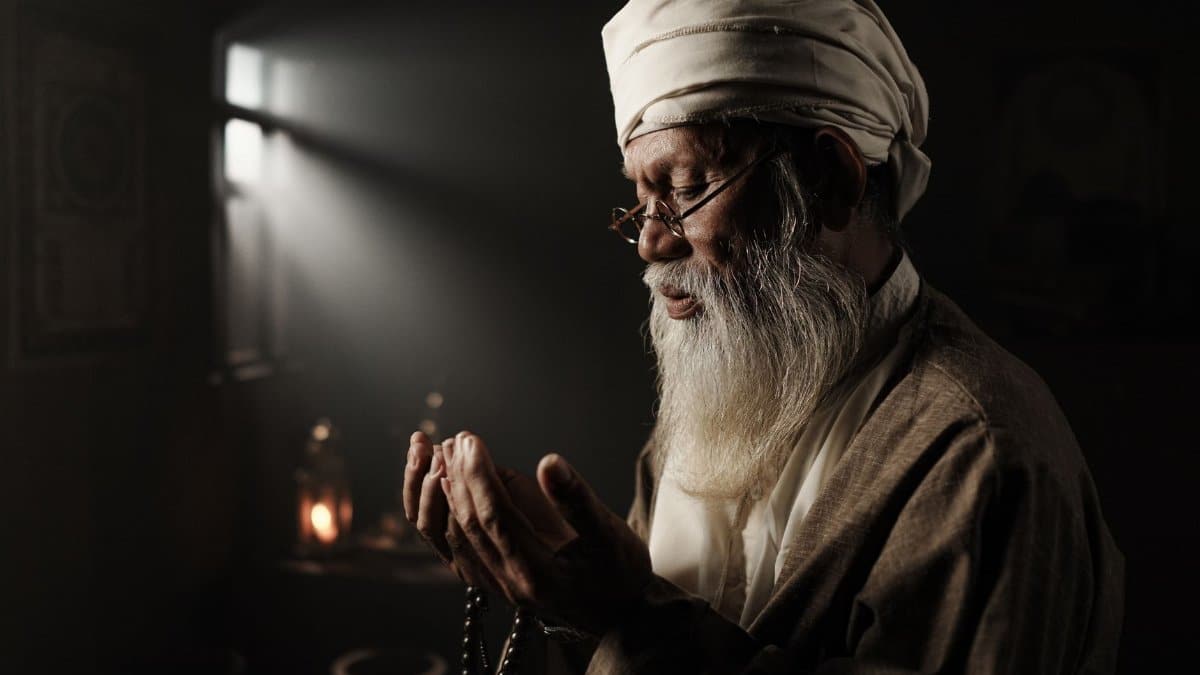
American voters have grown wary of candidates who seem to outsource judgment to clergy or to treat opponents as unbelievers. Massachusetts is especially alert to that risk. The state constitution and political culture both assume that public reason should be intelligible to people who do not share a creed. A campaign that sounds like a retreat can mobilize a base and lose everyone else.
The healthier version of a faith guided candidacy is more demanding. It explains moral premises in language a nonbeliever can follow. It accepts that democratic loss is not persecution. It distinguishes sins of the heart from powers of the state. And it invites scrutiny of the candidate’s own record in business and civic life, because a pulpit manner without a pattern of conduct is just marketing.
What supporters hear and what skeptics fear
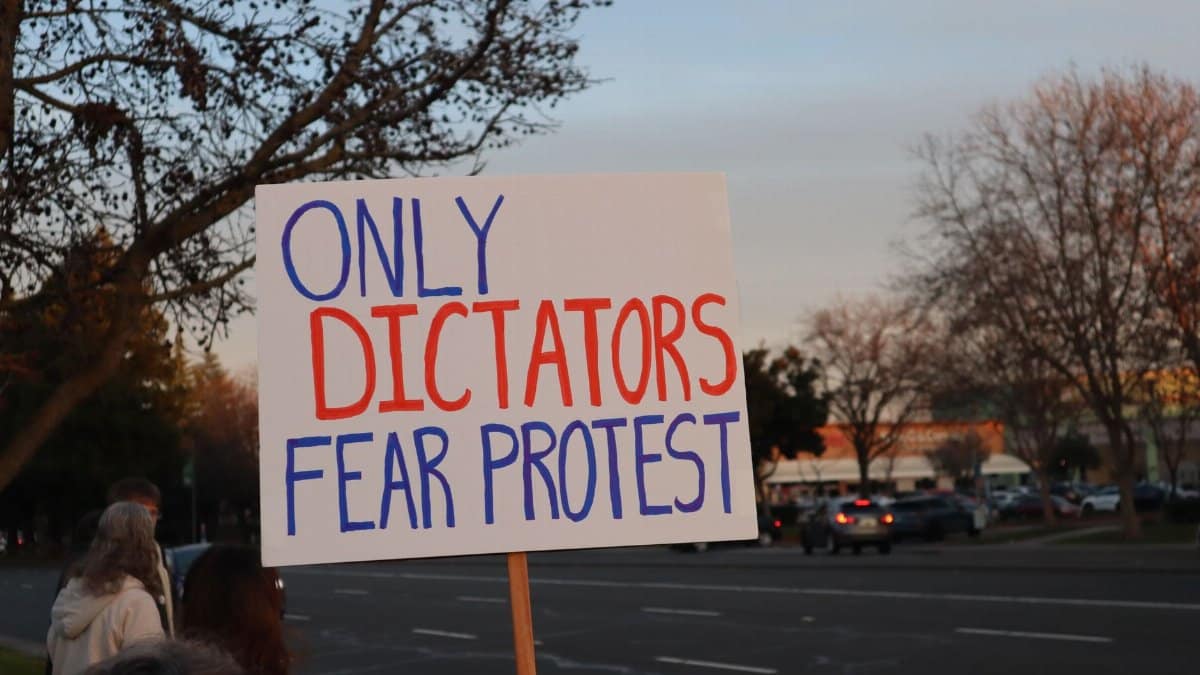
Supporters hear in this candidacy a correction. They are tired of a public square that treats religious conviction as a private embarrassment. They want a governor who will say that some goods are not invented by statute: family stability, the protection of children, the duty to the poor, the freedom to worship and to run institutions that worship. For them, Mike Minogue governor is a sentence about permission. Permission to bring the whole self into politics without apology.
Skeptics hear something else. They hear a prelude to restrictions on rights they consider settled. They hear a majority faith, even a culturally faded one, asking for the levers of a government that must serve Jews, Muslims, Protestants, and the unaffiliated with equal seriousness. Their fear is not that a Catholic will pray. It is that prayer will be used to rank citizens.
Both hearings can be partly right. The campaign’s job is to make the first hearing credible without confirming the second. That requires specificity. Which policies follow from the faith, which are prudential judgments open to revision, and which rights of others will be defended even when Catholic teaching disapproves of the underlying conduct? Candidates who skip those distinctions ask for trust they have not earned.
A state that still knows the hymns

Walk through older neighborhoods and the church names are still on the corners, even when the congregations have shrunk. Funerals still draw the lapsed. Christmas and Easter still fill parking lots. That residual literacy matters. Voters can tell the difference between a candidate who has lived inside a tradition and one who rented its vocabulary for a cycle. They can also tell when lived faith has hardened into contempt for neighbors.
The gubernatorial stage amplifies both signals. A governor speaks at disasters, graduations, and moments of public grief. Tone becomes policy by another name. If the faith is real, it should show up as steadiness and restraint as often as it shows up as opposition. Mercy is not a soft substitute for conviction. In executive office it is part of the job.
How to judge the claim before Election Day

Readers do not need a theology degree to evaluate this race. They can ask ordinary questions. Does the candidate apply his stated morals to allies as well as opponents? Does he protect religious minorities with the same energy he asks for Catholic institutions? Does he offer a governing plan that would improve schools, transit, housing, and public safety for people who will never share his creed? Does he accept constitutional limits when they frustrate him?
Those questions keep the focus where it belongs: on the office, not on the candidate’s soul. Faith can guide a candidacy without becoming a loyalty test for the electorate. Massachusetts has room for a religious argument made in public, provided it is an argument and not a demand for deference.
The sentence the race keeps repeating

Campaigns are remembered for the sentences they cannot stop saying. This one keeps circling a simple claim: that a Catholic conscience is not a disqualification for the state’s highest office, and that hiding it would be a worse form of politics. Whether that claim persuades will depend less on homilies than on the hard translation of belief into law, budget, and temperament.
In that sense the phrase Mike Minogue governor is doing two kinds of work. It names a person and an office. It also names a wager about Massachusetts itself, a place that still knows the hymns and no longer takes them as a voting guide. The wager will be settled by voters who want competence first and who will accept faith in the corner office only if it makes the governing clearer, not narrower. Between now and that judgment, the useful standard is plain. Show the connection between prayer and policy. Respect those who pray differently or not at all. And remember that a governor serves a whole commonwealth, not a parish that happens to be very large.